Shishito vs Padrón: Blistered Pepper Showdown
Shishito and Padrón are two of the most popular blistered peppers in the world, sharing a similar small, wrinkled appearance and a love for high-heat cooking. The key difference: Shishito tops out at 200 SHU while Padrón can reach 2,500 SHU, meaning that famous one-in-ten hot pepper roulette is actually more intense with Padrón. Both belong to the botanical family for Shishito but arrived in kitchens from very different directions.

Shishito Pepper measures 50–200 SHU while Padrón Pepper registers 500–3K SHU — making Padrón Pepper 13× hotter. Shishito Pepper is known for its sweet and grassy flavor (C. annuum), while Padrón Pepper offers mild and grassy notes (C. annuum).
- Heat difference: Padrón Pepper is 13× hotter
- Species: Both are C. annuum
- Best for: Shishito Pepper excels in everyday cooking and salsas, Padrón Pepper in fresh salsas and mild recipes
Shishito Pepper
MildPadrón Pepper
MediumShishito Pepper vs Padrón Pepper Comparison
Shishito Pepper vs Padrón Pepper Heat Levels
Shishito registers 50-200 SHU on the Scoville scale — essentially negligible heat for most palates. That puts it firmly in the heat category for Shishito at the very bottom edge, where most people would call it mild-to-no-heat territory. A guajillo's characteristic dried-chile warmth runs roughly 2,500-5,000 SHU, making even the hottest Shishito about 12 times cooler than a mild guajillo.
Padrón is a different story. Its range of 500-2,500 SHU means the average Padrón is already several times hotter than any Shishito, and the hot ones approach that guajillo baseline. The Scoville rating system for testing pepper heat captures this variability well — Padrón's spread is nearly five times wider than Shishito's, which is exactly what makes eating a plate of them so unpredictable.
Both peppers carry the same genetic quirk: individual fruits on the same plant, from the same harvest, can vary dramatically in capsaicin content. With Shishito, the variation is mostly academic — you might notice a faint tingle on the hot ones. With Padrón, that variation is genuinely felt. The classic Spanish saying roughly translates to 'Padrón peppers, some hot, some not' — and the ones that are hot carry real bite. Neither pepper approaches jalapeño territory at their peaks, but Padrón can deliver a noticeable, lingering warmth that Shishito simply cannot.
Flavor Profile Comparison
Shishitos belong to Capsicum annuum, the same broad botanical family that includes bell peppers, jalapeños, and most of the peppers you'll find at any grocery store.
Crack open a bag of Padrón peppers and you get something unusual: a built-in game of chance.
Start with the nose: both peppers release a grassy, green aroma when they hit a hot pan, almost herbal with a faint sweetness. Shishito's scent is lighter, almost delicate — there's a citrus-adjacent brightness that opens up as the skin chars. Padrón smells a touch earthier, with a more pronounced vegetal depth, closer to green bell pepper territory but with more character.
On the palate, Shishito leads with sweetness. The flesh is thin and tender, with a clean, slightly grassy finish that doesn't linger long. It's the kind of pepper that lets olive oil, flaky salt, and lemon do the talking — the pepper itself is a pleasant, undemanding backdrop.
Padrón has more going on. The flavor is still mild and grassy at its core, but there's a subtle bitterness in the skin and a savory, almost smoky undertone that comes through whether you blister it in a cast iron or roast it whole. When you get a hot one, that capsaicin doesn't just bring heat — it amplifies the other flavors, making the grassiness more intense and the finish longer.
For cooking, Shishito's sweetness makes it the easier crowd-pleaser. Padrón's more complex flavor holds up better alongside bold ingredients — aged cheese, cured meats, robust olive oil. Both benefit enormously from high-heat cooking, which concentrates their sugars and softens the raw grassy edge into something genuinely delicious.
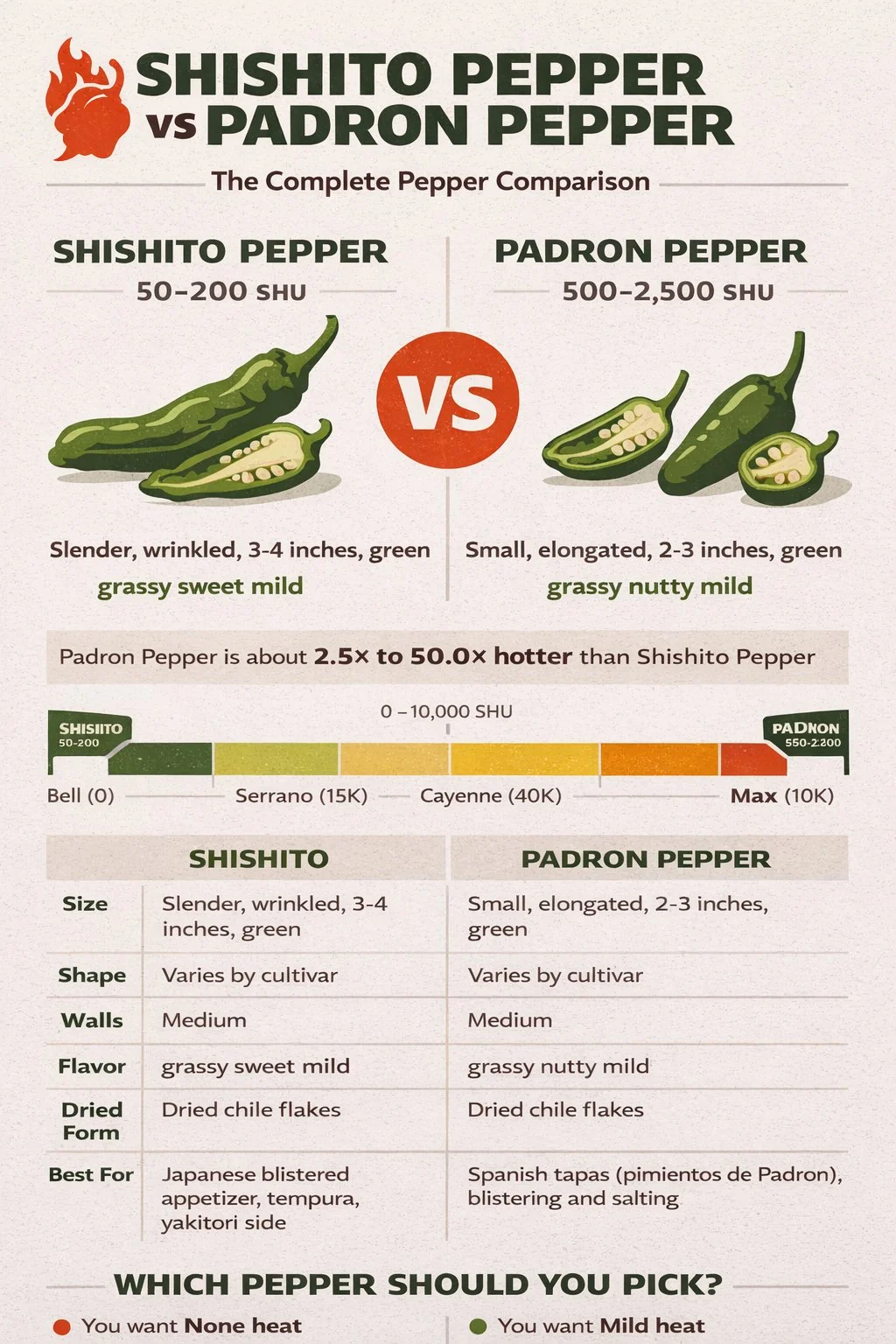
Culinary Uses for Shishito Pepper and Padrón Pepper
Blistering is the non-negotiable technique for both. Get a cast iron or carbon steel pan screaming hot, add enough oil to coat, and drop the peppers in a single layer. Don't crowd them — steam is the enemy of a good blister. They need 3-5 minutes of mostly undisturbed contact with the pan, turning once, until the skins are deeply charred in spots and the flesh has softened.
Shishito excels as a no-fuss appetizer. Blister, salt with flaky sea salt, add a squeeze of lemon or yuzu, and serve immediately. Japanese izakaya-style preparation is the gold standard — simple, fast, endlessly snackable. They also work sliced raw in salads where you want mild pepper flavor without heat, or skewered and grilled alongside fish. Tempura-battered Shishito is a legitimate revelation if you haven't tried it.
Padrón is the backbone of pimientos de Padrón, the Galician tapa that put this pepper on the international map. Blistered in olive oil, finished with coarse sea salt — that's the whole recipe, and it needs nothing else. The flavor complexity means Padrón also handles more assertive pairings: stuffed with goat cheese and briefly roasted, tucked into a bocadillo with jamón, or scattered over a tortilla española.
For substitution, the ratio depends on what you're after. If you want the blistered pepper experience with zero heat risk, Shishito replaces Padrón 1:1 in any recipe. Going the other direction — swapping Shishito for Padrón — works equally well by volume, though you lose the heat roulette element. The germination and growing guide for both is worth reading if you want to grow your own supply, since both are prolific producers that do well in containers.
Both peppers are at their best eaten immediately after cooking. They do not hold well — the blistered skin turns leathery within an hour.
Which Should You Choose?
Choose Shishito when the crowd includes heat-shy guests, when you want a guaranteed mild snack, or when the pepper is playing a supporting role in a dish where you need consistent flavor without surprise. It's the safer, sweeter, more universally crowd-pleasing option.
Choose Padrón when you want more flavor complexity and you're cooking for people who appreciate a little culinary suspense. The heat roulette is genuinely fun at a dinner party, and the earthier, more savory flavor stands up to bolder ingredients. The regional origin for Padrón shapes its natural pairing partners — Spanish olive oil, cured meats, aged cheeses — in ways that Shishito, rooted in the regional origin for Shishito, doesn't quite replicate.
For growing, both are beginner-friendly annuals. Neither demands special treatment beyond warmth and sun. The main difference is what lands on the plate — and with Padrón, you genuinely don't know what you're getting until you bite.
Can You Substitute One for the Other?
Yes — direct substitution works. Shishito Pepper and Padrón Pepper are close enough in heat to swap at roughly 1:1. The main difference will be flavor. For more swap options, explore ranked alternatives with conversion ratios.
Growing Shishito Pepper vs Padrón Pepper
If you’re deciding which pepper to grow at home, consider your climate and patience level. Shishito Pepper and Padrón Pepper have different maturation times and temperature preferences. Hotter varieties generally need a longer, warmer growing season to develop their full capsaicin content. Our zone-based planting date tool can pinpoint the best sowing window for your area.
Shishitos are productive, relatively compact plants that suit both garden beds and large containers. They thrive in the same conditions as most [*C.
Start seeds indoors 8–10 weeks before your last frost date. Germination is reliable at 75–85°F; a heat mat helps considerably.
The plants are vigorous and branch well without much intervention. Fruit sets prolifically once daytime temperatures settle between 70–85°F.
Padrón peppers follow the same basic calendar as most C. annuum varieties: start seeds indoors 8–10 weeks before last frost, transplant after soil temperatures reach 60°F, and expect first harvest roughly 70–80 days after transplant.
They prefer full sun and consistent moisture — Galicia's cool, humid climate shaped them, so they tolerate cooler summers better than most peppers. That said, they still need warmth to fruit well.
Plant spacing of 18 inches between plants gives enough airflow to reduce fungal issues, which matter more with thin-walled varieties. Unlike the long-season cultivation requirements of large Anaheim-type peppers, Padróns fruit relatively early and keep producing through the season if you harvest consistently.
History & Origin of Shishito Pepper and Padrón Pepper
Both peppers carry centuries of culinary heritage. Shishito Pepper traces its roots to Japan, while Padrón Pepper originates from Spain. Understanding their backstory helps explain why each pepper developed its distinctive traits.
Buying & Storage
Whether you’re shopping for Shishito Pepper or Padrón Pepper, the same quality indicators apply. Fresh peppers should feel firm and heavy for their size, with taut, glossy skin and no soft or wet spots. Minor stem cracks known as “corking” are perfectly normal and often indicate a mature, flavorful pod.
- Firm pods with taut skin and consistent color
- Should feel heavy relative to size
- Minor stem cracks (“corking”) are normal
- Avoid anything soft, shriveled, or with dark wet spots
- Fresh: Paper bag, crisper drawer — 1–2 weeks
- Frozen: Wash, dry, freeze on sheet pan — 6+ months
- Dried: Airtight, away from light — up to 1 year
The Verdict: Shishito Pepper vs Padrón Pepper
Shishito Pepper and Padrón Pepper occupy very different positions on the heat spectrum. Padrón Pepper delivers 13× more heat with its distinctive mild and grassy character. Shishito Pepper, with its sweet and grassy profile, excels in everyday cooking.
Frequently Asked Questions
Related Comparisons
Sources pending verification.