
Manzano Pepper vs Rocoto: Which Pepper Should You Use?
The manzano and rocoto are the same pepper - two names for Capsicum pubescens, the cold-hardy Andean species with black seeds and thick, apple-shaped fruit. Regional naming differs (manzano in Mexico, rocoto in South America), but the heat, flavor, and growing requirements are identical. Understanding the distinctions that actually matter - preparation, sourcing, and culinary application - is what separates confident cooks from confused ones.

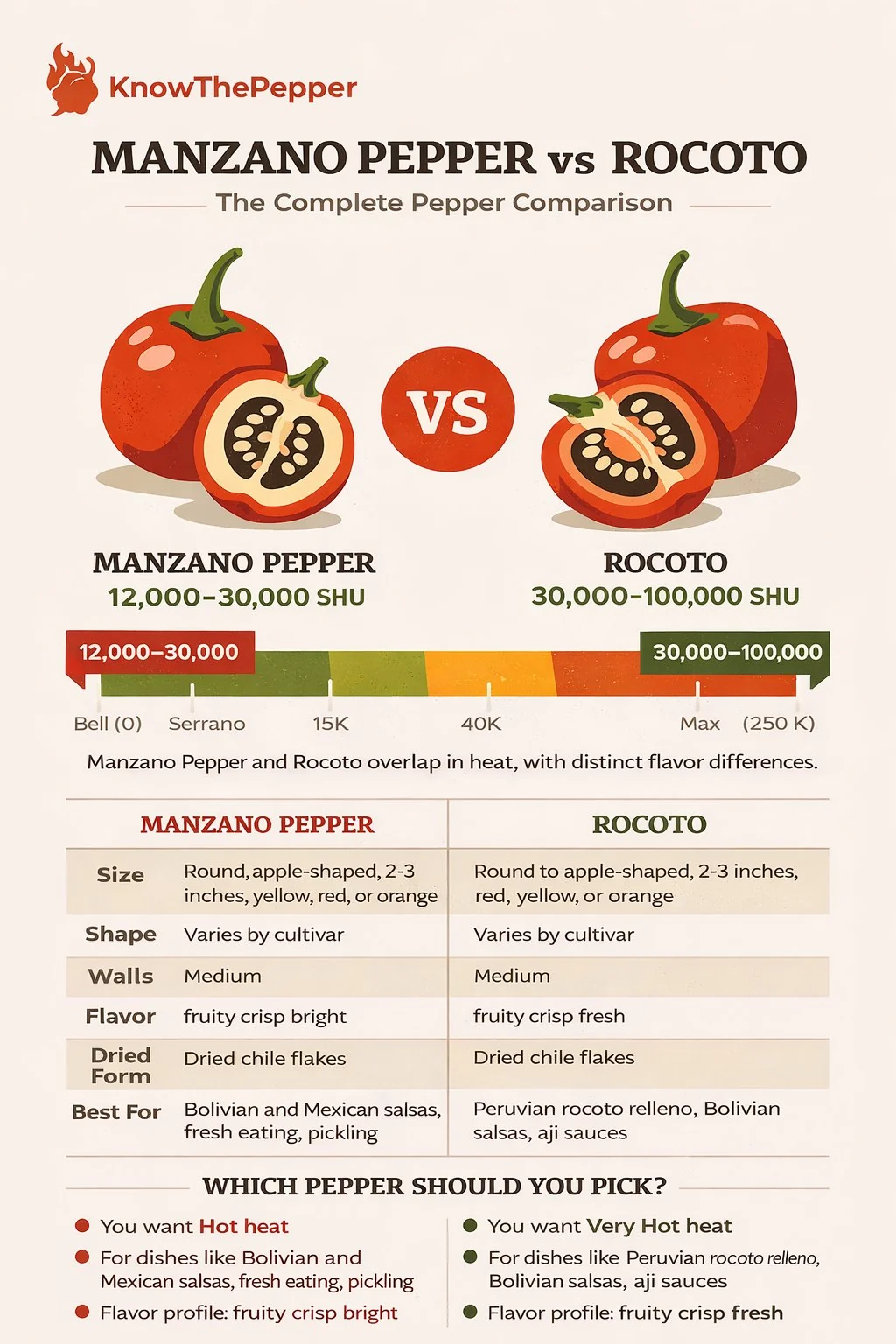
Manzano Pepper measures 12K–30K SHU while Rocoto registers 30K–100K SHU — making Rocoto 3× hotter. Manzano Pepper is known for its fruity and apple-like flavor (C. pubescens), while Rocoto offers fruity and crisp notes (C. pubescens).
- Heat difference: Rocoto is 3× hotter
- Species: Both are C. pubescens
- Best for: Manzano Pepper excels in everyday cooking and salsas, Rocoto in hot sauces and spicy dishes
Manzano Pepper
HotRocoto
Extra-HotManzano Pepper vs Rocoto Comparison
Manzano Pepper vs Rocoto Heat Levels
Both names refer to the same Capsicum pubescens species, so the heat profile is shared: roughly 12,000-30,000 SHU, though some sources cite peaks closer to 50,000 SHU in particularly hot specimens. That puts them solidly in the range of 2-5x hotter than a serrano (which typically sits around 10,000-23,000 SHU), depending on growing conditions and fruit maturity.
The burn character is what sets C. pubescens apart from other hot peppers at this SHU bracket intensity. The heat hits the back of the palate and throat rather than the lips and front of the mouth - a slower, deeper burn that lingers noticeably longer than you might expect from a pepper in this range. Capsaicin concentration in the placenta (the white membrane) is high, and the thick flesh means more surface area for that heat to develop during cooking.
For practical reference: a manzano/rocoto is meaningfully hotter than a jalapeño but well below habanero territory. The heat and flavor contrast versus habanero is significant - habaneros push 100,000-350,000 SHU, which is a completely different category of pain. The C. pubescens burn is intense but approachable for anyone who cooks regularly with serranos or Thai bird chiles.
Flavor Profile Comparison
The manzano pepper carries a secret most shoppers miss entirely: those distinctive black seeds mark it as [C.
Few peppers carry as much history as the rocoto.
The flavor question is more interesting than the heat question here. Manzano (the Mexican name) and rocoto (Peruvian/Bolivian usage) describe fruit from the same species, but regional cultivation has produced some variation in taste that goes beyond mere naming.
The baseline C. pubescens flavor is distinctly fruity - apple-like and slightly sweet, with a dense, almost crunchy flesh that holds up to heat far better than thin-walled peppers. There's a subtle floral note that's characteristic of the species, and the fruit itself is juicy without being watery.
Rocoto peppers grown in Andean highlands often develop a slightly earthier, more complex flavor profile due to cooler growing temperatures and longer maturation times. The altitude and temperature swings that C. pubescens thrives in seem to concentrate flavor compounds in ways that lowland cultivation doesn't replicate as easily.
Manzano peppers grown in central Mexican highlands (Michoacán, Puebla) tend toward a brighter, cleaner fruit flavor - the apple comparison is most apt here. Both are substantially more flavorful than most grocery-store jalapeños, with the thick walls giving a satisfying texture in fresh salsas and stuffed preparations.
The black seeds are a visual marker of authenticity - no other domesticated Capsicum species has them - and they're edible, though most traditional recipes remove them for texture reasons.
Culinary Uses for Manzano Pepper and Rocoto
Because manzano and rocoto are the same pepper under different names, the real culinary question is: which regional tradition are you cooking in?
Rocoto relleno is the flagship preparation - a Peruvian stuffed pepper dish where the thick walls make the fruit ideal for holding a filling of ground meat, onions, raisins, and hard-boiled egg, then baked with a cheese crust. The pepper's structural integrity during cooking is unmatched among hot peppers at this heat level. Poblanos are the closest analog in stuffed-pepper applications, but they're significantly milder and thinner-walled.
Manzano-based salsas from Michoacán use the fresh pepper raw or lightly charred, blended with tomatillo, garlic, and cilantro. The apple-fruit sweetness balances the heat in a way that pure capsaicin-forward peppers can't match. For a side-by-side look at how manzano heat compares to habanero fruitiness, the manzano wins on complexity at lower heat levels.
Substitution is straightforward in most recipes. If a dish calls for rocoto and you have manzano (or vice versa), use 1:1 with no adjustment. If you need to substitute with something more available, serrano peppers at 1.5x the quantity approximate the heat, but you'll lose the fruity thickness. Habaneros work at 0.5x quantity for heat matching, but the flavor profile shifts considerably.
For hot sauces, the thick flesh blends into a remarkably smooth, rich base. The swap options for manzano-based sauces typically recommend habanero or serrano depending on whether you're prioritizing heat or texture.
Roasting deepens the sweetness considerably - a 10-minute char under a broiler before peeling and using in any cooked application is worth the extra step.
Which Should You Choose?
If a recipe calls for one and you have the other, use it without hesitation - they're the same pepper. The choice between them is really a choice between culinary traditions.
Go with rocoto framing when making South American dishes: stuffed preparations, Peruvian sauces, anything where the pepper is a structural component of the dish rather than a seasoning element. The Andean tradition has centuries of technique built around this fruit.
Go with manzano framing for Mexican applications: fresh salsas, table sauces, anything where the bright fruit flavor needs to come forward. Central Mexican cooks have developed preparations that highlight the apple-sweetness in ways Andean recipes don't always prioritize.
For heat tolerance: this pepper is a serious step up from jalapeño but accessible to anyone who cooks with serranos regularly. The back-of-throat burn means first-timers should taste before committing to a full portion. For cooks who want the fuller picture on C. pubescens flavor and applications, the species rewards exploration.
Can You Substitute One for the Other?
Proceed with caution. Rocoto is 3× hotter than Manzano Pepper.
Need a different option altogether? Search for peppers that match your target heat and flavor with precise swap ratios.
Growing Manzano Pepper vs Rocoto
If you’re deciding which pepper to grow at home, consider your climate and patience level. Manzano Pepper and Rocoto have different maturation times and temperature preferences. Hotter varieties generally need a longer, warmer growing season to develop their full capsaicin content. Our zone-based planting date tool can pinpoint the best sowing window for your area.
Growing manzano means accepting one fundamental difference from most chili gardening: this plant wants cool temperatures. While Thai chili's fierce compact heat thrives in hot summers, manzano prefers 55-75°F and will struggle above 90°F.
Start seeds indoors 12-14 weeks before transplant - longer than most peppers because pubescens germinates slowly. Soil temperature for germination should be 75-80°F, but once sprouted, keep plants cooler than you would annuum varieties.
The plants grow large - up to 4-5 feet in ideal conditions - and are genuinely perennial in frost-free climates. In USDA zones 9-10, a manzano plant can produce for multiple years if protected from hard freezes.
Capsicum pubescens is the most cold-tolerant domesticated pepper species, but that doesn't mean it's easy. It needs a long growing season — often 120–150 days to first harvest — and performs best in mild climates where summers stay below 90°F.
Start seeds indoors 10–12 weeks before last frost. Germination is slower than most peppers, sometimes taking 3–4 weeks at 75–80°F soil temperature.
For seed-starting and container cultivation, rocoto rewards patience. Container growing works well given its perennial nature; bring it inside before frost and it may fruit for years.
History & Origin of Manzano Pepper and Rocoto
Both peppers carry centuries of culinary heritage. Manzano Pepper traces its roots to Mexico, while Rocoto originates from Peru. Understanding their backstory helps explain why each pepper developed its distinctive traits.
Buying & Storage
Whether you’re shopping for Manzano Pepper or Rocoto, the same quality indicators apply. Fresh peppers should feel firm and heavy for their size, with taut, glossy skin and no soft or wet spots. Minor stem cracks known as “corking” are perfectly normal and often indicate a mature, flavorful pod.
- Firm pods with taut skin and consistent color
- Should feel heavy relative to size
- Minor stem cracks (“corking”) are normal
- Avoid anything soft, shriveled, or with dark wet spots
- Fresh: Paper bag, crisper drawer — 1–2 weeks
- Frozen: Wash, dry, freeze on sheet pan — 6+ months
- Dried: Airtight, away from light — up to 1 year
The Verdict: Manzano Pepper vs Rocoto
Manzano Pepper and Rocoto occupy very different positions on the heat spectrum. Rocoto delivers 3× more heat with its distinctive fruity and crisp character. Manzano Pepper, with its fruity and apple-like profile, excels in everyday cooking.
Frequently Asked Questions
Related Comparisons
Sources pending verification.
