Habanero vs Ghost Pepper: How Much Hotter?
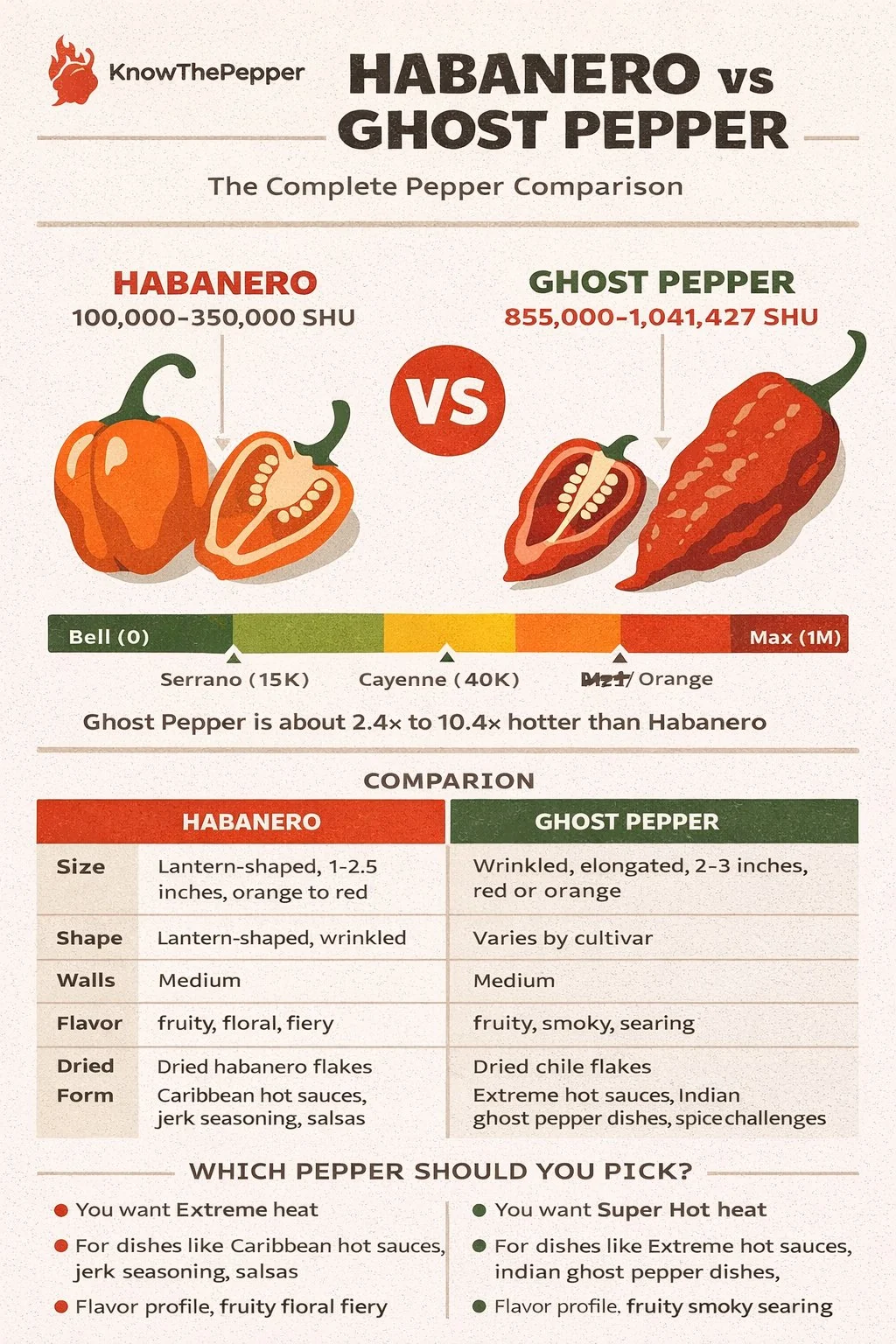
The habanero sits between 100,000 and 350,000 SHU, making it one of the most recognizable hot peppers in kitchens worldwide. The ghost pepper (Bhut jolokia) crosses the 1,000,000 SHU threshold — historically the first pepper to break that barrier. That gap is not subtle: the ghost pepper delivers roughly 3 to 10 times more heat depending on where each sample falls in its range.

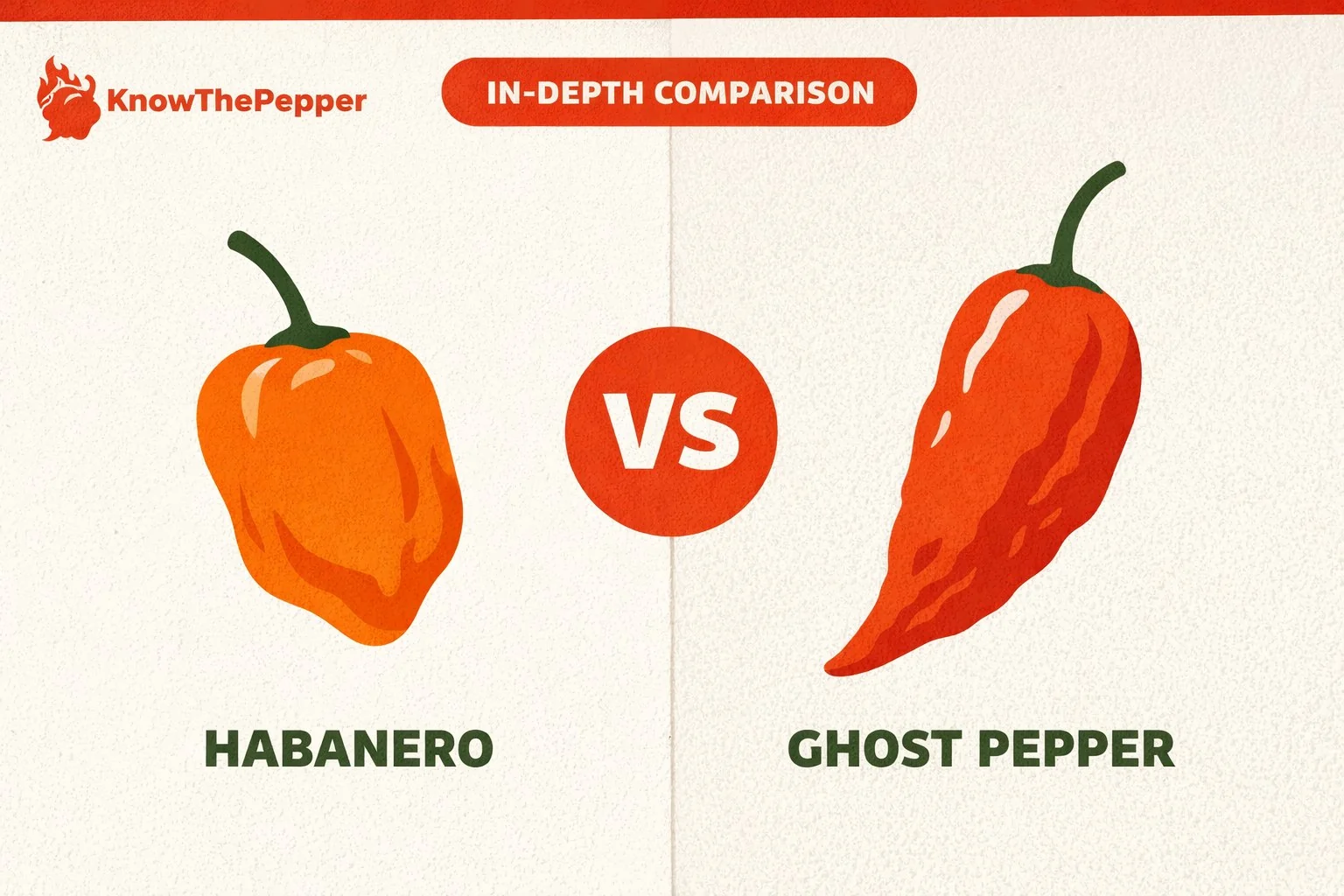
Habanero measures 100K–350K SHU while Ghost Pepper registers 855K–1M SHU — making Ghost Pepper 3× hotter. Habanero is known for its fruity and citrusy flavor (C. chinense), while Ghost Pepper offers smoky and sweet notes (C. chinense).
- Heat difference: Ghost Pepper is 3× hotter
- Species: Both are C. chinense
- Best for: Habanero excels in hot sauces and extreme dishes, Ghost Pepper in hot sauces and spicy dishes
Habanero
Extra-HotGhost Pepper
Super-HotHabanero vs Ghost Pepper Comparison
Habanero vs Ghost Pepper Heat Levels
The habanero registers 100,000–350,000 SHU on the Scoville scale, placing it firmly in the extra-hot pepper bracket alongside its close relatives. An Anaheim pepper typically measures around 500–2,500 SHU, which means a habanero can hit 40 to 140 times that heat level — a useful frame when you want to understand just how aggressive these peppers are before even introducing the ghost pepper into the picture.
The ghost pepper, or Bhut jolokia, was measured at approximately 1,041,427 SHU in a 2007 study by New Mexico State University's Chile Pepper Institute, making it the first pepper ever certified to break the one-million mark. Current samples can range from 800,000 to over 1,100,000 SHU depending on growing conditions, soil, and climate. By that math, a ghost pepper is 3 to 10 times hotter than a habanero — the gap widens significantly when comparing a lower-end habanero against a high-output ghost pepper crop.
Both peppers belong to C. chinense, so they share similar capsaicin delivery — but the ghost pepper's concentration is dramatically higher. The TRPV1 receptor response triggered by ghost pepper capsaicin tends to produce a slower-building, longer-lasting burn compared to the habanero's sharper initial spike. Habanero heat hits fast and fades in 10–15 minutes; ghost pepper heat can persist for 20–30 minutes or longer, spreading from the throat into the chest. For anyone calibrating their heat tolerance, these are two very different experiences despite sharing a species.
Flavor Profile Comparison
Few peppers balance heat and flavor as well as the habanero.
Long before it became a dare on YouTube, the ghost pepper was a staple of Naga cuisine in Assam, Nagaland, and Manipur — used in traditional pickles, meat preparations, and even as a topical remedy against arthritis.
The habanero has a genuinely distinctive flavor that earns it a place beyond pure heat delivery. Its profile is fruity and citrusy — think apricot, peach, and a faint floral note underneath the fire. That brightness is part of why it dominates Caribbean and Mexican pepper-based sauces: the flavor holds up and contributes something identifiable even after cooking. The citrus edge makes it particularly effective in fruit-forward salsas, mango-based hot sauces, and marinades where acidity plays a role.
The ghost pepper's flavor is less documented in culinary literature, partly because its extreme heat makes objective tasting difficult. What most experienced cooks note is an earthy, slightly smoky undertone with a hint of sweetness that gets buried almost immediately under the capsaicin load. The fruity quality exists but is muted compared to the habanero — it doesn't sing the same citrus notes. Think of it less as a flavoring agent and more as a heat delivery mechanism with background complexity.
In practical terms, the habanero is a dual-purpose pepper: heat and flavor in roughly equal measure. The ghost pepper skews heavily toward heat. This distinction matters enormously in cooking. A habanero can be used at meaningful quantities and still contribute taste. A ghost pepper, used at levels where flavor might register, often delivers more heat than most dishes can absorb without becoming inedible. If you want the fruity-hot combination that habanero brings, the ghost pepper is not a direct swap — it is a different tool entirely.
Culinary Uses for Habanero and Ghost Pepper
The habanero earns its place as a workhorse hot pepper in kitchens that want both fire and flavor. It's the backbone of many Caribbean jerk seasonings, Yucatecan salsas like xni pec, and commercial hot sauces. Roasting or quickly charring a habanero before blending deepens its fruity character and softens the raw edge. For the datil pepper vs. habanero flavor contrast, both are C. chinense with similar fruity profiles — but the datil skews sweeter, which is worth knowing when you're building a sauce and deciding which direction to go.
For everyday cooking, half a habanero is a reasonable starting point for a dish serving four. Removing seeds and membrane drops the heat by roughly 30–40%, giving you more control. It performs well in oil-based preparations — habanero-infused olive oil, compound butters, and chile oils — where the fat carries the flavor compounds effectively.
Ghost pepper use requires a more measured hand. A quarter of one pepper can heat an entire pot of chili for six people. It works best in applications where it's a background element: long-simmered stews, fermented hot sauces where the heat mellows over weeks, or dry rubs where only trace amounts end up in each serving. Ghost pepper powder, used at 1/8 to 1/4 teaspoon per dish, gives more control than fresh.
Substitution ratios matter here. If a recipe calls for one habanero and you want to use ghost pepper instead, start with one-fifth the amount — you can always add more. Going the other direction, replacing ghost pepper with habanero requires roughly 3 to 4 habaneros per ghost pepper to approximate the heat, though the flavor profile will shift noticeably toward citrus. For a closer heat match with less flavor change, the Carolina Reaper's extreme heat vs. habanero breakdown offers a useful frame — Reapers sit even higher than ghost peppers, so the substitution math scales similarly. Compared to a cayenne, the cayenne vs. habanero heat difference shows how much range exists even within the hot pepper world.
Which Should You Choose?
Choose the habanero when flavor matters as much as heat — when you want that citrus-fruit brightness in a sauce, marinade, or salsa that people can actually taste and appreciate. It belongs to the C. chinense botanical family alongside some of the world's most flavorful peppers, and it delivers on both dimensions reliably.
Choose the ghost pepper when heat is the primary goal and flavor is secondary — when you're building a sauce for heat-seekers, fermenting a long-aged hot sauce, or want bragging rights on a dish's Scoville credentials. Its flavor exists but gets overshadowed quickly.
For most home cooks, the habanero is the more versatile and controllable option. The ghost pepper rewards experienced cooks who understand exactly how to handle extreme heat. Neither is wrong — they just answer different questions in the kitchen. If you're building tolerance or exploring the upper range, the habanero is the logical starting point before stepping toward ghost pepper territory.
Can You Substitute One for the Other?
Proceed with caution. Ghost Pepper is 3× hotter than Habanero.
Need a different option altogether? Search for peppers that match your target heat and flavor with precise swap ratios.
Growing Habanero vs Ghost Pepper
If you’re deciding which pepper to grow at home, consider your climate and patience level. Habanero and Ghost Pepper have different maturation times and temperature preferences. Hotter varieties generally need a longer, warmer growing season to develop their full capsaicin content. Our zone-based planting date tool can pinpoint the best sowing window for your area.
Starting habaneros from seed requires patience. Germination takes 10–21 days at soil temperatures of 80–85°F — a heat mat is not optional, it's essential.
Transplant seedlings outdoors only after nighttime temperatures stay consistently above 55°F. Habaneros are frost-intolerant and will stall in cold soil.
Full sun — at least 6–8 hours daily — is non-negotiable. In containers, use a 5-gallon minimum; habaneros develop substantial root systems.
The hardest part of growing ghost peppers isn't germination — it's maintaining the long, hot season they need to fully ripen. In most of North America, that means starting seeds indoors 10–12 weeks before last frost and providing supplemental heat throughout the season.
Soil quality matters enormously. Ghost peppers want well-draining, slightly acidic soil (pH **6.
Fertilize with a lower-nitrogen mix once flowering begins — too much nitrogen pushes leafy growth at the expense of pods. Consistent calcium (through gypite or foliar spray) helps prevent blossom end rot, which ghost peppers are prone to during dry spells.
History & Origin of Habanero and Ghost Pepper
Both peppers carry centuries of culinary heritage. Habanero traces its roots to Mexico, while Ghost Pepper originates from India. Understanding their backstory helps explain why each pepper developed its distinctive traits.
Buying & Storage
Whether you’re shopping for Habanero or Ghost Pepper, the same quality indicators apply. Fresh peppers should feel firm and heavy for their size, with taut, glossy skin and no soft or wet spots. Minor stem cracks known as “corking” are perfectly normal and often indicate a mature, flavorful pod.
- Firm pods with taut skin and consistent color
- Should feel heavy relative to size
- Minor stem cracks (“corking”) are normal
- Avoid anything soft, shriveled, or with dark wet spots
- Fresh: Paper bag, crisper drawer — 1–2 weeks
- Frozen: Wash, dry, freeze on sheet pan — 6+ months
- Dried: Airtight, away from light — up to 1 year
The Verdict: Habanero vs Ghost Pepper
Habanero and Ghost Pepper occupy very different positions on the heat spectrum. Ghost Pepper delivers 3× more heat with its distinctive smoky and sweet character. Habanero, with its fruity and citrusy profile, excels in everyday cooking.
Frequently Asked Questions
Related Comparisons
Sources pending verification.