Ghost Pepper vs Trinidad Moruga Scorpion: Compared
The Ghost Pepper held the Guinness World Record for hottest pepper from 2007 to 2011, clocking in around 1,000,000 SHU. The Trinidad Moruga Scorpion dethroned it with measurements reaching 2,009,231 SHU — nearly double the heat in a pepper that also happens to taste genuinely good. This comparison breaks down where each pepper stands on heat, flavor, and practical kitchen use.

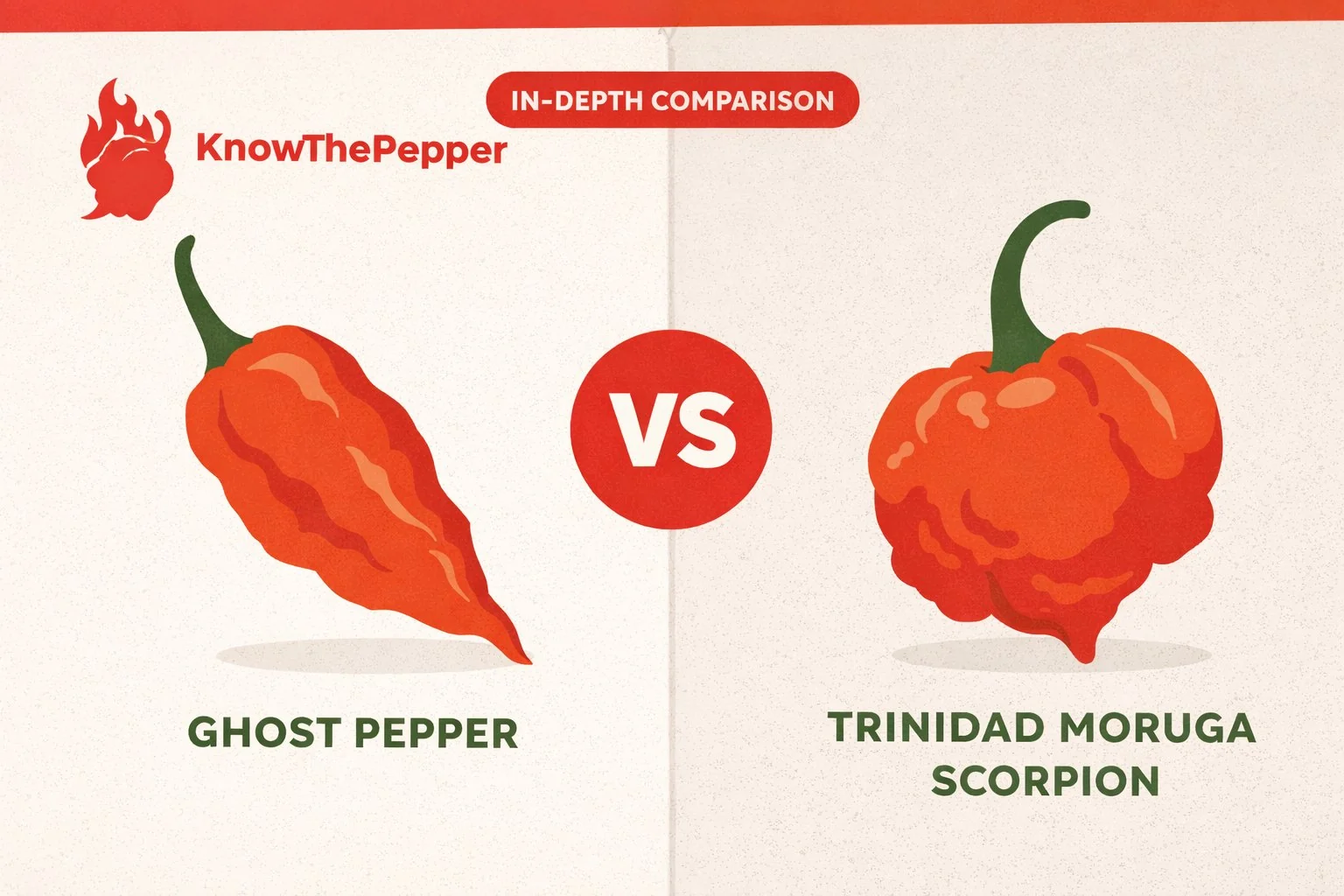
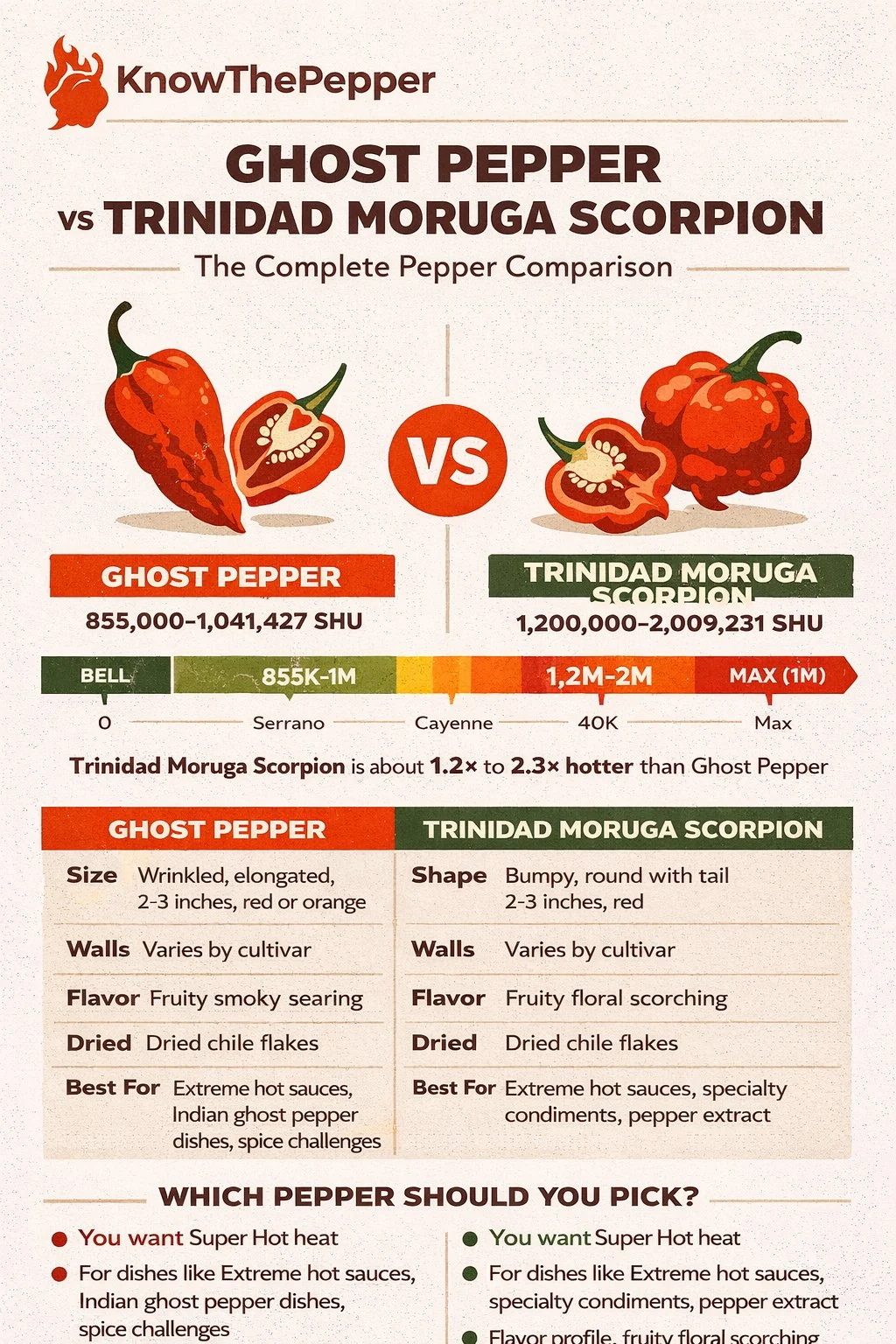
Ghost Pepper measures 855K–1M SHU while Trinidad Moruga Scorpion registers 1.2M–2M SHU — making Trinidad Moruga Scorpion 2× hotter. Ghost Pepper is known for its smoky and sweet flavor (C. chinense), while Trinidad Moruga Scorpion offers fruity and floral notes (C. chinense).
- Heat difference: Trinidad Moruga Scorpion is 2× hotter
- Species: Both are C. chinense
- Best for: Ghost Pepper excels in hot sauces and extreme dishes, Trinidad Moruga Scorpion in hot sauces and spicy dishes
Ghost Pepper
Super-HotTrinidad Moruga Scorpion
Super-HotGhost Pepper vs Trinidad Moruga Scorpion Comparison
Ghost Pepper vs Trinidad Moruga Scorpion Heat Levels
The Ghost Pepper (Bhut jolokia) averages around 1,000,000 SHU, though some measurements put it as low as 800,000 or as high as 1,041,427 SHU depending on growing conditions and testing method. That puts it roughly 125 times hotter than a typical jalapeño (at 8,000 SHU). When it first broke the 1-million SHU barrier, it genuinely shocked the pepper world.
The Trinidad Moruga Scorpion operates in a different atmosphere entirely. The New Mexico State University Chile Pepper Institute measured it at an average of 1,207,764 SHU across tested plants, with individual fruits hitting 2,009,231 SHU — that upper bound is roughly 250 times hotter than a jalapeño. It holds a permanent spot among the super-hot heat classification tier of peppers, a category the Ghost Pepper sits at the lower edge of.
Both belong to C. chinense, which tends to produce slower, more building heat than the sharp spike you get from C. annuum varieties. The burn from either pepper isn't instant — it creeps up over 30-90 seconds, then settles in for a long stay. The Moruga Scorpion's capsaicin load, however, sustains longer and reaches deeper tissue. If the Ghost Pepper is a sustained fire, the Moruga Scorpion is that fire with an accelerant poured on it.
For a head-to-head heat gap comparison with the Naga Viper — another pepper that briefly overtook the Ghost Pepper — the numbers tell a similar story of rapid record-breaking in the super-hot category.
Flavor Profile Comparison
Long before it became a dare on YouTube, the ghost pepper was a staple of Naga cuisine in Assam, Nagaland, and Manipur — used in traditional pickles, meat preparations, and even as a topical remedy against arthritis.
Few peppers command the same respect as the Trinidad Moruga Scorpion.
Ghost Pepper has a reputation for pure, overwhelming heat that overshadows its flavor — but that undersells it. There's a distinct smoky, earthy quality underneath the burn, with faint fruit notes that become more apparent in small doses or when the pepper is dried and ground. The aroma when you cut one open is sharp and pungent, not particularly sweet.
The Trinidad Moruga Scorpion is where things get genuinely interesting from a flavor standpoint. It carries a fruity, floral character that's unusual for something this hot — there's brightness to it, almost tropical, before the capsaicin completely takes over. Growers in Trinidad's pepper-growing regions have long valued this variety not just for its heat but for that underlying complexity.
In practical cooking terms, the Moruga Scorpion's fruitiness makes it more versatile when heat is being controlled through dilution. A small amount in a mango hot sauce or Caribbean-style marinade contributes flavor alongside fire. The Ghost Pepper, by contrast, adds more of a blunt heat presence — useful when you want intensity without a competing flavor note.
Both peppers share the C. chinense aromatic profile — that distinctive fruity-floral backbone that separates chinense varieties from the greener, grassier C. annuum types. The fruity Caribbean heat of the Scotch Bonnet offers a useful reference point: the Moruga Scorpion shares some of that tropical character, just multiplied several times over in heat.
Dried Ghost Pepper powder is a pantry staple for heat-seekers because the smokiness intensifies. Dried Moruga Scorpion powder is rarer but retains more of its fruity brightness — a notable difference in how each pepper transforms through processing.
Culinary Uses for Ghost Pepper and Trinidad Moruga Scorpion
Ghost Pepper works best when it's treated as a background heat element rather than a featured ingredient. A single dried pod simmered in a large batch of chili, then removed, can push the whole pot to serious heat without making the dish taste like pepper extract. Ghost Pepper hot sauces are widely available commercially, which makes the pepper approachable — you can calibrate heat by the drop rather than by the pod.
For cooking with whole fresh Ghost Peppers, the standard approach is using 1/8 to 1/4 of a single pod per dish serving 4-6 people, with seeds removed. Even that small amount delivers noticeable heat. The habanero-to-ghost-pepper heat gap is significant enough that cooks moving up from habanero recipes should cut their pepper quantity by at least 60-70%.
The Trinidad Moruga Scorpion demands even more caution. Its fruity profile makes it genuinely useful in Caribbean-style hot sauces, pepper jellies, and tropical salsas — but you're working with quantities measured in fractions of a single pod. A full Moruga Scorpion in a batch of salsa intended for normal consumption would make it inedible for most people.
Where the Moruga Scorpion shines is in small-batch artisan hot sauces where the maker wants to showcase both extreme heat and real flavor. Paired with pineapple, papaya, or mango, the pepper's floral notes actually come through before the heat takes over. That combination — fruit-forward flavor followed by sustained, deep burn — is what separates it from peppers that deliver heat and nothing else.
For substitution: if a recipe calls for Ghost Pepper and you only have Moruga Scorpion, use roughly half the quantity. Going the other direction, you'd need about twice the Ghost Pepper to approximate Moruga Scorpion heat — though you'll lose some of the floral character. Neither pepper substitutes cleanly for a habanero's bright citrus burn without significant quantity adjustment.
Both peppers work well in fermented hot sauces, where the fermentation process mellows sharp edges and lets underlying flavors develop. Gloves are non-negotiable when handling either — capsaicin transfer to eyes or mucous membranes from either pepper causes serious, lasting discomfort.
Which Should You Choose?
If heat alone is the goal, the Trinidad Moruga Scorpion wins without contest — nearly double the maximum SHU of Ghost Pepper, with a longer-lasting burn that reaches further into the pain threshold. It belongs firmly in the super-hot classification and earns that placement.
But the Ghost Pepper isn't irrelevant. It's more widely available, easier to find fresh or dried, and its smoky, earthy heat is actually more useful in everyday cooking because it's slightly more controllable. For someone building a hot sauce collection or experimenting with extreme heat for the first time, Ghost Pepper is the more practical starting point.
The Moruga Scorpion is for cooks who already know what they're doing with super-hots and want both maximum intensity and real fruit flavor in the same pepper. Its botanical family's characteristic sweetness survives even at these extreme heat levels, which is a genuinely rare quality.
Ghost Pepper for accessibility and smoky depth. Trinidad Moruga Scorpion when you want the ceiling — and you want it to taste like something.
Can You Substitute One for the Other?
Proceed with caution. Trinidad Moruga Scorpion is 2× hotter than Ghost Pepper.
Need a different option altogether? Search for peppers that match your target heat and flavor with precise swap ratios.
Growing Ghost Pepper vs Trinidad Moruga Scorpion
If you’re deciding which pepper to grow at home, consider your climate and patience level. Ghost Pepper and Trinidad Moruga Scorpion have different maturation times and temperature preferences. Hotter varieties generally need a longer, warmer growing season to develop their full capsaicin content. Our zone-based planting date tool can pinpoint the best sowing window for your area.
The hardest part of growing ghost peppers isn't germination — it's maintaining the long, hot season they need to fully ripen. In most of North America, that means starting seeds indoors 10–12 weeks before last frost and providing supplemental heat throughout the season.
Soil quality matters enormously. Ghost peppers want well-draining, slightly acidic soil (pH **6.
Fertilize with a lower-nitrogen mix once flowering begins — too much nitrogen pushes leafy growth at the expense of pods. Consistent calcium (through gypite or foliar spray) helps prevent blossom end rot, which ghost peppers are prone to during dry spells.
The Moruga Scorpion is a long-season grower. From seed to first ripe pod typically runs 150 to 180 days, which means starting indoors 10 to 12 weeks before your last frost date is non-negotiable in most climates.
Germination requires consistent soil temps of 80-85°F. A heat mat under the seed tray isn't optional — it's the difference between 70% germination and 20%.
Once seedlings reach 4-6 inches, pot up gradually rather than jumping straight to a large container. The Moruga Scorpion responds well to slightly root-bound conditions early on — it triggers more aggressive flowering.
History & Origin of Ghost Pepper and Trinidad Moruga Scorpion
Both peppers carry centuries of culinary heritage. Ghost Pepper traces its roots to India, while Trinidad Moruga Scorpion originates from Trinidad. Understanding their backstory helps explain why each pepper developed its distinctive traits.
Buying & Storage
Whether you’re shopping for Ghost Pepper or Trinidad Moruga Scorpion, the same quality indicators apply. Fresh peppers should feel firm and heavy for their size, with taut, glossy skin and no soft or wet spots. Minor stem cracks known as “corking” are perfectly normal and often indicate a mature, flavorful pod.
- Firm pods with taut skin and consistent color
- Should feel heavy relative to size
- Minor stem cracks (“corking”) are normal
- Avoid anything soft, shriveled, or with dark wet spots
- Fresh: Paper bag, crisper drawer — 1–2 weeks
- Frozen: Wash, dry, freeze on sheet pan — 6+ months
- Dried: Airtight, away from light — up to 1 year
The Verdict: Ghost Pepper vs Trinidad Moruga Scorpion
Ghost Pepper and Trinidad Moruga Scorpion sit in the same heat tier but serve different roles. Trinidad Moruga Scorpion delivers 2× more heat with its distinctive fruity and floral character. Ghost Pepper, with its smoky and sweet profile, excels in everyday cooking.
Frequently Asked Questions
Related Comparisons
Sources pending verification.