Espelette Pepper vs Paprika Pepper: What's the Difference?
Espelette pepper and paprika pepper are both mild, red, dried chili products with deep European roots — but they taste nothing alike. Espelette carries a fruity, lightly smoky heat from the Basque Country, while paprika spans a wide flavor spectrum from sweet and earthy to deeply smoky depending on variety and processing. Understanding their differences helps you pick the right one for the right dish.

Espelette Pepper measures 2K–4K SHU while Paprika Pepper registers 0–1K SHU — making Espelette Pepper 4× hotter. Espelette Pepper is known for its sweet and smoky flavor (C. annuum), while Paprika Pepper offers sweet and mild notes (C. annuum).
- Heat difference: Espelette Pepper is 4× hotter
- Species: Both are C. annuum
- Best for: Espelette Pepper excels in everyday cooking and salsas, Paprika Pepper in fresh salsas and mild recipes
Espelette Pepper
MediumPaprika Pepper
MediumEspelette Pepper vs Paprika Pepper Comparison
Espelette Pepper vs Paprika Pepper Heat Levels
Before getting into numbers, the flavor distinction matters more here than the heat gap — because both peppers sit at the gentler end of the spectrum.
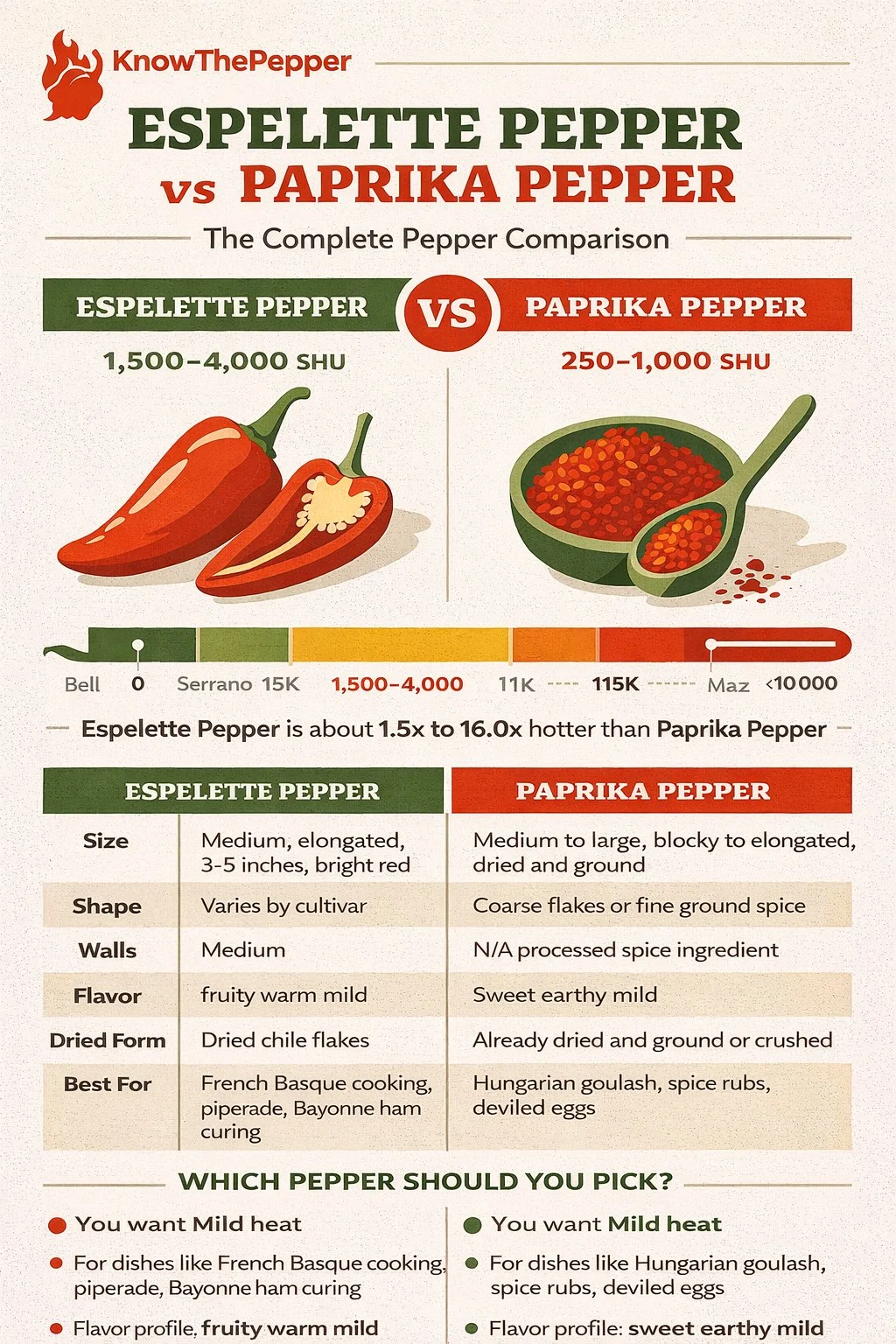
Espelette pepper (Piment d'Espelette) registers at roughly 100-2,500 SHU, though most sources place commercial Espelette closer to the lower end of that range. It earned an AOC designation in 2000, meaning only peppers grown in ten communes around Espelette in the French Basque Country can carry the name. The heat is subtle — a slow warmth that builds at the back of the throat rather than an immediate sting.
Paprika pepper is not a single pepper but a category. Hungarian and Spanish paprikas are made from various Capsicum annuum cultivars, and the heat varies by style. Sweet paprika sits near 0-500 SHU, hot paprika can reach 1,000-1,500 SHU, and smoked paprika (pimentón de la Vera) varies depending on the base pepper used. On the Scoville scale testing spectrum, both fall firmly in the mild heat zone — neither will challenge anyone with any tolerance for spice.
Compared to a jalapeño (2,500-8,000 SHU), even the hottest Espelette is at the very bottom of jalapeño territory, and most paprikas don't come close. You'd need to eat a lot of either to feel anything more than a gentle warmth. The chemistry behind that gentle sensation — how capsaicin binds to pain receptors — is covered in detail in the capsaicin burn chemistry guide.
Flavor Profile Comparison
Few peppers have a legal identity quite like the Espelette.
Paprika peppers sit at the mildest end of the pepper spectrum, delivering sweetness with almost no perceptible heat - a stark contrast to even the gentlest Fresno, which runs roughly 2,500 to 10,000 SHU by comparison.
This is where the two really diverge.
Espelette pepper has a specific, protected flavor profile: fruity and slightly sweet upfront, with a gentle earthiness and that characteristic slow-building warmth. There's a subtle smokiness from the traditional drying method — peppers are strung into garlands (les scoubidous) and air-dried, sometimes finished in a wood-fired dryer. The result is complex for something so mild. It smells almost like roasted red pepper with a faint floral note.
Paprika is harder to characterize because it covers so much ground. Sweet Hungarian paprika (édes nemes) is earthy, slightly bitter, and almost bell-pepper-like in its mildness — it contributes color more than heat. Smoked Spanish paprika (pimentón) adds an intense woodsmoke character that transforms dishes. Hot paprika has a sharper, more direct bite. The common thread across all paprikas is a deep, slightly sweet red-pepper base, but the processing method — whether dried in the sun, smoked over oak, or simply ground — shapes the final flavor dramatically.
For dishes where you want a named, terroir-driven flavor, Espelette is irreplaceable. For color, body, and background heat in stews or marinades, paprika is the workhorse. The bell pepper vs paprika flavor contrast shows how much processing changes the character of the same base fruit. Espelette's AOC protection means what's in the tin has been verified — paprika quality varies widely by brand and origin.
Culinary Uses for Espelette Pepper and Paprika Pepper
Espelette pepper is a finishing spice first and a cooking spice second. Basque cooks dust it over eggs, scatter it across grilled fish, stir it into pipérade, and use it anywhere you'd want a mild red-pepper note with some personality. It's expensive relative to paprika — the AOC protection and limited growing region keep supply tight — so it tends to appear in smaller quantities as a flavor accent rather than a base seasoning.
Classic applications: scrambled eggs, axoa (a Basque veal stew), chocolate, and anything that benefits from a fruity heat note without being overwhelmed. It also works beautifully on charcuterie — many Basque cured meats use Espelette as their primary seasoning.
Paprika is far more versatile by volume. Hungarian goulash depends on several tablespoons of sweet paprika as its flavor foundation. Spanish chorizo gets its red color and smokiness from pimentón. Deviled eggs, chicken paprikash, paella, and roasted vegetables all use paprika as a primary seasoning rather than a garnish.
For substitution: if a recipe calls for Espelette and you don't have it, a mix of sweet paprika with a small pinch of cayenne gets you in the right territory — roughly 3 parts sweet paprika to 1 part cayenne approximates the heat level and color, though you'll lose the fruity complexity. Going the other direction is harder — paprika can't replicate Espelette's specific character. The Aleppo pepper vs Espelette comparison is worth reading if you're hunting for alternatives with similar fruity warmth.
For paprika substitution in cooked dishes, cayenne vs paprika side-by-side covers the heat and flavor gap between the two in detail. Use about 1/4 teaspoon cayenne for every tablespoon of hot paprika — sweet paprika has no good single substitute for color and flavor combined.
Which Should You Choose?
Pick Espelette pepper when the pepper itself is the point — when you want a named, place-specific flavor that signals quality and adds a fruity, gentle warmth. It earns its premium price in finishing applications: eggs, fish, chocolate, and Basque-style dishes where it's the star.
Pick paprika when you need volume, color, and background flavor. It's the right tool for stews, braises, spice rubs, and anything where you're building a flavor base rather than accenting a finished plate. Smoked paprika in particular does something Espelette can't — it adds deep wood-smoke character that transforms a dish's entire profile.
They're not really competing for the same job. Espelette is a specialty finishing spice with protected origin status; paprika is one of the most-used spices in European cooking. Keeping both in the cabinet makes sense — they cover different situations. If budget is a constraint, good smoked paprika does more work per dollar than almost any spice on the shelf.
Can You Substitute One for the Other?
Yes — direct substitution works. Espelette Pepper and Paprika Pepper are close enough in heat to swap at roughly 1:1. The main difference will be flavor. For more swap options, explore ranked alternatives with conversion ratios.
Growing Espelette Pepper vs Paprika Pepper
If you’re deciding which pepper to grow at home, consider your climate and patience level. Espelette Pepper and Paprika Pepper have different maturation times and temperature preferences. Hotter varieties generally need a longer, warmer growing season to develop their full capsaicin content. Our zone-based planting date tool can pinpoint the best sowing window for your area.
Outside the Basque AOC zone, Espelette grows well in any warm temperate climate — USDA zones 7–11 are comfortable. The plants prefer full sun, well-drained soil with moderate fertility, and consistent moisture without waterlogging.
Start seeds indoors 8–10 weeks before last frost. Germination happens at soil temperatures of 75–85°F; a heat mat accelerates the process noticeably.
Mature plants reach 60–90 cm tall. Pods develop green and ripen to deep red over the season — full color typically arrives 80–90 days after transplant.
Paprika peppers are among the more rewarding varieties to grow - productive, relatively disease-resistant, and visually striking when the plants load up with red fruit in late summer.
Start seeds indoors 8-10 weeks before your last frost date. Germination is reliable at 75-85°F soil temperature; a heat mat helps considerably.
Plants reach 24-36 inches tall and benefit from caging or staking once fruit sets - the heavy load of thick-walled peppers can tip unsupported plants. Space them 18-24 inches apart for good airflow, which reduces fungal pressure.
History & Origin of Espelette Pepper and Paprika Pepper
Both peppers carry centuries of culinary heritage. Espelette Pepper traces its roots to France, while Paprika Pepper originates from Hungary. Understanding their backstory helps explain why each pepper developed its distinctive traits.
Buying & Storage
Whether you’re shopping for Espelette Pepper or Paprika Pepper, the same quality indicators apply. Fresh peppers should feel firm and heavy for their size, with taut, glossy skin and no soft or wet spots. Minor stem cracks known as “corking” are perfectly normal and often indicate a mature, flavorful pod.
- Firm pods with taut skin and consistent color
- Should feel heavy relative to size
- Minor stem cracks (“corking”) are normal
- Avoid anything soft, shriveled, or with dark wet spots
- Fresh: Paper bag, crisper drawer — 1–2 weeks
- Frozen: Wash, dry, freeze on sheet pan — 6+ months
- Dried: Airtight, away from light — up to 1 year
The Verdict: Espelette Pepper vs Paprika Pepper
Espelette Pepper and Paprika Pepper sit in the same heat tier but serve different roles. Espelette Pepper delivers 4× more heat with its distinctive sweet and smoky character. Paprika Pepper, with its sweet and mild profile, excels in everyday cooking.
Frequently Asked Questions
Related Comparisons
Sources pending verification.