
Cubanelle Pepper vs Poblano Pepper: What's the Difference?
Cubanelle and poblano peppers both sit at the mild end of the spectrum, but they are genuinely different in character - one is thin-walled, bright, and sweet; the other is thick, earthy, and made for roasting. Understanding the distinction helps you pick the right pepper for the job rather than settling for a close-enough substitute.

Cubanelle Pepper measures 100–1K SHU while Poblano Pepper registers 1K–2K SHU — making Poblano Pepper 2× hotter. Cubanelle Pepper is known for its sweet and mild flavor (C. annuum), while Poblano Pepper offers earthy and rich notes (C. annuum).
- Heat difference: Poblano Pepper is 2× hotter
- Species: Both are C. annuum
- Best for: Cubanelle Pepper excels in everyday cooking and salsas, Poblano Pepper in fresh salsas and mild recipes
Cubanelle Pepper
MediumPoblano Pepper
MediumCubanelle Pepper vs Poblano Pepper Comparison
Cubanelle Pepper vs Poblano Pepper Heat Levels
Both peppers register at the mild end of the Scoville heat index, but calling them 'the same heat' misses something important. Cubanelles typically measure 0-1,000 SHU, making them one of the mildest sweet-type peppers available. Poblanos run a bit hotter - usually 1,000-2,000 SHU - though individual fruits can occasionally push toward 2,500 SHU depending on growing conditions and stress.
To put that in jalapeño terms: a jalapeño averages around 5,000 SHU, so a cubanelle is roughly 5 to 10 times milder than a jalapeño, while a poblano sits closer to 2.5 to 5 times milder. Neither pepper is going to challenge anyone's heat tolerance, but the poblano does carry a low-grade warmth that the cubanelle almost entirely lacks.
The mild heat classification applies to both, yet the experience at the table differs. Cubanelles are essentially heat-free - you can eat them raw without any warming sensation. Poblanos have a subtle background heat that builds slightly as you chew, particularly near the seed cavity. Dried poblanos (sold as ancho chiles) can concentrate that heat further, occasionally reaching 2,500 SHU.
For heat-sensitive cooks or dishes where you want zero fire, the cubanelle is the safer call. For recipes where a whisper of warmth adds depth without intimidating anyone at the table, the poblano delivers exactly that.
Flavor Profile Comparison
Walk through any Italian neighborhood market in New York or a Cuban home kitchen, and you will almost certainly find cubanelles.
Pick up a fresh poblano and the first thing you notice is the weight.
Heat aside, these two peppers taste quite different - and that distinction matters more than the SHU gap when you're cooking.
Cubanelles are bright and sweet, with a thin-walled flesh that carries a slightly fruity, almost grassy note when raw. The flavor is clean and uncomplicated. They don't develop much depth when cooked, but they soften quickly and take on a pleasant sweetness that works well in stir-fries, fried pepper dishes, and quick sautés. Their aroma is mild and fresh, with none of the earthiness you get from thicker-skinned peppers.
Poblanos are a different story entirely. Raw poblanos have a vegetal depth - green, slightly smoky, and faintly bitter at the edges - that intensifies dramatically when roasted. Fire-roasting a poblano transforms it: the skin chars, the flesh softens, and a rich, almost chocolatey earthiness emerges that makes it one of the most complex mild peppers in cooking. That flavor is the backbone of classic dishes like chiles rellenos and mole negro.
When dried into ancho chiles, poblanos develop raisin, dried cherry, and cocoa notes that bear almost no resemblance to the fresh pepper - a transformation no other common mild pepper matches.
Cubanelles shine in Italian-American cooking: fried peppers with sausage, antipasto, or layered into sandwiches. Poblanos belong to Mexican and Southwestern kitchens where roasting, stuffing, and slow-cooking coax out their best qualities. The flavor profiles are complementary but not interchangeable.
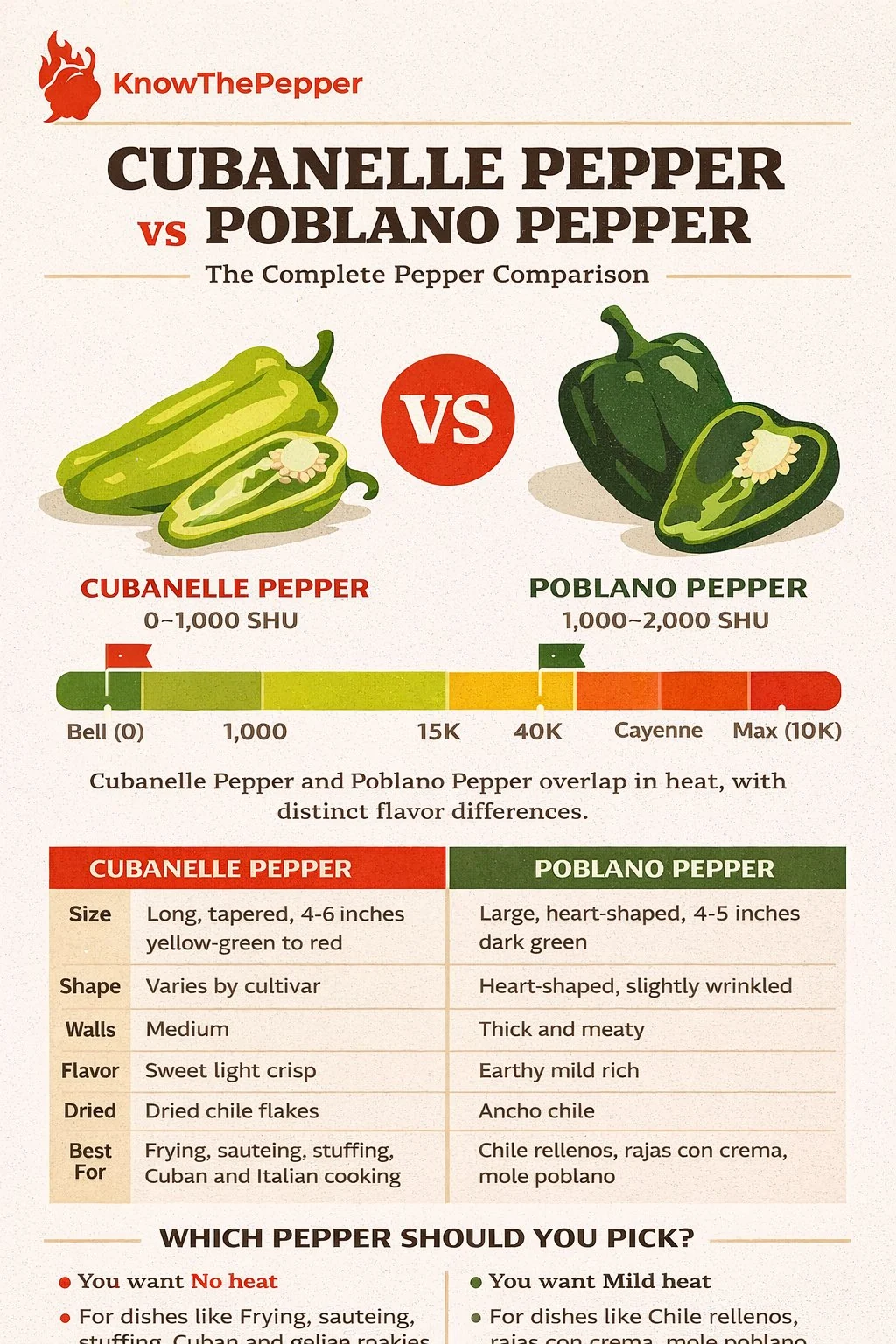
Culinary Uses for Cubanelle Pepper and Poblano Pepper
Cubanelles are a frying pepper first and foremost. Their thin walls and low moisture content mean they soften fast in a hot pan without releasing excess liquid. The classic Italian-American preparation - sliced and fried in olive oil with garlic and sausage - is hard to beat. They're also excellent raw in salads, pickled whole, or layered into hoagies and sandwiches. Because they hold their shape reasonably well and don't overwhelm other flavors, cubanelles work in egg dishes, stir-fries, and anywhere you want mild pepper flavor without textural heaviness.
Poblanos are built for roasting and stuffing. Their thick walls hold up to high heat without collapsing, and the charred skin peels cleanly once blistered under a broiler or over an open flame. Stuffed poblanos - filled with cheese, picadillo, or beans - are one of the most satisfying preparations in Mexican cooking. Roasted and peeled poblanos also make excellent additions to soups, cream sauces, and rice dishes. The flavor gap between fresh and roasted poblano is significant enough that the two preparations are almost different ingredients.
Substitution guidance: Cubanelles can replace poblanos in raw or lightly cooked applications where you need mild pepper bulk, but they won't replicate the roasted depth. Use a 1:1 ratio and add a small amount of smoked paprika to approximate the earthiness. Poblanos can replace cubanelles in stuffed preparations, though the thicker wall changes the texture. For fried pepper dishes, the cubanelle is actually the better choice - poblanos are too thick to fry quickly.
For anyone comparing poblano's roasted character to jalapeño's sharper heat, the poblano is the clear winner for stuffing and sauce applications where complexity matters more than fire.
Which Should You Choose?
Pick a cubanelle when speed and sweetness are the priority. It fries fast, tastes bright, and works raw without any prep beyond slicing. It's the better pepper for Italian-style dishes, quick weeknight cooking, and any recipe where you want mild pepper flavor without committing to roasting or peeling.
Pick a poblano when you have time to roast it and want depth. The earthy, slightly smoky character it develops under heat is irreplaceable in stuffed pepper dishes, green sauces, and Mexican-inspired cooking. It also dries beautifully into ancho chile, which opens up an entirely different category of recipes.
The two peppers don't compete so much as occupy different kitchens. A home cook who grows both will reach for the cubanelle on a Tuesday night and the poblano on a Sunday when there's time to char and peel. Neither is hotter than the other in any meaningful way - the real difference is texture, flavor depth, and cooking method. Match the pepper to the technique and you'll get the best from both.
Can You Substitute One for the Other?
Yes — direct substitution works. Cubanelle Pepper and Poblano Pepper are close enough in heat to swap at roughly 1:1. The main difference will be flavor. For more swap options, explore ranked alternatives with conversion ratios.
Growing Cubanelle Pepper vs Poblano Pepper
If you’re deciding which pepper to grow at home, consider your climate and patience level. Cubanelle Pepper and Poblano Pepper have different maturation times and temperature preferences. Hotter varieties generally need a longer, warmer growing season to develop their full capsaicin content. Our zone-based planting date tool can pinpoint the best sowing window for your area.
Cubanelles are among the more forgiving peppers to grow, which makes them a good choice for gardeners who want reliable production without fussing over soil conditions. Start seeds indoors 8–10 weeks before last frost — transplanting seedlings after soil temperature reaches 65°F consistently gives them the best start.
Plants typically reach 24–30 inches tall and produce heavily once established. Days to maturity run around 65–70 days from transplant to green-stage harvest, which is when most cooks want them.
They prefer full sun and well-drained soil with consistent moisture. Inconsistent watering leads to blossom drop and uneven fruit set.
Poblanos are rewarding garden plants, but they need a long season. Start seeds indoors 10-12 weeks before your last frost date — this is one case where rushing transplant time costs you yield.
For a full breakdown of seed-starting methods and timing, the complete pepper growing guide covers everything from soil mix to hardening off. Poblanos specifically want consistent moisture — irregular watering leads to blossom end rot and cracked fruit.
Transplant into full sun once nighttime temps stay above 55°F. Space plants 18-24 inches apart; they can reach 3 feet tall with good conditions.
History & Origin of Cubanelle Pepper and Poblano Pepper
Both peppers carry centuries of culinary heritage. Cubanelle Pepper traces its roots to Cuba, while Poblano Pepper originates from Mexico. Understanding their backstory helps explain why each pepper developed its distinctive traits.
Buying & Storage
Whether you’re shopping for Cubanelle Pepper or Poblano Pepper, the same quality indicators apply. Fresh peppers should feel firm and heavy for their size, with taut, glossy skin and no soft or wet spots. Minor stem cracks known as “corking” are perfectly normal and often indicate a mature, flavorful pod.
- Firm pods with taut skin and consistent color
- Should feel heavy relative to size
- Minor stem cracks (“corking”) are normal
- Avoid anything soft, shriveled, or with dark wet spots
- Fresh: Paper bag, crisper drawer — 1–2 weeks
- Frozen: Wash, dry, freeze on sheet pan — 6+ months
- Dried: Airtight, away from light — up to 1 year
The Verdict: Cubanelle Pepper vs Poblano Pepper
Cubanelle Pepper and Poblano Pepper sit in the same heat tier but serve different roles. Poblano Pepper delivers 2× more heat with its distinctive earthy and rich character. Cubanelle Pepper, with its sweet and mild profile, excels in everyday cooking.
Frequently Asked Questions
Related Comparisons
Sources pending verification.
