Chipotle vs Morita Pepper: Side-by-Side Pepper Comparison
Chipotle and morita are both smoke-dried jalapeños — but they diverge in color, texture, smoke intensity, and how Mexican cooks use them. Understanding the distinction helps you choose the right one for adobo sauces, braises, and dry rubs without muddying the flavor you're after.

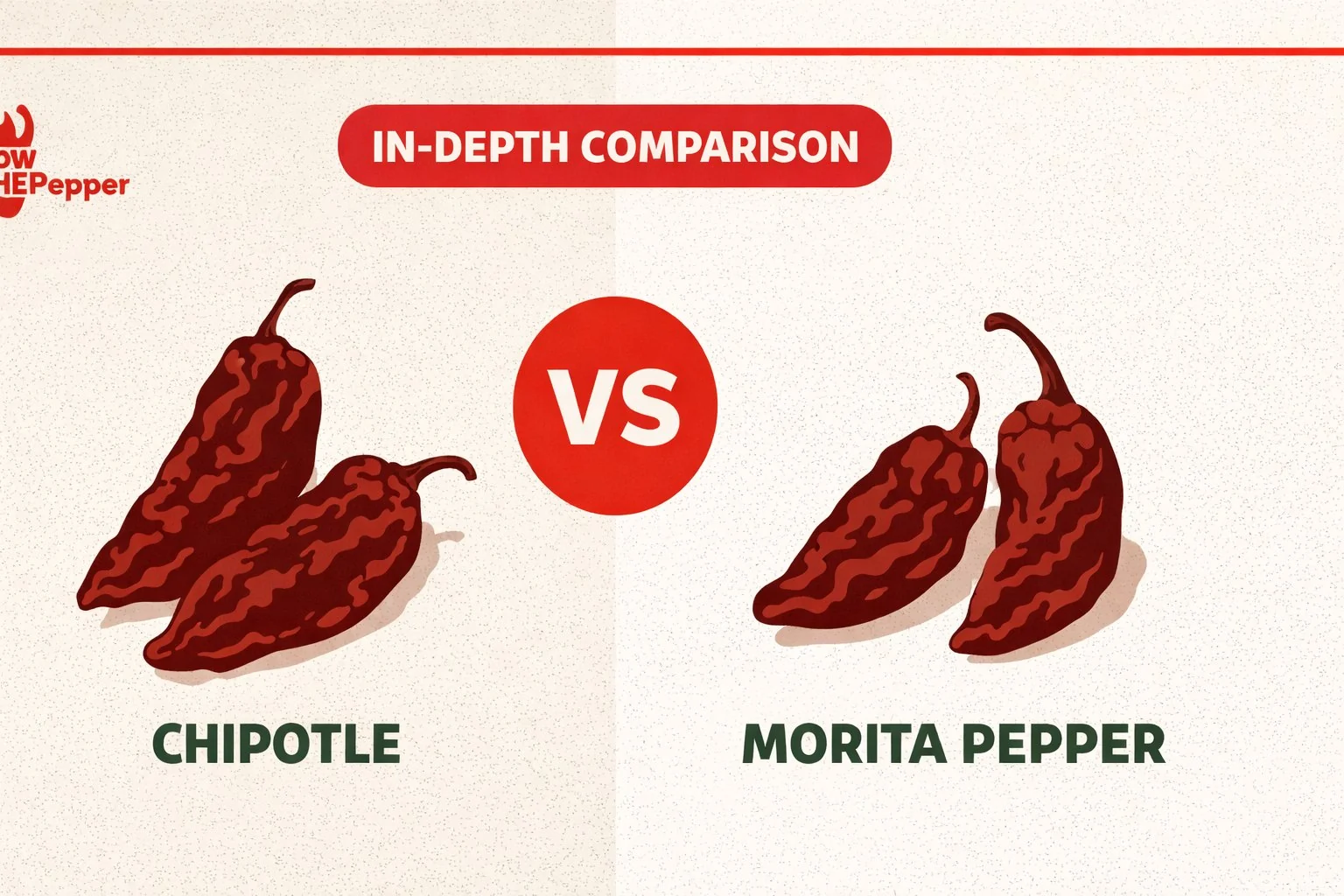
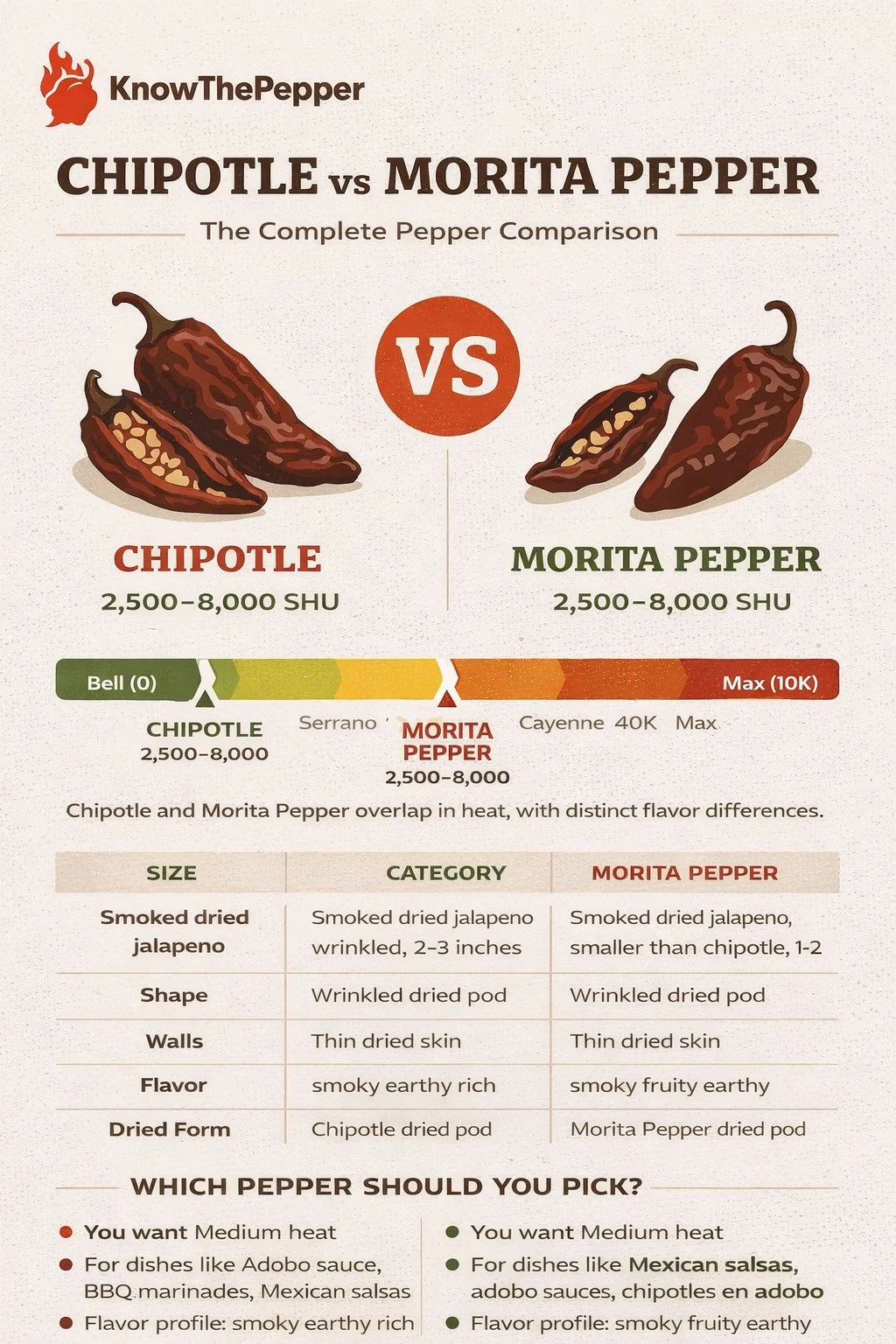
Chipotle measures 3K–8K SHU while Morita Pepper registers 5K–10K SHU — roughly equal in heat. Chipotle is known for its smoky and sweet flavor (C. annuum), while Morita Pepper offers smoky and fruity notes (C. annuum).
- Species: Both are C. annuum
- Best for: Chipotle excels in everyday cooking and salsas, Morita Pepper in fresh salsas and mild recipes
Chipotle vs Morita Pepper Comparison
Chipotle vs Morita Pepper Heat Levels
Both chipotle and morita start as Capsicum annuum jalapeños, which sit in the 2,500–8,000 SHU range on the Scoville measurement index. After drying and smoking, the heat concentrates slightly, landing chipotles and moritas in a similar 5,000–10,000 SHU band — roughly one-third to one-half the heat of a serrano pepper.
The practical difference isn't really about raw SHU numbers; it's about how the heat arrives. Chipotle meco (the tan, tobacco-colored variety) tends to deliver a slower, drier burn that lingers in the back of the throat. Morita — the smaller, darker, purplish-red chipotle — hits a touch faster and feels slightly brighter because it's smoked for less time, leaving more residual moisture and fruit character intact.
For context, both peppers occupy the medium-hot SHU zone comfortably — hot enough to matter in a dish but not so aggressive that they dominate. A tablespoon of chipotle powder in a pot of chili is noticeable; a tablespoon of morita paste in the same pot carries that heat plus a jammy sweetness the meco version lacks.
Neither pepper approaches serrano territory in raw heat, but the smoke amplifies perceived intensity. First-time users often rate chipotles hotter than they measure because the smoke compounds the sensation — a phenomenon tied to how capsaicin chemistry interacts with oral receptors.
Flavor Profile Comparison
The first time I tasted a chipotle straight from an adobo can, the smokiness hit before the heat — a slow, woody burn that felt nothing like the fresh medium-heat jalapeño it came from.
Moritas are jalapeños that have been smoked and dried to a leathery, dark reddish-purple state.
Strip away the smoke and you'd have two nearly identical jalapeños. Add the smoke back, and they become distinct ingredients.
Chipotle meco — the more common export variety — spends significantly longer over mesquite or pecan wood. The result is a dry, leathery pod with deep tobacco, coffee, and earthy chocolate notes. The fruit character of the original jalapeño is almost entirely gone. What remains is savory, complex, and assertively smoky. It's the pepper you reach for when you want smoke to be a primary flavor, not a background note.
Morita takes a shorter smoke bath, typically over fruit woods. The skin stays supple and slightly tacky. Flavor-wise, moritas retain a fruity, almost raisin-like sweetness alongside the smoke — think dried cherry meets campfire. They're more versatile in dishes where you want smoke as a supporting player rather than the lead.
Aroma tells the story quickly. Hold a chipotle meco close and the smoke hits hard, almost meaty. A morita smells sweeter, fruitier, with smoke riding underneath the fruit rather than over it.
In cooking, this translates directly: meco chipotles excel in long-cooked braises, dry rubs, and smoked salsas where intensity is welcome. Moritas shine in adobo sauces, enchilada bases, and marinades where you want complexity without overpowering the protein. Comparing these two is a different exercise than the smoky depth vs. mild earthiness side-by-side of ancho and chipotle, but the principle is similar — smoke level and fruit character are the deciding variables.
Culinary Uses for Chipotle and Morita Pepper
The good news: these peppers are largely interchangeable in a pinch, but knowing when each one excels saves you from muddying a sauce.
Chipotle meco is the workhorse of Tex-Mex and northern Mexican cooking. It's the pepper behind canned chipotles en adobo (though most canned versions use moritas, confusingly labeled as chipotles). Whole mecos rehydrate well for salsas and moles. Ground, they make an excellent dry rub base for brisket, pork shoulder, or grilled corn. Their low moisture content means they store almost indefinitely in an airtight jar.
Morita is the preferred chipotle in many central Mexican kitchens. Its softer texture blends more smoothly into sauces, making it ideal for chipotle vs. guajillo-style red sauce comparisons where body and fruit matter as much as heat. Moritas work beautifully in adobo, in bean dishes, and anywhere you'd use a chipotle but want a slightly more approachable, rounded result.
Substitution ratio: Use moritas and chipotles 1:1 by count. If swapping meco for morita in a recipe, consider adding a small amount of smoked paprika to compensate for the lost smoke depth.
Rehydration: Both peppers rehydrate in 15–20 minutes in hot water. Toast them briefly in a dry skillet first — 30 seconds per side — to wake up the volatile aromatics before soaking.
For dishes where these peppers feel too smoky, the earthy, less smoky character of pasilla vs. chipotle comparison is worth reading — pasilla offers a gentler alternative in mole and sauce applications. If you're sourcing fresh, moritas appear at Mexican grocers year-round; mecos are more seasonal and sometimes require specialty ordering.
Which Should You Choose?
Choose chipotle meco when smoke is the point — dry rubs, long braises, smoked salsas, or any dish where you want that deep, tobacco-forward complexity to carry the flavor profile. It's the bolder, more assertive option.
Choose morita when you want smoke as a supporting note rather than the headline. Its retained fruit character and softer texture make it more adaptable in sauces, adobos, and dishes where balance matters. Most canned chipotles en adobo actually use moritas, so if you're replicating that flavor, morita is technically the more accurate choice.
For heat-sensitive cooks, morita's slightly brighter, fruitier profile is easier to work with — the smoke doesn't compound as aggressively. For barbecue applications and dry seasonings, meco wins on intensity and shelf stability.
Both peppers reward the seed-starting and cultivation effort if you want to smoke your own — they're simply dried jalapeños at different stages and smoke durations.
Can You Substitute One for the Other?
Yes — direct substitution works. Chipotle and Morita Pepper are close enough in heat to swap at roughly 1:1. The main difference will be flavor. For more swap options, explore ranked alternatives with conversion ratios.
Growing Chipotle vs Morita Pepper
If you’re deciding which pepper to grow at home, consider your climate and patience level. Chipotle and Morita Pepper have different maturation times and temperature preferences. Hotter varieties generally need a longer, warmer growing season to develop their full capsaicin content. Our zone-based planting date tool can pinpoint the best sowing window for your area.
Growing chipotle starts with growing jalapeños — because that is exactly what they are before smoking. The distinction is purely in post-harvest processing.
Capsicum annuum jalapeños thrive in well-drained soil with full sun and consistent moisture. Start seeds indoors 8–10 weeks before your last frost date.
For chipotles specifically, you want the peppers to ripen fully to red before harvest. Most growers pick jalapeños green, but chipotle production requires patience — leave them on the plant until they turn deep red and the skin begins to show slight wrinkling.
Moritas aren't a variety you grow — they're a processed product made from jalapeños. But growing the jalapeños yourself and smoking them at home is entirely achievable.
Jalapeños thrive in USDA zones 9–11 as perennials, but most gardeners grow them as annuals. Start seeds indoors 8–10 weeks before last frost.
Transplant outdoors once nighttime temps stay above 55°F. Space plants 18 inches apart in full sun.
History & Origin of Chipotle and Morita Pepper
Both peppers carry centuries of culinary heritage. Chipotle traces its roots to Mexico, while Morita Pepper originates from Mexico. Understanding their backstory helps explain why each pepper developed its distinctive traits.
Buying & Storage
Whether you’re shopping for Chipotle or Morita Pepper, the same quality indicators apply. Fresh peppers should feel firm and heavy for their size, with taut, glossy skin and no soft or wet spots. Minor stem cracks known as “corking” are perfectly normal and often indicate a mature, flavorful pod.
- Firm pods with taut skin and consistent color
- Should feel heavy relative to size
- Minor stem cracks (“corking”) are normal
- Avoid anything soft, shriveled, or with dark wet spots
- Fresh: Paper bag, crisper drawer — 1–2 weeks
- Frozen: Wash, dry, freeze on sheet pan — 6+ months
- Dried: Airtight, away from light — up to 1 year
The Verdict: Chipotle vs Morita Pepper
Chipotle and Morita Pepper occupy very different positions on the heat spectrum. Morita Pepper delivers its distinctive smoky and fruity character. Chipotle, with its smoky and sweet profile, excels in everyday cooking.
Frequently Asked Questions
Related Comparisons
Sources pending verification.