Banana Pepper vs Long Hot Italian: Key Differences Explained
Both the banana pepper and the long hot Italian pepper occupy the mild-to-moderate end of the heat spectrum, making them easy to confuse at the grocery store. Their differences come down to heat ceiling, flesh texture, and how they behave under heat. Knowing which to reach for can make or break a recipe.

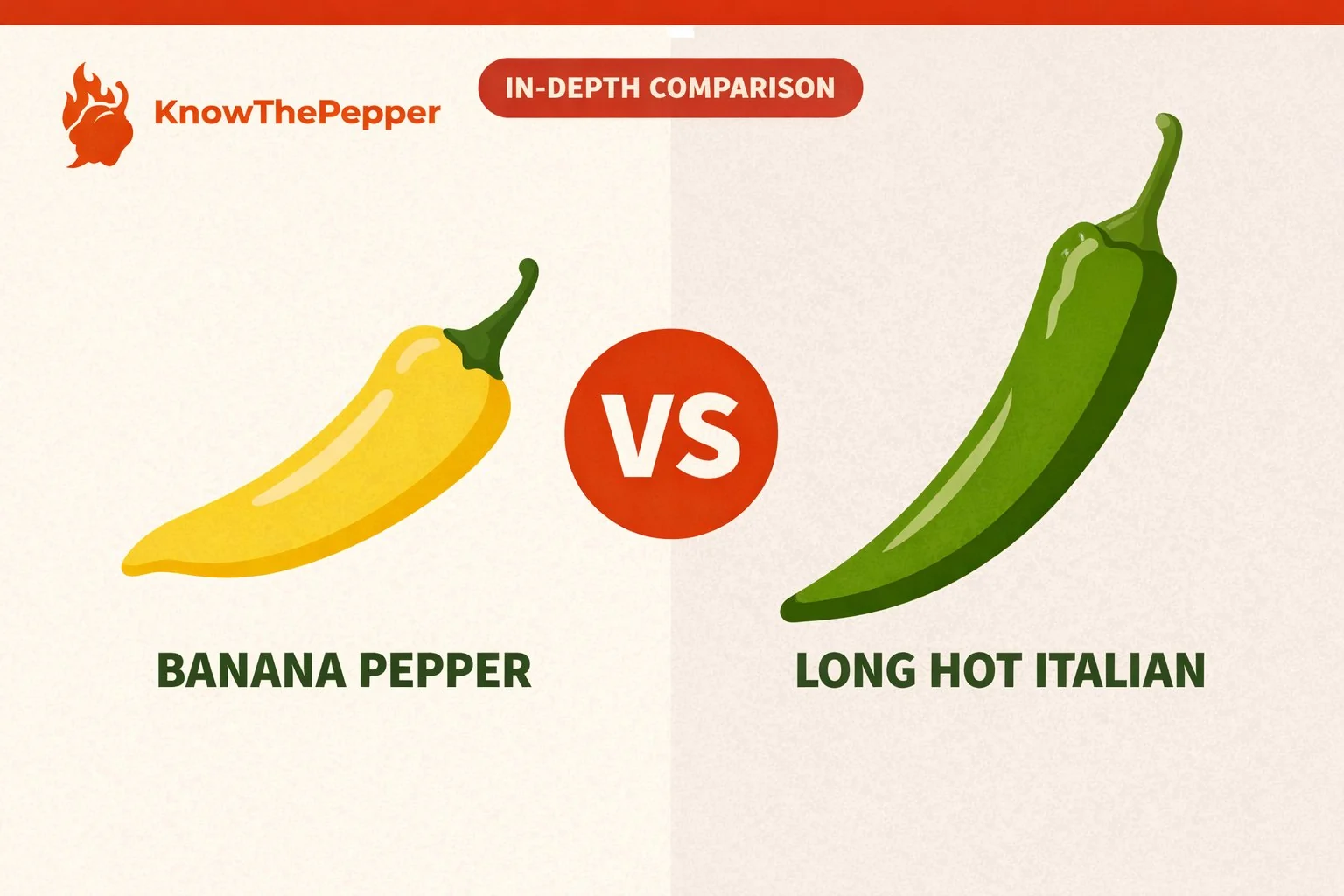
Banana Pepper measures 0–500 SHU while Long Hot Italian registers 100–1K SHU — making Long Hot Italian 2× hotter. Banana Pepper is known for its mild and tangy flavor (C. annuum), while Long Hot Italian offers sweet and mild notes (C. annuum).
- Heat difference: Long Hot Italian is 2× hotter
- Species: Both are C. annuum
- Best for: Banana Pepper excels in everyday cooking and salsas, Long Hot Italian in fresh salsas and mild recipes
Banana Pepper
MildLong Hot Italian
MediumBanana Pepper vs Long Hot Italian Comparison
Banana Pepper vs Long Hot Italian Heat Levels
Before getting into numbers, the flavor difference between these two actually signals the heat difference. Banana peppers taste sweet and almost tangy, with zero detectable burn — that flavor profile alone tells you something about what's going on chemically. Long hot Italian peppers carry a subtle vegetal sharpness that hints at the mild heat lurking underneath.
On the Scoville scale's measurement spectrum, banana peppers register at 0-500 SHU, with most falling at the absolute floor. Long hot Italians range from 100-1,000 SHU, occasionally climbing toward the upper end depending on growing conditions and stress. Both sit firmly in the mild heat bracket — neither will challenge anyone with a normal tolerance.
Compared to a jalapeño (typically 2,500-8,000 SHU), a banana pepper is essentially heatless — roughly 16-30 times milder than an average jalapeño. A long hot Italian at its hottest peak might be 8-25 times milder than that same jalapeño. The gap between the two peppers themselves is real but narrow: at their respective maximums, a long hot could be twice as hot as a banana pepper, but on most days from most grocery stores, you'd struggle to tell them apart by heat alone.
The burn character also differs. Banana pepper's rare trace of heat is diffuse and front-of-mouth. Long hot Italian heat, when present, tends to build slightly at the back of the palate — a slow warmth rather than an immediate sting. Neither triggers the capsaicin chemistry that makes hotter peppers genuinely uncomfortable.
Flavor Profile Comparison
The first time I bit into a raw banana pepper straight from the garden, the tanginess caught me off guard — more like a mild vinegar note than anything I expected from a fresh pepper.
Bite into a Long Hot Italian raw and you get bright, grassy sweetness with just enough warmth to remind you it's still a pepper.
Flavor is where these two diverge more meaningfully than heat ever will. Banana peppers are defined by their sweetness — a mild, almost fruity tang with bright acidity. The flesh is crisp and juicy, and that flavor holds whether the pepper is eaten raw, pickled, or roasted. Pickled banana peppers are a deli staple precisely because their natural acidity amplifies beautifully in brine.
Long hot Italian peppers are less sweet and more savory. There's a grassy, slightly bitter quality to the raw flesh that mellows dramatically with cooking. Under high heat — grilled, blistered in a cast iron, or roasted — they develop a smoky sweetness that banana peppers simply don't replicate. The flesh is thinner and more pliable, which means they char faster and absorb surrounding flavors more readily.
Aroma is another difference worth noting. Raw banana peppers smell clean and mildly sweet, almost like a bell pepper with a citrus edge. Long hots have a more pungent, herbaceous aroma when raw — something closer to a frying pepper or Italian frying pepper in the traditional sense.
For raw applications like salads, sandwiches, and antipasto, banana peppers win on sweetness and crunch. For cooked applications — especially anything involving a hot pan or open flame — long hot Italians have an advantage because their thinner walls blister and soften in ways that create better texture. The two peppers taste similar enough that substitution works in a pinch, but they're not identical flavor twins.
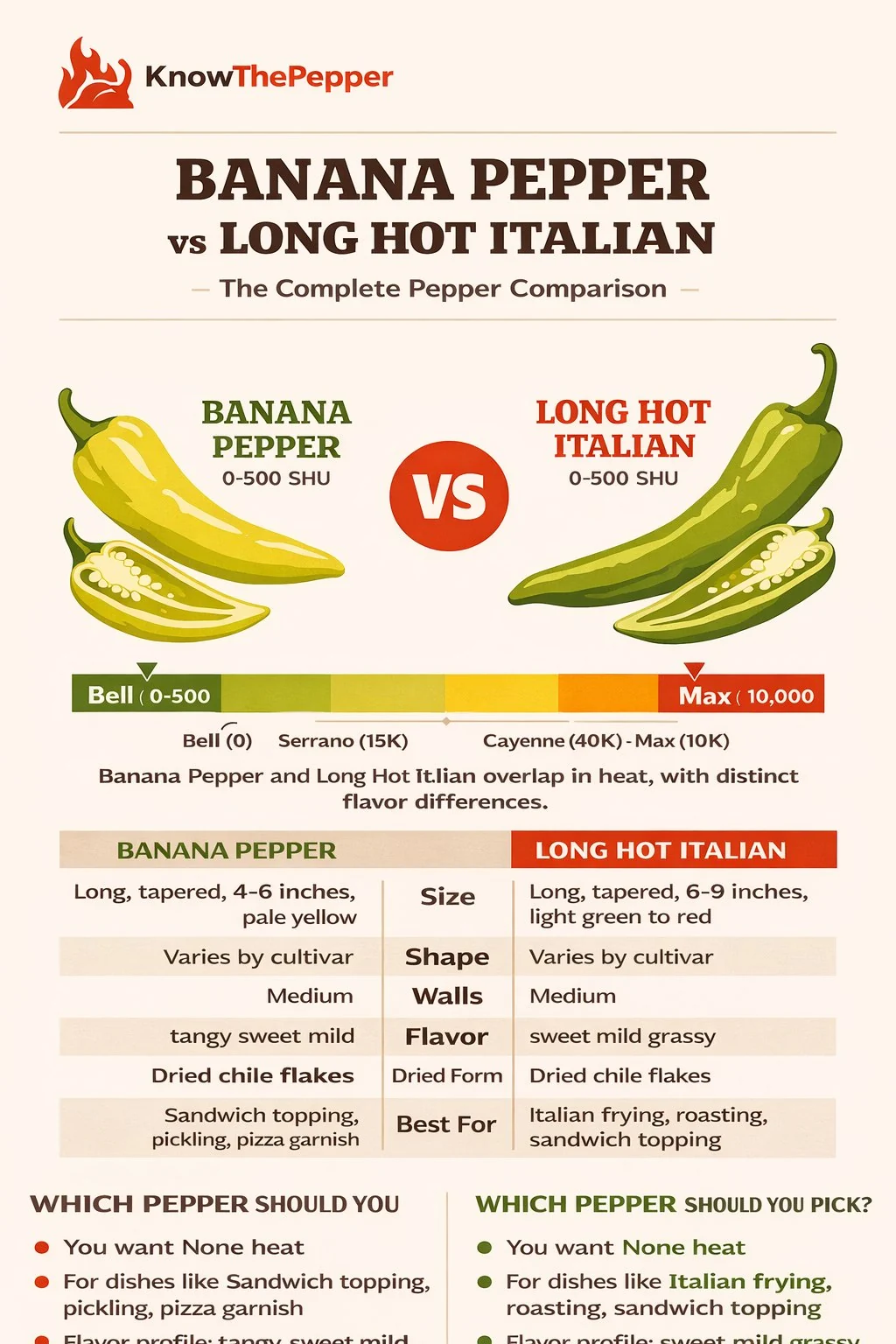
Culinary Uses for Banana Pepper and Long Hot Italian
Banana peppers shine in applications where their raw crunch and sweet-tangy flavor can stand out. Sliced thin on sandwiches and hoagies, they add brightness without competing with other ingredients. Pickled banana pepper rings are a pizza topping staple — the acidity cuts through cheese and fatty meats in a way that fresh peppers don't.
For cooking, banana peppers can be stuffed whole (their cavity is generous) and baked with cheese, ground meat, or rice fillings. They hold their shape reasonably well at oven temperatures, though they won't develop the char that long hots achieve. They also work well in quick sautés and stir-fries where a mild, sweet pepper note is needed without any heat.
Long hot Italian peppers are built for the pan. The classic Italian-American preparation — blistered in olive oil with garlic and salt — is one of the simplest and best uses for them. They're a fixture in Italian sausage-and-peppers dishes, where their thin walls soften quickly and absorb the fat from the sausage. Grilled whole alongside meats, they caramelize at the edges and become almost silky inside.
Substitution works in both directions with some adjustment. Swapping banana peppers into a long hot recipe means adding a touch more cooking time to compensate for the thicker flesh, and accepting a slightly sweeter result. Going the other direction — using long hots where banana peppers are called for — works fine in cooked dishes but can taste slightly more vegetal in raw preparations.
For anyone comparing options in the mild-pepper family, the sweet versus slightly sharp contrast with cubanelle follows similar logic: cubanelle and long hot Italians share that savory, thin-walled character that banana peppers lack.
For heat-conscious cooks who want just a step up from banana pepper, the banana pepper-to-jalapeño heat gap is significant enough that long hot Italian sits much closer to banana pepper than to anything spicy. And if you're curious about the wax pepper's sharper heat ceiling compared to both of these, Hungarian wax is the next logical step up the ladder.
Which Should You Choose?
Choose banana peppers when raw brightness, sweetness, or pickling is the goal. They're the better sandwich pepper, the better pickling pepper, and the more crowd-pleasing option for anyone avoiding heat entirely.
Choose long hot Italian peppers when cooking over high heat — blistering, grilling, or sautéing — where their thin walls and savory depth create better texture and more complex flavor than banana peppers can deliver.
For stuffed pepper recipes, banana peppers are easier to work with due to their thicker walls and larger cavity. For Italian-American cooking traditions, long hots are the more authentic choice.
If you're stocking one and need flexibility, banana peppers are more versatile raw; long hots are more versatile cooked. Most kitchens benefit from having both around, since they're inexpensive, widely available, and cover slightly different flavor ground despite their similar heat levels. Neither will challenge anyone's spice tolerance — that's the one thing they genuinely share.
Can You Substitute One for the Other?
Yes — direct substitution works. Banana Pepper and Long Hot Italian are close enough in heat to swap at roughly 1:1. The main difference will be flavor. For more swap options, explore ranked alternatives with conversion ratios.
Growing Banana Pepper vs Long Hot Italian
If you’re deciding which pepper to grow at home, consider your climate and patience level. Banana Pepper and Long Hot Italian have different maturation times and temperature preferences. Hotter varieties generally need a longer, warmer growing season to develop their full capsaicin content. Our zone-based planting date tool can pinpoint the best sowing window for your area.
Banana peppers are forgiving plants — a good starting point if you want a step-by-step growing guide to work from. They thrive in full sun with consistent moisture and warm soil, performing best where daytime temperatures stay between 70°F and 85°F.
Start seeds indoors 8 to 10 weeks before the last frost date. Transplant once nighttime temperatures stay reliably above 55°F — cold soil stunts early growth noticeably.
Fertilize at transplant with a balanced formula, then switch to a lower-nitrogen feed once flowering begins. Too much nitrogen pushes leafy growth at the expense of fruit set.
Long Hot Italians are straightforward producers that reward warm conditions and consistent moisture. Start seeds indoors 8–10 weeks before last frost — they germinate best at 80–85°F soil temperature.
Transplant outdoors after nighttime temps stay above 55°F. Space plants 18–24 inches apart; they get bushy and will shade each other if crowded.
For gardeners familiar with cultivation approaches for Spanish frying peppers, the care requirements are similar — warm soil, consistent watering, and patience during fruit development. Long Hots mature in roughly 70–80 days from transplant.
History & Origin of Banana Pepper and Long Hot Italian
Both peppers carry centuries of culinary heritage. Banana Pepper traces its roots to USA, while Long Hot Italian originates from Italy. Understanding their backstory helps explain why each pepper developed its distinctive traits.
Buying & Storage
Whether you’re shopping for Banana Pepper or Long Hot Italian, the same quality indicators apply. Fresh peppers should feel firm and heavy for their size, with taut, glossy skin and no soft or wet spots. Minor stem cracks known as “corking” are perfectly normal and often indicate a mature, flavorful pod.
- Firm pods with taut skin and consistent color
- Should feel heavy relative to size
- Minor stem cracks (“corking”) are normal
- Avoid anything soft, shriveled, or with dark wet spots
- Fresh: Paper bag, crisper drawer — 1–2 weeks
- Frozen: Wash, dry, freeze on sheet pan — 6+ months
- Dried: Airtight, away from light — up to 1 year
The Verdict: Banana Pepper vs Long Hot Italian
Banana Pepper and Long Hot Italian occupy very different positions on the heat spectrum. Long Hot Italian delivers 2× more heat with its distinctive sweet and mild character. Banana Pepper, with its mild and tangy profile, excels in everyday cooking.
Frequently Asked Questions
Related Comparisons
Sources pending verification.