
Banana Pepper vs Hungarian Wax: Key Differences Explained
Banana peppers and Hungarian wax peppers look nearly identical hanging on the vine — pale yellow, waxy, tapered — yet they behave very differently in the kitchen. Both register at the mild end of the Scoville scale, but Hungarian wax carries genuine heat potential while banana peppers stay firmly sweet. Knowing which is which saves you from a surprise burn in your potato salad.

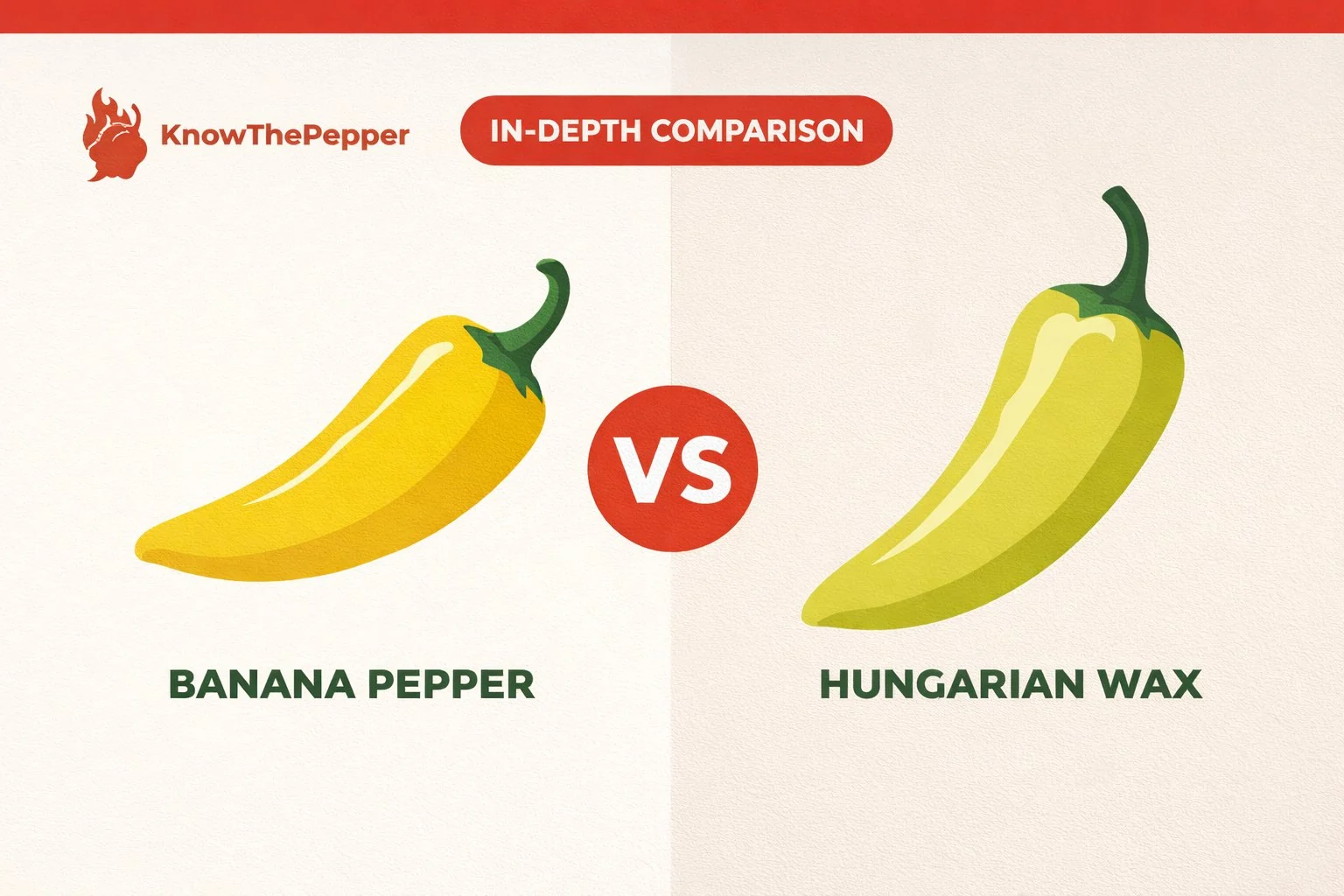
Banana Pepper measures 0–500 SHU while Hungarian Wax registers 5K–15K SHU — making Hungarian Wax 30× hotter. Banana Pepper is known for its mild and tangy flavor (C. annuum), while Hungarian Wax offers tangy and bright notes (C. annuum).
- Heat difference: Hungarian Wax is 30× hotter
- Species: Both are C. annuum
- Best for: Banana Pepper excels in everyday cooking and salsas, Hungarian Wax in fresh salsas and mild recipes
Banana Pepper
MildHungarian Wax
HotBanana Pepper vs Hungarian Wax Comparison
Banana Pepper vs Hungarian Wax Heat Levels
Both peppers occupy the mild zone on the Scoville scale's unit definition, but they don't share the same address there.
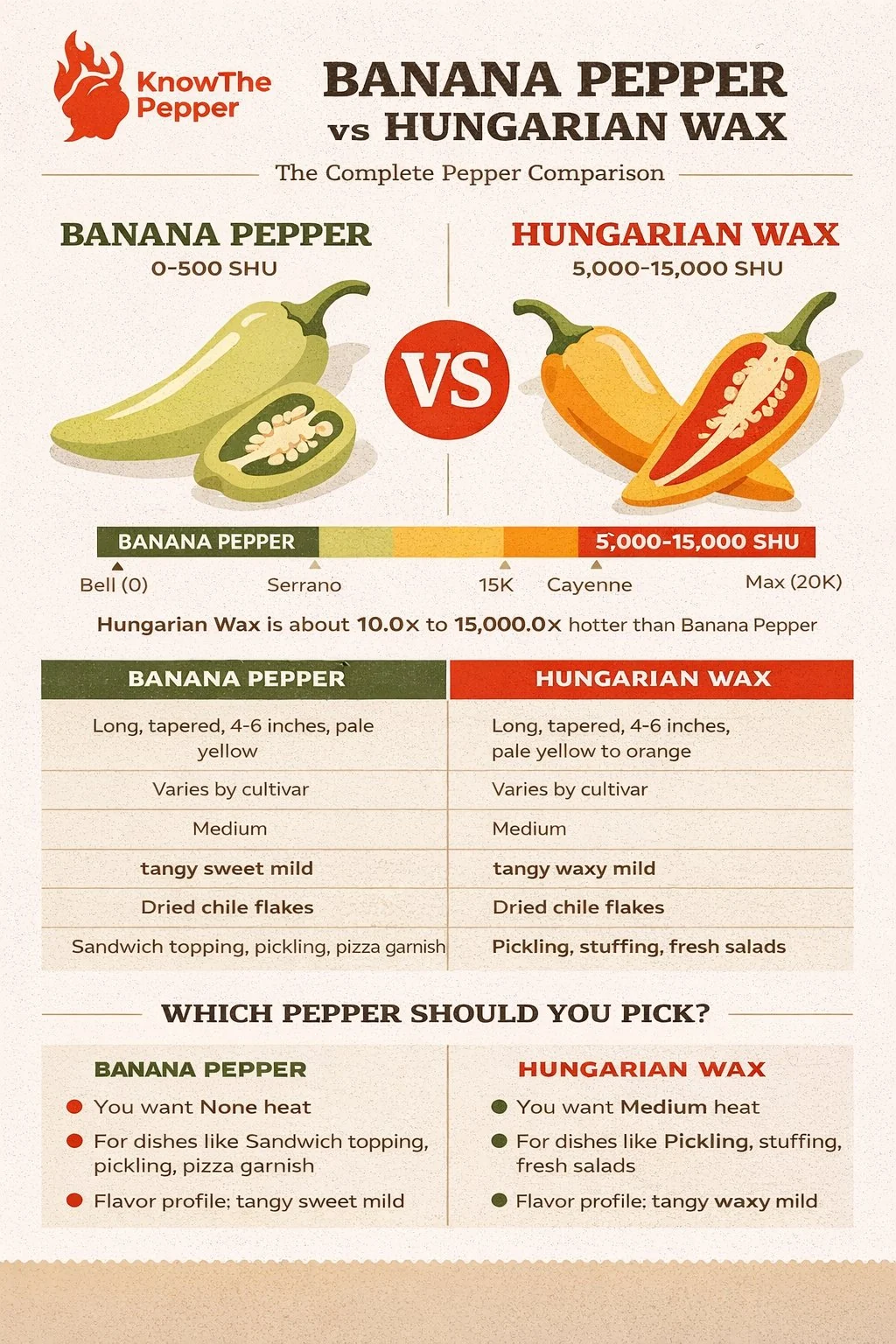
Banana peppers measure 0-500 SHU — essentially zero heat in practical terms. Most specimens you'll find at the grocery store sit at the low end of that range, delivering no perceptible burn whatsoever. They're firmly in the sweet and non-burning mild category alongside bells and pimentos.
Hungarian wax peppers are a different story. Their range spans 1,000-15,000 SHU, with most market-grade fruits landing between 5,000 and 10,000 SHU. That upper end puts them on par with a moderately hot jalapeño — meaningful heat, not just a suggestion of it.
For perspective, an Anaheim pepper averages around 2,000 SHU. A typical Hungarian wax at mid-range is roughly 3-5 times hotter than an Anaheim. A banana pepper, by contrast, is essentially equivalent to an Anaheim in terms of burn — which is to say, nearly none.
The confusion between these two peppers is understandable. Visually, an unripe Hungarian wax and a banana pepper are nearly indistinguishable. The heat difference only reveals itself when you bite in. That variability within the Hungarian wax range — driven by growing conditions, soil, and sun exposure — means even experienced cooks get surprised occasionally. The capsaicin compounds responsible for that burn work through a TRPV1 response in heat-sensitive nerve endings, which is why the same pepper can feel dramatically different depending on where it grew.
Flavor Profile Comparison
The first time I bit into a raw banana pepper straight from the garden, the tanginess caught me off guard — more like a mild vinegar note than anything I expected from a fresh pepper.
Pull a Hungarian Wax from the plant when it's still pale yellow and you get something tangy, crisp, and moderately hot.
Strip away the heat question and these two peppers still have distinct personalities.
Banana peppers are genuinely sweet — not sugary, but pleasantly mild with a slight tanginess that makes them one of the most approachable peppers available. Their flesh is crisp when fresh, and that bright, clean flavor holds up well both raw and pickled. The pickled version is arguably more famous than the fresh one, lending a vinegary snap to sandwiches and antipasto trays without any heat interference.
Hungarian wax peppers carry more complexity. When young and pale yellow, they have a similar sweetness to banana peppers, but there's an underlying sharpness — a faint bitterness — that banana peppers lack. As they mature toward orange and red, that sharpness deepens and the heat climbs. The flavor becomes more layered, almost reminiscent of a hot banana pepper hybrid that never quite existed.
Aroma-wise, banana peppers have a delicate, slightly grassy scent. Hungarian wax peppers smell more assertive — closer to a mild chili than a sweet pepper — even before you taste them.
In cooking, banana peppers fade pleasantly into the background, contributing brightness without dominating. Hungarian wax peppers hold their own against bold ingredients: sausage, smoked meats, sharp cheeses. For a head-to-head look at how banana peppers compare against another mild Italian-style pepper, the sweetness contrast with cubanelle pepper is worth exploring. Hungarian wax, meanwhile, sits in interesting territory between mild and genuinely spicy — the heat and flavor breakdown against jalapeño illustrates exactly where it lands.
Culinary Uses for Banana Pepper and Hungarian Wax
The near-identical appearance of these two peppers masks very different kitchen roles.
Banana peppers shine anywhere you want mild pepper flavor without heat risk. Raw in salads, sliced on sandwiches, layered on pizza — they contribute crunch and a clean brightness. Pickled banana peppers are a staple of Italian-American delis for good reason: the vinegar brine amplifies their natural tang without introducing any burn. They're also excellent stuffed with cream cheese or ricotta mixtures, since the mild shell lets the filling take center stage.
Hungarian wax peppers handle heat applications better. They're the traditional choice for Hungarian dishes like lecsó (a paprika-forward pepper stew), and they take well to roasting, grilling, and frying. Their firmer flesh holds up to longer cooking times without turning mushy. Pickled Hungarian wax is popular too, but carries the caveat that heat levels vary — a jar labeled "mild" may still surprise you depending on the harvest.
Substitution guidance: If a recipe calls for banana peppers and you only have Hungarian wax, use a 2:3 ratio (less Hungarian wax to reduce heat impact) and taste as you go. Going the other direction — replacing Hungarian wax with banana peppers — works fine for mild preparations but loses the heat entirely. For a comprehensive substitute picks and ratio guide for banana pepper replacements, there are several options that split the difference.
Both peppers work well in egg dishes, relish trays, and quick pickles. For grilling, Hungarian wax wins on flavor complexity; for raw applications where heat sensitivity matters, banana pepper is the safer call. The Bulgarian carrot pepper's heat versus Hungarian wax offers another angle if you're building a pepper board with graduated heat levels.
Growing your own gives you more control over Hungarian wax heat — plants stressed by drought or intense sun produce hotter fruits. For a step-by-step indoor starting guide for both varieties, starting from seed indoors about 8-10 weeks before last frost works well for either.
Which Should You Choose?
If heat is a concern — for kids, guests with low tolerance, or dishes where pepper flavor should be background — banana pepper is the reliable choice. It delivers consistent mild sweetness with zero burn risk, and its pickled form is one of the most versatile pantry staples in the mild pepper category.
Hungarian wax is the better pick when you want a pepper with some backbone. It bridges the gap between sweet peppers and genuinely hot ones, making it useful for cooks who find jalapeños too aggressive but bell peppers too tame. The heat variability can be a drawback in commercial applications, but for home cooks it's manageable — and the flavor payoff is real.
For pickling and sandwiches with no heat: banana pepper. For grilling, Hungarian stews, or dishes that benefit from a slow-building warmth: Hungarian wax. When in doubt at the market, check the color — a fully yellow pepper could be either, but a pepper showing orange or red blush is almost certainly Hungarian wax and will carry noticeable heat.
Can You Substitute One for the Other?
Yes — direct substitution works. Banana Pepper and Hungarian Wax are close enough in heat to swap at roughly 1:1. The main difference will be flavor. For more swap options, explore ranked alternatives with conversion ratios.
Growing Banana Pepper vs Hungarian Wax
If you’re deciding which pepper to grow at home, consider your climate and patience level. Banana Pepper and Hungarian Wax have different maturation times and temperature preferences. Hotter varieties generally need a longer, warmer growing season to develop their full capsaicin content. Our zone-based planting date tool can pinpoint the best sowing window for your area.
Banana peppers are forgiving plants — a good starting point if you want a step-by-step growing guide to work from. They thrive in full sun with consistent moisture and warm soil, performing best where daytime temperatures stay between 70°F and 85°F.
Start seeds indoors 8 to 10 weeks before the last frost date. Transplant once nighttime temperatures stay reliably above 55°F — cold soil stunts early growth noticeably.
Fertilize at transplant with a balanced formula, then switch to a lower-nitrogen feed once flowering begins. Too much nitrogen pushes leafy growth at the expense of fruit set.
Hungarian Wax is a reliable producer that suits most North American growing climates. Start seeds indoors 8–10 weeks before last frost — the plants need a long season to hit full production.
Transplanting outdoors after soil temperatures reach 60°F gives roots the warmth they need to establish quickly. Follow solid pepper plant spacing guidelines — about 18 inches between plants keeps air circulation adequate and reduces fungal pressure on those thick waxy pods.
The plants reach 18–24 inches tall and can carry a heavy pod load. Some growers skip pruning entirely, but selectively pruning pepper plants during the season redirects energy to fruit development and can improve pod size in shorter growing seasons.
History & Origin of Banana Pepper and Hungarian Wax
Both peppers carry centuries of culinary heritage. Banana Pepper traces its roots to USA, while Hungarian Wax originates from Hungary. Understanding their backstory helps explain why each pepper developed its distinctive traits.
Buying & Storage
Whether you’re shopping for Banana Pepper or Hungarian Wax, the same quality indicators apply. Fresh peppers should feel firm and heavy for their size, with taut, glossy skin and no soft or wet spots. Minor stem cracks known as “corking” are perfectly normal and often indicate a mature, flavorful pod.
- Firm pods with taut skin and consistent color
- Should feel heavy relative to size
- Minor stem cracks (“corking”) are normal
- Avoid anything soft, shriveled, or with dark wet spots
- Fresh: Paper bag, crisper drawer — 1–2 weeks
- Frozen: Wash, dry, freeze on sheet pan — 6+ months
- Dried: Airtight, away from light — up to 1 year
The Verdict: Banana Pepper vs Hungarian Wax
Banana Pepper and Hungarian Wax occupy very different positions on the heat spectrum. Hungarian Wax delivers 30× more heat with its distinctive tangy and bright character. Banana Pepper, with its mild and tangy profile, excels in everyday cooking.
Frequently Asked Questions
Related Comparisons
Sources pending verification.
