Aleppo Pepper vs Urfa Biber Showdown: Heat, Flavor & Uses
Aleppo pepper and Urfa biber are two of the Middle East's most storied dried chile flakes, both prized for depth over firepower. Aleppo brings a bright, fruity warmth with moderate heat, while Urfa biber delivers a darker, smokier character with a gentle 500-1,500 SHU bite. Understanding their differences helps you choose the right one for everything from spice rubs to finishing oils.

Aleppo Pepper measures 10K–30K SHU while Urfa Biber registers 500–2K SHU — making Aleppo Pepper 20× hotter. Aleppo Pepper is known for its fruity and earthy flavor (C. annuum), while Urfa Biber offers smoky and earthy notes (C. annuum).
- Heat difference: Aleppo Pepper is 20× hotter
- Species: Both are C. annuum
- Best for: Aleppo Pepper excels in everyday cooking and salsas, Urfa Biber in fresh salsas and mild recipes
Aleppo Pepper
HotUrfa Biber
MediumAleppo Pepper vs Urfa Biber Comparison
Aleppo Pepper vs Urfa Biber Heat Levels
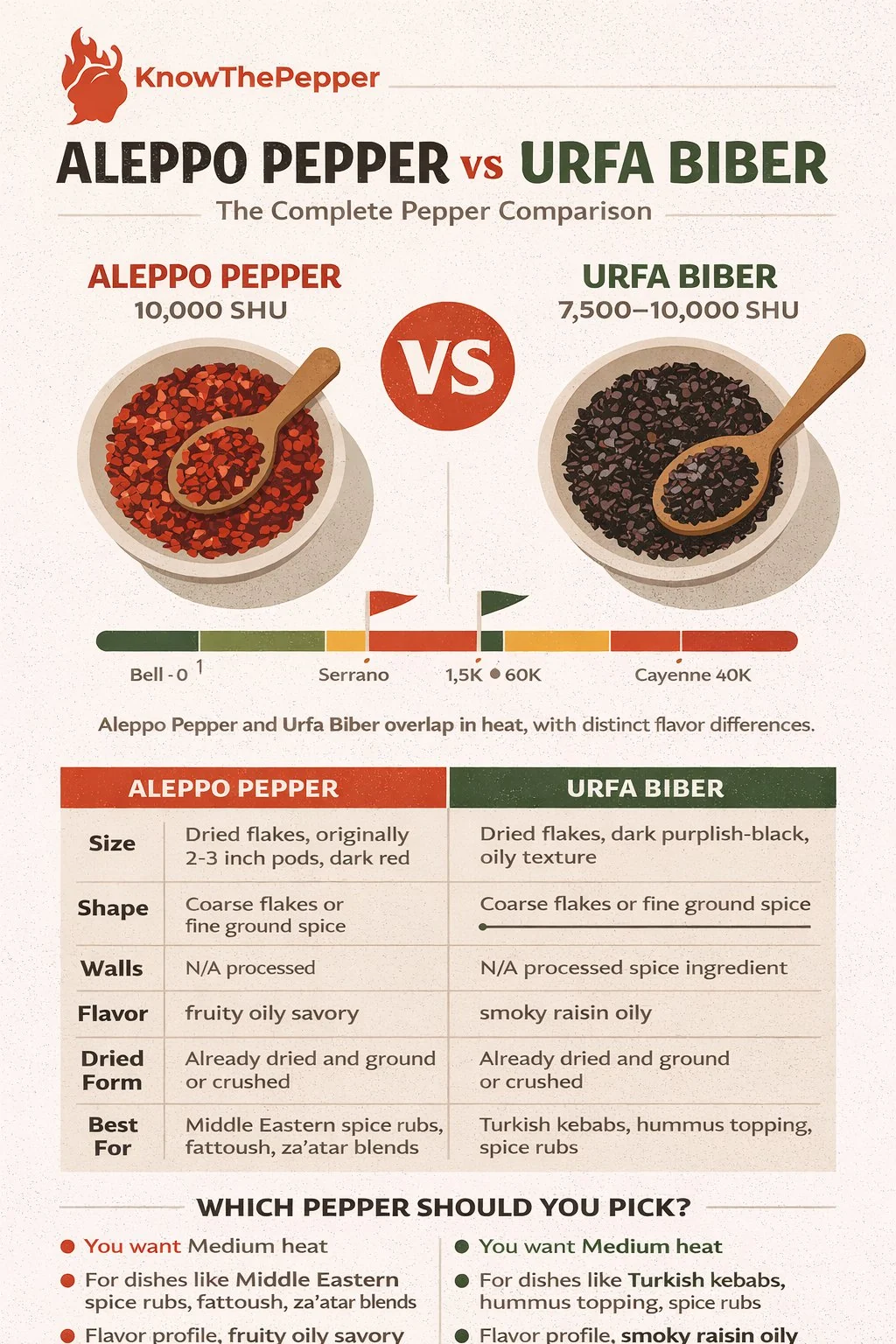
On paper, heat is almost beside the point with these two — neither is trying to punish you. Urfa biber registers at 500-1,500 SHU, placing it firmly in the mild-to-low end of the hot classification alongside sweet paprika and mild Anaheim. That puts it at roughly one-tenth to one-fifth the heat of a chipotle, which typically lands around 2,500-8,000 SHU.
Aleppo's SHU data is inconsistently documented across sources, but it's widely described by spice merchants and culinary references as sitting in a similar mild-moderate window — generally around 10,000 SHU in some commercial descriptions, though this varies by source and drying method. What both peppers share is a heat that builds slowly and fades gently, never spiking the way a fresh chile does.
The Scoville ranking method matters less here than the delivery of heat. Urfa biber's capsaicin disperses through an oily, resinous texture — the flakes retain natural oils from a unique sun-wilting and night-wrapping cure process. That oil-bound heat coats the palate differently than the dry, crystalline burn of something like cayenne. Aleppo similarly carries residual moisture and oil from its semi-dried state, giving both peppers a warmth that's more of a slow glow than a sharp sting.
For heat-sensitive cooks, both are excellent entry points. Neither approaches the TRPV1 receptor response that makes high-SHU peppers genuinely uncomfortable.
Flavor Profile Comparison
Most peppers ask you to choose between heat and flavor.
If you judge urfa biber by its heat, you're missing the point.
This is where the real story is. Aleppo pepper — named for the Syrian city of Aleppo, though now primarily sourced from Turkey and neighboring regions due to ongoing conflict — has a flavor profile that reads as fruity, mildly tangy, and almost raisin-like. There's a subtle salinity to quality Aleppo flakes (they're often processed with a small amount of salt and oil), which gives them a complexity you don't get from standard red pepper flakes. Some describe a hint of cumin or sun-dried tomato in the background.
Urfa biber, also called isot pepper, comes from the Urfa (Şanlıurfa) region of southeastern Turkey's rich pepper-growing tradition. Its flavor is darker in every sense — the curing process, where peppers are sun-dried by day and wrapped to sweat overnight, concentrates sugars and creates a deep, almost chocolatey smokiness. Think dried fruit, dark coffee, and a hint of tobacco. The earthiness is prominent without being muddy.
Aleppo tends to brighten a dish; Urfa tends to deepen it. Aleppo has a Mediterranean lightness — it works with lemon, yogurt, and fresh herbs without overwhelming them. Urfa biber pulls toward warmer, richer pairings: lamb, dark lentils, roasted eggplant, aged cheese. Aroma-wise, Aleppo is floral and slightly sweet when you open the jar. Urfa is more resinous, almost incense-like.
For a head-to-head contrast with another mild, fruity flake, Espelette pepper sits in a similar brightness zone to Aleppo but without the oily texture.
Culinary Uses for Aleppo Pepper and Urfa Biber
Both peppers function beautifully as finishing spices — sprinkled over food just before serving rather than cooked into a base. But their flavor trajectories diverge enough that they're rarely interchangeable without some adjustment.
Aleppo pepper excels in: - Fattoush, tabbouleh, and grain salads where its brightness lifts other flavors - Labneh, hummus, or yogurt dips as a finishing oil (bloom it in olive oil first) - Egg dishes — shakshuka, scrambled eggs, frittatas - Grilled fish and chicken where you want mild warmth without overpowering - Compound butters for bread or corn
Urfa biber works best in: - Lamb kofte, kebabs, or slow-braised lamb shoulder - Dark lentil soups and stews - Chocolate desserts — it pairs surprisingly well with dark cocoa - Roasted root vegetables and eggplant - Coffee rubs for beef or brisket
For substitution, Aleppo and Urfa biber can swap for each other at a 1:1 ratio, but expect a flavor shift. Going Urfa-for-Aleppo adds smokiness and loses brightness; going Aleppo-for-Urfa lightens the dish and reduces earthiness. A pinch of smoked paprika alongside Aleppo can help bridge the gap.
For a comparison with another mildly fruity dried chile, gochugaru brings more heat and a different fruity sweetness — useful context if you're building a spice pantry around these flavor profiles.
Both peppers respond well to blooming in oil or butter over low heat for 30-60 seconds before adding other ingredients. This releases fat-soluble flavor compounds and amplifies their aromatic qualities significantly. Neither should be cooked at high heat for extended periods — their sugars scorch easily.
Aleppo is also excellent stirred into marinades for grilled meats or whisked into vinaigrettes. Urfa biber shines when mixed into ground meat before cooking.
Which Should You Choose?
If your pantry has room for one, choose based on your cooking style. Aleppo pepper is the more versatile everyday spice — it works across a wider range of dishes, brightens rather than dominates, and integrates naturally into Mediterranean and Middle Eastern cooking without demanding a specific flavor direction. It's the one that disappears into a dish in the best possible way.
Urfa biber is the more distinctive choice. Its smoky, dark, almost chocolatey depth is harder to replicate with anything else in a typical spice cabinet. For lamb, dark legumes, or anywhere you'd use smoked paprika but want more complexity, Urfa biber is the stronger pick.
For a broader look at how Aleppo stacks up against another mild, oil-rich dried chile, that comparison highlights how different regional curing traditions shape flavor even at similar heat levels.
Ideally, keep both. They're inexpensive, last 12-18 months in a sealed jar, and occupy completely different flavor lanes despite their surface similarities. The C. annuum botanical lineage they share explains their structural similarities — mild heat, thick walls, good oil content — but the curing methods and terroir create genuinely distinct results.
Can You Substitute One for the Other?
Yes — direct substitution works. Aleppo Pepper and Urfa Biber are close enough in heat to swap at roughly 1:1. The main difference will be flavor. For more swap options, explore ranked alternatives with conversion ratios.
Growing Aleppo Pepper vs Urfa Biber
If you’re deciding which pepper to grow at home, consider your climate and patience level. Aleppo Pepper and Urfa Biber have different maturation times and temperature preferences. Hotter varieties generally need a longer, warmer growing season to develop their full capsaicin content. Our zone-based planting date tool can pinpoint the best sowing window for your area.
Growing Aleppo pepper in North America is straightforward for anyone familiar with C. annuum cultivation basics — the plant doesn't demand special treatment, just warmth and patience.
Start seeds indoors 8–10 weeks before last frost. Germination is reliable at 75–85°F soil temperature, typically within 10–14 days.
The plants reach 24–36 inches tall and prefer full sun with well-draining soil. Once established, they're relatively drought-tolerant — overwatering is a more common mistake than underwatering.
Urfa biber is a C. annuum variety, which means it's one of the more forgiving species to grow.
For anyone comfortable with seed-starting pepper varieties from scratch, urfa biber presents no unusual challenges. Transplant seedlings once nighttime temperatures stay above 55°F — these plants don't tolerate cold soil.
Full sun and consistent watering matter more here than with hotter varieties. The pepper's flavor complexity comes from stress-free, even growth followed by a specific post-harvest curing process.
History & Origin of Aleppo Pepper and Urfa Biber
Both peppers carry centuries of culinary heritage. Aleppo Pepper traces its roots to Syria, while Urfa Biber originates from Turkey. Understanding their backstory helps explain why each pepper developed its distinctive traits.
Buying & Storage
Whether you’re shopping for Aleppo Pepper or Urfa Biber, the same quality indicators apply. Fresh peppers should feel firm and heavy for their size, with taut, glossy skin and no soft or wet spots. Minor stem cracks known as “corking” are perfectly normal and often indicate a mature, flavorful pod.
- Firm pods with taut skin and consistent color
- Should feel heavy relative to size
- Minor stem cracks (“corking”) are normal
- Avoid anything soft, shriveled, or with dark wet spots
- Fresh: Paper bag, crisper drawer — 1–2 weeks
- Frozen: Wash, dry, freeze on sheet pan — 6+ months
- Dried: Airtight, away from light — up to 1 year
The Verdict: Aleppo Pepper vs Urfa Biber
Aleppo Pepper and Urfa Biber occupy very different positions on the heat spectrum. Aleppo Pepper delivers 20× more heat with its distinctive fruity and earthy character. Urfa Biber, with its smoky and earthy profile, excels in everyday cooking.
Frequently Asked Questions
Related Comparisons
Sources pending verification.