Aleppo Pepper vs Calabrian Chili: Key Differences Explained
Aleppo pepper and Calabrian chili sit at opposite ends of the heat spectrum, with Aleppo registering a mild, oily warmth while Calabrian clocks in at 25,000-40,000 SHU — a genuine hot pepper with serious bite. Beyond heat, they diverge sharply in flavor character, texture, and how they behave in the kitchen. Choosing between them depends almost entirely on what you want the pepper to do in a dish.

Aleppo Pepper measures 10K–30K SHU while Calabrian Chili registers 25K–40K SHU — roughly equal in heat. Aleppo Pepper is known for its fruity and earthy flavor (C. annuum), while Calabrian Chili offers fruity and smoky notes (C. annuum).
- Species: Both are C. annuum
- Best for: Aleppo Pepper excels in everyday cooking and salsas, Calabrian Chili in fresh salsas and mild recipes
Aleppo Pepper
HotCalabrian Chili
HotAleppo Pepper vs Calabrian Chili Comparison
Aleppo Pepper vs Calabrian Chili Heat Levels
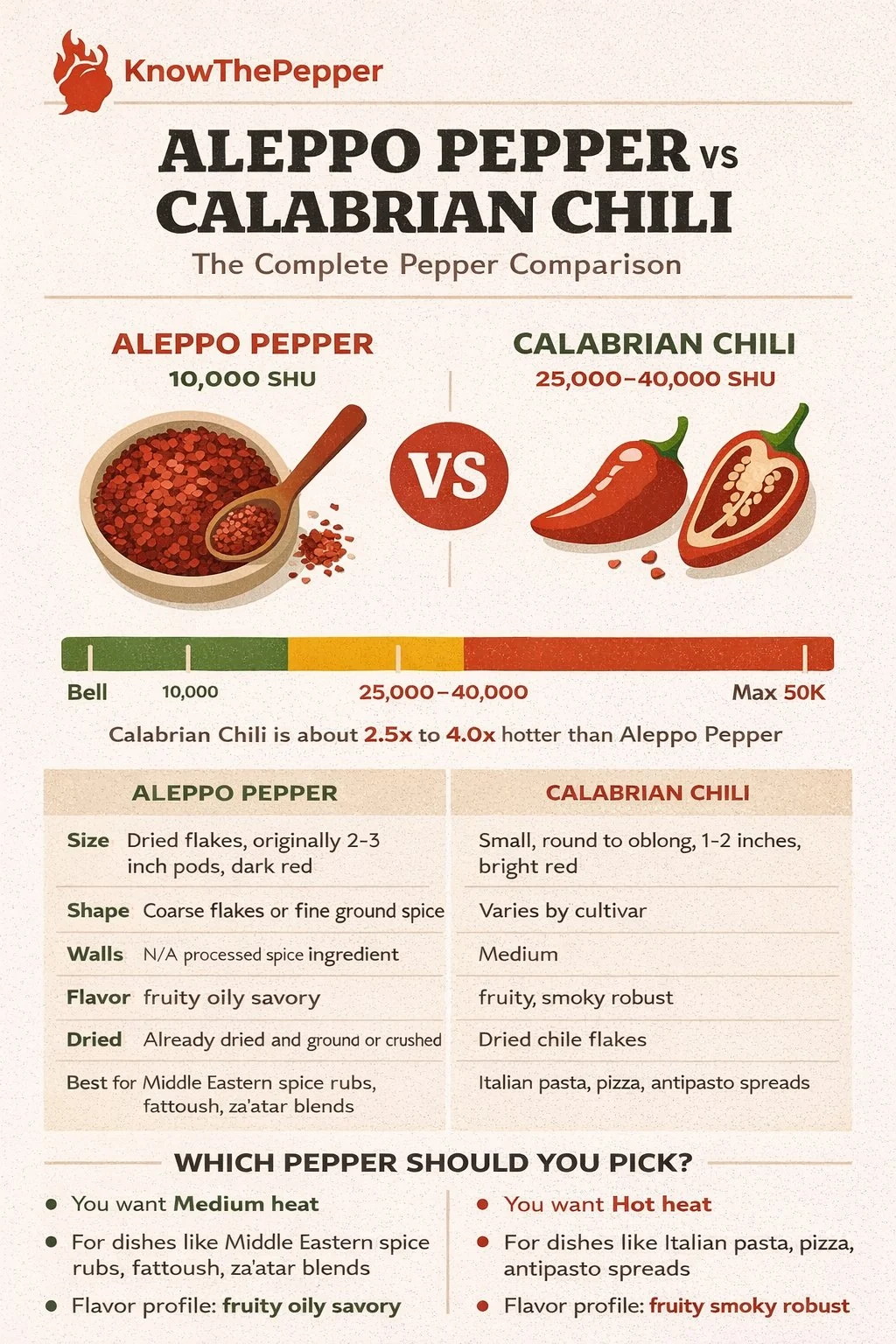
The heat gap here is substantial. Aleppo pepper is typically cited at around 10,000 SHU in most culinary references, though some sources place it lower — it reads more as a warm, building tingle than a sharp burn. Calabrian chili lands at 25,000-40,000 SHU, putting it firmly in the hot pepper category alongside cayenne and Thai bird chiles.
For a useful comparison: a guajillo pepper sits at roughly 2,500-5,000 SHU. Calabrian chili is somewhere between 5x and 16x hotter than a guajillo depending on where in its range a given batch falls. Aleppo, by contrast, sits only 2x to 4x above that guajillo baseline — a much more approachable difference.
The character of the heat differs just as much as the numbers. Aleppo's warmth spreads slowly across the palate, often described as back-of-throat rather than front-of-mouth. It fades quickly without lingering discomfort. Calabrian heat is sharper and more immediate — you feel it on the tip of the tongue first, then it builds. The Scoville rating system for testing pepper heat measures capsaicin concentration, and Calabrian's higher capsaicin load means that heat sticks around longer, especially in oil-based preparations where the capsaicin stays active.
For heat-sensitive cooks, Aleppo is the obvious choice. For anyone who wants actual pepper heat — not just warmth — Calabrian delivers consistently.
Flavor Profile Comparison
Most peppers ask you to choose between heat and flavor.
Calabria, the sun-scorched toe of Italy's boot, produces a pepper that reflects its terroir completely — intense, complex, and a little wild.
Start with aroma, because that's where these two diverge most immediately. Aleppo pepper carries a distinctive oily, sun-dried fragrance — slightly fruity, faintly cumin-adjacent, with a raisin-like sweetness that becomes more pronounced when the flakes hit a warm pan. It smells like the Middle East in the best possible way: earthy, warm, complex without being aggressive.
Calabrian chili opens differently. The aroma is brighter, more acidic — there's a sharpness that signals heat before you've tasted anything. Preserved Calabrian chiles (typically packed in oil) add a fermented, umami-forward note that fresh or dried versions don't have.
On the palate, Aleppo tastes mildly fruity with a hint of salt (most commercial Aleppo is processed with salt during drying) and a subtle chocolate-like bitterness on the finish. It layers rather than punches. Calabrian chili, a C. annuum botanical species like many Italian cultivars, brings a genuinely fruity heat — tomato-adjacent, slightly smoky, with an acidic brightness that makes it feel almost citrusy at times.
The culinary implication: Aleppo adds depth and warmth without demanding attention. Calabrian insists on being noticed. This makes them useful in very different situations — Aleppo as a background flavor builder, Calabrian as a foreground heat element.
For comparisons with other Middle Eastern flake peppers, the Aleppo vs. Urfa Biber matchup covers the smoky-vs-fruity contrast in detail, and the Aleppo vs. Maras pepper flavor differences breaks down how these Syrian and Turkish variants diverge.
Culinary Uses for Aleppo Pepper and Calabrian Chili
Aleppo pepper shines as a finishing spice. Sprinkled over hummus, labneh, roasted vegetables, or eggs, it adds color, warmth, and complexity without heat that might overwhelm the dish. It's a staple in Syrian and Turkish cooking — used in kebab spice blends, muhammara (red pepper walnut dip), and fattoush dressings. Because it's processed with oil and salt, it dissolves beautifully into dressings and marinades without the raw, harsh edge some dried chiles carry.
A practical ratio: 1 teaspoon Aleppo roughly equals 1/2 teaspoon of a standard mild paprika blend in terms of heat contribution, though the flavor complexity is considerably higher.
Calabrian chili earns its place in Italian-American cooking primarily through preserved chile paste and oil-packed whole chiles. It's the backbone of spicy Calabrian pasta sauces (nduja — the spreadable salami — gets its fire from Calabrian peppers), pizza toppings, and antipasto preparations. A small amount of Calabrian paste stirred into tomato sauce adds heat and depth simultaneously.
For substitution purposes: if a recipe calls for Calabrian chili paste and you only have Aleppo, you'd need roughly 3-4 teaspoons of Aleppo to approximate the heat of 1 teaspoon Calabrian paste — and you'd still be missing the sharper, fruitier bite. Going the other direction (substituting Calabrian for Aleppo), use 1/4 the amount and expect the dish to run hotter and less complex.
The Aleppo vs. gochugaru comparison is worth reading if you're working with Korean-inflected recipes where the fruity-sweet flake profile overlaps — the heat and texture differences matter there too.
For dishes requiring both warmth and fruit without significant heat, Aleppo is the right tool. For pastas, pizza, braises, and anything that needs real pepper presence from Italian pepper traditions, Calabrian is the better fit.
Which Should You Choose?
Pick Aleppo pepper when the goal is layered warmth, subtle fruitiness, and Middle Eastern depth without challenging heat. It's ideal for spice blends, finishing oils, and dishes where the pepper should support rather than lead. Home cooks who find cayenne too sharp will appreciate how Aleppo integrates.
Choose Calabrian chili when you need genuine heat with personality — fruity, smoky, slightly acidic, and persistent. It's purpose-built for Italian preparations and handles high-heat cooking (braising, roasting, sauteing in oil) better than Aleppo's more delicate flake structure.
They're not really interchangeable. The heat difference alone — roughly 4x to 8x depending on the specific batch — makes direct substitution tricky. But if you keep both in the pantry, you've covered a wide range of global cooking needs from a single flavor category. The Aleppo vs. Maras pepper profile is a useful next read if you want to go deeper on the mild-flake end of this spectrum.
Can You Substitute One for the Other?
Yes — direct substitution works. Aleppo Pepper and Calabrian Chili are close enough in heat to swap at roughly 1:1. The main difference will be flavor. For more swap options, explore ranked alternatives with conversion ratios.
Growing Aleppo Pepper vs Calabrian Chili
If you’re deciding which pepper to grow at home, consider your climate and patience level. Aleppo Pepper and Calabrian Chili have different maturation times and temperature preferences. Hotter varieties generally need a longer, warmer growing season to develop their full capsaicin content. Our zone-based planting date tool can pinpoint the best sowing window for your area.
Growing Aleppo pepper in North America is straightforward for anyone familiar with C. annuum cultivation basics — the plant doesn't demand special treatment, just warmth and patience.
Start seeds indoors 8–10 weeks before last frost. Germination is reliable at 75–85°F soil temperature, typically within 10–14 days.
The plants reach 24–36 inches tall and prefer full sun with well-draining soil. Once established, they're relatively drought-tolerant — overwatering is a more common mistake than underwatering.
Growing Calabrian chilies follows the standard C. annuum playbook, but they particularly reward warm, dry conditions — which makes sense given their origin.
Transplant outdoors once nighttime temps stay above 55°F. These plants prefer full sun and well-drained soil; they'll tolerate drought better than many peppers but produce more flavorful pods with consistent moderate watering.
Pods mature in 80–90 days from transplant. Harvest when fully red for maximum fruity character.
History & Origin of Aleppo Pepper and Calabrian Chili
Both peppers carry centuries of culinary heritage. Aleppo Pepper traces its roots to Syria, while Calabrian Chili originates from Italy. Understanding their backstory helps explain why each pepper developed its distinctive traits.
Buying & Storage
Whether you’re shopping for Aleppo Pepper or Calabrian Chili, the same quality indicators apply. Fresh peppers should feel firm and heavy for their size, with taut, glossy skin and no soft or wet spots. Minor stem cracks known as “corking” are perfectly normal and often indicate a mature, flavorful pod.
- Firm pods with taut skin and consistent color
- Should feel heavy relative to size
- Minor stem cracks (“corking”) are normal
- Avoid anything soft, shriveled, or with dark wet spots
- Fresh: Paper bag, crisper drawer — 1–2 weeks
- Frozen: Wash, dry, freeze on sheet pan — 6+ months
- Dried: Airtight, away from light — up to 1 year
The Verdict: Aleppo Pepper vs Calabrian Chili
Aleppo Pepper and Calabrian Chili sit in the same heat tier but serve different roles. Calabrian Chili delivers its distinctive fruity and smoky character. Aleppo Pepper, with its fruity and earthy profile, excels in everyday cooking.
Frequently Asked Questions
Related Comparisons
Sources pending verification.