Aji Amarillo vs Aji Limo: Heat, Flavor & Key Differences
Aji Amarillo and Aji Limo share the same 30,000-50,000 SHU heat range and both hail from Peru, but they belong to different species and taste nothing alike. Aji Amarillo brings a fruity, raisin-like depth rooted in C. baccatum genetics, while Aji Limo delivers a sharp citrus brightness characteristic of C. chinense varieties. Same heat, wildly different flavor — that gap matters enormously in the kitchen.

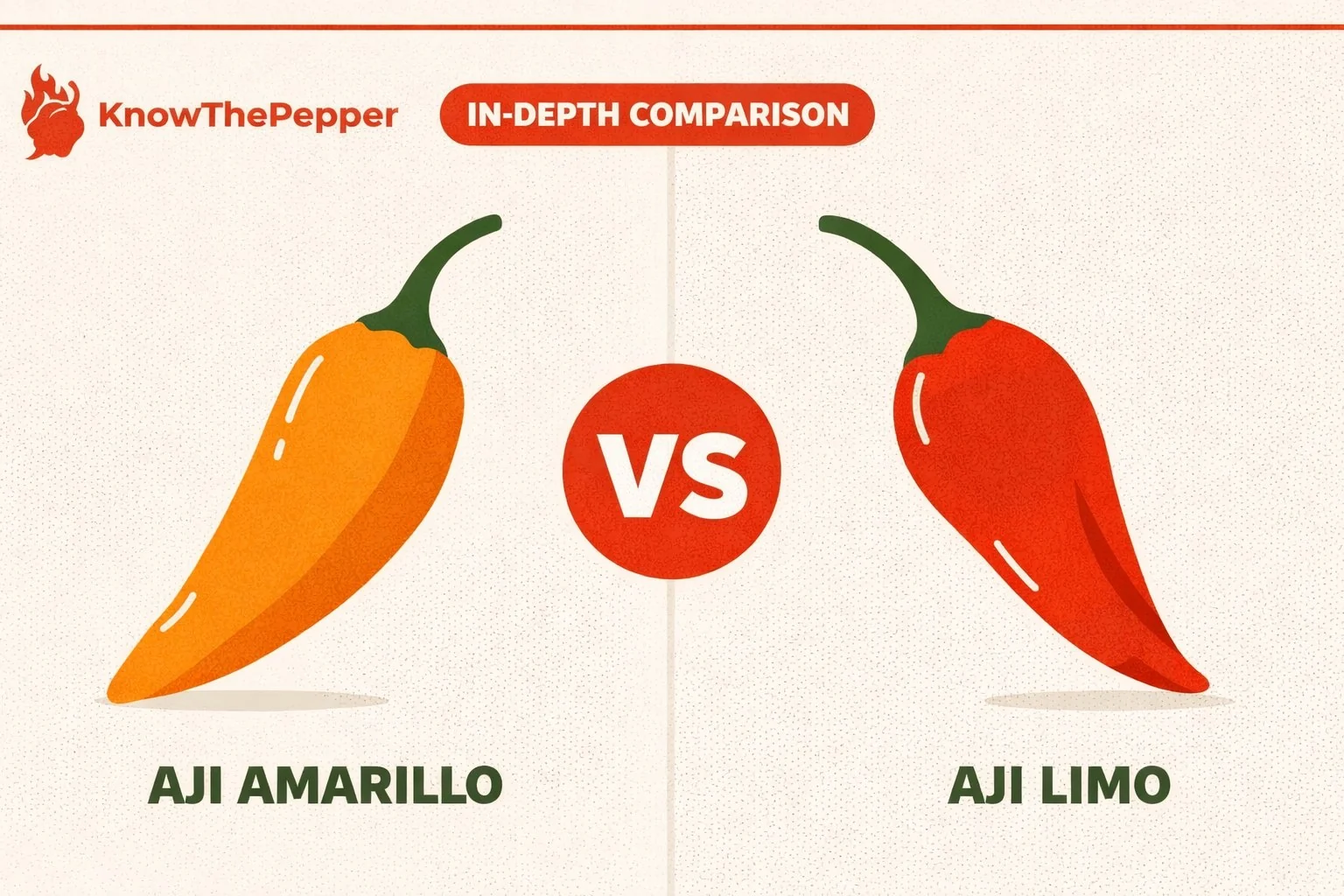
Aji Amarillo measures 30K–50K SHU while Aji Limo registers 30K–50K SHU — roughly equal in heat. Aji Amarillo is known for its fruity and raisin-like flavor (C. baccatum), while Aji Limo offers fruity and citrusy notes (C. chinense).
- Species: C. baccatum vs C. chinense
- Best for: Aji Amarillo excels in everyday cooking and salsas, Aji Limo in fresh salsas and mild recipes
Aji Amarillo vs Aji Limo Comparison
Aji Amarillo vs Aji Limo Heat Levels
Flavor is often where these two diverge most obviously, but the heat profile itself tells an interesting story too.
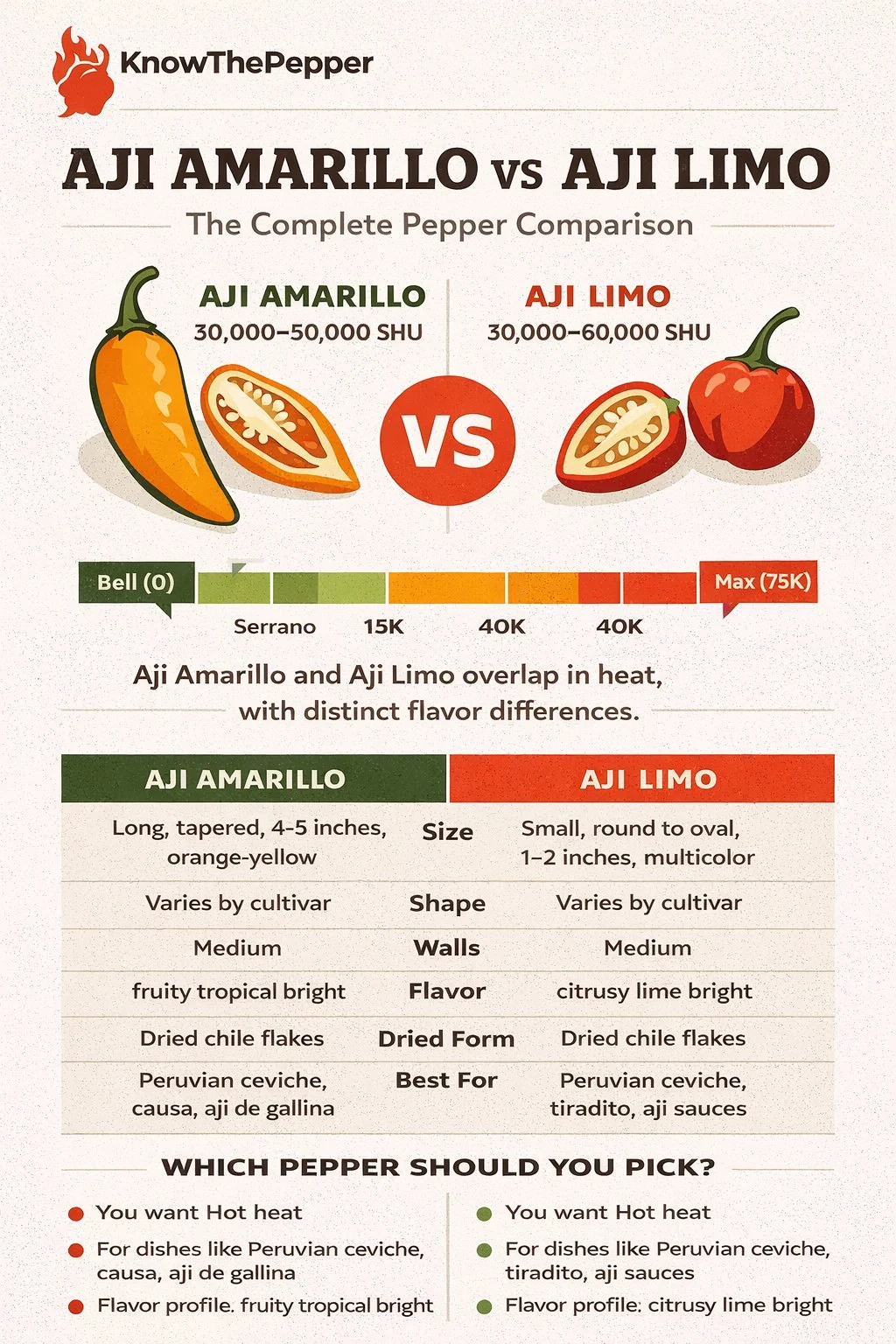
Aji Amarillo sits at 30,000-50,000 SHU, putting it firmly in the hot pepper classification zone — roughly 6 to 10 times hotter than a typical jalapeño at its upper end. The burn comes on gradually, building at the back of the throat with a lingering warmth that doesn't overwhelm the other flavors in a dish.
Aji Limo occupies the exact same 30,000-50,000 SHU bracket on the Scoville testing scale, but the burn character differs noticeably. As a C. chinense variety — the same species that gives us habaneros — Aji Limo tends to deliver heat that hits faster and more intensely upfront. The capsaicin chemistry behind why C. chinense burns differently from C. baccatum relates to how the compounds interact with receptors, not just total concentration.
Both peppers are roughly 6-10x the heat of a jalapeño, so neither is casual snacking territory. That said, neither approaches the scorching territory of an Aji Amarillo vs. habanero heat gap — the habanero can push past 350,000 SHU at its peak. For practical cooking purposes, treat both Aji Amarillo and Aji Limo as equivalent heat contributors, then let flavor drive your choice.
Flavor Profile Comparison
Long before Spanish conquistadors arrived in South America, the aji amarillo was already woven into the fabric of Andean civilization.
Long before Spanish colonizers arrived, coastal Peruvian communities were cultivating aji limo as a cornerstone of their food culture.
This is where the real separation happens. Aji Amarillo has a flavor profile that reads fruity and raisin-like — warm, slightly dried-fruit sweetness with an almost berry-like undertone. It's a complex, layered taste that doesn't disappear behind the heat. That depth is partly why it became a cornerstone of Peruvian pepper cuisine — it adds character, not just fire.
Aji Limo goes a completely different direction. The citrus brightness is immediate and sharp — think lime zest and tropical fruit rather than dried fruit sweetness. It has a clean, almost acidic quality that cuts through fatty or rich dishes in a way Aji Amarillo doesn't. Some describe it as having a floral edge alongside the citrus, which is a trait common to many C. chinense varieties.
Aroma matters here too. Aji Amarillo smells warm and fruity even raw, while Aji Limo has a sharper, more pungent scent that signals the citrus notes before you even taste it.
In ceviche, Aji Limo is the traditional choice in northern Peru specifically because that citrus sharpness harmonizes with the lime-cured fish. Aji Amarillo, more common in Lima-style cooking, brings sweetness that rounds out cream-based sauces and stews. You could swap one for the other in a pinch, but you'd notice — the dish would taste like a different region entirely. The fruity depth of Aji Amarillo compared to Aji Panca illustrates how even within Peruvian peppers, flavor varies dramatically by variety.
Culinary Uses for Aji Amarillo and Aji Limo
Aji Amarillo is arguably the most important pepper in Peruvian cooking. It shows up in aji de gallina (a creamy chicken stew), causa (potato terrine), and countless sauces where its fruity sweetness balances dairy and starch. Paste form is common — jars of aji amarillo paste are a pantry staple in Peru and increasingly available in specialty grocery stores internationally.
Use Aji Amarillo when the dish needs heat plus warmth and body. It works beautifully roasted, blended into sauces, or simmered into braises. The flavor holds up through cooking without turning bitter.
Aji Limo is the pepper of choice for ceviche, tiradito, and other acid-forward preparations where its citrus sharpness amplifies rather than competes with lime and vinegar. It's used fresh more often than cooked, which preserves the volatile citrus aromatics that define it. Northern Peruvian cooking — particularly around Trujillo — relies on Aji Limo the way coastal Lima cooking relies on Aji Amarillo.
For substitution: if a recipe calls for Aji Limo and you only have Aji Amarillo, add a squeeze of lime juice and a small amount of orange zest to approximate the citrus brightness — use a 1:1 ratio by weight. Going the other direction is trickier; Aji Amarillo's raisin-like depth is harder to fake with Aji Limo, though a touch of honey can soften the citrus edge.
Neither pepper is easy to find fresh outside South America. Aji Amarillo paste is more widely available than Aji Limo in any form. If you grow your own, starting both from seed is the most reliable path to fresh supply — both germinate well under consistent warmth. The bright citrus-fruity contrast between Aji Amarillo and Aji Cristal is worth exploring if you cook Peruvian food regularly and want to understand how these peppers differ from milder South American varieties.
Which Should You Choose?
If you cook Peruvian food at home and can only stock one, Aji Amarillo is the more versatile choice — its fruity depth integrates into more dish types, paste form is easier to source, and it defines the flavor of Lima-style cooking that most people associate with Peruvian cuisine internationally.
Aji Limo wins decisively for ceviche and acid-forward dishes. Its citrus sharpness is genuinely difficult to replicate with other peppers, and if northern Peruvian cooking is your focus, it's non-negotiable.
Heat-wise, treat them as equals at 30,000-50,000 SHU — about 6-10x a jalapeño — and let flavor be the deciding factor. Both belong to the hot pepper classification tier, but they represent two very different expressions of Peruvian pepper tradition. Serious cooks should stock both; casual cooks should start with Aji Amarillo paste and work up from there.
Can You Substitute One for the Other?
Yes — direct substitution works. Aji Amarillo and Aji Limo are close enough in heat to swap at roughly 1:1. The main difference will be flavor. For more swap options, explore ranked alternatives with conversion ratios.
Growing Aji Amarillo vs Aji Limo
If you’re deciding which pepper to grow at home, consider your climate and patience level. Aji Amarillo and Aji Limo have different maturation times and temperature preferences. Hotter varieties generally need a longer, warmer growing season to develop their full capsaicin content. Our zone-based planting date tool can pinpoint the best sowing window for your area.
Aji amarillo is a warm-season perennial grown as an annual in most climates. Seeds need 80–90 days from transplant to first harvest, so starting indoors 10–12 weeks before last frost is standard practice.
The plants grow tall, often reaching 3–4 feet, and benefit from staking once pods set. They prefer well-draining soil with a pH between 6.
For cultivation characteristics, compare this to peppers grown in upward-facing clusters — aji amarillo pods hang downward, which helps with water drainage off the fruit. Pods start green and ripen through yellow to orange; the sweetest flavor develops at full orange ripeness.
The hardest part of growing aji limo isn't germination - it's humidity management. As a coastal Peruvian native, this pepper wants warm nights and moderate humidity, conditions that are easy to oversimulate into fungal problems.
Germination needs 80-85°F soil temperature and typically takes 14-21 days. Start seeds 10-12 weeks before last frost indoors.
Like other C. chinense varieties, aji limo has a long growing season - expect 90-100 days from transplant to first ripe pods.
History & Origin of Aji Amarillo and Aji Limo
Both peppers carry centuries of culinary heritage. Aji Amarillo traces its roots to Peru, while Aji Limo originates from Peru. Understanding their backstory helps explain why each pepper developed its distinctive traits.
Buying & Storage
Whether you’re shopping for Aji Amarillo or Aji Limo, the same quality indicators apply. Fresh peppers should feel firm and heavy for their size, with taut, glossy skin and no soft or wet spots. Minor stem cracks known as “corking” are perfectly normal and often indicate a mature, flavorful pod.
- Firm pods with taut skin and consistent color
- Should feel heavy relative to size
- Minor stem cracks (“corking”) are normal
- Avoid anything soft, shriveled, or with dark wet spots
- Fresh: Paper bag, crisper drawer — 1–2 weeks
- Frozen: Wash, dry, freeze on sheet pan — 6+ months
- Dried: Airtight, away from light — up to 1 year
The Verdict: Aji Amarillo vs Aji Limo
Aji Amarillo and Aji Limo sit in the same heat tier but serve different roles. Aji Amarillo delivers its distinctive fruity and raisin-like character. Aji Limo, with its fruity and citrusy profile, excels in everyday cooking.
Frequently Asked Questions
Related Comparisons
Sources pending verification.