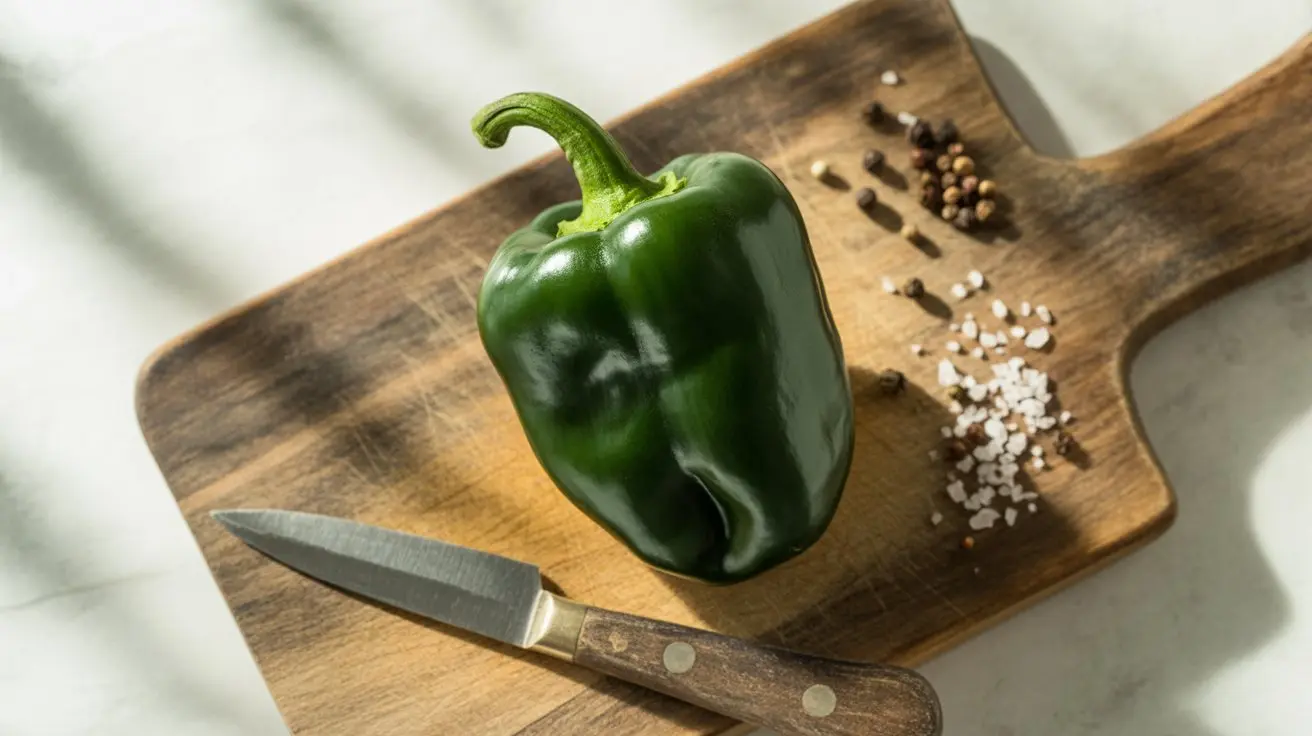
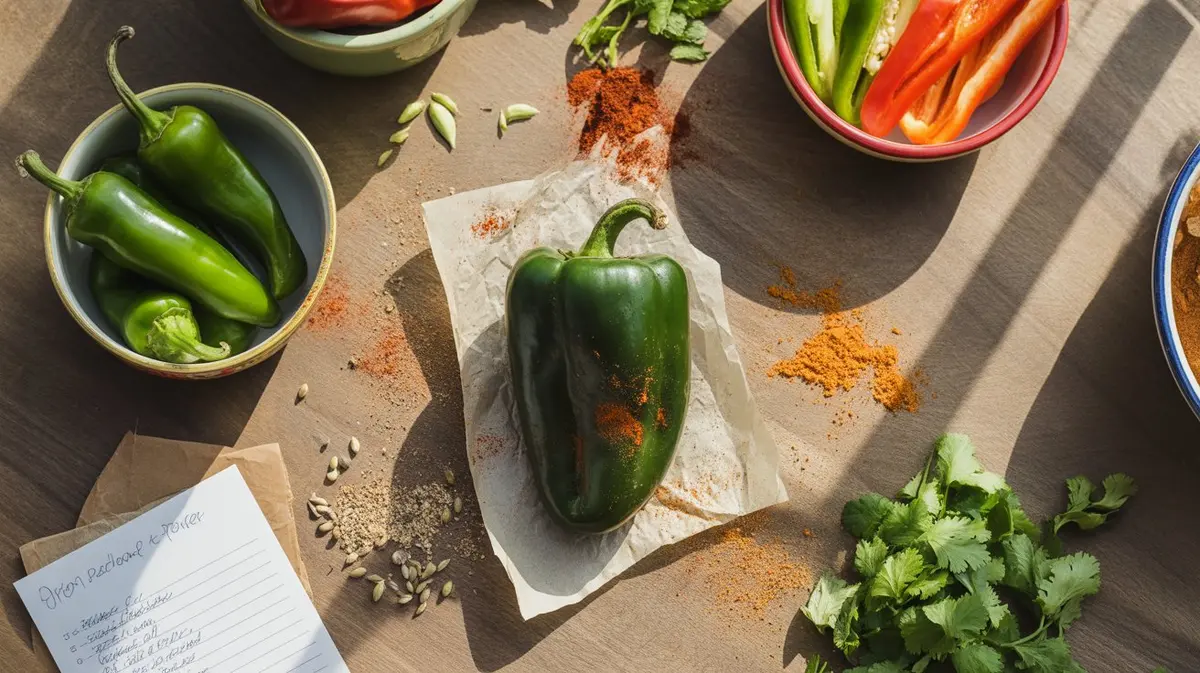
Poblano peppers bring a distinctive earthy depth to chiles rellenos, mole, and roasted salsas that's hard to replicate exactly. Their mild heat — 1,000-2,000 SHU — sits well below most fresh chiles, and their thick walls make them ideal for stuffing. When fresh poblanos aren't available, the right substitute depends on whether you need that physical structure, the flavor profile, or just the gentle warmth.
These alternatives are ranked by how closely they match Poblano Pepper’s heat level and flavor profile. Use the conversion ratios to adjust quantities in your recipe.
#1
Anaheim Pepper Closest Match
The closest structural match to a poblano, Anaheim peppers run 500-2,500 SHU — overlapping almost perfectly with poblano's heat band. Their walls are thick enough for stuffing, and they char and peel beautifully under a broiler. The flavor is slightly sweeter and less earthy, but in cooked applications like chiles rellenos or rajas, most people won't notice the difference. Use a 1:1 ratio by count. If you want a deeper look at this pepper's mild, slightly sweet heat profile, it's worth bookmarking.
#2
Pasilla Pepper (Dried) Runner-Up
If your recipe calls for poblanos in a sauce or mole, dried pasilla (also called chile negro) is arguably a better flavor match than any fresh substitute. Pasillas are dried chilacas — earthy, slightly fruity, with a deep complexity that mirrors the roasted character of poblano. Heat runs 1,000-2,500 SHU. Rehydrate one dried pasilla for every fresh poblano called for. The dark, raisin-like depth of a pasilla makes it the go-to for sauces where flavor is the priority.
#3
Mulato Pepper (Dried) Also Great
Less common than pasilla but worth seeking out, mulatos are dried poblanos that have ripened to brown before drying — which means they carry the same genetic profile with added chocolate and licorice notes. SHU range: 2,500-3,000, slightly hotter than fresh poblano. In mole negro and tamale fillings, the smoky, chocolatey warmth of a mulato can elevate a dish beyond what a fresh poblano would achieve. Use a 1:1 ratio by weight when rehydrated.
#4
Cubanelle Pepper
For fresh applications where stuffing is the goal, Cubanelles are a practical poblano substitute. Their walls are thinner, so they soften faster during cooking, but they hold their shape well enough for baked preparations. Heat is very mild at 100-1,000 SHU — noticeably gentler than poblano. The flavor leans sweet and grassy rather than earthy, so expect a lighter result. Use a 1:1 ratio by count, but consider adding a pinch of smoked paprika to compensate for the missing earthiness.
#5
Bell Pepper
Zero heat — 0 SHU — but bell peppers are widely available and structurally excellent for stuffing. Red or green bells can stand in for poblanos in chiles rellenos when heat isn't a factor. Green bells come closest to poblano's vegetal, slightly bitter flavor; red bells skew sweeter. Use a 1:1 ratio by count. To push the flavor closer to poblano, char the skin directly over a flame before using. The heat-free, thick-walled structure of a green bell makes it the most practical emergency substitute.
#6
Hatch Green Chile
Hatch chiles from New Mexico's Hatch Valley range from 1,000-8,000 SHU depending on variety — mild Hatches overlap directly with poblano's heat range. Their flavor is earthier and more mineral-forward than Anaheim, which actually makes them a stronger flavor match for poblano in roasted preparations. Use a 1:1 ratio for mild Hatch varieties. In canned or frozen form, they're available year-round and work well in sauces, soups, and casseroles where fresh poblano would typically appear.
#7
Guajillo Pepper (Dried)
For red sauces and braises, guajillo brings a tangy, slightly cranberry-like flavor at 2,500-5,000 SHU — meaningfully hotter than poblano, so use about half the quantity called for and taste as you go. They won't replicate the earthy depth of poblano, but their smooth, fruity character works well in enchilada sauces and stews where the pepper is blended rather than served whole. Rehydrate in warm water for 20 minutes before using. The bright, tangy heat of a guajillo is a reliable pantry fallback when fresh chiles aren't an option.
Jalapeño seems like a natural swap given its availability, but at 2,500-8,000 SHU it runs significantly hotter than poblano — and its thin walls make it completely unsuitable for stuffing. The flavor is sharper and greener, which clashes in dishes built around poblano's roasted earthiness.
Serrano peppers present the same problem at even higher intensity: 10,000-23,000 SHU with a bright, grassy bite that overpowers rather than complements. Swapping serranos into a chile relleno recipe would produce something unrecognizable.
Chipotle peppers in adobo are tempting because they're smoky and earthy — two qualities associated with roasted poblano — but the 2,500-8,000 SHU heat and the intensely acidic adobo sauce will dominate any dish. They work as a seasoning agent, not a structural or volume substitute for fresh poblano.
Substitution Tip
When substituting Poblano Pepper (1K–2K SHU), always start with less of a hotter substitute and add more to taste. For milder substitutes, you can increase the quantity. Our swap ratio calculator gives precise conversion amounts, and the heat unit converter translates between Scoville and other scales.
Fact-Checked & Expert Reviewed
Editorial Standards: All facts verified against authoritative sources. Content reviewed by subject matter experts before publication.
Review Process:
Written by
Sofia Torres
(Lead Culinary Reviewer)
, reviewed by
Karen Liu
(Lead Fact-Checker & Science Editor)
. Last updated February 18, 2026.
Yes — bell peppers are the most structurally reliable swap for stuffed preparations, with walls thick enough to hold filling and withstand oven heat. Green bells come closest to poblano's slightly bitter, vegetal flavor, though they carry zero heat and a noticeably sweeter profile.
Dried pasilla (chile negro) is the strongest flavor match for fresh poblano in sauces and moles — it's actually a dried relative with a deep, earthy, slightly fruity character. Rehydrate one dried pasilla per fresh poblano called for, using the soaking liquid as part of your sauce base.
Their heat ranges overlap significantly — poblano runs 1,000-2,000 SHU and Anaheim spans 500-2,500 SHU, so at the upper end Anaheim can be marginally hotter. In practice the difference is negligible in cooked dishes, and Anaheim is the easiest fresh substitute to find at most grocery stores.
Canned mild green chiles — typically Hatch or Anaheim varieties — work well in soups, casseroles, and sauces where texture isn't critical. They won't work for stuffed preparations since they're already soft, but the flavor is a reasonable match for roasted poblano in cooked applications.
Start with about half the quantity — guajillo runs 2,500-5,000 SHU, which is noticeably hotter than poblano's ceiling of 2,000 SHU. Taste after blending and adjust upward; guajillo also brings a tangy, fruity note that differs from poblano's earthiness, so the sauce will taste distinct even at the right heat level.