
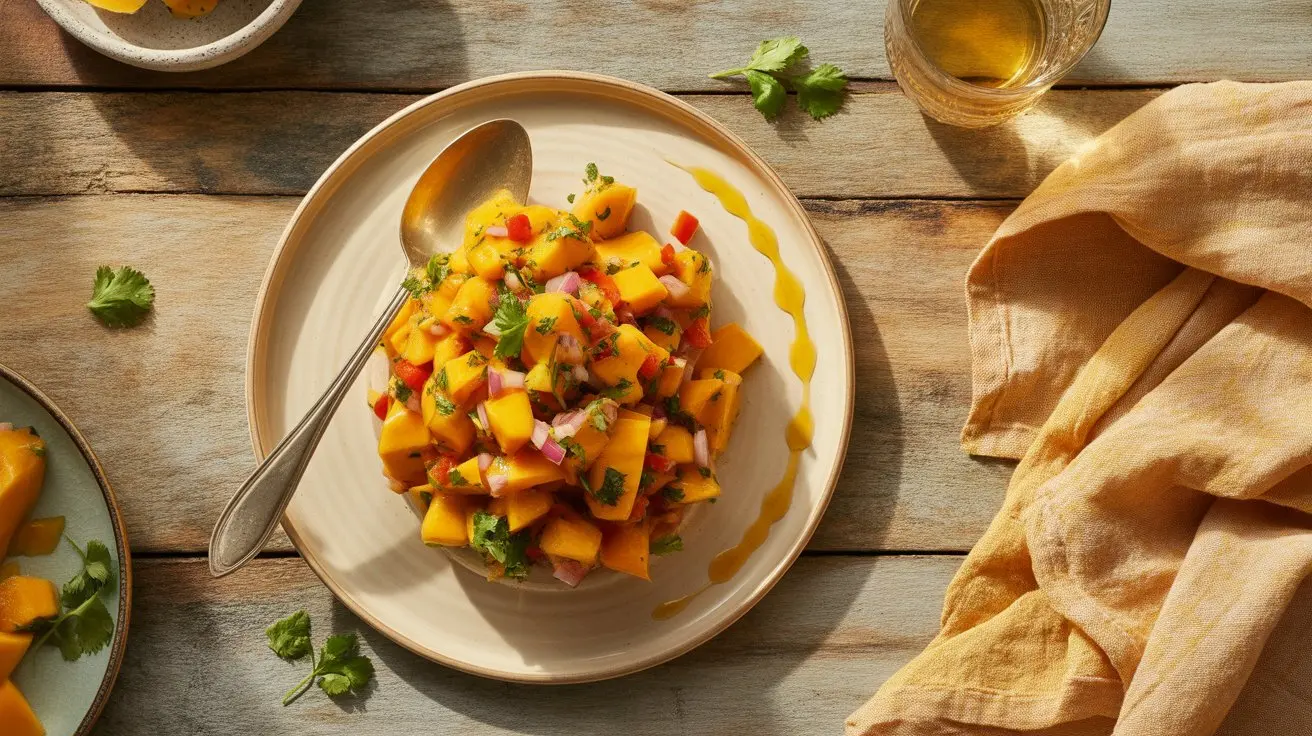
Mango Salsa
Fresh mango salsa with jalapeño heat, lime, and cilantro. Perfect for fish tacos, grilled chicken, or chips. Find your perfect heat level.

What Makes This Salsa Worth Making
Mango salsa hits a balance that most condiments miss entirely - sweet, acidic, spicy, and fresh all at once. The jalapeño brings manageable heat that sits in the mild-to-medium intensity range, while ripe mango softens the burn with natural sugar. This is the salsa that disappears first at any table.
The whole thing comes together in about 10 minutes, no cooking required. What separates a great mango salsa from a forgettable one is mango ripeness and knife work - both covered below.
The Right Mango Makes All the Difference
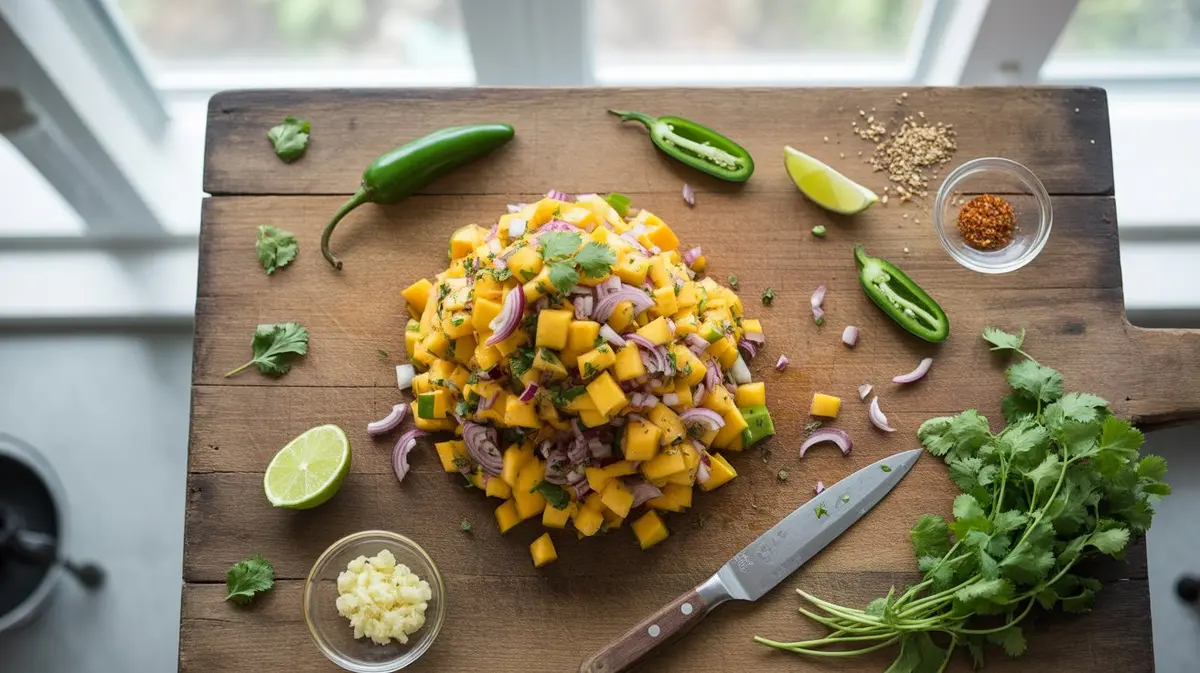
Ataulfo (also called Champagne or Honey) mangoes are the best choice here. They have less fiber, a creamier texture, and higher sugar content than Tommy Atkins, which is the most common supermarket variety. Tommy Atkins works fine but can be stringy - if that is what you have, just dice more carefully.
Ripeness test: the mango should give slightly to thumb pressure and smell sweet near the stem end. An underripe mango is starchy and sour; it will not balance the jalapeño the way a ripe one does. An overripe mango turns mushy and loses its structural integrity in the bowl.
Heat Level Adjustments
The standard recipe with 1 seeded jalapeño lands at a heat level that most people find approachable - noticeable warmth without discomfort. Here is how to dial it up or down.
- Mild version: Use half a jalapeño, fully seeded, or swap for a small amount of mild poblano used for its vegetal depth without real heat. This puts you firmly in mild territory - great for kids or heat-sensitive guests.
- Medium version: Two jalapeños with seeds left in. This is the standard recipe at full intensity - sits in the medium heat range that most adults handle comfortably.
- Hot version: Replace one jalapeño with a Fresno chile. Fresno runs 2,500-10,000 SHU on the Scoville rating scale, overlapping with jalapeño but often hitting the higher end. It also brings a slightly fruity note that complements mango well.
- Extra hot version: Add a single habanero known for its floral, citrus-forward heat - minced very fine and used sparingly. Habanero sits in the hot pepper range and will fundamentally change the character of the salsa.
Best Uses: Blackened Fish Tacos
Blackened fish tacos are where this salsa earns its reputation. Spoon it over blackened mahi-mahi or tilapia in a warm corn tortilla and the contrast is immediate - the char and spice of the fish against the cold, sweet-acidic salsa. Add a thin smear of sour cream and you have a complete taco.
Beyond tacos, this salsa works across a wide range of applications. Grilled chicken thighs, seared scallops, pork tenderloin, or shrimp skewers all benefit from the brightness it adds. It also works as a straight chip dip - the mango sweetness makes it more snackable than a tomato-based salsa for people who find straight heat tiring.
For a Caribbean-inspired direction, add 1/4 teaspoon allspice and swap the jalapeño for a small amount of Scotch Bonnet with its distinctly fruity Caribbean heat profile - a nod to Caribbean pepper traditions where fruit and heat are regularly paired.
Variations Worth Trying
- Pineapple-Mango Salsa: Replace half the mango with fresh pineapple. The higher acidity of pineapple amplifies the lime and makes the salsa more aggressive - good on pork.
- Avocado Mango Salsa: Fold in one diced avocado just before serving. Do not make this version ahead - avocado oxidizes fast and turns the salsa brown within an hour.
- Black Bean Version: Add 1/2 cup rinsed black beans and a handful of corn kernels. This turns the salsa into more of a substantial side that works alongside grilled meats or as a burrito bowl topping.
- Thai-Inspired Version: Swap cilantro for Thai basil, add a minced Thai bird chile with its sharp, concentrated sting - drawing from Thai chile traditions - and a teaspoon of fish sauce in place of half the salt. The result is less Tex-Mex, more Southeast Asian.
- Cucumber Mango Salsa: Add 1/2 cup finely diced English cucumber. The water content thins the salsa slightly but adds crunch and a cooling effect that makes the jalapeño heat feel more pronounced by contrast.
Technique Tips
Uniform knife work is the single biggest factor in salsa texture. When pieces are different sizes, the smaller ones break down faster in the lime juice and the larger ones stay raw-tasting. Take the extra minute to dice consistently.
Do not skip the onion maceration step. Raw red onion in salsa can be overwhelming - the brief lime soak mellows the sulfur compounds without making the onion soft. Five minutes is enough; more than 15 and it starts to pickle noticeably.
Fresh lime juice only. Bottled lime juice is oxidized and flat - it adds acidity without the aromatic brightness that makes the salsa pop. One lime gives about 1.5 tablespoons of juice; you need two limes for this recipe.
Salt at the end, not the beginning. Salting mango too early draws out liquid and makes the salsa watery. Season right before serving or just before the rest period.
Make-Ahead and Storage
Mango salsa is best within 2 hours of making - the mango releases juice over time and the texture softens. That said, it holds reasonably well in the refrigerator for up to 24 hours if stored in an airtight container. The flavors actually deepen overnight as the lime and jalapeño infuse into the mango.
Do not freeze this salsa. Mango becomes mushy and watery after freezing and thawing, and the fresh herb character is completely lost. Make it fresh each time - the 10-minute prep time makes that practical.
If making ahead for a party, prep all components separately and combine 20-30 minutes before serving. Keep the lime-onion mixture separate until the last step so the mango does not sit in acid too long.
For the jalapeño component specifically - if you want to reduce the heat slightly for a crowd, you can soak the minced jalapeño in cold water for 5 minutes before adding. This pulls out some capsaicin without changing the flavor profile significantly. It is the same principle behind the heat difference between jalapeño and serrano - surface area and cell disruption affect how much capsaicin you actually taste.
Chef's Tip: The Resting Period
Patience is an ingredient. After mixing, let the dish rest for 10–15 minutes before serving. This allows the flavours to meld and the seasoning to fully penetrate. If making ahead, refrigerate and bring to room temperature before serving.
Shopping List
-
2 ripe mangoespeeled and diced into 1/4-inch cubes (about 2 cups)
-
1-2 jalapeñosseeded and finely minced
-
1/2 red onionfinely diced
-
1/2 cup fresh cilantroroughly chopped
-
Juice of 2 limes (about 3 tablespoons)
-
1/2 red bell pepperdiced small
-
1/2 teaspoon kosher saltplus more to taste
-
1/4 teaspoon black pepper
-
Optional: 1/4 teaspoon cayenne for extra heat
Full Recipe Instructions
Dice red onion…
Dice red onion and combine with lime juice and a pinch of salt in a small bowl. Let sit 5 minutes to mellow the raw edge.
Peel and pit…
Peel and pit mangoes. Score each half in a grid pattern, invert, and slice off 1/4-inch cubes.
Mince jalapeño, removing…
Mince jalapeño, removing seeds and membrane for less heat or leaving them for more.
Dice red bell…
Dice red bell pepper into pieces roughly the same size as the mango.
Combine mango, bell…
Combine mango, bell pepper, cilantro, and the macerated onion-lime mixture in a medium bowl.
Add minced jalapeño.…
Add minced jalapeño. Start with 1, taste, then add the second if more heat is desired.
Season with 1/2…
Season with 1/2 teaspoon kosher salt and black pepper. Toss gently to combine.
Let salsa rest…
Let salsa rest 5-10 minutes before serving to allow flavors to marry.
Taste and adjust…
Taste and adjust with more lime, salt, or jalapeño as needed.
Frequently Asked Questions
-
Frozen mango works in a pinch but releases significantly more liquid as it thaws, making the salsa watery. If using frozen, thaw completely and drain excess liquid before dicing and combining with other ingredients.
-
Press gently near the stem end - a ripe mango gives slightly without feeling mushy. Smell it there too; ripe mangoes have a sweet, floral scent. Color is unreliable since it varies by variety.
-
Up to 24 hours in an airtight container, though texture softens as the mango releases juice. For best results, serve within 2 hours of making, or prep components separately and combine just before serving.
-
Fresh flat-leaf parsley is the closest neutral substitute. For a different but complementary direction, try fresh mint - it pairs surprisingly well with mango and keeps the salsa feeling bright and fresh.
-
Grilled chicken thighs, pork tenderloin, seared scallops, and shrimp skewers all work well. It also serves as a straight chip dip, and the mango sweetness makes it more approachable than tomato salsa for heat-sensitive guests.
More Recipes
View allFresh Salsa Recipe
Restaurant-quality fresh salsa in 10 minutes. Proper tomato prep, right jalapeño amount, and the secret to balanced flavor. Find your perfect heat level.
Jalapeno Poppers Recipe
Classic cream cheese stuffed jalapeño poppers that are crispy outside, creamy inside. Find your perfect heat level.
Pickled Jalapenos Recipe
Two methods: 10-minute quick pickle and proper fermented. Both stay crispy. Find your perfect heat level.
Stuffed Peppers Recipe
Classic stuffed peppers with rice and meat, plus vegetarian and Mexican variations. Covers bell peppers, poblanos, and which peppers stuff best.