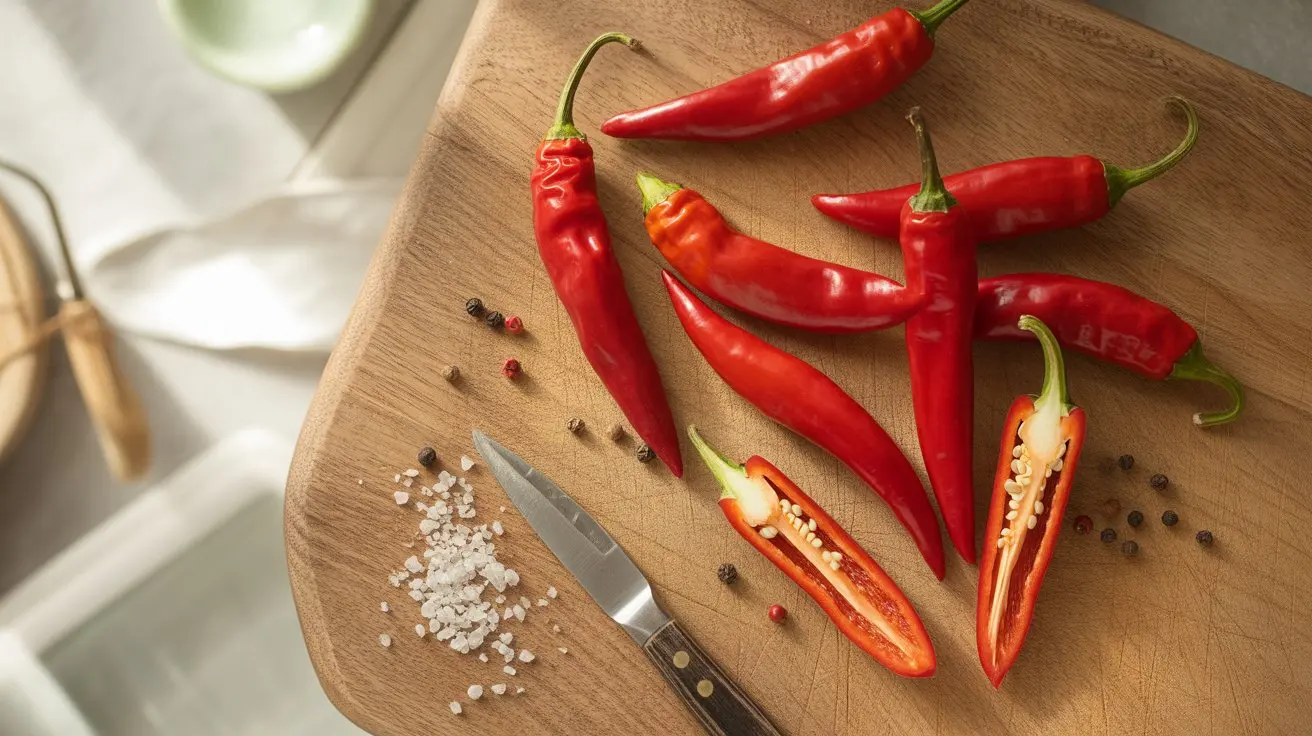
Teja Chili

The Teja chili is a slender, wrinkled Indian pepper delivering 50,000–100,000 SHU of smoky, earthy heat. Dried and ground into powders or whole in curries, it anchors South Asian cooking with a slow-building burn that lingers. Compared to a bird's eye chili's sharp needle-like punch, Teja hits at roughly the same intensity but with more depth and less brightness.
- Species: C. annuum
- Heat tier: Extra-Hot (100K–1M SHU)
- Comparison: 20x hotter than a jalapeño
What is Teja Chili?
Grown primarily in Andhra Pradesh and Telangana, the Teja chili — sometimes labeled S17 by exporters — is one of India's most commercially significant dried chili varieties. Its elongated, deeply wrinkled pods dry to a vivid red and carry a heat that builds steadily rather than striking all at once.
At 50,000–100,000 SHU, Teja sits firmly in the extra-hot intensity range alongside peppers like the smoky, earthy depth of the Kashmiri chili — though Teja runs far hotter than Kashmiri. The flavor profile is distinctly smoky with an earthy undertone that survives the drying process intact, making it more than just a heat delivery mechanism.
The C. annuum botanical family includes thousands of varieties, but Teja stands out for its unusually high oleoresin content — the compound that gives dried Teja powder its deep color and makes it valuable to food manufacturers for natural coloring. India exports hundreds of thousands of metric tons annually, with Guntur district serving as the global trading hub.
For home cooks and growers, Teja offers something rare: a pepper that performs as well in the garden as it does in the kitchen. Plants are productive, relatively compact, and well-suited to warm climates. Whether you're after the culinary punch or the ornamental appeal of bright red pods, Teja earns its place in any serious pepper collection.
History & Origin of Teja Chili
Teja's roots trace to the Guntur region of Andhra Pradesh, where chili cultivation has been central to local agriculture for centuries. The variety was developed and selected for high yield, intense color, and consistent heat — qualities that made it commercially dominant across Indian spice markets.
The Indian pepper growing tradition has long prized Andhra varieties for their heat and oleoresin content, and Teja became the benchmark. By the late 20th century, it had become India's most exported dried chili, shipped to markets in Asia, the Middle East, and increasingly the West.
The name 'Teja' is sometimes used loosely to describe several related Andhra cultivars, but the S17 designation is the standardized commercial form. Its rise mirrors the global expansion of South Asian cuisine and the food industry's demand for natural red colorants.
How Hot is Teja Chili? Heat Level & Flavor
The Teja Chili delivers 50K–100K Scoville Heat Units, placing it in the Extra-Hot tier (100K–1M SHU). That makes it roughly 20x hotter than a jalapeño.
Flavor notes: smoky and earthy.
Teja Chili Nutrition Facts & Health Benefits
Dried Teja chili is nutritionally dense relative to its small serving size. A 1-teaspoon serving of ground powder provides meaningful amounts of vitamin C, vitamin A (from beta-carotene), and vitamin B6. The high oleoresin content contributes antioxidant compounds including capsanthin, responsible for the deep red color.
Capsaicin — the compound driving Teja's heat — has been studied for anti-inflammatory and metabolism-supporting properties. Iron and potassium are present in modest amounts. Because Teja is used in small quantities, it contributes flavor and micronutrients without significant caloric load — a typical teaspoon contains fewer than 10 calories.
Best Ways to Cook with Teja Chili Peppers
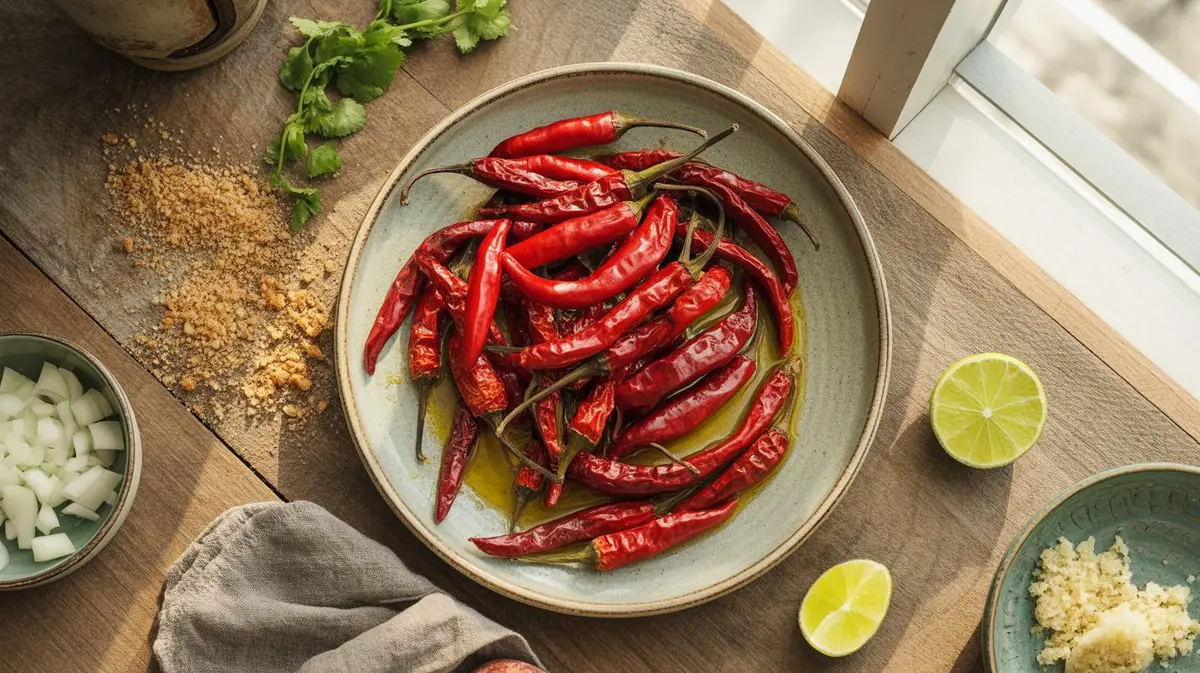
Teja is almost always used dried — whole pods, crushed flakes, or ground powder. The drying process concentrates both the heat and the smoky, earthy character that distinguishes it from brighter fresh chilies.
In South Indian cooking, whole dried Teja pods are tempered in hot oil at the start of a dish, releasing their color and fragrance before other ingredients are added. Ground Teja powder forms the backbone of many curry blends, vindaloo pastes, and achaar (pickles).
For those exploring high-heat culinary applications like those of the peach-toned sweet-hot Sugar Rush Peach, Teja offers a very different direction — earthy and smoke-forward rather than fruity. A pinch of Teja powder goes a long way; start with a quarter teaspoon in dishes serving four people and adjust from there.
Teja pairs naturally with mustard seeds, curry leaves, tamarind, and coconut — the flavor architecture of Andhra cuisine. Outside that tradition, it works well in dry rubs for grilled meats, spiced oils, and any preparation where you want heat with color and depth rather than just raw fire.
The sharp, grassy heat profile of the Thai Dragon makes an interesting comparison point — both sit in the same SHU range, but Teja's smokiness takes it in a completely different direction in the kitchen.
Where to Buy Teja Chili & How to Store
Dried whole Teja pods and ground powder are widely available at Indian grocery stores and online spice retailers. Look for powder with a deep, vivid red color — dull or brownish powder has lost potency. The small but fierce Dundicut pepper is sometimes stocked alongside Teja in South Asian markets if you need a comparison point.
Store whole dried pods in an airtight container away from light and heat; they hold well for 12 months. Ground powder loses pungency faster — use within 6 months for best results. Freezing whole pods extends shelf life significantly without compromising heat or flavor.
Best Teja Chili Substitutes & Alternatives
Whether you ran out of teja chili or just want to try something different, these peppers make solid stand-ins. We picked them based on heat range, flavor overlap, and how well they actually work in the same dishes.
Our top pick: Apollo Pepper (50K–100K SHU). Same species (C. annuum) and nearly the same heat, so it swaps in at a 1:1 ratio without changing the character of the dish. The flavor leans bright and crisp, which is close enough that most people won’t notice the difference in a cooked recipe.
How to Grow Teja Chili Peppers
Teja thrives in conditions that mimic its Andhra Pradesh homeland: full sun, warm temperatures, and well-drained soil. Start seeds indoors 8–10 weeks before your last frost date. Germination is reliable at 80–85°F soil temperature — a heat mat speeds things up considerably.
Transplant outdoors once nighttime temperatures stay above 55°F. Space plants 18–24 inches apart; they grow to roughly 3 feet tall and produce heavily when given room. For guidance on getting seeds started through to transplant, the techniques that work for cayenne apply almost directly to Teja.
Soil fertility matters more than most growers expect. Teja is a heavy feeder during pod development. Following sound advice on feeding schedules for productive pepper plants will make a noticeable difference in pod count and color intensity.
Water consistently but avoid waterlogged roots — Teja is drought-tolerant once established but produces better with even moisture. The cultivation approach used for thick-walled Rocoto-style plants differs significantly; Teja prefers leaner, faster-draining conditions.
Pods are ready to harvest when fully red, typically 75–90 days after transplant. For drying, harvest the entire plant before frost and hang it upside down in a warm, ventilated space. Pods dry evenly within 2–3 weeks and store well for up to a year in an airtight container.
Frequently Asked Questions
-
Both sit in the 50,000–100,000 SHU range, so they are roughly equivalent in raw heat. The practical difference is character — Teja burns with a slower, smokier build while the sharp, slender heat of the bird's eye chili hits faster and brighter.
-
Yes, though a 5-gallon container is the minimum for a productive plant. Container-grown Teja needs more frequent watering and fertilizing than in-ground plants, since nutrients deplete faster in limited soil volume.
-
Commercial 'chili powder' blends typically contain multiple spices including cumin and garlic powder, with much lower heat. Pure Teja powder is single-origin, significantly hotter, and carries a distinct smoky-earthy character that blended powders don't replicate.
-
Teja has one of the highest oleoresin contents of any commercial chili variety, making it valuable both as a heat source and as a natural red colorant for the food industry. India exports hundreds of thousands of metric tons annually, with Guntur district serving as the primary trading center.
-
'Guntur chili' refers to the regional growing area in Andhra Pradesh, while Teja (also labeled S17) is a specific cultivar within that region. Multiple varieties are grown in Guntur, but Teja is the most widely exported and commercially standardized of them.
- Directorate of Arecanut and Spices Development - Indian Chili Varieties
- Chile Pepper Institute, New Mexico State University
- USDA Agricultural Research Service - Capsicum
- Guntur Chili Export Statistics - APEDA
Species classification: C. annuum — based on published botanical taxonomy.