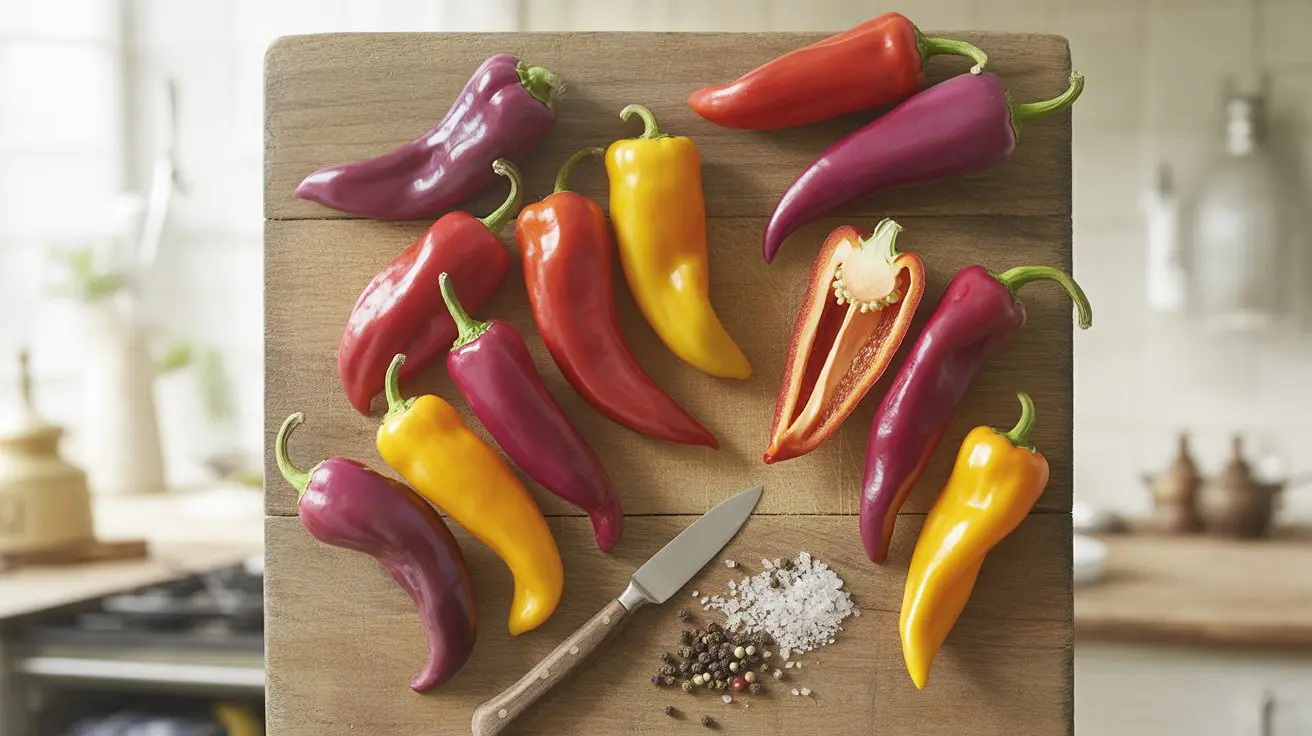
NuMex Twilight

NuMex Twilight is a ornamental pepper that earns its keep in the kitchen too. Developed at New Mexico State University, it produces small round fruits that ripen through purple, yellow, and orange before hitting red, hitting 30,000–50,000 SHU along the way. The heat is sharp and bright, roughly matching red-hot Louisiana-style heat without the vinegar backdrop.
- Species: C. annuum
- Heat tier: Hot (10K–100K SHU)
- Comparison: 10x hotter than a jalapeño
What is NuMex Twilight?
Most ornamental peppers are bred for looks at the expense of flavor. NuMex Twilight breaks that rule hard.
Developed by Dr. Paul Bosland at the Chile Pepper Institute, NMSU, this compact Capsicum annuum produces clusters of upright fruits that cycle through an almost theatrical color sequence — deep purple, cream, yellow, orange, and finally red, often with multiple colors on a single plant simultaneously. That visual spectacle is why it shows up in garden centers.
But at 30,000–50,000 SHU, the heat is no afterthought. The burn is quick and sharp, landing at the front of the palate rather than building slowly. Flavor-wise, expect brightness with a clean, slightly grassy finish — not smoky, not fruity, just direct.
The round, pea-sized fruits are small enough that you'd typically use them whole or halved rather than sliced. Fresh off the plant, the colored stages each carry slightly different intensity — purple fruits tend to be milder, while the red-ripe stage hits hardest.
For context, these sit in the hot pepper classification bracket — firmly above a jalapeño but below a habanero. That positions them as genuinely useful in cooking, not just a curiosity. The compact plant habit (under 18 inches) means they work on a kitchen windowsill or patio container, keeping fresh peppers within arm's reach of the stove.
History & Origin of NuMex Twilight
NuMex Twilight came out of New Mexico State University's Chile Pepper Breeding Program, the same program that produced the famous NuMex Big Jim and dozens of other named varieties. Dr. Paul Bosland, often called the "chilemaster," developed it primarily as an ornamental variety — the name references the multicolored fruit display that mimics a twilight sky.
NMSU's breeding program has a long history of developing C. annuum varieties suited to both commercial agriculture and home gardening in the American Southwest. Twilight fits that tradition of practical beauty: it was built to look good in a pot while still producing genuinely hot, edible fruit.
The variety gained traction through seed companies in the 1990s and has since become one of the more recognizable ornamental hot peppers in North American horticulture. It holds the All-America Selections award, a meaningful endorsement in the home garden market.
How Hot is NuMex Twilight? Heat Level & Flavor
The NuMex Twilight delivers 30K–50K Scoville Heat Units, placing it in the Hot tier (10K–100K SHU). That makes it roughly 10x hotter than a jalapeño.
Flavor notes: bright and sharp.
NuMex Twilight Nutrition Facts & Health Benefits
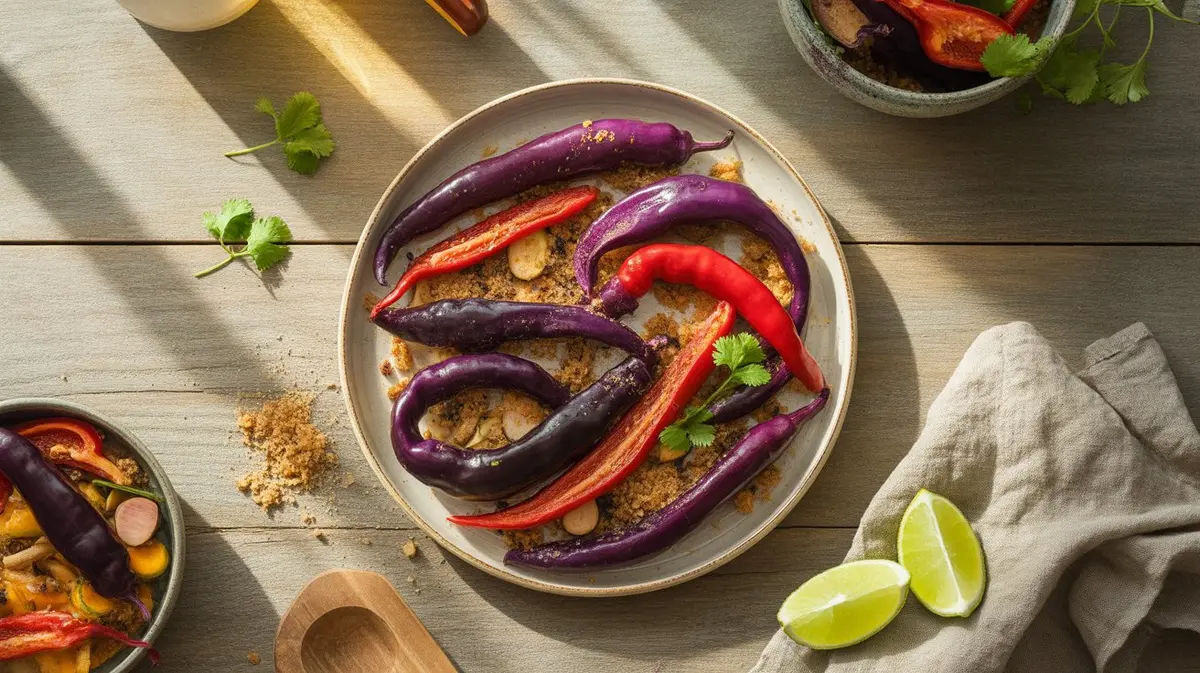
Like most hot peppers, NuMex Twilight fruits deliver solid nutritional value despite their small size. Ripe red fruits contain significant vitamin C — often exceeding bell peppers by weight — plus vitamin A from carotenoids that develop during ripening.
The heat compound, capsaicin, has been studied for its role in metabolism and as a topical analgesic. The molecular structure of capsaicin binds to TRPV1 receptors, producing the characteristic burn.
Because these peppers are typically consumed in small quantities, their macro contribution is minimal. Think of them as a micronutrient delivery vehicle — antioxidants, vitamins, and bioactive compounds in a very small package. The purple-stage fruits contain anthocyanins not present in the fully ripe red stage.
Best Ways to Cook with NuMex Twilight Peppers
Small peppers can be deceptive. At 30,000–50,000 SHU, a single ripe red NuMex Twilight fruit adds real heat to whatever it touches — roughly the same intensity as fiery Sichuan-style dried chilies used in Chinese cooking.
The bright, sharp flavor profile makes them particularly good in fresh preparations. Slice a few ripe fruits into a vinaigrette, or muddle them into a cocktail for heat without muddiness. They work well in Thai-inspired stir-fries where you want visible flecks of color alongside the burn.
For pickling, the round shape holds up beautifully. A simple brine of rice vinegar, sugar, and salt transforms them into table condiments that work anywhere you'd reach for pickled jalapeños. The color variety — if you pick across ripeness stages — gives you a visually striking jar.
Dried, they lose some of the brightness but concentrate heat effectively. Grind them into a powder for seasoning rubs, or leave whole for infusing oils. The flavor sits closer to the bold heat of Indian-style dried chilies than to smoked varieties — forward and clean.
For heat management, the purple-stage fruits are noticeably milder than red-ripe ones, which gives you some flexibility when cooking for mixed-tolerance groups.
Where to Buy NuMex Twilight & How to Store
Fresh NuMex Twilight fruits are rarely sold in grocery stores — your best bet is farmers markets, specialty produce shops, or growing your own. Plants are widely available at garden centers in spring.
If you get fresh fruits, refrigerate in a paper bag for up to 2 weeks. Avoid plastic bags, which trap moisture and accelerate softening.
For longer storage, freeze whole fruits on a sheet pan first, then transfer to a bag — they hold flavor well for 6 months. Drying works equally well: a dehydrator at 135°F for 8–10 hours produces shelf-stable pods that keep for a year in an airtight container away from light.
Best NuMex Twilight Substitutes & Alternatives
Whether you ran out of numex twilight or just want to try something different, these peppers make solid stand-ins. We picked them based on heat range, flavor overlap, and how well they actually work in the same dishes.
Our top pick: Cayenne Pepper (30K–50K SHU). Same species (C. annuum) and nearly the same heat, so it swaps in at a 1:1 ratio without changing the character of the dish. The flavor leans neutral and peppery, which is close enough that most people won’t notice the difference in a cooked recipe.
How to Grow NuMex Twilight Peppers
Container growers love NuMex Twilight for good reason — the plant tops out around 16–18 inches, making it one of the more manageable hot peppers for patio or windowsill growing. It needs the same conditions as most C. annuum cultivation: full sun, consistent moisture, and warm nights above 55°F.
Start seeds indoors 8–10 weeks before last frost. Germination takes 10–14 days at soil temperatures around 80–85°F. The plants are prolific once established, producing dozens of upright fruit clusters simultaneously — the same trait that makes them ornamentally striking.
One thing worth knowing: the upright fruit habit (fruits point skyward rather than hanging) means the plant holds moisture around the calyx. In humid climates, this can invite fungal issues. Space plants at least 12 inches apart and avoid overhead watering once fruit sets.
Soil should be well-draining with moderate fertility. Too much nitrogen pushes foliage at the expense of fruit. A balanced fertilizer at transplanting, then a switch to lower-nitrogen formula once flowering starts, works well.
Harvest at any color stage depending on intended use. For the full ornamental effect, leave fruits to cycle through the complete color sequence before picking. The plant continues producing through the season, so regular harvesting actually encourages more fruit set.
Frequently Asked Questions
-
They are fully edible at every color stage, with heat increasing as fruits ripen from purple through to red. At 30,000–50,000 SHU, the ripe red fruits are genuinely hot — treat them like a small hot chili, not a garnish.
-
At peak ripeness, NuMex Twilight runs roughly 10 times hotter than a typical jalapeño (3,000–8,000 SHU). The heat is also sharper and more immediate rather than the slower build jalapeños tend to produce.
-
Yes — purple-stage fruits are noticeably milder than fully ripe red ones, because capsaicin content increases as the fruit matures. If you want heat with less intensity, harvest at the orange stage rather than waiting for full red ripeness.
-
Expect fruit set roughly 70–80 days from transplant under good conditions. Starting seeds indoors 8–10 weeks before last frost gives you the longest possible outdoor growing season.
-
It is one of the better hot peppers for containers — the compact habit (under 18 inches) and prolific fruit set make it practical for pots as small as 3 gallons. Full sun and consistent watering are more critical in containers than in-ground, since pots dry out faster.
- Chile Pepper Institute, NMSU — NuMex Varieties
- All-America Selections — NuMex Twilight
- USDA GRIN — Capsicum annuum
Species classification: C. annuum — based on published botanical taxonomy.