
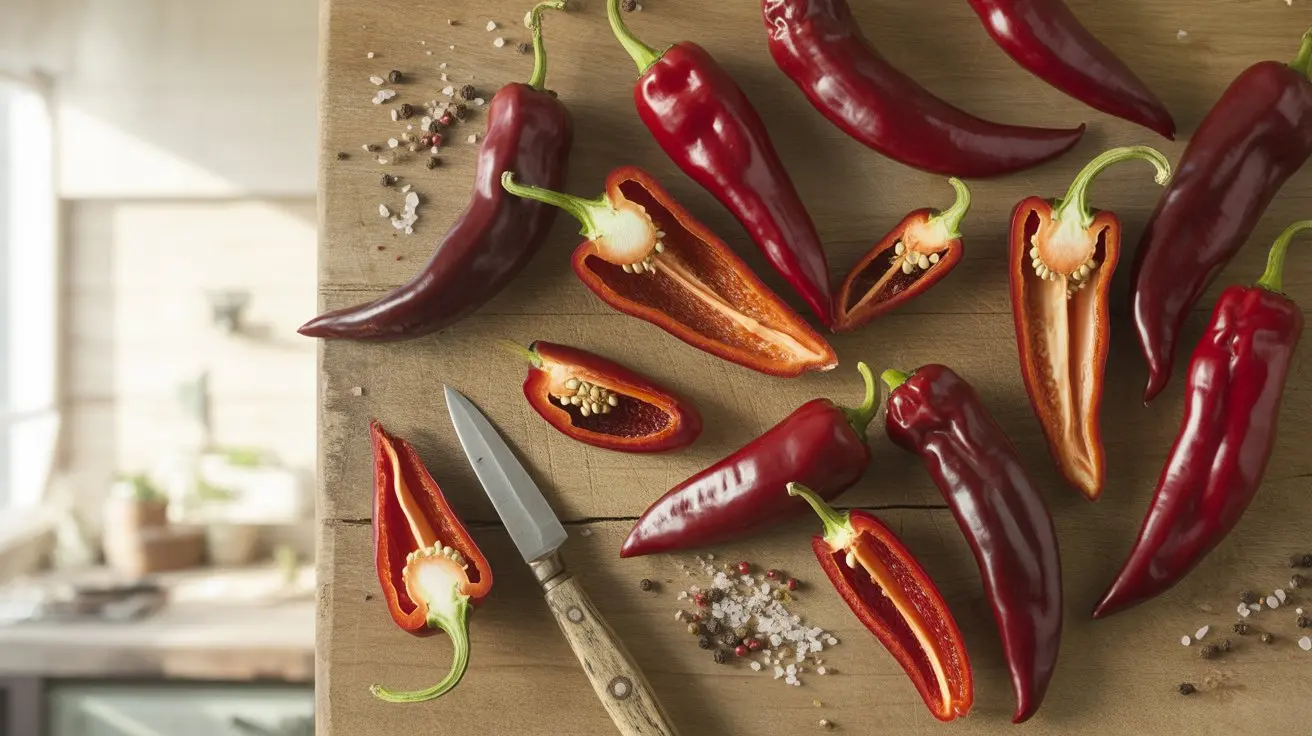
Chilhuacle Pepper

The chilhuacle pepper is a wrinkled, dried Mexican chile registering 1,500-2,500 SHU on the Scoville scale position — roughly on par with a mild smoky dried Fresno but with far more complexity. Its deep, smoky flavor makes it a cornerstone of Oaxacan cooking, particularly in mole negro and enchilada sauces.
- Species: Capsicum annuum
- Heat tier: Medium (1K–10K SHU)
What is Chilhuacle Pepper?
Grown primarily in the Cañada region of Oaxaca, the chilhuacle (sometimes spelled chilhuacle) is one of Mexico's most regionally specific dried chiles. It belongs to Capsicum annuum and reaches maturity as a wrinkled, leathery pod that dries to a dark reddish-brown or near-black color depending on variety.
Three distinct types exist: negro (darkest, most complex), rojo (red, slightly fruitier), and amarillo (yellow-orange, brighter flavor). All three share the same medium-intensity heat band of 1,500-2,500 SHU, making them approachable for cooks who want depth without serious burn.
The flavor profile sets it apart from other dried Mexican chiles. Toasted chilhuacles release notes of dried fruit, tobacco, and chocolate alongside their signature smokiness — qualities that develop through sun-drying on the plant rather than artificial drying. That extended drying process concentrates sugars and phenolic compounds, producing a complexity that's hard to replicate with fresher substitutes.
For home gardeners, the chilhuacle is a rewarding long-season project. Plants are vigorous, upright, and productive once established, though they require a longer growing window than shorter-season varieties. The wrinkled pods are visually striking even before harvest, making them a standout in any pepper garden.
History & Origin of Chilhuacle Pepper
The chilhuacle's story is inseparable from Oaxaca's Cañada region, a hot, semi-arid valley where the microclimate suits slow-ripening chile varieties. Indigenous communities in this region cultivated these peppers for centuries before Spanish contact, and the chile remains deeply embedded in local foodways.
Unlike many Mexican chiles that traveled widely through trade routes, the chilhuacle stayed close to home. It never achieved the commercial distribution of the earthy dried guajillo or the mild California-grown Anaheim with its Spanish mission roots, which helps explain why it remains largely unknown outside Mexican specialty markets.
Oaxacan cooks have used chilhuacles as the base for mole negro for generations, a tradition documented by food historians tracing pre-Columbian sauce-making techniques. The three color variants — negro, rojo, amarillo — likely represent generations of farmer selection for different culinary applications.
How Hot is Chilhuacle Pepper? Heat Level & Flavor
The Chilhuacle Pepper delivers 2K–3K Scoville Heat Units, placing it in the Medium tier (1K–10K SHU).
Flavor notes: smoky and complex.
Chilhuacle Pepper Nutrition Facts & Health Benefits
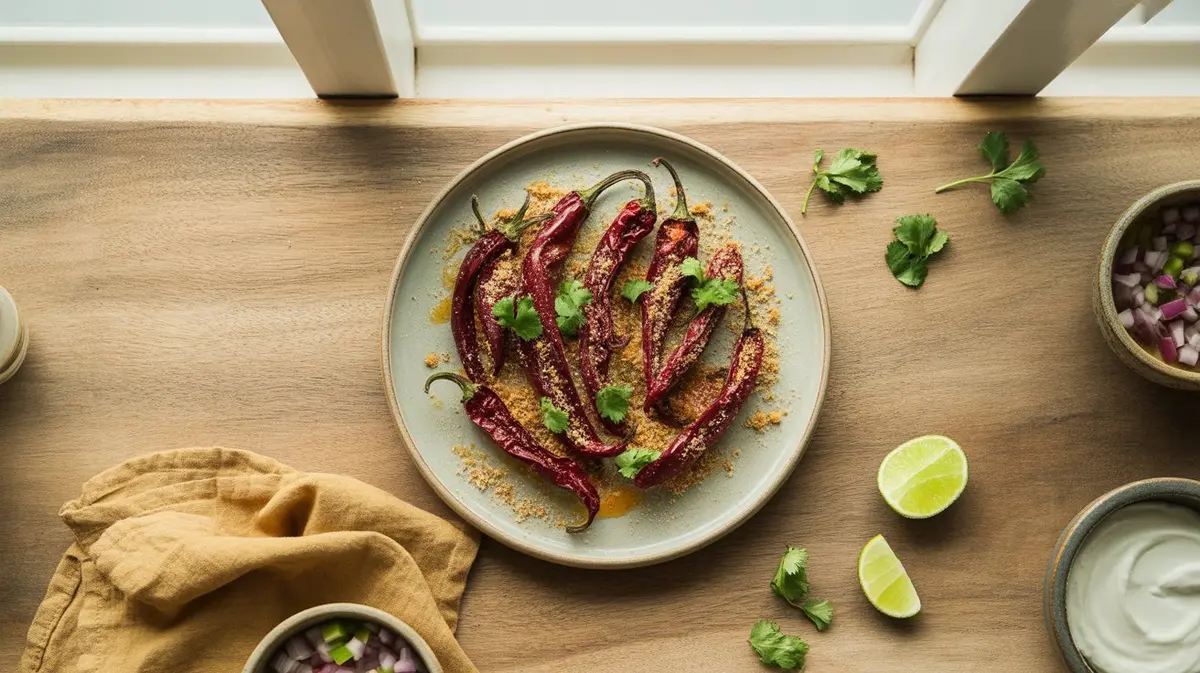
Dried chilhuacle peppers are nutritionally dense relative to their small serving size. A 1-ounce serving of dried chile provides roughly 90 calories, primarily from carbohydrates with minimal fat. Dried chiles are concentrated sources of vitamin A (as beta-carotene from the red pigments), vitamin C, and iron.
Capsaicin in the medium-intensity range has been studied for metabolic and anti-inflammatory effects, though amounts consumed in typical cooking are modest. The drying process concentrates antioxidants, making dried chilhuacles more nutrient-dense per gram than their fresh counterparts.
Best Ways to Cook with Chilhuacle Peppers
Chilhuacle negro enchiladas are the place to start. Toast two or three dried pods in a dry skillet until fragrant — about 30 seconds per side — then rehydrate in hot water for 20 minutes. Blend with garlic, charred onion, and a splash of the soaking liquid for a sauce that coats tortillas with a depth no commercial enchilada sauce can match.
For mole negro, chilhuacles work alongside other dried chiles to build the sauce's characteristic bitterness and smoke. The negro variety in particular contributes the near-black color that defines the dish. Check the practical guidance on chile rellenos if you want to experiment with rehydrated pods as a stuffing base.
The complex kitchen uses of dried pasilla overlap with chilhuacle applications, and the two can substitute for each other in a pinch — though chilhuacles tend to be smokier and slightly more bitter. Toast them before any application; dry heat activates aromatic compounds that raw pods simply don't release.
Ground chilhuacle powder adds a smoky backbone to dry rubs for pork or beef. The 1,500-2,500 SHU range means even heat-sensitive guests can eat the finished dish without distress.
Where to Buy Chilhuacle Pepper & How to Store
Look for chilhuacles in Mexican specialty grocers, particularly those stocking Oaxacan ingredients. Online retailers carrying regional Mexican chiles are your best bet outside major cities. The negro variety is most commonly available; rojo and amarillo are harder to find.
Choose pods that are pliable, not brittle — flexibility indicates proper moisture content and freshness. Avoid bags with visible mold or a musty smell.
Store in an airtight container away from light and heat. Properly stored dried chilhuacles keep for 6-12 months without significant flavor loss. Vacuum sealing extends shelf life further.
Best Chilhuacle Pepper Substitutes & Alternatives
Whether you ran out of chilhuacle pepper or just want to try something different, these peppers make solid stand-ins. We picked them based on heat range, flavor overlap, and how well they actually work in the same dishes.
Our top pick: Pasilla Pepper (1K–3K SHU). The heat level is close enough for a direct swap in salsas, sauces, and stir-fries. Flavor leans earthy and rich, so the taste will shift a bit — but the overall heat stays in the same range.
How to Grow Chilhuacle Peppers
Chilhuacle plants need a long season — plan on 90-110 days from transplant to first harvest of mature pods ready for drying. Start seeds indoors 10-12 weeks before your last frost date. Germination happens reliably at soil temperatures between 75-85°F; a heat mat speeds things up considerably.
Transplant outdoors only after nighttime temperatures stay consistently above 55°F. These plants respond well to the same step-by-step germination walkthrough used for other Capsicum annuum varieties — no exotic treatment required, just patience.
Spacing matters more than many growers realize. Give each plant 18-24 inches in all directions. Chilhuacle plants become bushy and benefit from airflow to prevent fungal issues, especially in humid climates. Full sun is non-negotiable — aim for 8+ hours daily.
The how plants develop heat from growing conditions is relevant here: stress from inconsistent watering can push SHU upward slightly, but it also reduces yield. Consistent moisture during pod development produces better results than drought cycling.
Leave pods on the plant until they reach full color and the skin begins to wrinkle naturally. That on-plant drying is what distinguishes chilhuacle flavor from artificially dried chiles. Compare this approach to the cultivation habits of the variable Padrón, which is harvested young and green for a completely different culinary result.
Frequently Asked Questions
-
All three are the same species dried to different maturity stages and color variants, producing distinct flavor profiles. Negro is darkest with the most bitter, smoky complexity; rojo is slightly fruitier; amarillo has a brighter, less smoky character suited to lighter sauces.
-
Yes, the dried smoky pasilla's culinary applications overlap significantly with chilhuacle, and the heat ranges are nearly identical at 1,000-2,500 SHU. The swap works, though chilhuacle negro contributes a deeper bitterness that pasilla doesn't fully replicate.
-
A chilhuacle sits at 1,500-2,500 SHU, which puts it at the lower end of what a fresh medium-heat Fresno delivers — Fresnos typically reach 2,500-10,000 SHU. The chilhuacle's heat is mild enough that most people notice the flavor complexity far more than the burn.
-
From transplant, expect 90-110 days before pods reach full color and begin wrinkling naturally on the plant. Starting seeds indoors 10-12 weeks before last frost gives you the long growing window these plants require.
-
They are both Capsicum annuum varieties with overlapping dark, wrinkled dried-pod appearance and similar SHU ranges, but they are distinct cultivars from different regions. The fresh green flavor and aroma of chilaca differs notably from the dried, smoky character that defines chilhuacle.
- Chile Pepper Institute - New Mexico State University
- Diana Kennedy, The Cuisines of Mexico - regional chile documentation
- USDA FoodData Central - dried chile peppers nutritional data
- Oaxacan Food Culture Documentation - CONACULTA
Species classification: Capsicum annuum — based on published botanical taxonomy.