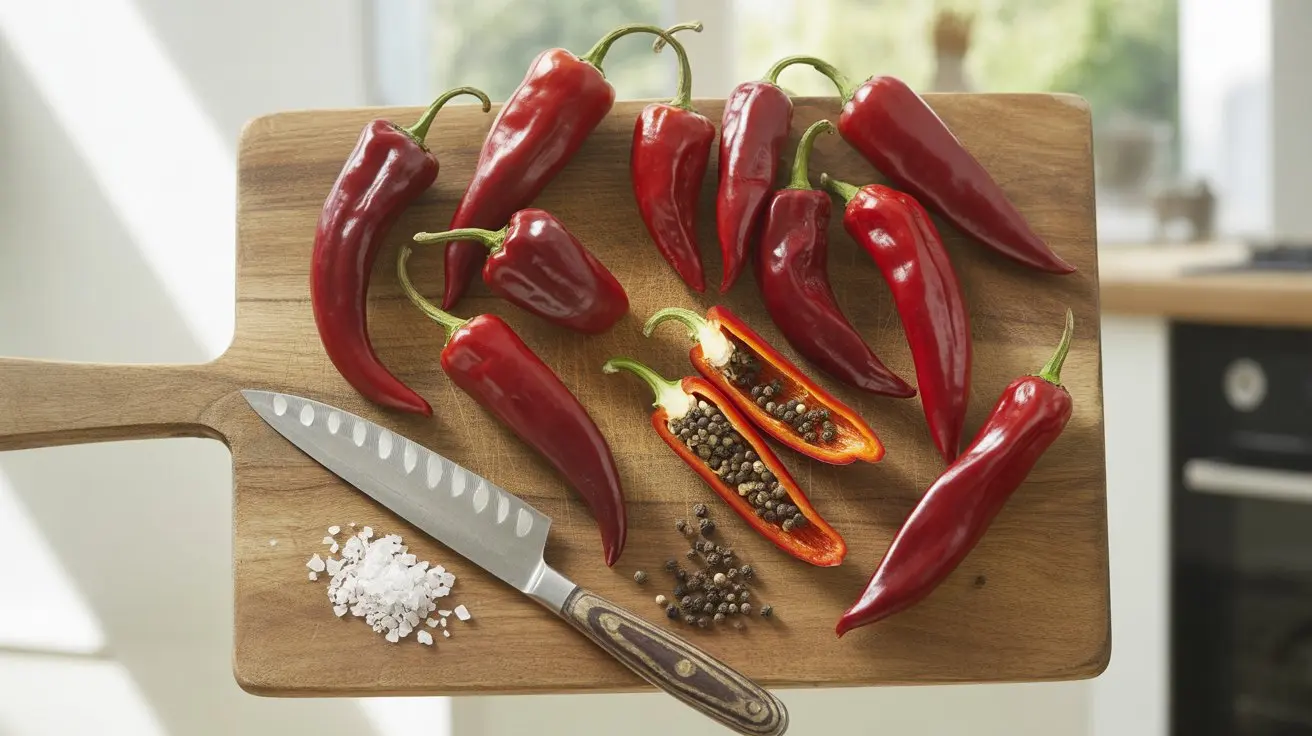
Aji Panca

Aji Panca is a deep burgundy dried pepper from Peru's coastal valleys, registering just 1,000–1,500 SHU — well below a serrano's sharp mid-range bite. Its defining character is a slow, smoky warmth with hints of berry and dried fruit. Used for centuries in Peruvian cooking, it is one of the most important chiles in South American cuisine.
- Species: C. baccatum
- Heat tier: Medium (1K–10K SHU)
What is Aji Panca?
Long before Spanish colonizers arrived in South America, the Aji Panca was already a staple along Peru's Pacific coast. Belonging to the C. baccatum species — a lineage distinct from the Mexican annuum and Caribbean chinense varieties — this pepper was cultivated in the Andean foothills and coastal valleys where dry conditions concentrate its sugars and deepen its color.
Fresh pods are elongated and turn a rich burgundy-red at maturity, reaching roughly 3–4 inches in length. Most of the world encounters Aji Panca in its dried form, where the color deepens to near-black and the flavor becomes intensely smoky with undercurrents of dried cherry and cocoa. That complexity puts it in a different category than most low-heat chiles.
At 1,000–1,500 SHU, it sits at the lower end of the medium heat intensity band — comparable to the deep red dried pepper with mild warmth from Mexico, though the flavor profiles diverge significantly. Where ancho leans toward raisin and earthiness, Aji Panca goes smokier and fruitier.
The pepper is central to Peruvian anticuchos (grilled beef heart skewers), marinades, and stews. Its low heat makes it approachable for cooks who want depth without fire. In paste form, it is one of the most useful ingredients in the Andean pantry.
History & Origin of Aji Panca
Peru's coastal and Andean valleys have cultivated C. baccatum peppers for over 5,000 years, with archaeological evidence from sites like Huaca Prieta predating Incan civilization. The Aji Panca specifically became embedded in the culinary traditions of coastal Peru, where it was dried in the sun and ground into pastes long before any written record.
The Incan empire standardized its use across the Andes, incorporating it into ceremonial foods and everyday cooking. After Spanish colonization in the 16th century, Aji Panca remained a fixture in Peruvian kitchens even as European ingredients entered the food supply — a testament to how deeply it was rooted in the regional pepper tradition.
Today it is considered one of Peru's three most important chiles alongside Aji Amarillo and Aji Limo, and it has gained international recognition as Peruvian cuisine has risen in global prominence.
How Hot is Aji Panca? Heat Level & Flavor
The Aji Panca delivers 1K–2K Scoville Heat Units, placing it in the Medium tier (1K–10K SHU).
Flavor notes: smoky and fruity.
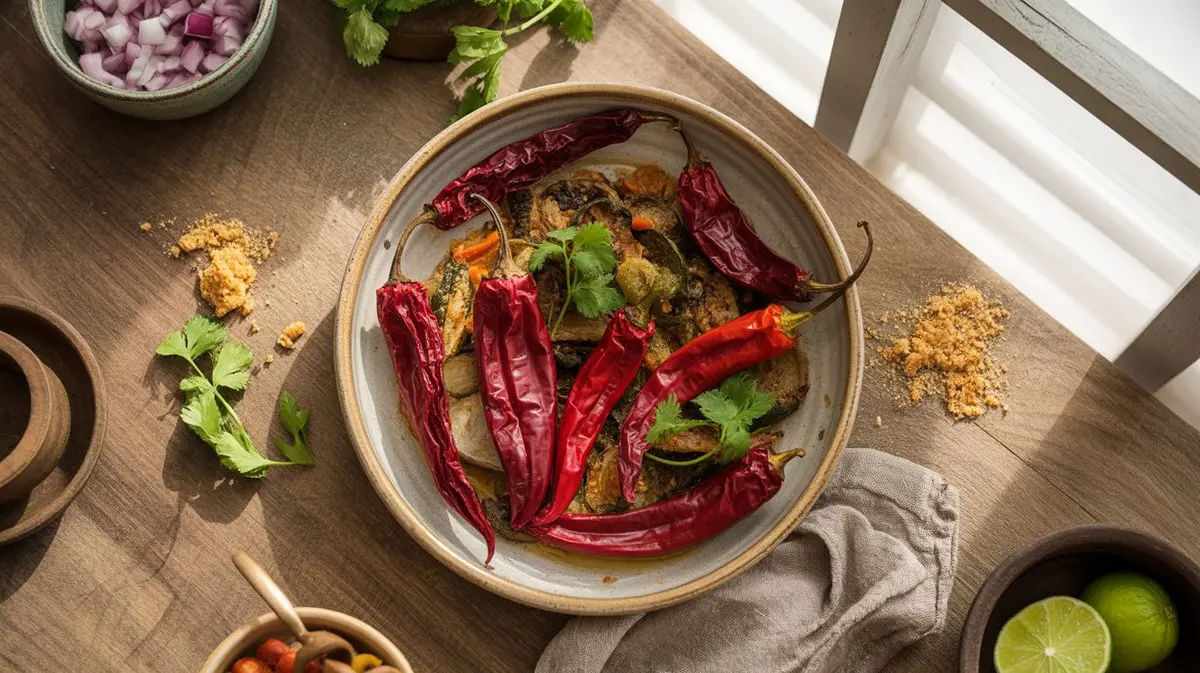
Aji Panca Nutrition Facts & Health Benefits
Like most dried chiles, Aji Panca is nutritionally dense relative to its typical serving size. Dried peppers concentrate vitamins and antioxidants as moisture is removed.
A 1-tablespoon serving of Aji Panca paste (roughly 15g) provides meaningful amounts of vitamin C, vitamin A (from carotenoids), and capsaicin — the compound responsible for both heat and the chemistry behind how peppers interact with pain receptors.
Its deep burgundy color signals high anthocyanin and carotenoid content, both associated with antioxidant activity. Sodium in commercial pastes varies by brand; check labels if sodium intake is a concern. Calorie count per tablespoon is minimal — typically under 20 calories.
Best Ways to Cook with Aji Panca Peppers
Aji Panca is almost always used dried or as a paste. The drying process is what unlocks its full character — the smoky, berry-forward flavor that makes it irreplaceable in Peruvian cooking.
The most traditional use is in anticuchos de corazón, where the paste is rubbed into beef heart along with cumin and garlic before grilling over charcoal. The smokiness of the pepper and the char from the grill amplify each other in a way that feels entirely intentional.
For home cooks, the easiest entry point is Aji Panca paste, sold jarred in Latin markets and online. A tablespoon stirred into braised chicken, lamb stew, or black bean soup adds a layer of complexity that is hard to identify but impossible to miss. It also works well in dry rubs for pork ribs or brisket.
For those who prefer fresh vs dried pepper guidance when deciding how to use it, the dried form is strongly preferred here — fresh pods lack the depth that makes this pepper special.
Its 1,000–1,500 SHU range means it adds flavor without overwhelming heat, making it suitable for dishes where children or heat-sensitive guests will eat. Compare its approach to the mild warmth and sweet tang of South African peppadews — both are low-heat peppers, but Aji Panca runs in a smokier, more savory direction.
Where to Buy Aji Panca & How to Store
Jarred Aji Panca paste is the most widely available form outside Peru and can be found in Latin American grocery stores or ordered online. Dried whole pods are less common but worth seeking out from specialty importers.
Once opened, paste should be refrigerated and used within 2–3 weeks, or frozen in tablespoon-sized portions for up to 6 months. Whole dried pods keep well at room temperature in an airtight container for up to a year if stored away from light and moisture.
When buying dried pods, look for flexibility — completely brittle pods have lost moisture unevenly and may be old. Deep burgundy color without mold or off-odors is the quality indicator to prioritize.
Best Aji Panca Substitutes & Alternatives
Whether you ran out of aji panca or just want to try something different, these peppers make solid stand-ins. We picked them based on heat range, flavor overlap, and how well they actually work in the same dishes.
Our top pick: Urfa Biber (500–2K SHU). The heat level is close enough for a direct swap in salsas, sauces, and stir-fries. Flavor leans smoky and earthy, so the taste will shift a bit — but the overall heat stays in the same range.
How to Grow Aji Panca Peppers
The hardest part of growing Aji Panca is the drying stage, not germination. The pepper needs extended dry heat to develop its characteristic color and flavor, which makes humid climates genuinely challenging. If you live somewhere with wet summers, plan for a greenhouse finish or invest in a dehydrator.
In the ground, plants reach 2–3 feet tall and prefer full sun with well-draining soil. As a C. baccatum, it is more cold-tolerant than chinense varieties but still needs soil temperatures above 65°F before transplanting outdoors. Start seeds indoors 10–12 weeks before last frost.
The plants are productive and relatively disease-resistant. Pods mature to their deep burgundy color in approximately 90–100 days from transplant. Harvest when fully colored and allow them to dry on the vine if weather permits, or cut and finish in a dehydrator at 125–135°F for 8–12 hours.
For a complete germination-to-harvest walkthrough, the pepper cultivation full guide covers spacing, fertilization, and overwintering. Aji Panca's cultivation needs are broadly similar to the mild South African pepper with distinctive growing habits — both prefer warm, dry conditions and consistent watering without waterlogging.
Frequently Asked Questions
-
At 1,000–1,500 SHU, Aji Panca is significantly milder than a jalapeño, which typically runs 2,500–8,000 SHU. Most people experience it as a warm background heat rather than anything sharp or biting.
-
Ancho is the closest widely available substitute — both sit in the 1,000–2,000 SHU range and are used in dried or paste form. The flavor differs: ancho is earthier and raisin-like, while Aji Panca is smokier with more berry character.
-
Latin American grocery stores, specialty food importers, and online retailers like Amazon carry both jarred paste and dried whole pods. Goya and Inca's Food are two brands commonly stocked in US supermarkets with Latin sections.
-
No — both are Peruvian C. baccatum peppers, but they are distinct varieties with very different flavor profiles. Aji Amarillo is orange, fruity, and significantly hotter at 30,000–50,000 SHU, while Aji Panca is dark burgundy, smoky, and mild.
-
Dried whole pods should be soaked in warm water for 20–30 minutes before blending into sauces or marinades. Jarred paste is ready to use directly and skips this step entirely.
- Chile Pepper Institute — C. baccatum Species Overview
- Huaca Prieta Archaeological Evidence — Capsicum in Pre-Columbian Peru
- USDA FoodData Central — Dried Chili Pepper Nutritional Data
- Johnny's Selected Seeds — C. baccatum Growing Notes
Species classification: C. baccatum — based on published botanical taxonomy.