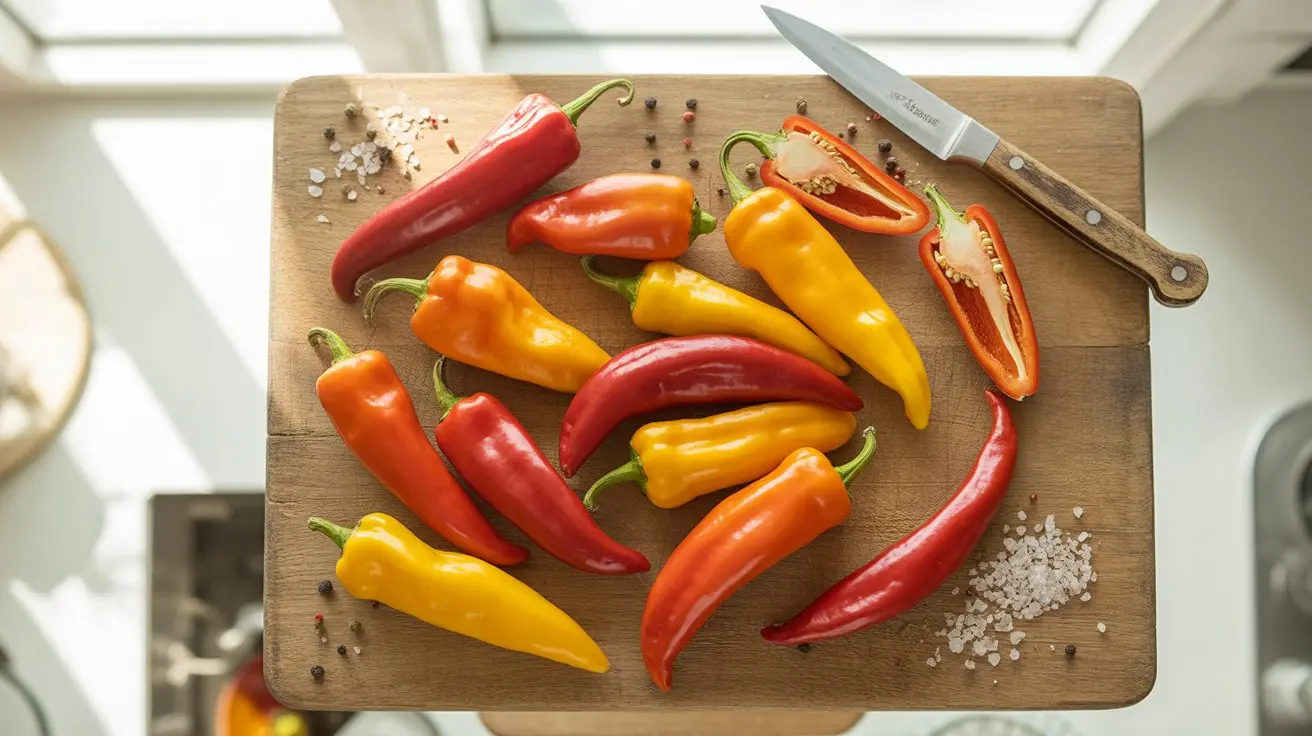
Aji Dulce

Aji dulce is a sweet, aromatic C. chinense pepper from Venezuela registering just 0–500 SHU — essentially zero heat despite being a close botanical cousin of the habanero. Its lantern shape and complex floral-fruity fragrance make it irreplaceable in Caribbean cooking, particularly in sofrito. If you want habanero aroma without the fire, this is your pepper.
- Species: C. chinense
- Heat tier: Mild (0–999 SHU)
What is Aji Dulce?
The flavor hits you before the heat does — because there is no heat. Aji dulce delivers the same intoxicating tropical aroma as its habanero relatives while topping out at 500 SHU on the Scoville measurement scale. That combination of fragrance without fire is what makes it so prized across the Caribbean and northern South America.
Botanically, this is a C. chinense pepper — the same species as some of the world's hottest chiles. But a genetic quirk dramatically suppresses capsaicin production, leaving behind pure sweetness and that characteristic fruity depth. The small lantern-shaped pods ripen from green through yellow to red, with the red stage offering the most developed sweetness.
Flavor-wise, expect notes of tropical fruit, herbs, and a subtle smokiness that becomes more pronounced when the peppers are roasted or charred. Raw, they taste almost like a sweet bell pepper with far more personality. Cooked low and slow, they release an aroma that forms the backbone of Puerto Rican and Dominican sofrito.
Among mild-range sweet peppers, aji dulce occupies a unique niche — it brings the complexity of a hot pepper's genetics to dishes where heat would be unwelcome. That's a genuinely useful thing to have in the kitchen.
History & Origin of Aji Dulce
Aji dulce has been cultivated across Venezuela, Trinidad, Puerto Rico, and the Dominican Republic for centuries, though its exact origins trace to the northern coast of South America. The name simply means "sweet pepper" in Spanish, reflecting how central this variety became to everyday Caribbean cooking.
In Puerto Rico, it is known locally as ají caballero or just ají dulce, and it forms the aromatic foundation of recaíto and sofrito — the flavor base used in countless traditional dishes. Trinidad developed its own closely related strain, sometimes called seasoning pepper, that cooks rely on in the same way.
The pepper belongs to the C. chinense botanical family, which likely originated in Amazonia before spreading throughout the Caribbean basin via indigenous trade routes. Its presence in kitchens from Caracas to San Juan speaks to how thoroughly it embedded itself in South American pepper traditions over generations.
How Hot is Aji Dulce? Heat Level & Flavor
The Aji Dulce delivers 0–500 Scoville Heat Units, placing it in the Mild tier (0–999 SHU).
Flavor notes: sweet and aromatic.
Aji Dulce Nutrition Facts & Health Benefits
A 100-gram serving of aji dulce provides roughly 30 calories, with minimal fat and about 6 grams of carbohydrates. Like other C. chinense varieties, these peppers are rich in vitamin C — a single serving can deliver over 100% of the recommended daily intake.
The red-ripe stage contains significantly more beta-carotene than green pods, contributing to vitamin A intake. Capsaicin is nearly absent at these SHU levels, so the anti-inflammatory compounds associated with hotter peppers are minimal. The peppers do provide useful amounts of vitamin B6 and potassium, making them a nutritious addition beyond their aromatic value.
Best Ways to Cook with Aji Dulce Peppers
Sofrito is where aji dulce earns its reputation. The peppers are blended with onion, garlic, cilantro, and culantro to create the aromatic base that starts nearly every Puerto Rican and Dominican dish. No other pepper replicates that specific floral-herbal-sweet combination — substituting bell peppers produces something flat by comparison.
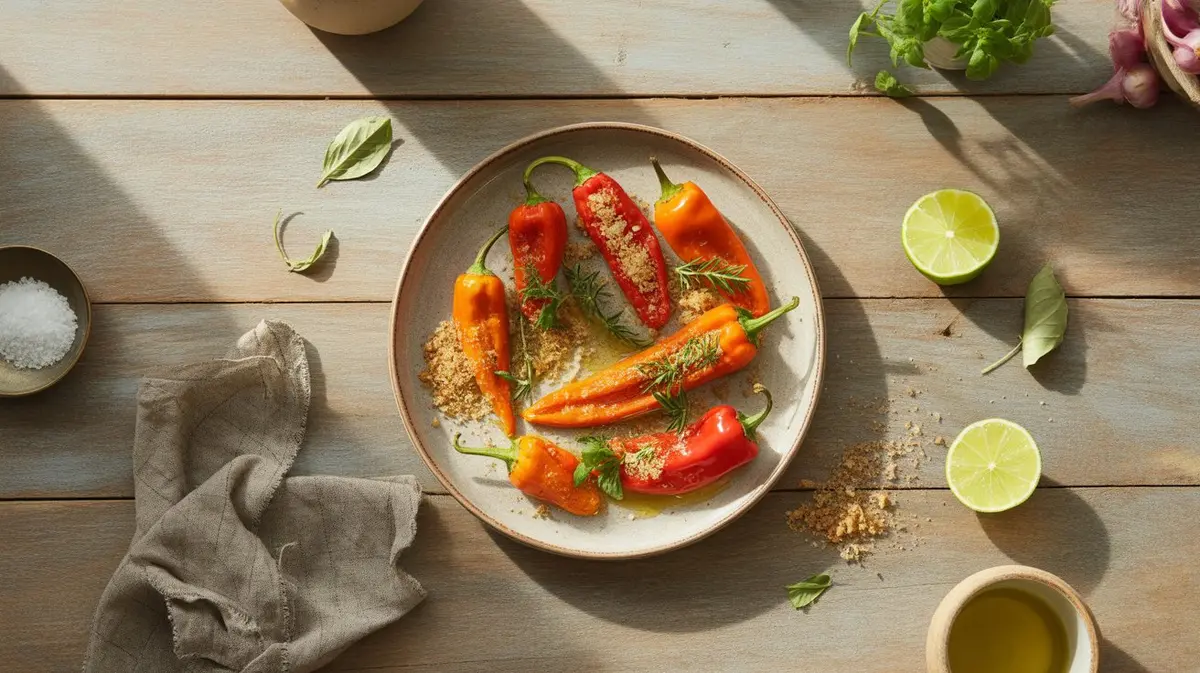
Beyond sofrito, the applications are broad. Slice them raw into salads for a pop of sweetness with tropical undertones. Roast them whole until charred and serve alongside grilled meats. Stuff them with cheese or seasoned rice — their size (roughly 1–2 inches) makes them ideal for small bites.
For cooking comparisons within the mild sweet category, the zero-heat Italian frying pepper with thin walls works well in similar roasting applications, but lacks aji dulce's aromatic complexity. The sweet, thick-walled pimento used in pimento cheese and stuffing shares the no-heat profile but has a different flavor register entirely.
Aji dulce also freezes exceptionally well — blend a large batch into sofrito base and freeze in ice cube trays for year-round use. The aroma survives freezing better than most aromatic herbs, which makes seasonal growing practical for year-round cooking.
Where to Buy Aji Dulce & How to Store
Fresh aji dulce is hard to find outside Caribbean grocery stores and Latin markets, particularly in areas with Puerto Rican or Dominican communities. Farmers markets in the Northeast US sometimes carry them during summer. Online seed sources are the most reliable route to growing your own.
Fresh peppers keep 1–2 weeks refrigerated in a paper bag or loosely wrapped. For longer storage, blend into sofrito base and freeze in portions — flavor holds well for 6 months. Dried aji dulce is occasionally available but loses much of the aromatic quality that makes it special. Buy red-ripe pods for fullest flavor.
Best Aji Dulce Substitutes & Alternatives
Whether you ran out of aji dulce or just want to try something different, these peppers make solid stand-ins. We picked them based on heat range, flavor overlap, and how well they actually work in the same dishes.
Our top pick: Banana Pepper (0–500 SHU). The heat level is close enough for a direct swap in salsas, sauces, and stir-fries. Flavor leans mild and tangy, so the taste will shift a bit — but the overall heat stays in the same range.
How to Grow Aji Dulce Peppers
Start seeds indoors 8–10 weeks before last frost. Germination is reliable at soil temperatures above 80°F, so bottom heat helps considerably. As a C. chinense, this variety runs slower than jalapeños or bells — expect 85–95 days from transplant to ripe fruit, though green peppers are usable much earlier.
Plant spacing of 18–24 inches gives the bushy plants room to branch. They're productive in containers too — a five-gallon pot works well on a patio or balcony. Full sun and consistent moisture matter more than soil richness; overfertilizing with nitrogen pushes foliage at the expense of fruit.
For anyone starting from seed for the first time, the practical guide to growing from seed covers the fundamentals that apply directly here. If you're growing multiple varieties close together, knowing how to hand-pollinate for variety isolation keeps strains true — important if you're saving seeds.
Harvest red for maximum sweetness, but green peppers have their own grassy brightness that works in certain dishes. The plants continue producing through the season with regular harvesting.
Frequently Asked Questions
-
Both belong to C. chinense, but aji dulce carries a genetic variation that suppresses capsaicin production while preserving the aromatic compounds responsible for that distinctive tropical fragrance. The chemistry behind why capsaicin triggers heat explains why these two traits can be decoupled — aroma molecules and capsaicinoids are produced through separate biosynthetic pathways.
-
You can swap it in for the aroma, but you will get none of the heat — which is either a feature or a problem depending on the dish. For sofrito and seasoning pastes, aji dulce is the preferred choice; for salsas where heat is central, you would need to add another pepper alongside it.
-
Both sit at the sweet, no-heat end of the pepper spectrum, but the comparison mostly ends there. Bell peppers are grassy and mild; aji dulce has a floral, almost perfumed sweetness with tropical fruit undertones that bell peppers simply do not have.
-
They are closely related but not identical — Trinidad's seasoning pepper is a local strain selected over generations in Trinidad and Tobago, while Venezuelan aji dulce has its own regional variation. Both share the same no-heat aromatic C. chinense profile, and cooks often use them interchangeably. You can see how the two compare directly in the Aji Dulce vs Trinidad Perfume Pepper side-by-side.
-
Red-ripe pods have the fullest sweetness and most developed aroma, making them ideal for sofrito and cooking applications where the pepper's fragrance is the point. Green pods have a sharper, grassier flavor that works in raw preparations where you want brightness over sweetness.
- Chile Pepper Institute - Capsicum Species Overview
- USDA GRIN - Capsicum chinense Jacq.
- University of Puerto Rico Agricultural Extension - Traditional Pepper Varieties
Species classification: C. chinense — based on published botanical taxonomy.