7 Pot Douglah

The 7 Pot Douglah is a Trinidad-born super-hot with a flavor profile that sets it apart from the typical scorcher - nutty, earthy undertones riding underneath 1,200,000-1,853,986 SHU of sustained heat. That depth of flavor makes it genuinely useful in the kitchen, not just a heat stunt. Roughly 4-5 times hotter than a ghost pepper, this dark, bumpy C. chinense is a serious cook's pepper.
- Species: C. chinense
- Heat tier: Super-Hot (1M+ SHU)
- Comparison: 371x hotter than a jalapeño
What is 7 Pot Douglah?
Most super-hots taste like pure fire. The 7 Pot Douglah tastes like fire with a backstory.
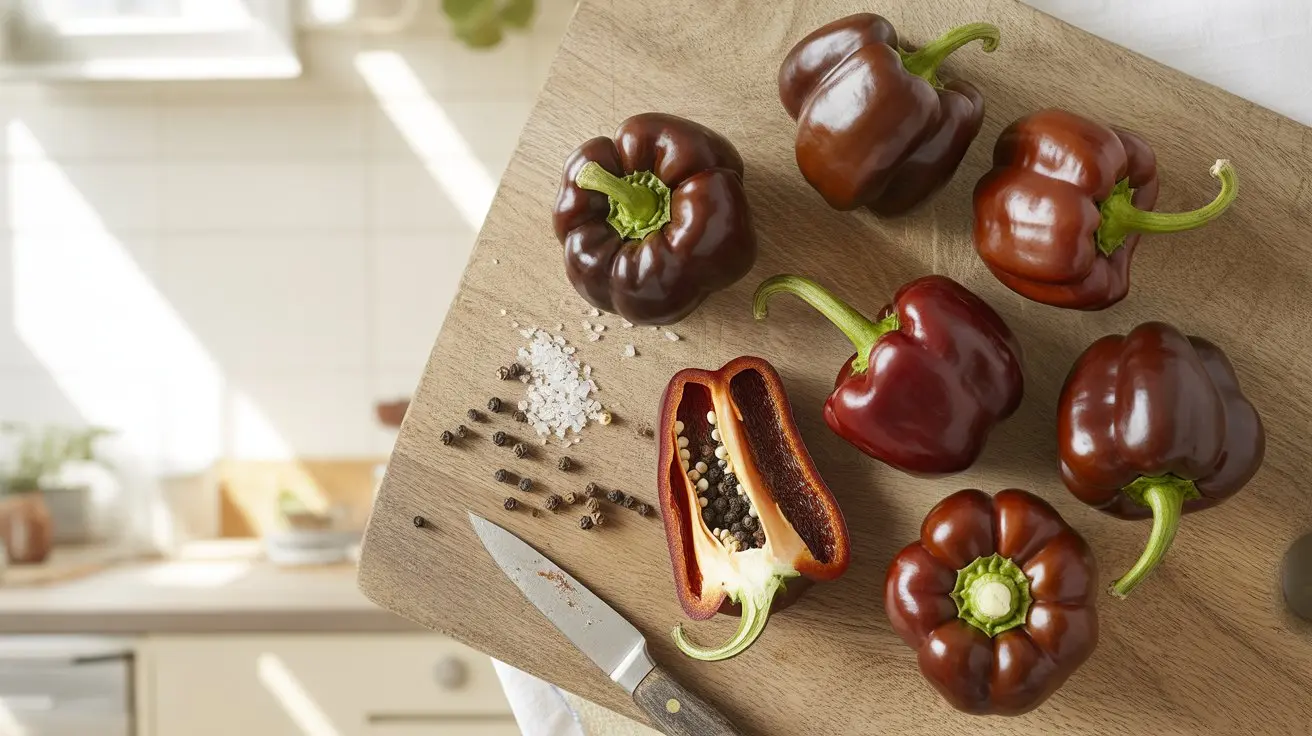
This Trinidad native produces small, deeply wrinkled pods that ripen to a dark chocolate-brown - almost mahogany at peak maturity. That color signals something beyond typical super-hot genetics: a flavor base that's genuinely nutty and earthy, reminiscent of roasted seeds or dark chocolate before the heat takes over.
SHU range sits at 1,200,000-1,853,986, putting it firmly in the super-hot category alongside some of the most extreme peppers ever documented. For context, the ghost pepper tops out around 1,000,000 SHU - the Douglah starts where that pepper ends.
The name comes from Trinidadian Creole. "7 Pot" refers to the old claim that one pepper could season seven pots of stew - a nod to potency, not just heat. "Douglah" is a Trinidadian term for someone of mixed African and Indian heritage, reflecting the island's complex cultural history. The pepper itself embodies that complexity: it's not a one-note burner.
The bumpy, constricted pod shape is characteristic of the botanical family that produces many of the world's most extreme heat varieties. What distinguishes the Douglah is that the flavor actually survives the heat - something that can't be said for every variety in this tier.
History & Origin of 7 Pot Douglah
Trinidad has been producing extreme C. chinense varieties for generations, and the 7 Pot Douglah sits at the center of that tradition. The island's hot pepper culture runs deep - peppers appear in everything from pepper sauce to stewed meats, and local growers have selectively cultivated for both heat and flavor over decades.
The Douglah gained international attention in the early 2010s when the super-hot community began documenting and sharing seeds globally. Its distinctive dark coloration and unusually complex flavor made it stand out from the flood of new extreme varieties being developed at the time.
Its Trinidadian roots connect it to a broader regional pepper tradition that also produced the scorching fruity heat of Moruga Scorpion genetics and the culturally rooted Butch T lineage. The Douglah predates the commercial super-hot race - it's a traditional variety that the heat community discovered, not one engineered for records.
How Hot is 7 Pot Douglah? Heat Level & Flavor
The 7 Pot Douglah delivers 1.2M–1.9M Scoville Heat Units, placing it in the Super-Hot tier (1M+ SHU). That makes it roughly 371x hotter than a jalapeño.
Flavor notes: nutty and earthy.
7 Pot Douglah Nutrition Facts & Health Benefits
Like all hot peppers, the Douglah delivers vitamin C in meaningful quantities - a single fresh pod contains more than the daily recommended value, though few people eat a whole pod in one sitting.
Capsaicin, the compound responsible for heat, has documented associations with metabolism support and anti-inflammatory pathways. The chemistry behind capsaicin's burn response explains why the heat feels so sustained at these SHU levels.
The dark pod color indicates higher antioxidant content than green or yellow varieties - similar to the relationship between dark and light chocolate. Dried Douglah powder retains most of these compounds. Calories per pod are negligible.
Best Ways to Cook with 7 Pot Douglah Peppers
The Douglah's nutty, earthy flavor makes it one of the more flexible super-hots for actual cooking. Where many extreme peppers contribute only heat, this one adds character.
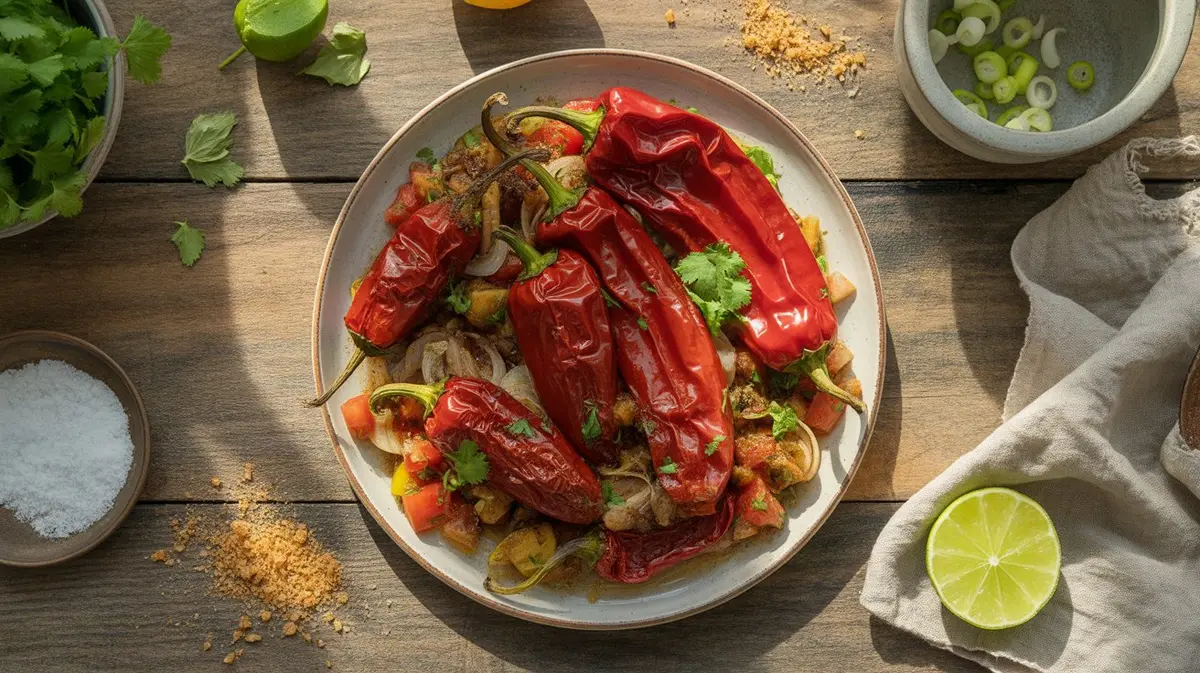
Dried and ground, it produces a dark powder that works into dry rubs for beef or lamb - the earthiness complements red meat in a way that fruity super-hots don't. A pinch goes into chili, mole-adjacent sauces, or dark chocolate desserts where the flavor complexity can actually express itself.
Fermented hot sauce is where the Douglah really performs. A mash of Douglah pods with garlic, salt, and a small amount of roasted cumin fermented for two to three weeks produces a sauce with real depth. The heat is serious - start with 1/4 of a pod per quart of sauce if you want something broadly usable.
Fresh pods can be deseeded and used in small quantities in stews or braises, where long cooking mellows the raw capsaicin intensity while the flavor base survives. Pairing with coconut milk, dark beans, or roasted root vegetables works well.
For heat management when cooking, the practical guide on stopping capsaicin burn is worth reading before you start - dairy fat and starchy foods are your tools, not water.
Compared to the broad culinary applications of the Carolina Reaper, the Douglah's earthier profile fits savory applications more naturally.
Where to Buy 7 Pot Douglah & How to Store
Fresh Douglah pods are rare outside specialty markets or direct growers. Online seed suppliers and hot pepper festivals are the most reliable sources. Dried pods and ground powder are more available through specialty spice retailers.
Store fresh pods in the refrigerator wrapped loosely in paper towel inside a bag - they keep 1-2 weeks. Dried whole pods store in an airtight container away from light for up to a year without significant flavor loss. Ground powder degrades faster; use within 6 months for best flavor.
For the Douglah's closest alternatives at purchase, see the 7 Pot Douglah swap options for workable substitutes.
Best 7 Pot Douglah Substitutes & Alternatives
Whether you ran out of 7 pot douglah or just want to try something different, these peppers make solid stand-ins. We picked them based on heat range, flavor overlap, and how well they actually work in the same dishes.
Our top pick: Chocolate Bhutlah (1.5M–2M SHU). Same species (C. chinense) and nearly the same heat, so it swaps in at a 1:1 ratio without changing the character of the dish. The flavor leans smoky and intense, which is close enough that most people won’t notice the difference in a cooked recipe.
How to Grow 7 Pot Douglah Peppers
Growing a Douglah requires patience before anything else. Seeds take 14-21 days to germinate and need soil temperatures of 80-85°F - a heat mat under your seed tray is not optional at this stage.
Start seeds 10-12 weeks before last frost. Transplant outdoors only after nighttime temperatures stay consistently above 60°F. The plants are large - expect 3-4 feet tall and wide at maturity - so give them 24-30 inches of spacing.
Full sun is non-negotiable: 8+ hours daily. The plants are heavy feeders; a balanced fertilizer through vegetative growth transitioning to a lower-nitrogen, higher-phosphorus formula once flowering begins will push pod development. Inconsistent watering causes blossom drop, so drip irrigation or a consistent hand-watering schedule matters.
Pods take 150-180 days from transplant to reach full dark-brown maturity. You can harvest at the intermediate red stage, but the full flavor profile develops at complete ripeness. The slow-maturing cultivation pattern is common across extreme C. chinense varieties.
For a complete seed-starting walkthrough, the full pepper growing guide covers the process from germination through harvest. If you're comparing growing difficulty across super-hots, the Dragon's Breath growing characteristics offer a useful reference point.
Frequently Asked Questions
-
The Douglah starts at 1,200,000 SHU - roughly where the ghost pepper's maximum sits - and can reach nearly 1,854,000 SHU at the top end. That makes it approximately 4-5 times hotter than a typical ghost pepper in practice.
-
The chocolate-brown color at maturity is a genetic trait specific to this variety, linked to the same pigment compounds that produce dark coloration in chocolate-type peppers. That dark pigmentation also correlates with the nutty, earthy flavor notes that distinguish the Douglah from fruity super-hots.
-
It's genuinely useful in cooking - the earthy, nutty base flavor survives into sauces, dry rubs, and fermented hot sauces in a way that adds character beyond pure heat. The key is using very small quantities: a quarter pod or a pinch of dried powder is enough to season a full batch of chili.
-
Expect 150-180 days from transplant to full dark-brown maturity, plus another 10-12 weeks of indoor seed starting before transplant. Total time from seed to harvest is typically 7-8 months, which is long even by super-hot standards.
-
The Reaper's documented range reaches 2,200,000 SHU at its peak, while the Douglah tops out around 1,853,986 SHU - so the Reaper holds the edge on maximum heat. At average measurements, the two overlap considerably, and real-world heat perception varies by individual pod and growing conditions.
- Chile Pepper Institute - New Mexico State University
- Bosland, P.W. & Votava, E.J. - Peppers: Vegetable and Spice Capsicums (CAB International)
- USDA Agricultural Research Service - Capsicum Species Data
Species classification: C. chinense — based on published botanical taxonomy.