What Can You Make With Whole Dried Chili Peppers, From Sauce to Powder?
Check whole dried chilies for mold, insect damage, decay, or decorative coatings before cooking. Keep a pod whole for removable heat, rehydrate it for sauce or paste, crush it for visible bursts, or grind it for even seasoning. Toast only when you want deeper aroma, and stop before the skin blackens or smokes.
Whole dried chili peppers can season beans, soup, stew, curry, salsa, marinades, noodles, tomato sauce, and spice blends. Their best use depends on whether the dish needs a removable infusion, a smooth chile base, visible flakes, or heat distributed through every bite.
Do not grind the bag before making that choice.
A whole pod can still be toasted, soaked, simmered, torn, or ground, while powder has only one direction left.
Are your dried chili peppers still good to use?
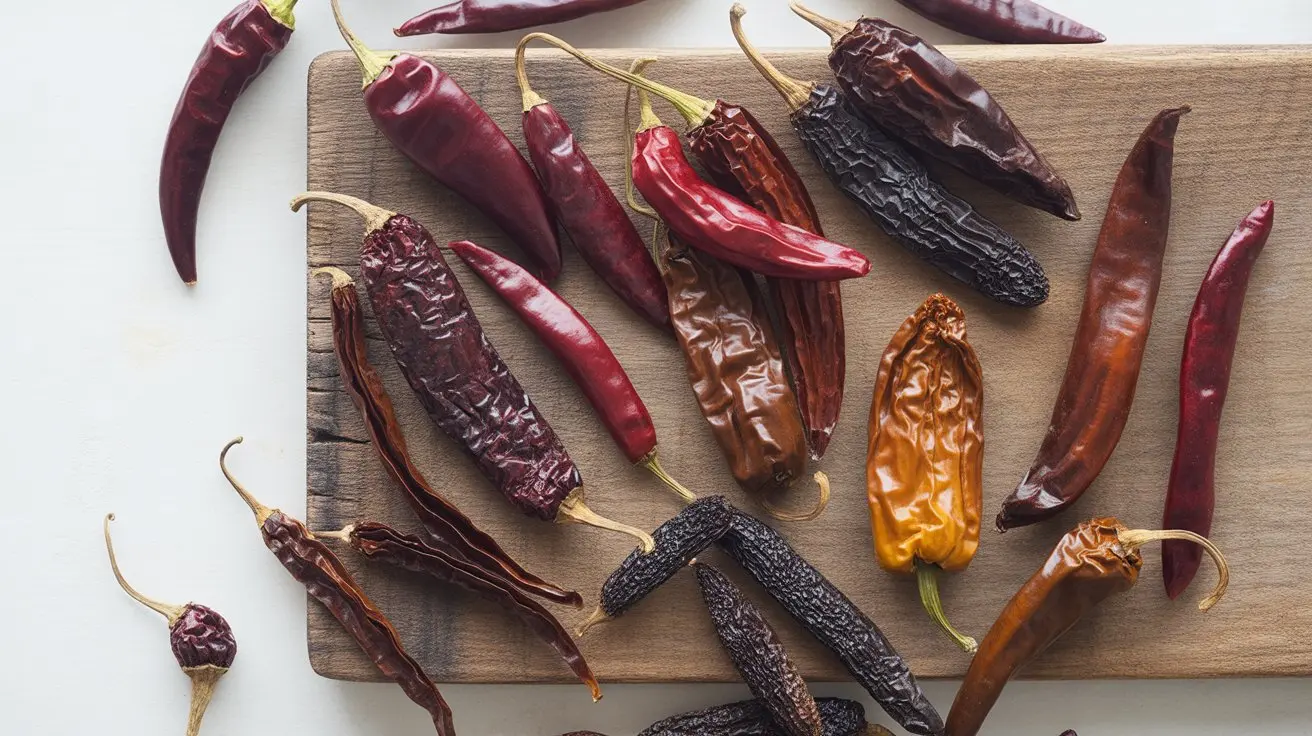
Inspect every pod before it reaches heat or water. A sound dried chile should look dry and intact, smell like the variety rather than a damp cupboard, and show no fuzzy growth, webbing, insects, or soft decayed patches.
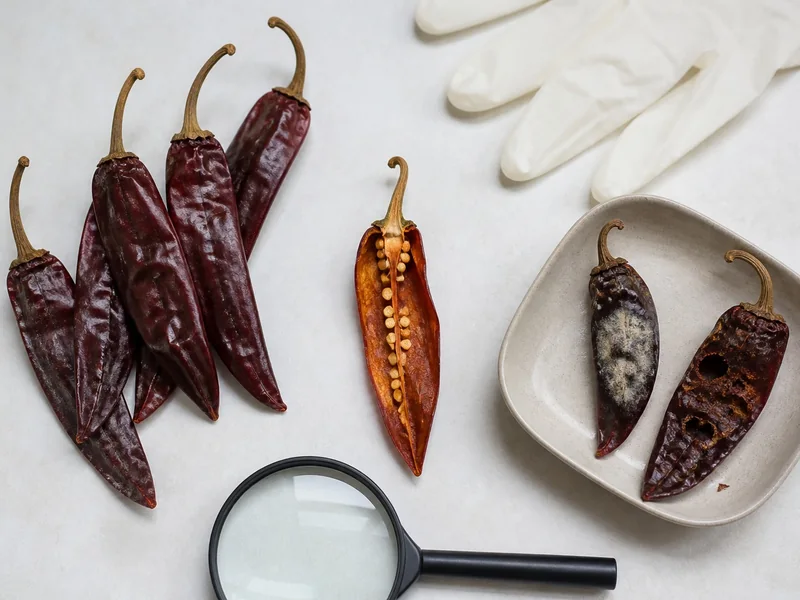
New Mexico State University gives a firm rejection line for dried red chile sauce. Its extension guide says not to use pods showing mold, insect infestation, disease, or decay.
Open at least one pod from an unfamiliar or long-stored batch.
The stem end and folded inner walls can hide damage that the outside does not reveal.
- Look over the outer skin for fuzzy growth, wet spots, webbing, and insect holes.
- Snap off the stem and inspect the cavity before preparing the rest of the batch.
- Discard pods with mold, active insects, decay, or a musty odor.
- Confirm that a decorative ristra was never coated with plastic, shellac, or insecticide.
- Wash dusty food-grade pods according to the recipe or source guidance, then drain them before use.
A faded or very brittle pod may be stale without being visibly spoiled. That is a quality problem, so use aroma and a tiny test batch to decide whether it still contributes enough flavor.
Should you toast dried chili peppers first?
Toast a dried chile when a deeper roasted aroma will help the finished dish. Skip the step when the pod will simmer for a long time and you want its cleaner fruit or direct heat without another browned note.
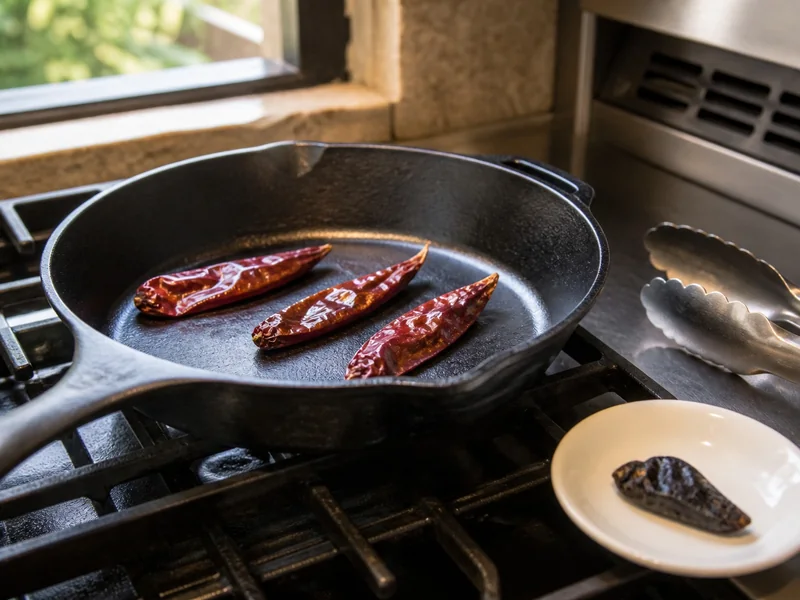
Chef and cookbook author Pati Jinich recommends brief contact with a low to medium skillet, as reported by The Washington Post. The useful cues are fragrance, slight softening or puffing, and modest darkening.
Keep the pan dry and the pod moving. Smaller thin pods change faster than broad fleshy ones, so toast mixed varieties separately instead of waiting for every shape to finish together.
Blackened skin, sharp smoke, or a harsh smell means the chile went past toasted. Remove it immediately because blending a scorched pod into sauce spreads the bitterness through the entire batch.
Toasting is a flavor decision, not an entry fee for every dried-chile recipe.
A whole pod dropped into broth or beans can soften and season the liquid without visiting a skillet first.
Should you rehydrate, grind, crush, or simmer them whole?
Choose the form from the texture and control the dish requires. Rehydration builds body, grinding spreads seasoning, crushing leaves distinct flecks, and whole-pod simmering keeps the chile easy to remove.
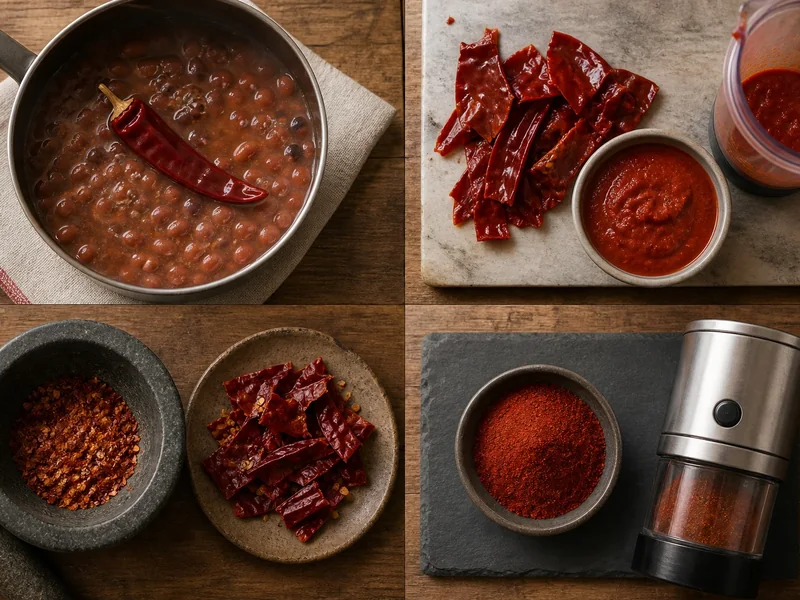
| Form | What it does | Best fit | Main tradeoff |
|---|---|---|---|
| Whole pod | Infuses cooking liquid while remaining visible and removable | Beans, broth, curry, stew, braises | Flavor may stay uneven if the liquid is not stirred and tasted |
| Rehydrated flesh or purée | Adds chile flavor, color, and physical body | Sauce, salsa, marinade, mole, thick soup | Requires softening and blending before it disappears into the dish |
| Crushed flakes | Creates visible pieces and concentrated hot bites | Pizza, pasta, noodles, roasted vegetables, table seasoning | Heat is intentionally less even |
| Fine powder | Disperses quickly through dry seasoning or liquid | Rubs, spice blends, eggs, sauces, batters | Difficult to remove and easy to overdose |
Whole and coarse forms preserve reversibility.
You can lift out a whole pod or avoid a visible flake, but you cannot retrieve fine powder once it has dispersed.
Wet dishes usually favor a whole pod or rehydrated purée. Dry rubs and fast table seasoning favor powder or flakes because water is not available to soften tough skin.
A leathery broad chile is easier to soften and blend than to grind into an even powder. A small brittle chile can crush cleanly, but its heat may be concentrated enough that one pod seasons many servings.
What can you make with rehydrated dried chilies?
Rehydrate dried chilies when the flesh itself should become part of a smooth or spoonable base. Softened pods can be blended into enchilada sauce, salsa, mole, marinade, braising liquid, soup, stew, or a concentrated paste for later seasoning.
NMSU describes dried red pods becoming soft enough for the pulp to separate easily from the skin. Its red chile method uses 12 to 14 large pods for about one pint of purée, which shows how much body whole pods can contribute after softening.
- Blend softened mild or medium chilies with cooking liquid for a sauce base.
- Use a thicker purée in marinades where the chile needs to coat meat or vegetables.
- Stir a spoonful of paste into beans, stew, or tomato sauce instead of adding dry pieces.
- Pass a rough purée through a sieve when tough peel fragments would weaken the texture.
The soaking liquid is optional, not automatically valuable.
Taste a cooled spoonful before adding it, then use fresh water, stock, or another recipe liquid if the soak tastes bitter, dusty, or harsh.
Rehydrated pods will be soft rather than crisp.
Choose them for body and integration, not as a direct replacement for the snap of a fresh pepper.
The exact water temperature and timing belong to the rehydration method. Once you decide that soft chile flesh is the right form, follow a dedicated guide rather than improvising from a one-line summary.
How can you use dried chilies without soaking them?
You can use a fully dried pod without a separate soak when the cooking liquid will hydrate it or the finished dish needs a dry form. The useful choices range from a removable whole chile to powder that becomes impossible to isolate.
- Simmer one pod whole in beans, broth, curry, or stew. Taste the liquid as it cooks and remove the pod when the heat and aroma are sufficient.
- Tear the pod into pieces for oil-based noodles, braises, or stir-fries where visible chile fragments suit the dish.
- Crush a brittle pod for flakes that land in distinct hot bites on pizza, pasta, roasted vegetables, or eggs.
- Grind only the amount needed when a rub, batter, sauce, or seasoning blend requires even distribution.
Direct simmering does two jobs at once.
The liquid softens the pod while carrying its flavor into the food, so a separate bowl and blending step are unnecessary.
Keep a whole pod visible near the surface when it must be removed. If it breaks apart during a long cook, strain the liquid or accept that the remaining pieces will make later servings less predictable.
Torn and crushed chilies release flavor faster because more inner surface touches oil or liquid.
Add them early for broader seasoning or late for sharper, more localized bursts.
Fine powder blooms quickly in warm fat, but it can scorch in seconds. Keep the heat moderate, stir continuously, and add the next wet ingredient as soon as the powder becomes fragrant.
How do you control heat and avoid bitterness?
Control heat before cooking by limiting the amount of pod and pale inner tissue that enters the dish. Removing loose seeds along with the ribs reduces some capsaicin-bearing material, but it does not turn a naturally hot chile into a mild one.
Start with less than the full pod when the variety or batch is unknown.
Powder and purée distribute widely, so taste them in measured increments rather than judging the dose from color.
Bitterness usually needs a different correction.
Stop dry toasting before blackening, taste soaking liquid before using it, and avoid burning flakes or powder in hot oil.
If a finished pot is too hot, increase the unseasoned base. More beans, tomatoes, broth, or sauce lowers the chile concentration without relying on enough sugar to change the identity of the dish.
Do not keep adding toasted flavor to compensate for a bland chile. A stale pod needs replacement, while a scorched pod needs removal before it is blended or ground.
Which dried chili fits the dish you are making?
Choose a dried chile by flavor role before comparing heat. Four representative peppers cover many everyday decisions without turning the pantry into a catalog.
| Flavor role | Representative chile | Useful dishes | Form that fits |
|---|---|---|---|
| Dark fruit and mild body | Ancho | Mole, enchilada sauce, beef stew, tomato sauce, chocolate desserts | Rehydrated purée or ground seasoning |
| Bright red fruit and gentle tang | Guajillo | Marinades, salsa, red sauce, braises | Rehydrated and blended |
| Smoke plus medium heat | Chipotle | Beans, chili, barbecue sauce, tomato soup | Whole infusion, pieces, or powder |
| Direct heat with little bulk | Chile de arbol | Table salsa, vinaigrette, noodles, pizza, infused broth | Whole, crushed, or finely ground |
The Chile Pepper Institute describes ancho as a dried poblano with mild heat, sweet and smoky flavor, and hints of dried fruit. It lists ground seasoning, sauces, stews, marinades, mole, tomatoes, meat, and chocolate among its uses.
Guajillo brings brighter color and a cleaner red-fruit direction than ancho.
Chipotle makes smoke part of the seasoning, so adding it to an already smoky dish can become repetitive.
Chile de arbol supplies heat without much flesh. Use it when a dish needs a sharp accent, then pair it with a broader mild chile if the sauce also needs body.
These are starting roles rather than interchangeable labels.
A separate dried Mexican chile guide can handle fresh-to-dried names, identification, and a larger pantry comparison once the dish needs a specific variety.
Should you grind the whole bag or store the pods whole?
Keep most dried chilies whole and grind only what the next dish requires.
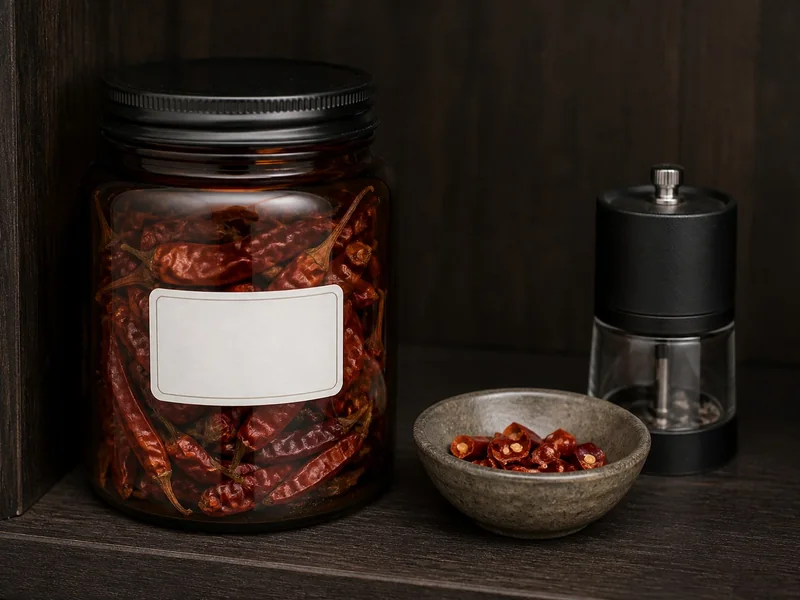
Whole pods retain the option to simmer, soak, crush, or grind later, and their condition remains easier to inspect.
Powder trades flexibility for speed.
It disperses immediately, but it cannot become a removable infusion or a smooth flesh-based purée later.
The full method for storing dried peppers belongs on the dedicated route for container, location, and shelf-life decisions. Use that route after deciding which pods should remain whole.
The best use for a dried chile is the form that gives the dish enough flavor while leaving the cook the right amount of control.
Make that decision one pod at a time and the rest of the bag remains useful for a different meal.