Visible solids
Skin, flesh, and seeds remain recognizable instead of disappearing into a smooth emulsion.


Sambal oelek is a coarse Indonesian chile paste whose basic form centers on crushed fresh red chiles and salt, with acid or preservatives in some commercial jars. It adds direct chile flavor, visible texture, and adjustable heat without the sweetness, fermentation, or cooked aromatics found in many nearby sauces.
Sambal oelek is a coarse Indonesian chile paste built to keep the chile recognizable. Its basic form is much leaner than sriracha, gochujang, or a cooked sambal because fresh red chiles and salt do most of the work.
Commercial jars may add vinegar, another acid, or preservatives. Those additions affect sharpness and storage, but they do not turn the paste into a sweet pourable sauce.
Sambal names a wide family of chile condiments rather than one fixed recipe. Singapore's Intangible Cultural Heritage inventory describes sambal as a living preparation with many ingredients, textures, and uses across Malay and Indonesian food traditions.
The second word points to the tool and action. Ulek refers to grinding or crushing with a mortar and pestle, while the older Dutch-influenced spelling oelek remains common on exported jars.
That name gives a useful recognition test. Sambal oelek should show crushed chile flesh, skin, and often seeds instead of presenting a completely smooth, sweetened sauce.
Family and form Sambal is the family, while oelek identifies the crushed base. A jar labeled sambal badjak, sambal manis, sambal belacan, or sambal terasi carries different ingredients or processing.
The paste can be served directly, mixed into a dressing, or cooked into another sauce. Its job is to supply chile and texture first, leaving sweetness, garlic, fermentation, and other aromatics to the cook or the named sambal style.
The Smithsonian Asian Pacific American Center presents a homemade form centered on red chiles and salt. That minimal architecture explains why a spoonful tastes closer to crushed fresh chile than to a finished hot sauce.
Fresh red chiles provide water, skin, flesh, seeds, aroma, and capsaicinoids. Salt seasons the mash and draws some moisture from the cut cells, which helps the crushed particles settle into a loose paste.
| Label item | Role | What the reader may notice |
|---|---|---|
| Red chiles | Main solid, aroma, color, and heat | Visible skin and seeds with direct chile flavor |
| Salt | Seasoning and moisture draw | A savory finish that becomes stronger when the paste is reduced |
| Vinegar or acid | Sharpness and product formulation | A brighter, tangier jar that can change a dressing or marinade |
| Preservative | Commercial stability | Usually little visible effect, but it changes label and storage decisions |
| Garlic or sugar | Brand-specific flavor addition | A product that moves away from the leanest base style |
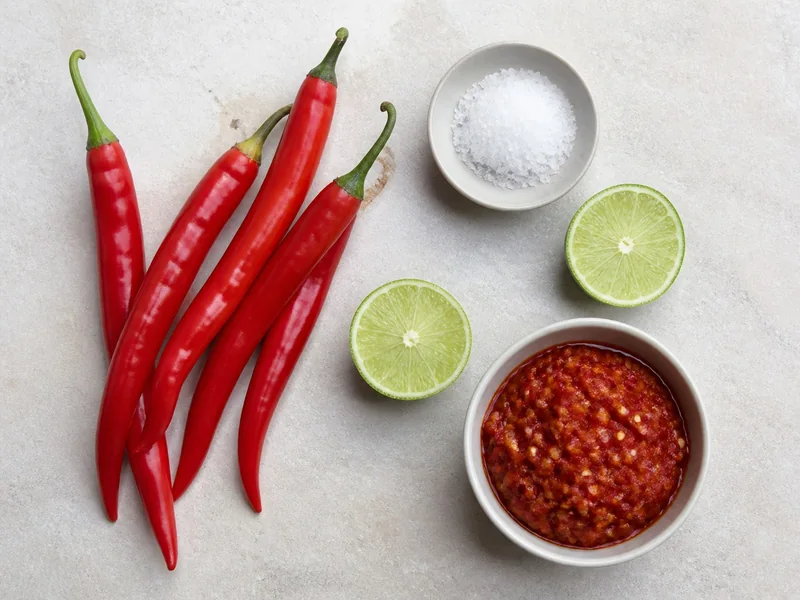
Acid is common in export products, but not every traditional preparation needs to taste strongly of vinegar. Read the current ingredient order before deciding how much lime, rice vinegar, or another sour ingredient the finished dish needs.
Garlic and sugar require the same attention. A jar that includes them may still be sold as sambal oelek, yet it will overlap more with chile-garlic sauce or a sweeter table condiment.
The ingredient list also owns dietary claims. A simple chile-and-salt tradition cannot prove that a particular product is vegan, gluten free, or free from cross-contact.
Crushing breaks chile flesh without turning every piece into a uniform puree. The mortar tears skins, releases juice, and leaves particles large enough to remain visible on food.
Seeds are easy to see, but they are not the sole source of heat. Much of a pepper's capsaicin is produced in the pale internal placental tissue, and crushing distributes that material through the wet paste.
Skin, flesh, and seeds remain recognizable instead of disappearing into a smooth emulsion.
Chile juice and any added acid move around the particles, so the paste may look wetter after standing.
A coarse spoonful creates small bursts of chile rather than the perfectly even coating of a pureed sauce.
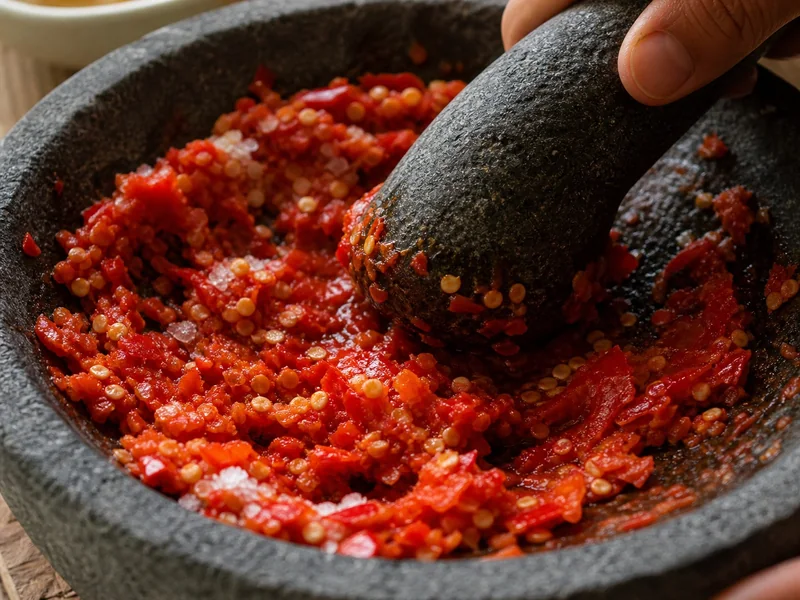
Grinding degree changes behavior. A finer jar disappears more readily into soup or dressing, while a coarser one remains visible on eggs, rice, noodles, and grilled food.
Liquid separation is not automatically a defect. Check the package directions, then use a clean utensil to stir when the manufacturer allows it.
The flavor begins with fresh red chile rather than sugar or fermentation. Salt follows quickly, and acid becomes obvious when vinegar or another souring ingredient appears high on the label.
Its simplicity is the point. The paste can add heat without automatically adding the sweetness of sriracha, the fermented bean depth of gochujang, or the roasted seafood richness of nam prik pao.
Sambal oelek has no single SHU range. Heat depends on the chile variety, growing conditions, proportion of chile tissue, and amount of salt or liquid in the product.
A mild-looking spoon can still spread widely once mixed into a wet dish. Judge a new jar in a small portion because color, seed count, and country of sale do not provide a reliable heat measurement.
Salt and acid can make the paste feel sharper without adding capsaicin. Cooking may soften fresh aroma, but it distributes the same chile material across more of the food.
Use the first taste as a label check. Notice chile, salt, and acid separately before adding soy sauce, sugar, lime, or vinegar to the rest of the dish.
Raw sambal oelek keeps its brightest chile aroma and most obvious coarse texture. It works well when the cook wants a fresh, sharp accent in a dipping sauce, dressing, or finished bowl.
Heat changes that balance. Chile particles soften, free water evaporates, and the paste spreads through oil or cooking liquid instead of sitting in distinct red pockets.
| When it enters | What stays prominent | Useful result | Main caution |
|---|---|---|---|
| At the table | Fresh aroma, acid, and coarse particles | A direct condiment or adjustable finish | Salt and heat are concentrated |
| Late in cooking | Some fresh chile character with wider distribution | Bright stir-fries, noodles, soups, and eggs | The paste may remain in hot pockets if not mixed |
| Early in cooking | Integrated heat and softened particles | Marinades, braises, pan sauces, and soup bases | Salt and acid can concentrate as water leaves |
| Briefly fried in oil | Chile aroma carried through the fat | An even base for aromatics and sauce | Very high heat can scorch fine chile solids |
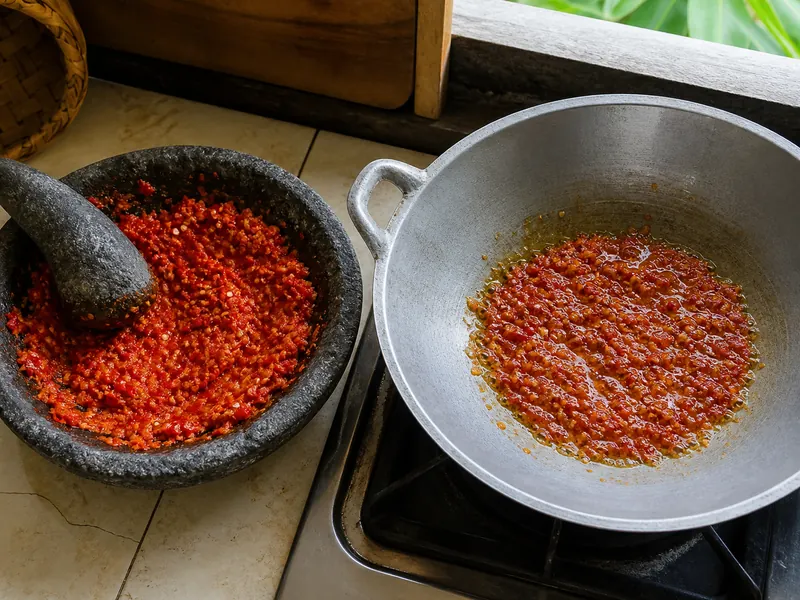
Cooking does not convert the paste into sambal badjak or another named style by itself. Those condiments have their own ingredient and process patterns, often including aromatics, sugar, shrimp products, or a longer fry.
Addition time follows the intended aroma. Early addition favors integration, while a small late addition restores fresher chile character after a long simmer.
If a cooked sauce becomes too salty or sharp, add unsalted food or liquid before adding sugar. Sweetness may mask the imbalance while leaving the salt concentration unchanged.
No. The peer-reviewed study Diversity of Sambals, Traditional Indonesian Chili Pastes documents a broad group shaped by local ingredients, processing, and eating customs rather than one master recipe.
Sambal oelek is useful as a baseline because its chile-first structure makes added layers easier to recognize. Other names may signal frying, sweetness, shrimp paste, aromatics, or a regional preparation.
| Name on the jar | Common distinction | How the eating experience changes |
|---|---|---|
| Sambal oelek | Crushed chile base with salt and possible acid | Fresh, coarse, direct, and easy to modify |
| Sambal badjak | Cooked or fried with aromatics and often sweetness | Darker, richer, and more finished as a table condiment |
| Sambal manis | A sweeter style | Heat arrives inside a more obvious sweet balance |
| Sambal belacan | Belacan shrimp paste contributes fermented seafood depth | Stronger savory aroma and a shellfish concern |
| Sambal terasi | Terasi shrimp paste plays a defining role | Chile is joined by salty fermented complexity |
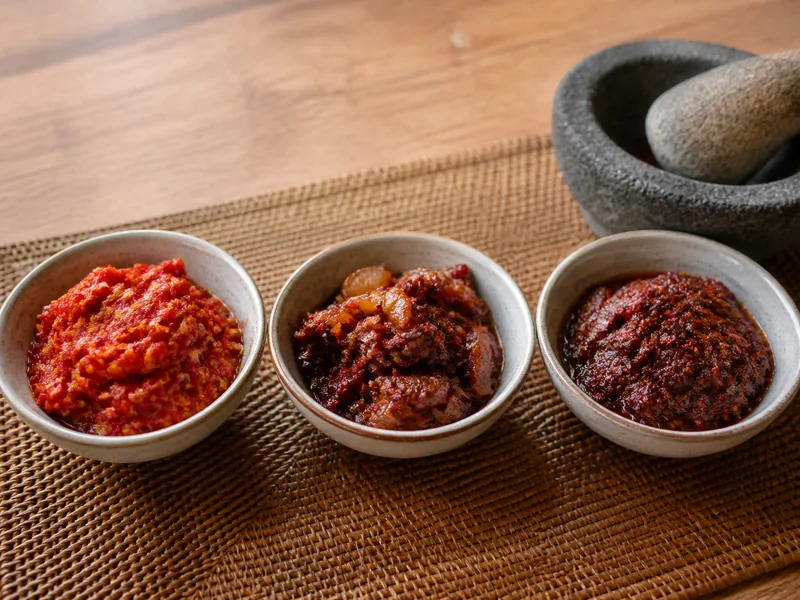
These descriptions are orientation, not a complete taxonomy. Recipes change across places and cooks, so the ingredient list remains more reliable than guessing from color.
A sweeter, darker, cooked sambal may be excellent beside rice but behave differently in a recipe that expects raw crushed chile. The product name tells you which tradeoff to investigate.
Nearby products may all add heat, yet their sweetness, fermentation, oil, aromatics, and water content change the dish. Replace by function rather than by color.
| Product | Defining structure | What it adds beyond heat | Substitution consequence |
|---|---|---|---|
| Sambal oelek | Coarse crushed chile, salt, and possible acid | Texture and direct chile | The neutral baseline |
| Sriracha | Smooth pourable chile sauce with garlic, sugar, and vinegar | Sweetness, garlic, and more free liquid | Reduce other sugar or acid |
| Chili garlic sauce | Coarse chile sauce with a stronger garlic identity | Garlic and often a formulated sour-salty balance | Accept extra garlic or adjust the recipe |
| Gochujang | Fermented Korean paste with grain, soybean, and sweet components | Fermented depth, body, and sweetness | Thin it and expect a different flavor center |
| Harissa | North African chile paste with spices and often oil | Cumin, coriander, caraway, garlic, or other aromatics | Use only when those spices fit |
| Nam prik pao | Roasted Thai chile paste with sugar, tamarind, oil, and often seafood seasoning | Sweet, sour, roasted, and savory layers | Do not treat it as plain chile heat |
Sriracha can work when a smooth sweet sauce is acceptable. It cannot preserve sambal oelek's coarse particles or neutral chile-first profile.
Gochujang and harissa create larger flavor changes. Their fermented or spiced identities may improve a particular dish, but they are not quiet replacements.
Nam prik pao moves in the opposite direction from the raw crushed base. Its ingredients arrive roasted, fried, sweetened, soured, and often seasoned with seafood.
Use sambal oelek where direct chile and visible texture help. Then decide whether it should remain concentrated, spread through liquid, or cook into the base.
| Reader job | Method | Adjustment to make afterward |
|---|---|---|
| Table heat | Serve a small spoon beside rice, eggs, noodles, vegetables, or grilled food | None until the diner tastes the concentrated paste |
| Dressing or dip | Whisk into oil, citrus, vinegar, soy sauce, or another liquid | Salt and acid after full dilution |
| Marinade | Distribute through the wet ingredients before coating food | Sugar only when browning and balance require it |
| Stir-fry | Loosen with pan liquid and toss through the food | Fresh chile or acid at the end when brightness faded |
| Soup or braise | Stir into a small amount of hot liquid before returning it to the pot | Heat and salt after the paste disperses |
| Existing sauce correction | Add a measured amount for chile without automatic sweetness | Body if the sauce becomes too thin |
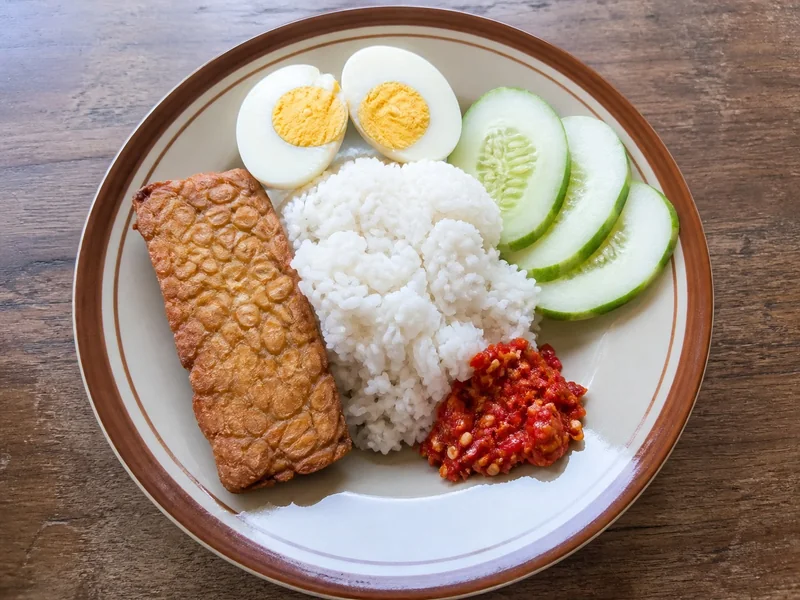
A raw spoonful beside rice and tempeh preserves the paste's texture. Mixing the same amount into a bowl of noodles produces less concentrated bites but wider heat distribution.
For a dressing, whisk until no dense pockets remain. Oil rounds the chile, while citrus or vinegar may need to be reduced when the jar already tastes sharp.
For a stir-fry, avoid dropping the paste onto a dry smoking pan. A little cooking liquid helps the particles spread before water evaporates.
In soup, dissolve the paste in a ladle of broth first. This makes it easier to see how much chile and salt enter the whole pot.
Choose from the back label, not the front photograph. The first ingredients reveal whether the product stays close to chile and salt or introduces a larger amount of acid, garlic, sugar, or another seasoning.
Preservatives do not automatically make a product poor, and their absence does not prove freshness or safety. They tell you that formulation and storage instructions may differ.
Inspect the seal and lid before purchase. Dried paste around an unopened rim, leakage, a lifted lid, or a damaged safety button is a package problem rather than normal chile texture.
Buy a size that matches use frequency. A smaller jar finished with clean utensils is more practical than a bulk jar that sits open through many uncertain handling cycles.
Follow the jar's instruction because acid level, salt, preservatives, and heat processing differ. Refrigerate after opening whenever the label requires it.
Use a clean, dry spoon and close the lid promptly. Food crumbs, broth, and used utensils introduce moisture and material that the manufacturer did not account for.
| Observation | Likely meaning | Response |
|---|---|---|
| Thin liquid rises | Normal separation may occur in a coarse wet paste | Follow the label and stir with a clean utensil when allowed |
| Slow darkening | Oxidation, age, and chile pigments can change color | Judge it with date, aroma, texture, and storage history |
| Visible mold | Contamination | Discard the jar rather than scraping the surface |
| Swollen lid, gas, or leakage | Package failure or unexpected activity | Do not taste it |
| Unfamiliar rotten odor | A clear departure from the normal sharp chile aroma | Discard when the change is unexplained |
Keep the rim clean so the lid seals fully. A crust of paste on the threads also makes later leakage and odor harder to evaluate.
Do not assign one opened shelf life to every sambal oelek. The package date and storage statement belong to the specific formula and process in that jar.