Poblano Peppers: When Should You Plant and How Far Apart?
Plant poblanos only after soil reaches about 65°F and nights stay above 50°F. A stocky transplant, 18-to-24-inch spacing, nursery-depth planting, and early support give the broad plant room to establish and carry large fruit.
Poblano pepper planting succeeds when a stocky transplant enters warm soil with enough width and early support. Poblanos grow into broad plants that carry large fruit on spreading branches, so the small seedling footprint is misleading.
The best planting day comes after frost risk has passed, nights are mild, and the bed is warm enough that roots start growing instead of sitting still.
When should you plant poblano peppers?
For home-raised plants, University of Maryland Extension recommends starting pepper seed 8 to 10 weeks before the average frost-free date, while some cultivars need 12 weeks. That count produces a transplant for the safe window rather than forcing an overgrown plant into a cold bed.
Use both soil and night temperatures as the outdoor gate. University of Minnesota Extension recommends setting peppers outside after nighttime lows stay above 50°F, while Maryland Extension warns that plants set before soil reaches 65°F can simply sit without growing.
If the calendar says spring but the soil is still cold and wet, wait. Check the root zone in the morning for several days because one warm afternoon does not show the temperature the roots experience overnight.
Choose a cloudy day or late afternoon if you can. The plant gets one cool night to settle roots before full sun starts pulling water from the leaves.
Utah State University Extension describes a fast-establishing pepper transplant as 5 to 8 inches tall with 6 to 9 mature leaves and a developed root system. A tall soft plant or one already carrying fruit may look advanced, but USU reports that flowering or fruiting transplants establish more slowly.
Harden the plant for one to two weeks by increasing outdoor sun and wind exposure gradually. Minnesota Extension advises bringing pepper seedlings back inside if nights drop below 55°F during this transition.
Planting weather is only the first decision for a poblano. The larger canopy, heavier pods, and spreading branch angles make spacing and support part of the planting operation rather than later cleanup.
How far apart should you plant poblanos?
Poblanos need more side room than many small hot peppers. The plant's future width is the spacing target, not the size of the seedling in your hand.
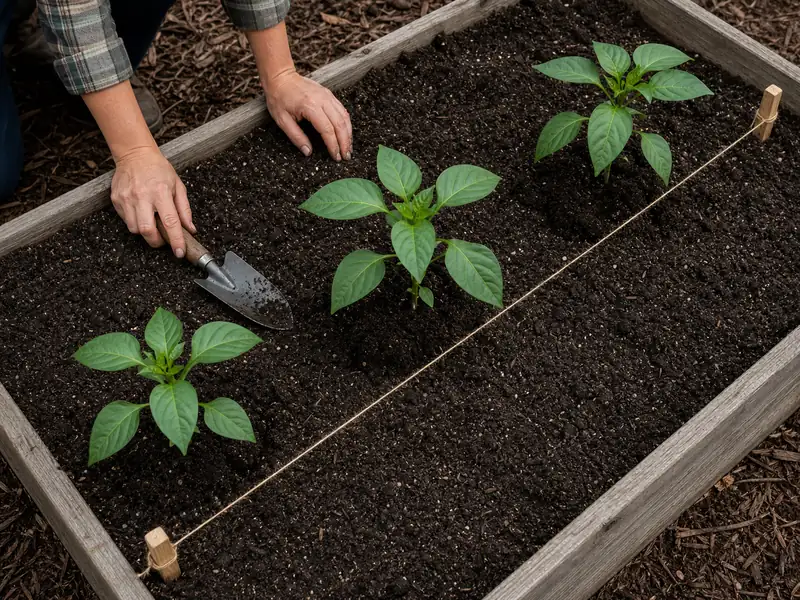
For most home beds, space poblano plants 18 to 24 inches apart, with rows 30 to 36 inches apart when you need walking room. Minnesota and Maryland Extension both publish ranges within those boundaries, and the wider end protects airflow in humid gardens or fertile soil where the canopy grows dense.
| Planting setup | Starting spacing | Why it fits poblanos |
|---|---|---|
| Raised bed, single row | 18 to 24 inches apart | Room for broad leaves and harvest access |
| Wide bed, staggered plants | 24 inches on center | Better airflow when plants fill in |
| Traditional rows | 18 to 24 inches in row, 30 to 36 inches between rows | Space to stake, weed, and pick |
| Containers | One strong plant per 5 to 7 gallon pot | Enough root volume for heavy pods |
Do not judge the bed on planting day. Judge it in August, when broad leaves overlap and fruit hangs low.
If you already planted too close, remove only leaves that touch soil or block the picking path. Do not strip the canopy to imitate wider spacing because Maryland Extension identifies sunscald as a pepper problem and leaves provide the fruit's shade.
Prepare roots and drainage without burying the crown
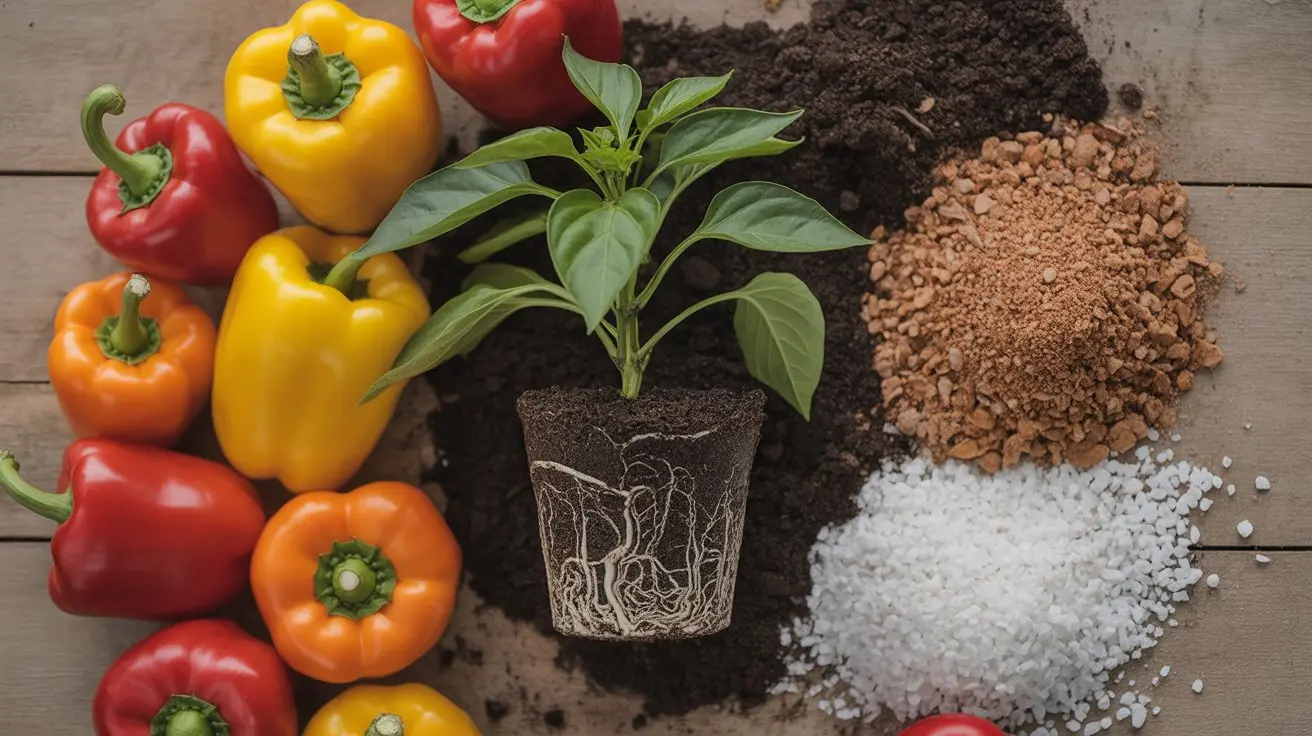
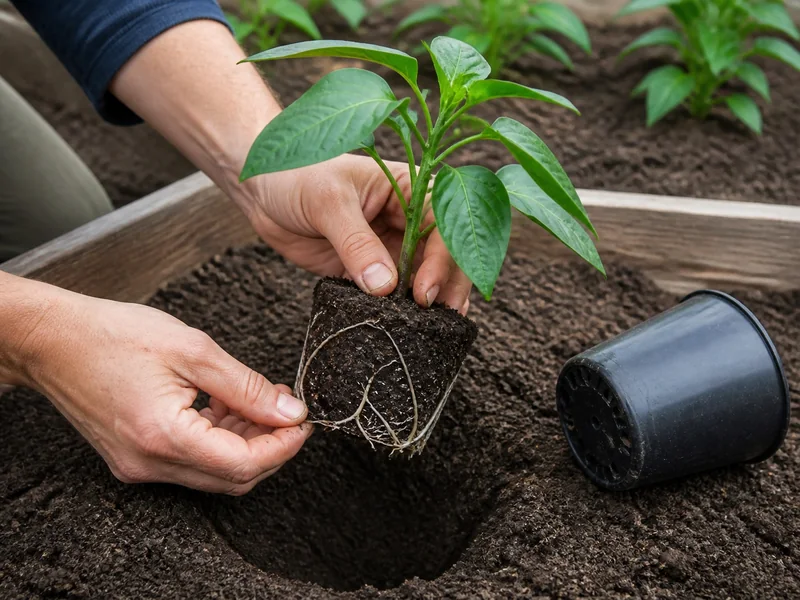
Poblanos should sit at roughly the same soil line they had in the pot. Unlike tomatoes, peppers do not need deep burial to root well.
Choose well-drained soil because Utah State University Extension warns that peppers perform poorly in heavy wet ground. Minnesota Extension places the preferred soil pH between 6.5 and 7.0, so use a soil test before adding lime or fertilizer.
Water the transplant before planting so the root ball holds together. Loosen only circling roots at the edge instead of tearing the whole mass apart.
Set the plant into loose soil, firm around the root ball, and water once to settle contact. The goal is steady root-to-soil contact without burying the crown.
- Plant after the bed has warmed.
- Keep the original soil line visible.
- Firm soil around the root ball with your hands.
- Water at the base, not over the leaves.
- Mulch later, after the soil is warm.
Keep the nursery soil line visible after the first watering settles the bed. A buried crown stays wetter, while an exposed root-ball shoulder dries faster than the surrounding soil.
What size pot does a poblano plant need?
A small poblano transplant can fool you into a small pot. The plant may survive there, but the root zone dries quickly and the canopy gets top-heavy once fruit sets.
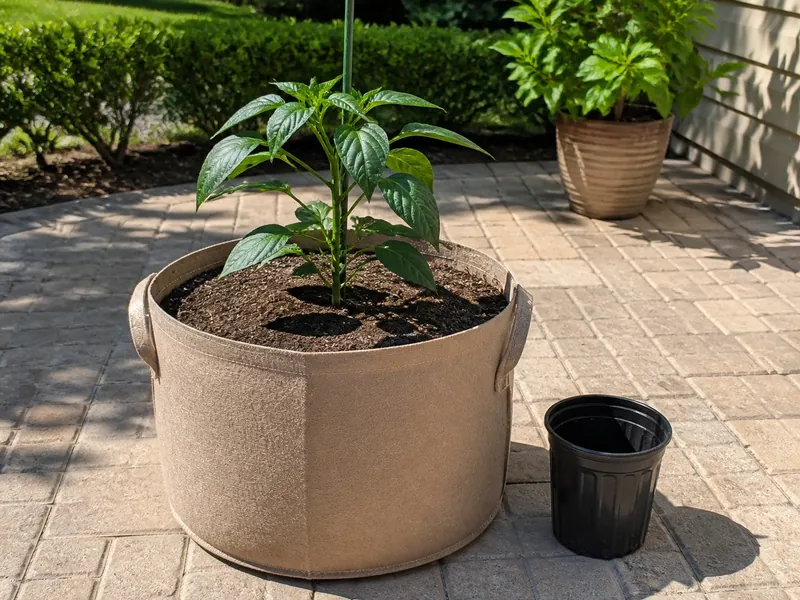
Maryland Extension gives five gallons as the minimum container volume for a pepper. A seven-gallon pot gives a broad poblano more moisture reserve and a wider base once fruit pulls the canopy sideways.
Drainage matters more than pot style. A decorative container with one blocked hole is worse than a plain nursery pot that drains cleanly.
Put the pot where it gets strong sun but not reflected heat all day from concrete. Poblanos like warmth, but containers can overheat faster than in-ground beds.
Use fresh container mix rather than dense garden soil, and leave enough headspace to water slowly. One plant per pot also makes it possible to rotate the canopy, inspect every branch, and move the plant before severe weather.
Do poblano plants need support?
Poblano pods hang heavy and wide, so the stake goes in at transplant rather than after the branches have already started to lean.
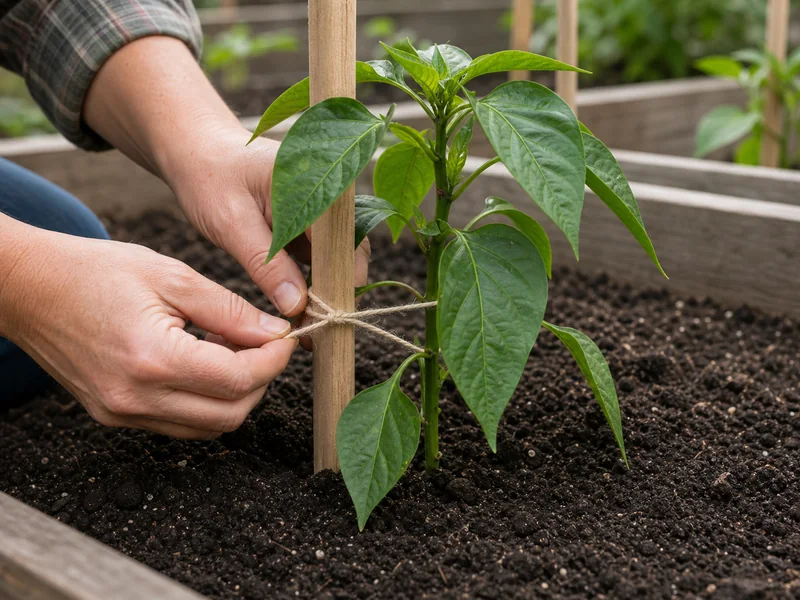
Poblano plants often load fruit on branches that spread outward. If you wait until the plant leans, staking becomes a rescue job instead of support.
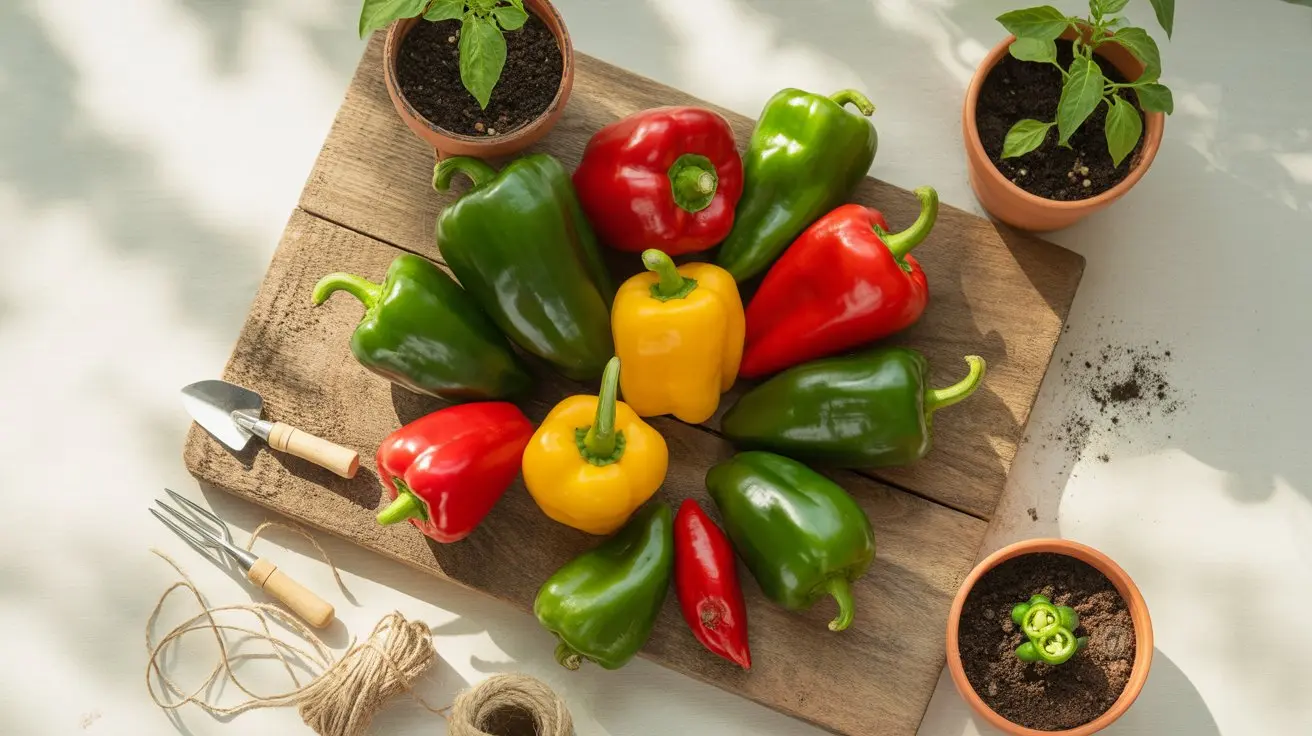
Place a stake at planting or soon after, before roots spread into the support area. Tie loosely with soft twine so the stem can thicken.
A single central stake works for a modest plant. In windy beds, two stakes or a small cage holds the branch spread better.
Do not tie every branch tight. The goal is to keep the plant upright while still letting it move naturally in wind.
This differs from a compact jalapeño planting, where the fruit load is smaller and heavy branch spread is usually less dramatic. The poblano support must carry several broad pods without pinching the main stem.
Water and feed for steady growth, not huge leaves
Poblanos need even moisture during flowering and fruit set. Wide leaves lose water quickly on hot days, and uneven watering can make fruit set less reliable.
University of Maryland Extension recommends uniform moisture and identifies drip irrigation or soaker hoses as effective methods. The goal is not constant wetness but fewer hard swings between dry and saturated soil.
Feed moderately. Too much nitrogen can build a lush plant that shades itself and delays fruiting.
Use fertilizer at planting only when a soil test or the potting-mix label calls for it, then watch growth. Utah State University Extension warns that overfertilizing peppers encourages excessive foliage and delays fruit set and maturity.
If flowers start dropping during heat, diagnose the temperature and moisture pattern before blaming the planting hole. Maryland Extension reports that very hot evenings can slow or stop pod production even on an established plant.
Use new growth as the two-week checkpoint
The first two weeks are about roots. Keep soil evenly moist, protect from wind if needed, and avoid chasing every small leaf change with a new product.
Once new growth starts, the plant should widen quickly. That is when early spacing pays off because each plant can make leaves without shading its neighbor.
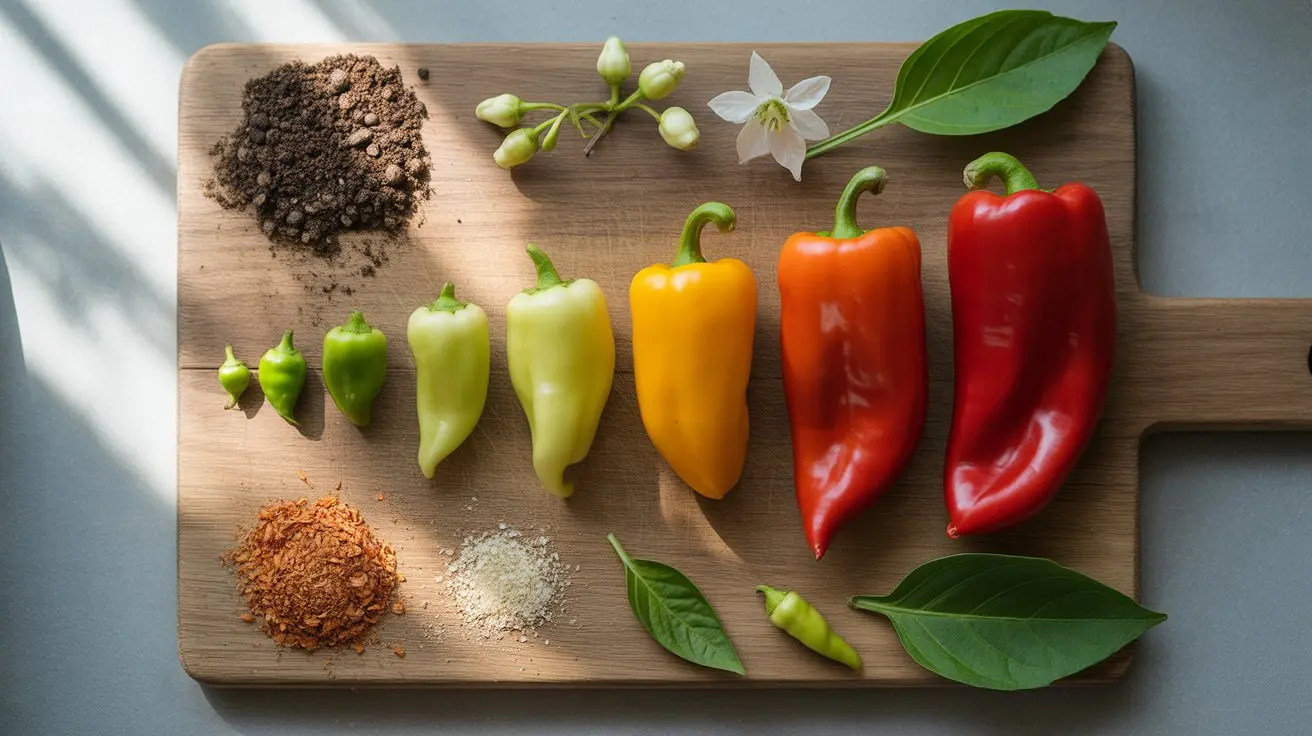
Harvest poblanos green when they are full sized and glossy, or leave selected pods to ripen red on the plant. Maryland Extension notes that peppers can be harvested green or allowed to change color, so the decision belongs to your season and kitchen plan.
If your season is short, plant early enough to get full-size green fruit first. Waiting only for red pods can leave you with fewer usable peppers.
Choose fewer reachable plants over a crowded extra plant. The benefit is practical rather than numerical because open sides make watering, tying, inspection, and clean harvest easier throughout the season.
A simple bed layout for three poblano plants
For a small raised bed, plant three poblanos in a single row instead of squeezing them into a tight triangle. Put the row where you can reach both sides for tying, picking, and removing low yellow leaves.
Set each plant about 24 inches apart if the bed is humid or partly enclosed. Use 18 inches only when airflow is good and you can reach the plants easily.
Run drip line or a soaker hose before mulch goes down. Utah State University Extension advises delaying organic mulch until soil is warm, so a cool spring bed keeps gaining heat instead of being insulated too early.
Keep basil, flowers, or other companions on the edge, not between every poblano. The companion can help the bed, but it should not steal the space you saved for the pepper.
Planting mistakes that show up later
The first mistake is planting too deep. A buried crown can stay wet, and the plant may wobble or rot before roots settle.
The second mistake is skipping support because the seedling looks short. Poblanos often lean only after the branches load with fruit, which is the worst time to push a stake through the root zone.
The third mistake is feeding for huge leaves. Big dark leaves look successful in June, but too much nitrogen can delay the flowers and pods that make the planting worthwhile.
The fourth mistake is planting beside a wall that reflects hard afternoon heat. Poblanos like warmth, but hot reflected surfaces can stress flowers and dry containers unevenly.
Fixing those mistakes later is harder than planting calmly at the start. Warm soil, right depth, early support, and generous spacing do most of the work before the plant gets large.
How poblanos differ from other pepper plantings
Poblanos are not the plant to squeeze into every spare gap. The fruit is large, the leaves are wide, and the harvest is easier when the plant has a clear side to reach from.
Compared with small hot peppers, a poblano row needs more patience before it looks full. That empty-looking space in June becomes airflow and picking room in late summer.
Compared with bell peppers, poblanos usually reward planned picking access more than extra feeding. The long fruit can hide beneath wide leaves, so a clear side of the row helps you see pods before they become overripe or rest on wet soil.
If you grow poblanos for roasting, plant where you can pick several full-size green pods at once. If you grow some for red ripe pods, put the best-supported plant in the warmest spot.
The planting plan should match the kitchen plan. Roasting, stuffing, and drying all benefit from large clean pods, and large clean pods come from plants with light, airflow, and steady roots.
Poblano Peppers: When Should You Plant and How Far Apart? FAQ
- University of Minnesota Extension - Growing peppers
- University of Maryland Extension - Growing peppers in a home garden
- Utah State University Extension - How to grow peppers in your garden
- University of Illinois Extension - Peppers