Why Do Pepper Plant Flowers Fall Off Before Fruit Sets?
Pepper plant flowers fall off most often when temperature or root-zone moisture interrupts fruit set. Check the weather during the bloom, soil two inches down, the green ovary behind the petals, leaf growth, container heat, and flower damage before changing fertilizer or pollination care.
Pepper plant flowers fall off most often because temperature or root-zone moisture interrupted fruit set. Check when the drop happened, whether a green ovary had begun to swell, and what the soil felt like before changing fertilizer or trying to pollinate every bloom.
A few scattered flowers can fall while a healthy plant continues setting fruit.
A whole flush dropping after the same hot day, cold night, dry pot, or soaking points to an active condition that the next bloom will face too.
What temperatures make pepper flowers fall off?
Temperature is the first check when many healthy-looking flowers drop together.
Pepper pollen and fruit set become unreliable before the leaves necessarily show lasting damage.
University of Maryland Extension reports that pepper flowers and small fruits can drop when nights fall below 60 F, nights remain above 75 F, or days rise above 95 F. Utah State University gives a slightly wider warning range, noting abortion with nights below 55 F or days above 90 F.
These numbers are warning bands rather than an on-off switch.
Cultivar, humidity, wind, root temperature, and the length of the weather event change the response.
Compare the drop date with the weather during the previous several days. A patio thermometer placed at canopy height is more useful than a regional high when a black pot, wall, or concrete surface adds reflected heat.
| Timing pattern | Leading cause | First check |
|---|---|---|
| Whole flush after very hot days | Pollen injury or heat stress | Canopy temperature, reflected heat, night cooling |
| Drop after nights below the set range | Cold-limited set | Night low, soil warmth, transplant exposure |
| Drop after a dry afternoon | Root-zone moisture stress | Soil two inches down, pot weight, wind |
| Drop after watering wet soil again | Saturated roots | Drainage, saucer water, soil smell |
| Brown or scarred flowers in mild weather | Possible insect feeding | Thrips inside blooms, leaf and fruit lesions |
Is it the petals or the whole flower falling off?
A fallen white corolla does not always mean the developing fruit was lost.
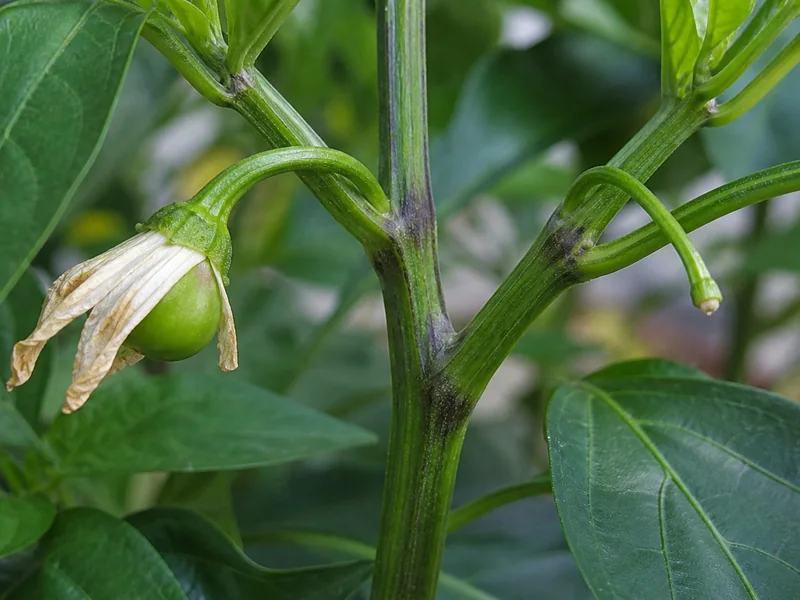
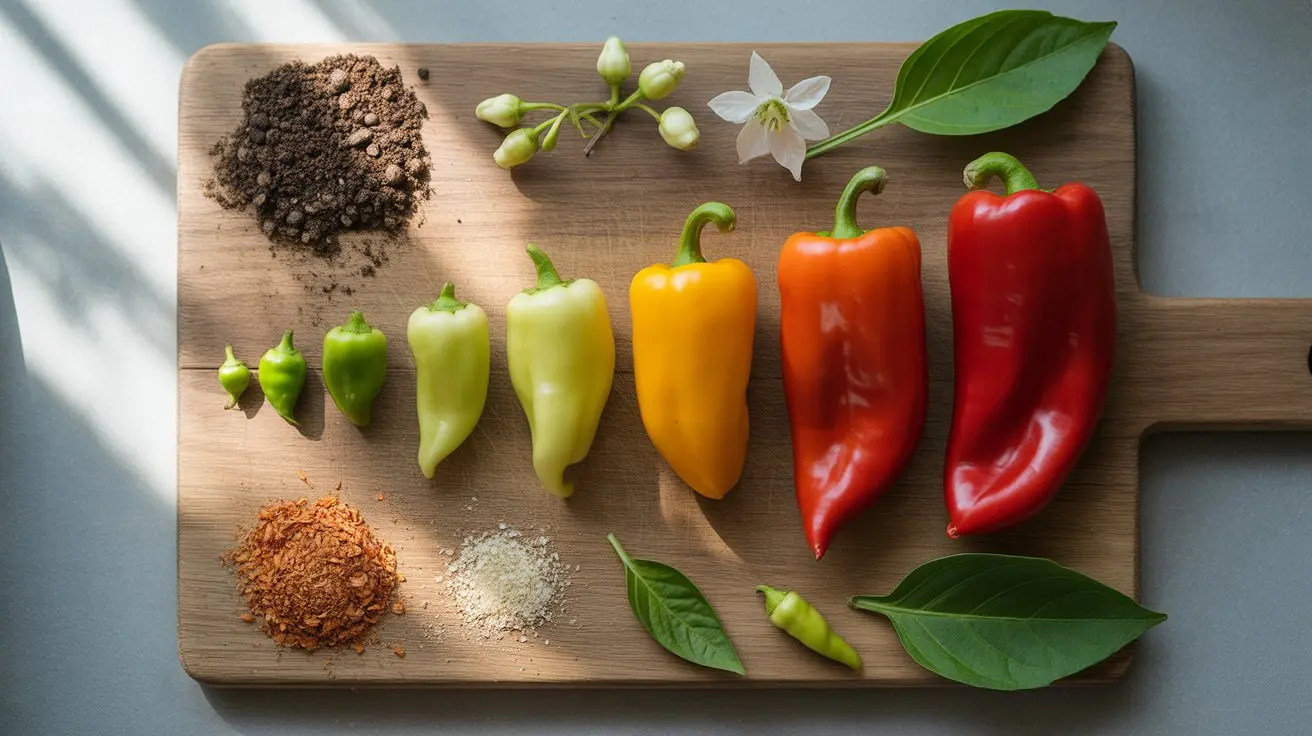
On a successfully set flower, the petals can wither and fall while the small green ovary remains attached behind them.
Inspect the joint where the flower met the stem.
If a firm green swelling remains, fruit set started and the falling petals are normal. If the entire flower stem detached cleanly with no swelling, the bloom was aborted before a fruit developed.
A pea-sized fruit that yellows, softens, or drops is a later abortion. Maryland Extension includes both flowers and small fruits in its temperature warning because a plant can lose the crop after pollination has already occurred.
This distinction narrows the response. A missing ovary sends you toward weather, pollen, and early stress, while a dropped tiny fruit also raises plant water balance, root condition, and current fruit load.
Can dry or soggy soil cause flower drop?
Dry soil and saturated soil can both interrupt flower set, but they require opposite corrections. Maryland Extension names prolonged dry or wet soil among the causes of poor blossom and fruit set, and USU links irregular watering with flower drop.
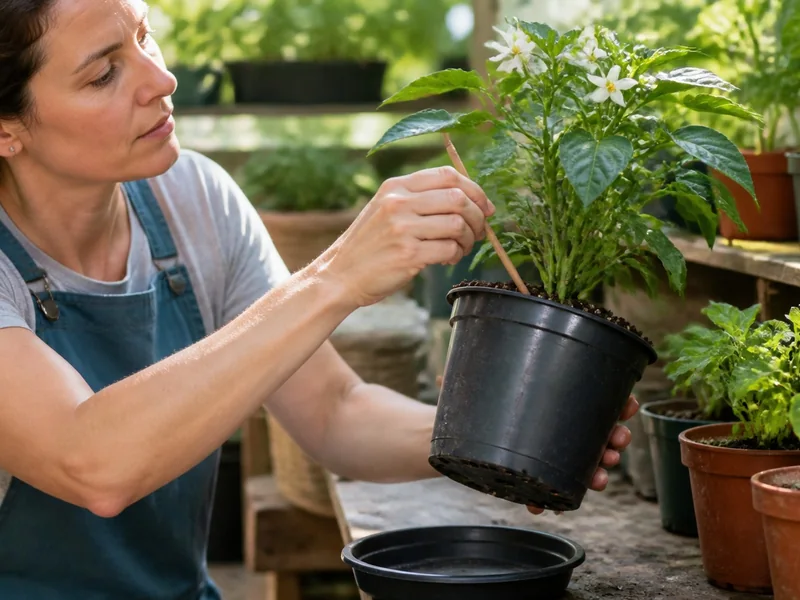
Push a finger or narrow trowel about two inches into the root zone before watering. In a container, lift the pot as well because a dry root ball is much lighter than wet mix.
If the soil is dry and the plant is light, water slowly until the entire root ball is moist and excess water exits the drain holes.
A hard, shrunken root ball may need two slow passes because the first water can run down the gap beside the pot wall.
If the soil is damp and the pot is heavy, do not add rescue water. Empty the saucer, open the drainage path, and let the root zone regain air.
Leaves can recover within hours while flowers still drop later because the decision to abort happened during the stress event. Judge the correction by the next flowers, not by whether the current damaged flush stays attached.
Will hand pollination stop pepper flowers from dropping?
Pepper flowers contain both pollen-producing and pollen-receiving structures, so a flower can self-pollinate.
Movement from wind, insects, or a gentle stem tap can improve pollen transfer when the pollen remains viable.
USU says bees can improve the yield and quality of peppers, but the same university warns that temperatures above 95 F may kill pollen. Shaking a plant cannot make heat-damaged pollen fertile.
Use a light morning tap only when flowers are open, temperatures are moderate, and the plant sits in still air such as a greenhouse or sheltered porch.
Move the main stem gently enough to vibrate the blossoms without bruising them.
Do not mist open flowers as a pollination treatment.
Improve morning airflow and direct irrigation to the soil so flowers dry normally. During bloom, avoid insecticide applications that can harm visiting bees, following USU pollinator guidance and the product label.
Is too much nitrogen causing the flower drop?
A dark green plant with long soft shoots and wide internodes may be receiving more nitrogen than it needs for balanced growth. Maryland Extension lists excessive nitrogen and excessive shade among the conditions that reduce blossom and fruit set.
Do not diagnose nitrogen from one dropped flower.
Compare new leaf color, shoot length, current fertilizer schedule, recent compost additions, and whether nearby peppers show the same lush pattern.
When excess feeding is plausible, pause high-nitrogen fertilizer and keep water steady. Do not flush a garden bed or repeatedly soak a container because that creates a second root stress.
Resume feeding only when the schedule and product label call for it, using a balanced rate appropriate to the growing medium. A bloom booster cannot override hot nights, dry roots, deep shade, or dead pollen.
Can a hot container make pepper flowers drop?
A potted pepper can experience a different day from one planted in the ground.
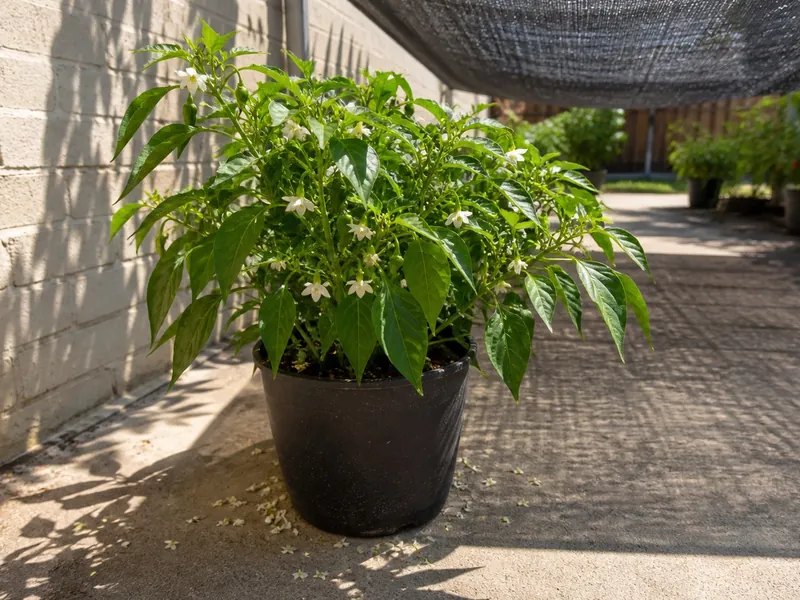
Dark plastic, concrete, brick, glass, and still corners can heat the root ball and canopy while the reported air temperature looks acceptable.
Check the container at the hour when flowers usually wilt or drop. Feel the sunward pot wall, lift the pot, inspect the saucer, and note whether leaves recover after direct sun leaves the site.
Move the pot away from a heat-reflecting wall or give light afternoon shade before changing its fertilizer. Keep the plant in strong morning light so the correction does not replace heat stress with weak light.
A small container also carries less water reserve.
If the mix dries every day despite a complete watering, move the pepper into a larger container during mild weather and preserve as much of the root ball as possible.
After repotting, water once to settle the mix and wait for soil evidence before watering again. The next bloom flush provides a cleaner test than the flowers already exposed to the old pot conditions.
Are thrips or disease damaging the flowers?
Weather-related flowers often look intact before they yellow and detach.
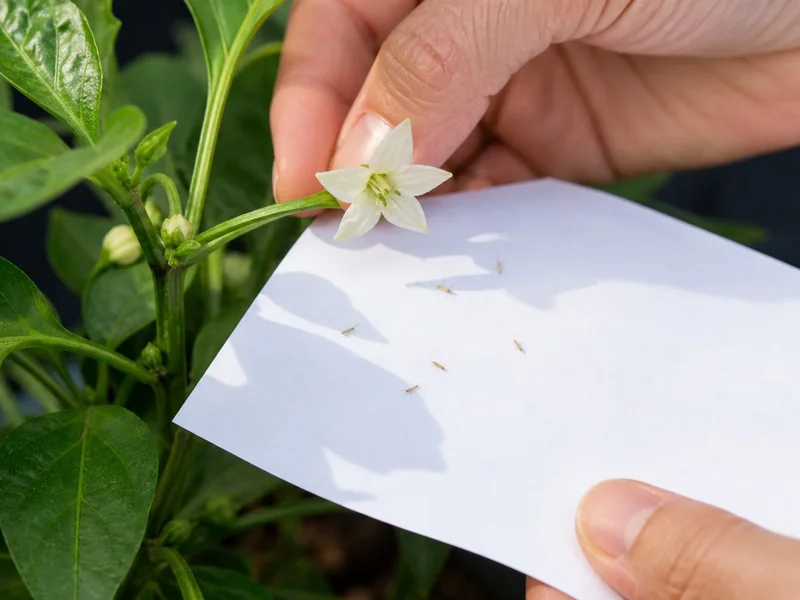
Scarred, browned, distorted, or streaked blossoms deserve a closer insect inspection.
University of Maryland IPM says thrips prefer to feed in flowers and that feeding in pepper blossoms may cause blossom drop or scarred fruit.
Tap an open flower over white paper and look for tiny slender insects moving on the surface.
Thrips can also vector tomato spotted wilt virus. Maryland describes infected peppers as having dark foliage lesions and spotted fruit, so flower drop plus distorted new growth or spreading lesions is not a simple weather case.
Do not spray a flower because one insect was present. Confirm the pest, inspect several blossoms and leaves, and use the pepper pest guide or a local diagnostic service before choosing treatment.
What should you fix first when flowers keep dropping?
Several simultaneous changes hide the result and can add stress.
Choose the strongest evidence from weather, root-zone moisture, pollen conditions, feeding, and flower damage.
- Record the canopy high and overnight low for seven days.
- Check soil moisture at the same depth and time each morning.
- Mark two fresh flowers and note whether a green ovary remains.
- Correct the leading cause without changing unrelated care.
- Inspect the next open flowers for set, damage, and tiny fruit.
For heat, reduce reflected afternoon exposure and keep moisture even. For cold, protect the plant at night without sealing it into stagnant humidity.
For a dry pot, restore a complete watering pattern. For wet roots, improve drainage and allow air back into the root zone.
For still-air pollination, add a light morning vibration. For suspected excess nitrogen, pause the extra feed rather than adding a different product.
How can you tell the plant is setting fruit again?
A dropped flower cannot reattach, so recovery is forward-looking.
The useful sign is a new bloom that leaves a firm green ovary and begins enlarging.
Record the date of the next heavy flush and check the same flowers for three to five mornings. Stable tiny fruit after the petals wither is stronger evidence than a temporary change in leaf posture.
If the weather moved back into the set range and new flowers hold, keep the successful routine steady. Reintroducing strong fertilizer or changing watering immediately can erase the evidence.
If every new flower still drops, revisit the diagnosis with the record in hand. A repeated pattern at one temperature, soil state, or side of the plant is more useful than another general blossom-drop list.
How many flowers should a pepper plant keep?
There is no reliable universal number of blossoms that a pepper should retain.
Cultivar, plant size, weather, roots, existing fruit, and growing system all change how many flowers become harvestable peppers.
Do not assume a small hot pepper and a large bell pepper should carry the same number of fruit. Use the plant's new set, branch strength, and continued growth as the practical comparison.
A heavy flush on a small transplant can lose flowers without signaling season-long failure. University of Minnesota Extension recommends removing flower clusters from seedlings until close to transplanting because early reproduction can compete with establishment.
Once the plant is established, avoid stripping every bloom as a reset. Correct the environment, protect the branches, and let the next moderate-weather flush show what the plant can hold.
When is flower drop a sign of a bigger problem?
Flower drop alone commonly points to weather or water. Flower drop with twisted leaves, mottling, spreading lesions, severe wilt, or stalled new growth needs a broader diagnosis.
Inspect both sides of leaves, stems, flowers, and the root zone.
Compare affected and healthy plants in the same setting, then photograph the symptoms before removing tissue. A local Extension diagnostic service can separate insects, virus, herbicide injury, and root disease when the pattern does not resolve with the next weather change.
Escalate after one corrected bloom cycle if every new flower still aborts and the plant shows additional symptoms. That boundary prevents weeks of random feeding, watering, and pollination changes while the actual problem advances.
Why Do Pepper Plant Flowers Fall Off Before Fruit Sets? FAQ
- University of Maryland Extension - Growing peppers in a home garden
- University of Minnesota Extension - Growing peppers in home gardens
- University of Minnesota Extension - Watering the vegetable garden
- University of Minnesota Extension - Fertilizing and watering container vegetables