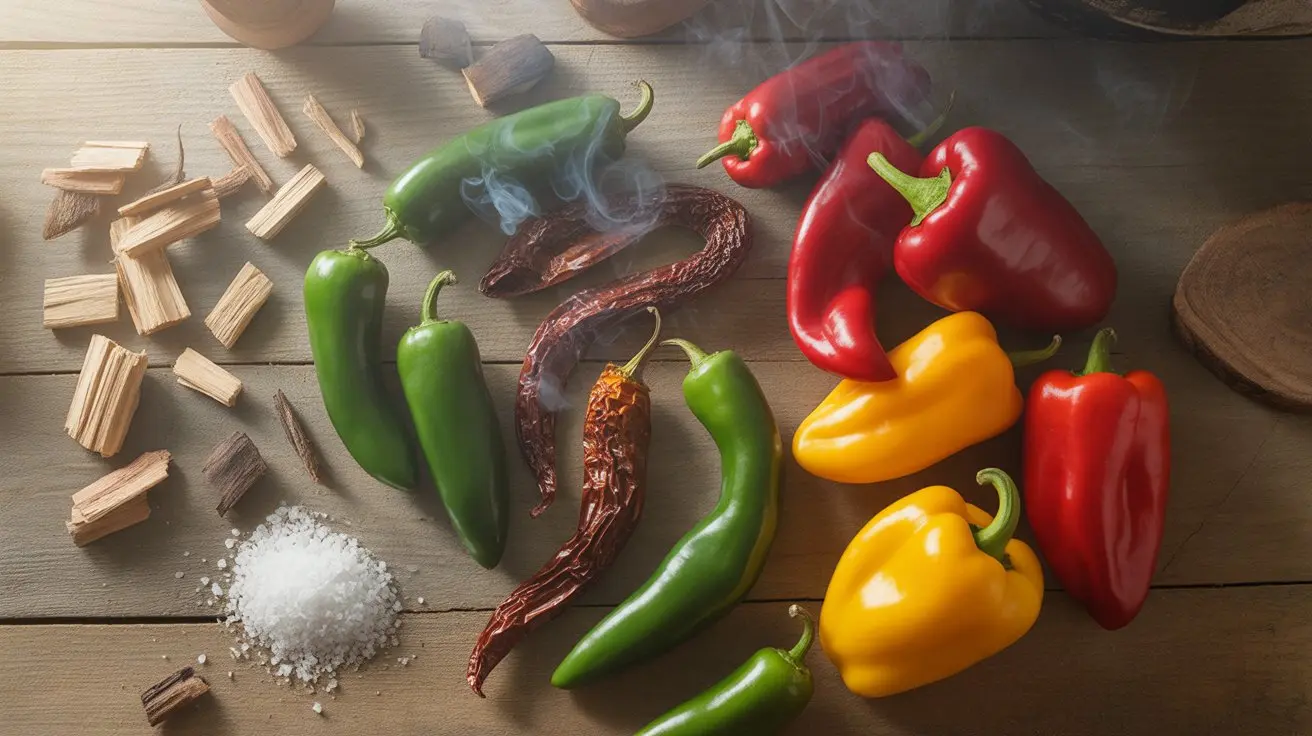
Best Peppers for Smoking
The best peppers for smoking include jalapeño (chipotle), ancho, and cherry peppers. Wood types, smoke times, and storage. Find your perfect heat level.

Why Smoke Peppers in the First Place?
Smoking transforms peppers in ways that drying or roasting simply cannot replicate. The slow application of wood smoke breaks down cell walls, concentrates sugars, and deposits aromatic compounds that bond with capsaicin to create entirely new flavor dimensions.
Chipotle — smoked jalapeño — is the entry point most people know, but it barely scratches the surface of what's possible when you start matching different pepper varieties to different wood types and smoke times.
The Science Behind Smoke and Capsaicin
Capsaicin and its related compounds (capsaicinoids) are oil-soluble molecules concentrated in the placenta of the pepper. When smoke penetrates the fruit, phenolic compounds from the wood interact with these oils, softening the sharp leading edge of heat and adding earthy, woody undertones.
This is why a smoked habanero tastes fundamentally different from a fresh one — the TRPV1 response is the same, but the flavor context surrounding it shifts dramatically. Understanding how heat units are measured helps you predict how aggressive a smoked pepper will taste before you commit to a full batch.
Selecting Peppers by Wall Thickness
Wall thickness is the single most important structural factor in smoking peppers. Thin-walled peppers like de arbol and Thai chilies smoke in 2-3 hours; thick-walled varieties like poblanos and bell peppers need 4-6 hours at low temperatures.
Thick walls hold more moisture, which means more time for smoke absorption — but they also risk fermenting or rotting if your smoker runs too cool. Aim for 180-225°F regardless of variety, adjusting time based on wall thickness and desired final texture.
Best Peppers for Cold Smoking (Mild to Medium Heat)
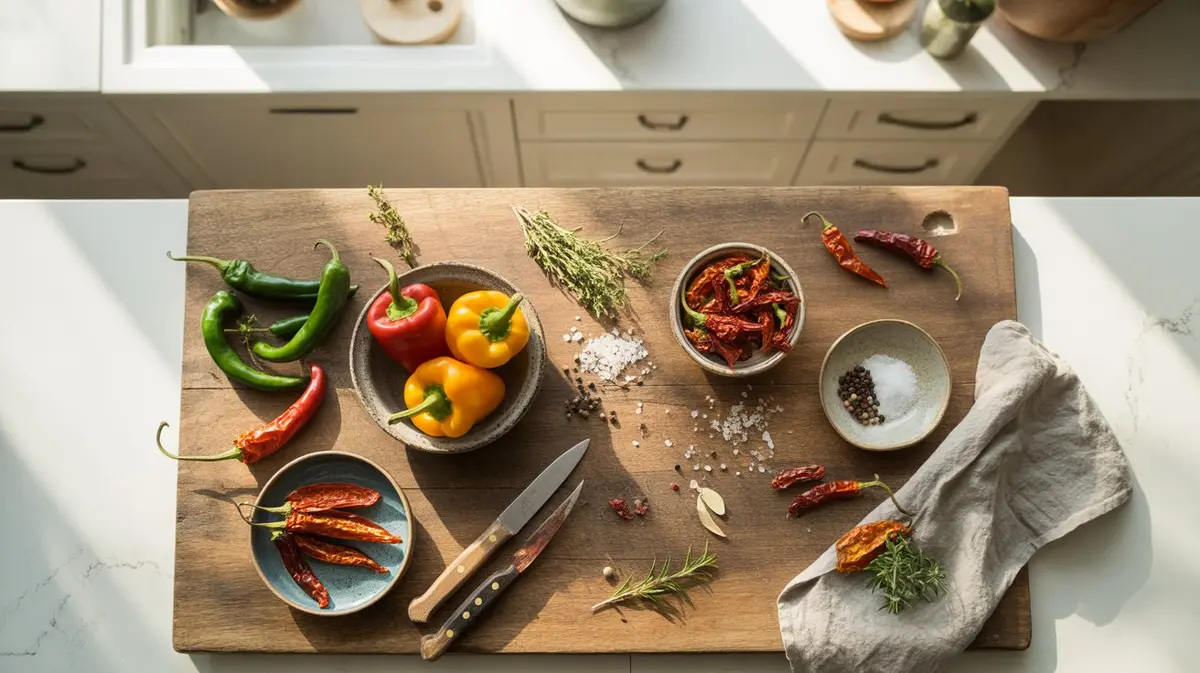
Cold smoking runs below 90°F and preserves the fresh character of the pepper while adding smoke complexity. This technique works beautifully with sweeter, thicker-walled varieties.
Carmen peppers — the elongated Italian frying type sitting in the lowest heat bracket — are exceptional candidates. Their high sugar content caramelizes slightly even at cold-smoke temperatures, and the result is something between a sundried tomato and smoked paprika in character. Find details on their sweet, pimento-adjacent flavor profile if you want to understand how little heat you're working with.
Anaheim peppers are another reliable choice here. Their mild, grassy flavor absorbs applewood or cherry smoke cleanly without the smoke overwhelming what little heat they carry.
Hot-Smoking the Mid-Range: Jalapeño, Serrano, and Poblano
This is where most home smokers spend their time, and for good reason — the medium-heat range offers enough capsaicin to feel the smoke's moderating effect without requiring protective gear during prep.
Serranos deserve more attention in this category. Running 10,000-23,000 SHU — roughly 3-4 times hotter than a typical Anaheim — they hold their structure better than jalapeños due to slightly thicker flesh relative to size. Check the bright, grassy bite of serrano before smoking; that sharpness softens dramatically with smoke, producing a chipotle-like result with more backbone.
Poblanos, once smoked and dried, become ancho chilies — one of the most commercially important dried peppers in Mexican cooking. The transformation is dramatic: from a fresh, mildly earthy pepper to a deeply complex dried chile with notes of chocolate, raisin, and dried fruit layered under light smoke.
Smoking High-Heat Peppers: Habanero, Scotch Bonnet, and Tabasco
Smoking peppers in the upper heat tier is a commitment. At 100,000-350,000 SHU, habaneros and their relatives don't lose significant heat through smoking — but the flavor transformation is worth the risk.
Habaneros smoked over fruitwood (cherry or apple) develop a tropical, almost floral smokiness that works remarkably well in hot sauces and BBQ glazes. The smoke rounds out the sharp citrus-forward heat without killing it.
Tabasco peppers — the variety, not the sauce — are a fascinating smoking subject. Their thin-walled, intensely juicy flesh absorbs smoke faster than almost any other variety at this heat level. Two hours at 200°F over hickory produces a pepper that's ready to blend into a smoked hot sauce immediately. The original Tabasco sauce process involves aging mash in oak barrels, which is essentially a slow, controlled smoke-adjacent process.
The Capsicum frutescens species — which includes Tabasco and similar upright-fruiting varieties — tends to respond well to smoke because of its naturally high moisture content and thin walls.
Extreme Heat: Smoking Super-Hots
Smoking peppers in the extreme heat bracket — ghost peppers, scorpions, Carolina Reapers — is a niche practice but produces remarkable results for hot sauce makers and spice blenders.
The key challenge: these peppers are so potent that even smoked and dried, a small amount goes a long way. Gloves and eye protection are non-negotiable during processing. The smoke flavor becomes a secondary note to the heat, but it adds depth to blends that would otherwise taste one-dimensional.
De arbol chilies, while not in the super-hot category, bridge the gap usefully. At 15,000-65,000 SHU — significantly hotter than an Anaheim, closer to a cayenne — their thin walls make them ideal for quick hot-smoking. The sharp, tannic heat of de arbol mellows noticeably after even a short smoke session, making them more versatile in sauces and rubs.
Wood Pairing Guide
Wood selection matters as much as pepper selection. The wrong wood can make a pepper taste bitter or muddy; the right pairing amplifies the pepper's natural character.
- Applewood: Light, slightly sweet. Best with jalapeño, serrano, Carmen, and other mild-medium peppers where you don't want smoke to dominate.
- Cherry: Mild, fruity. Excellent with habanero and other tropical-fruited varieties — reinforces their natural fruitiness.
- Hickory: Strong, bacon-like. Best for thick-walled peppers (poblano, bell) that can absorb the intensity. Overpowers thin-walled varieties.
- Mesquite: Very strong, earthy. Traditional for chipotle; use sparingly and blend with milder wood to avoid bitterness.
- Pecan: Medium, nutty. Versatile — works with almost any pepper variety. Good starting point for first-time pepper smoking.
- Oak: Medium, neutral. Reliable for longer smokes; won't interfere with pepper flavor but adds solid backbone.
Smoking Wild and Specialty Peppers
Beyond the mainstream varieties, a few specialty peppers reward the adventurous smoker.
Chiltepin peppers — tiny, spherical, and ferociously hot at 50,000-100,000 SHU — are considered the wild ancestor of many domesticated varieties. Their ancestral heat and earthy, slightly smoky character even when fresh makes them an interesting smoking subject. Because they're so small, they need only 60-90 minutes of smoke exposure before they're ready to dry and grind into a smoked wild pepper powder.
Thai chilies, popular across Southeast Asian cooking, are another underutilized option. The searing, clean heat of Thai bird chilies doesn't soften much with smoke, but the aromatic complexity increases significantly. Smoked Thai chilies work well in dry rubs for pork and chicken where you want both heat and smoke without a sauce. Their Southeast Asian culinary roots make them less traditional in BBQ contexts, but that's precisely what makes them interesting.
Step-by-Step: Smoking Peppers at Home
- Select and prep: Choose peppers at peak ripeness — red jalapeños for chipotle, fully red serranos, or ripe poblanos. Wash and dry completely. Moisture on the skin creates steam, not smoke penetration.
- Score or leave whole: Thin-walled peppers (de arbol, Thai, chiltepin) smoke whole. Thick-walled varieties benefit from a single lengthwise score to allow smoke entry without splitting.
- Set your temperature: 180-225°F for hot smoking. Use a water pan to maintain humidity if smoking for more than 3 hours.
- Add wood: Soak chips 30 minutes before use, or use chunks for longer burns. Start with a small amount — you can always add more smoke, never less.
- Smoke and monitor: Check every hour. Thin-walled peppers are done when fully wrinkled and leathery. Thick-walled peppers should feel soft but hold their shape.
- Finish and dry: For long-term storage, finish smoked peppers in a dehydrator at 135°F until completely dry and brittle. Alternatively, freeze smoked peppers immediately after smoking for use within 6 months.
- Store properly: Dried smoked peppers store in airtight containers away from light for up to 12 months. Grind to powder or leave whole.
Smoked Pepper Applications
Smoked peppers are more versatile than most people realize. Beyond chipotle in adobo sauce, smoked peppers work in dry rubs, compound butters, infused oils, vinegars, and finishing salts.
Smoked and ground serrano makes a compelling substitute for smoked paprika in dishes where you want more heat. Smoked habanero powder added to chocolate desserts is a legitimate technique — the smoke bridges the bitterness of dark chocolate and the fruity heat of the pepper in a way that's genuinely surprising.
For hot sauce applications, blend smoked peppers with fresh ones at roughly a 1:3 ratio to get smoke character without losing brightness. All-smoked hot sauces tend toward the heavy and one-dimensional unless balanced with acid and fresh aromatics.
If you want to go deeper on growing your own smoking stock, a step-by-step indoor starting guide covers everything from seed selection through transplant — growing your own means you control ripeness at harvest, which matters enormously for smoking quality.
Sourcing and Storage of Raw Peppers for Smoking
Farmers markets in late summer offer the best selection of smoking-grade peppers. Look for fully ripe specimens — red jalapeños, red serranos, and dark red poblanos — since sugar content is highest at full ripeness and that sugar is what caramelizes and interacts with smoke compounds.
Avoid peppers with soft spots, blemishes, or signs of mold. Any existing bacterial activity will accelerate during the warm smoking process. Peppers should feel firm and have tight, glossy skin.
If you're buying in bulk for a large smoke session, store raw peppers in the refrigerator unwashed for up to 2 weeks. Wash only immediately before smoking.
Frequently Asked Questions
-
Capsaicin is heat-stable and doesn't degrade significantly during low-temperature smoking. The perceived heat may feel slightly lower because smoke compounds add flavor complexity that contextualizes the burn, but the actual SHU measurement stays close to the fresh pepper's level.
-
Traditional chipotle uses mesquite or pecan wood, but applewood produces a cleaner, slightly sweeter result that many home smokers prefer. Blend mesquite with apple at a 1:2 ratio if you want the authentic earthy character without the bitterness risk.
-
Thin-walled varieties like de arbol and Thai chilies take 2-3 hours at 200°F. Thick-walled peppers like jalapeños and poblanos need 4-6 hours. Finish in a dehydrator at 135°F to ensure complete drying for long-term storage.
-
Yes, freezing is an excellent option for smoked peppers you plan to use within 6 months. Freeze in a single layer first, then transfer to bags. Frozen smoked peppers work well blended into sauces but lose their texture for applications requiring whole or sliced peppers.
-
Drying removes moisture through heat or air circulation without adding flavor compounds. Smoking deposits phenolic compounds from wood combustion that bond with the pepper's oils, creating flavor complexity that pure drying cannot replicate. Many traditional dried chilies like ancho are also lightly smoked.