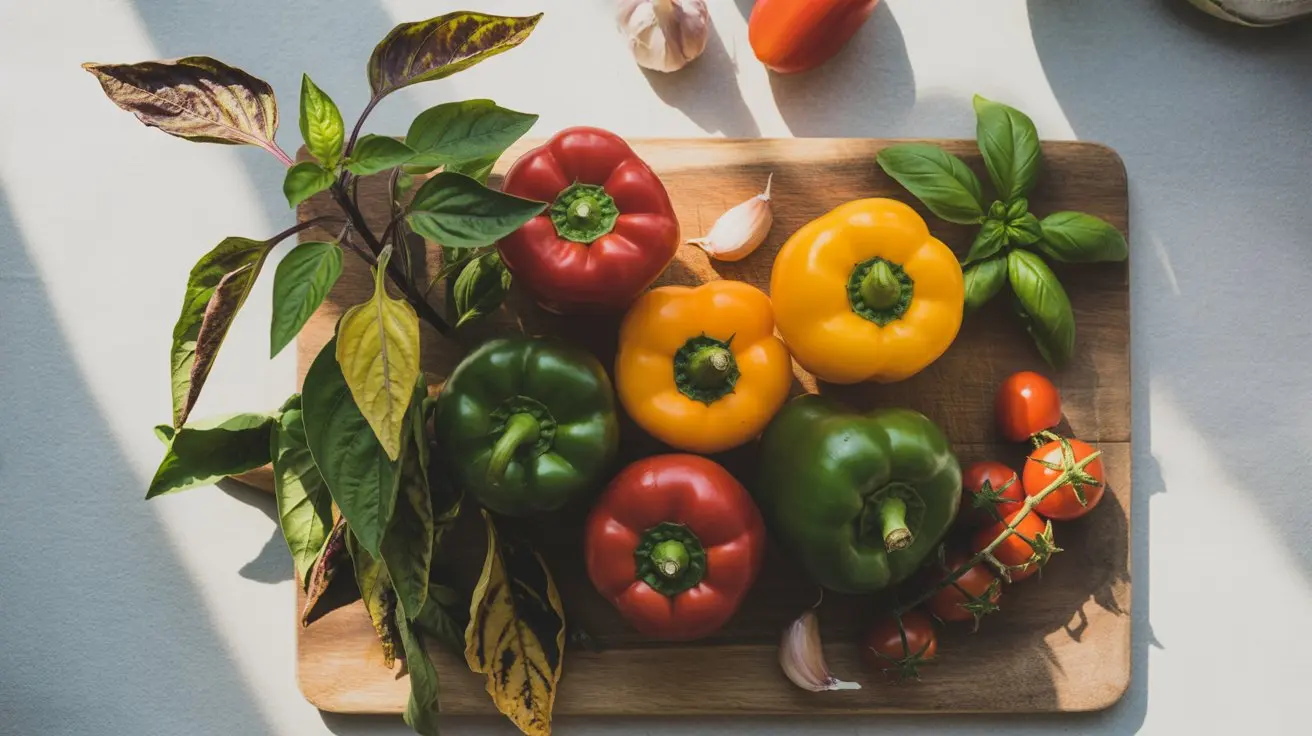
Pepper Leaves Turning Brown
Brown pepper leaves can mean bacterial spot, sunburn, frost damage, or fertilizer burn. Each cause with treatment steps. Find your perfect heat level.

Why Brown Leaves Are Your Pepper Plant's SOS Signal
Pepper plants are remarkably communicative - brown leaves aren't random, they're a specific distress signal with a specific cause. The tricky part is that six distinct problems produce nearly identical symptoms, and the fix for one can make another dramatically worse.
Getting the diagnosis right before reaching for a spray bottle or fertilizer bag is the difference between a thriving plant and a dead one by August.
Bacterial Leaf Spot: The Most Common Culprit
Bacterial leaf spot (Xanthomonas campestris pv. vesicatoria) is the leading cause of brown lesions on pepper foliage, particularly in humid climates or after periods of rain.
The telltale sign is water-soaked spots that start yellow-green, then develop brown or black centers with a pale yellow halo. Unlike sunburn or fertilizer damage, bacterial spot lesions have irregular edges and often appear on lower leaves first.
Overhead watering is the primary transmission vector - the bacteria splash from soil to leaves and spread plant to plant through rain or irrigation. Warm temperatures between 75-86°F accelerate bacterial multiplication dramatically.
Treatment Steps for Bacterial Spot
- Remove and bag all visibly infected leaves immediately - don't compost them.
- Switch to drip irrigation or water at the base of plants only.
- Apply copper-based bactericide (copper hydroxide or copper octanoate) as a preventive spray on remaining foliage.
- Space plants adequately - at least 18 inches apart for good airflow.
- Avoid working with plants when foliage is wet, which spreads bacteria mechanically.
Copper sprays won't cure already-infected tissue, but they protect healthy leaves from further spread. Reapply every 7-10 days during wet periods.
Sunscald: When Too Much Light Becomes Damage
Pepper plants love sun, but there's a threshold - particularly when plants are moved suddenly from shade to direct exposure, or during extreme heat events above 95°F.
Sunscald produces bleached, papery patches that turn tan or light brown, almost always on the side of the leaf facing the sun. The damage is crispy and dry rather than water-soaked, and affected tissue doesn't expand over time the way bacterial infections do.
This is especially common when transplanting seedlings outdoors without a proper hardening-off period. Moving plants from a greenhouse or windowsill directly into full summer sun can cause visible damage within 48 hours.
Fixing Sunscald
- Provide temporary shade cloth (30-40% shade) during peak afternoon hours (noon to 3pm).
- Harden off transplants over 7-10 days by gradually increasing sun exposure.
- Damaged leaves won't recover - remove severely affected ones to reduce plant stress.
- Water consistently during heat waves; drought-stressed plants are more susceptible to scald.
Super-hot varieties like the Trinidad Scorpion Butch T's blistering heat and the Naga Viper's extreme capsaicin output are actually more susceptible to sunscald than milder varieties - the same thin-walled genetics that concentrate heat also make foliage more delicate.
Fertilizer Burn: Salt Damage From Overfeeding
More fertilizer does not equal faster growth. Excess nitrogen or phosphorus salts draw moisture out of root cells through osmosis, creating symptoms that look remarkably like drought stress combined with browning leaf edges.
This happens most often with synthetic granular fertilizers applied too heavily, or with liquid concentrates mixed stronger than the label specifies.
Reversing Fertilizer Burn
- Stop all fertilizer applications immediately.
- Flush the soil thoroughly - water deeply until runoff is substantial, repeat after 30 minutes. For container plants, this means running 3-4x the pot volume through the soil.
- Test soil EC (electrical conductivity) if possible - readings above 3.5 mS/cm indicate dangerous salt levels.
- Resume feeding at half-strength after 2-3 weeks, using a balanced formula.
- Trim dead leaf margins to improve aesthetics, but don't remove entire leaves unless they're fully brown.
Frost and Cold Damage: Temperature Stress
Peppers are tropical plants. Capsicum annuum species like bells and jalapeños struggle below 50°F, while Capsicum pubescens varieties handle cold better than most.
Cold damage produces brown or black patches that look water-soaked initially, then collapse and dry out. Leaf edges and tips are usually hit first. After a light frost, entire leaves may droop and turn dark brown overnight - this is cell rupture from ice crystal formation inside leaf tissue.
Even without frost, extended periods below 55°F cause chilling injury - a slower browning that starts at leaf margins and progresses over several days.
Cold Damage Response
- Don't prune frost-damaged plants immediately - damaged tissue protects surviving growth underneath.
- Wait until consistent temperatures above 60°F return before assessing true damage.
- Remove dead tissue once new growth resumes from the base or main stems.
- Apply a light foliar spray of seaweed extract to stimulate recovery.
- Protect remaining plants with row cover or bring containers indoors when temperatures drop below 50°F.
Robust varieties like the thick-walled rocoto with its fruity, berry-like heat tolerate cooler conditions better than most peppers - they're native to Andean altitudes where nights can be cold year-round.
Root Rot and Overwatering: The Underground Problem
Brown leaves caused by root rot are counterintuitive - the plant looks thirsty even though the soil is wet. Overwatered roots suffocate and die, then fungal pathogens colonize the dead tissue. The plant can no longer uptake water or nutrients, so leaves brown and wilt despite adequate soil moisture.
Phytophthora capsici is the most destructive root rot pathogen for peppers, capable of killing an entire plant in days. It thrives in waterlogged, poorly drained soil, especially in warm conditions.
Check the roots if browning is accompanied by wilting that doesn't respond to watering. Healthy roots are white or tan. Rotted roots are brown, black, and often mushy with a foul smell.
Root Rot Treatment
- Reduce watering frequency immediately - allow the top 2 inches of soil to dry between waterings.
- Improve drainage by adding perlite to container mixes or raising garden beds.
- For mild cases, drench soil with a solution of hydrogen peroxide (3% diluted 1:4 with water) to kill anaerobic pathogens.
- Severe root rot usually means losing the plant - remove it to prevent spread to neighboring peppers.
- Never replant peppers in the same spot where Phytophthora was present without soil solarization or replacement.
Nutrient Deficiency: Reading the Pattern
Specific nutrient deficiencies produce specific browning patterns - learning to read them saves a lot of guesswork.
Calcium deficiency causes brown leaf margins and tip burn, often on new growth first. It's common in acidic soils (below pH 6.0) where calcium becomes unavailable even when present. Magnesium deficiency produces yellowing between leaf veins that eventually turns brown - the veins stay green while tissue between them dies.
Potassium deficiency shows as brown scorching along leaf edges, starting on older lower leaves. This is common in heavily watered containers where potassium leaches out faster than other nutrients.
Addressing Deficiencies
- Test soil pH - most pepper nutrient problems resolve when pH is between 6.0-6.8.
- For calcium deficiency: apply gypite or calcium nitrate as a foliar spray and soil drench.
- For magnesium: Epsom salt solution (1 tablespoon per gallon of water) as a foliar spray works quickly.
- For potassium: use a balanced fertilizer with higher K ratio (like 5-5-10) and reduce leaching by watering less frequently but more deeply.
- Retest soil after 4-6 weeks to confirm correction.
Varieties grown for extreme heat - including the fiery Aji Chombo with its Caribbean heat profile and the peri-peri with its sharp African heat - are particularly sensitive to calcium deficiency because capsaicin synthesis requires adequate calcium for proper cell wall development.
Spider Mites and Thrips: Pest-Caused Browning
Not all brown leaves come from disease or environment. Spider mites create stippled bronze-brown discoloration by piercing leaf cells and extracting contents. Look for fine webbing on leaf undersides and tiny moving dots - mites are 0.5mm, barely visible to the naked eye.
Thrips cause silvery-bronze streaking that turns brown as feeding damage accumulates. Both pests thrive in hot, dry conditions and spread rapidly through a pepper patch.
Pest Control Steps
- Spray plants with a strong stream of water to dislodge mites and thrips - do this in the morning so foliage dries quickly.
- Apply insecticidal soap or neem oil to all leaf surfaces, especially undersides, every 5-7 days for three applications.
- Introduce predatory mites (Phytoseiulus persimilis) for persistent spider mite infestations in greenhouse settings.
- Remove heavily infested leaves to reduce pest populations.
- Increase humidity around plants - spider mites hate moist conditions.
Diagnosing Your Specific Situation
The fastest way to narrow down the cause is to look at three factors: location of browning on the plant, the pattern within each leaf, and current growing conditions.
Browning that starts on lower leaves and moves up suggests bacterial or fungal disease, or a nutrient deficiency moving from old to new growth. Browning that appears uniformly across the plant or on new growth first points to environmental stress - sunburn, cold, or fertilizer burn.
Wet, humid weather combined with overhead irrigation almost always means bacterial spot. Hot, dry conditions with stunted growth usually mean spider mites or drought. Wet soil with wilting despite adequate watering is root rot until proven otherwise.
Growing super-hot varieties like the Komodo Dragon with its scorching fruity heat adds another layer of complexity - these plants are often pushed harder with nutrients and heat, making fertilizer burn and heat stress more common than with milder varieties across the medium heat classification range.
Prevention: Building Resistant Plants
Healthy pepper plants resist most of these problems before they start. The foundation is soil structure - well-draining soil with adequate organic matter prevents both root rot and nutrient lockout simultaneously.
Consistent watering matters more than frequent watering. Letting soil dry slightly between waterings reduces fungal pressure, improves root oxygen, and prevents salt accumulation from fertilizer. For container plants, this typically means watering every 2-3 days in summer rather than daily.
Calcium and magnesium are the two nutrients most commonly deficient in pepper gardens. Adding a tablespoon of dolomitic lime per gallon of potting mix at planting time provides both, while also buffering pH into the ideal range. For garden beds, a soil test every 2-3 years keeps nutrient levels calibrated before deficiency symptoms appear.
Row cover and shade cloth are cheap insurance against the two environmental stressors you can't fully control - unexpected late frosts and heat waves. Keeping both on hand means you can respond within hours rather than watching plants take damage while waiting for supplies to arrive.
Frequently Asked Questions
-
Leaves that are already brown will not turn green again - the tissue is dead. However, once you fix the underlying cause, new healthy growth will emerge and the plant can fully recover.
-
Bacterial spot produces irregular brown lesions with yellow halos, often on lower leaves, and the spots have water-soaked edges. Sunburn creates bleached, papery patches on sun-facing leaf surfaces with no yellow halo.
-
Remove leaves that are more than 50% brown, as they drain energy without contributing to photosynthesis. Leave mildly affected leaves unless they show active disease spread, since partial leaf function still helps the plant.
-
Brown leaf tips specifically indicate either fertilizer burn from excess salt buildup or calcium deficiency. Check your fertilizer schedule and soil pH - calcium becomes unavailable below pH 6.0 even when present in the soil.
-
Yes - overwatering kills roots by suffocation, then fungal pathogens colonize the dead tissue. The plant can no longer uptake water or nutrients, causing leaves to brown and wilt even though the soil remains wet.