How to Make Chili Powder
Grind your own chili powder from dried peppers. Single-origin and blended recipes. Find your perfect heat level.

Why Homemade Chili Powder Beats the Jar
The dried pepper aisle at most grocery stores is a graveyard of potential. Pre-blended chili powder sits in tins for months before it reaches your shelf, losing volatile oils and aromatic compounds the whole time.
Grinding your own changes the equation entirely — you control the peppers, the ratios, the heat level, and the freshness. The result is a powder that actually smells like something when you open the bag.
Understanding Dried Peppers Before You Grind
Not every dried pepper makes good chili powder. The best candidates have thick flesh that dries evenly, deep color, and enough sugar to caramelize during toasting.
Anchos, guajillos, and pasillas are the workhorses of traditional Mexican-style blends — mild to medium heat, rich dried fruit and chocolate notes. For background on peppers from Mexico's regional traditions, the diversity is worth understanding before you start blending.
Push into hotter territory and you're looking at cayenne, chile de arbol, or even small fruity varieties like the intensely hot Wiri Wiri, a Caribbean pepper that punches well above its tiny size.
For powders with an earthy, smoky backbone, Indian pepper varieties like Kashmiri and Byadagi offer deep color with moderate heat — essential for anyone building blends beyond the standard American template.
The Toasting Step Nobody Skips Twice
Dry-toasting whole dried peppers before grinding is non-negotiable if you want depth. Heat activates Maillard reactions in the pepper's sugars and proteins, creating new aromatic compounds that raw grinding never achieves.
Use a dry cast iron or stainless skillet over medium heat. Press each pepper flat with a spatula for 10-15 seconds per side — you want fragrant and slightly puffed, not charred. Smoke means bitterness.
Let them cool completely on a wire rack before grinding. Grinding warm peppers clogs the blade and creates steam that muddles the flavor.
Equipment: What Actually Works
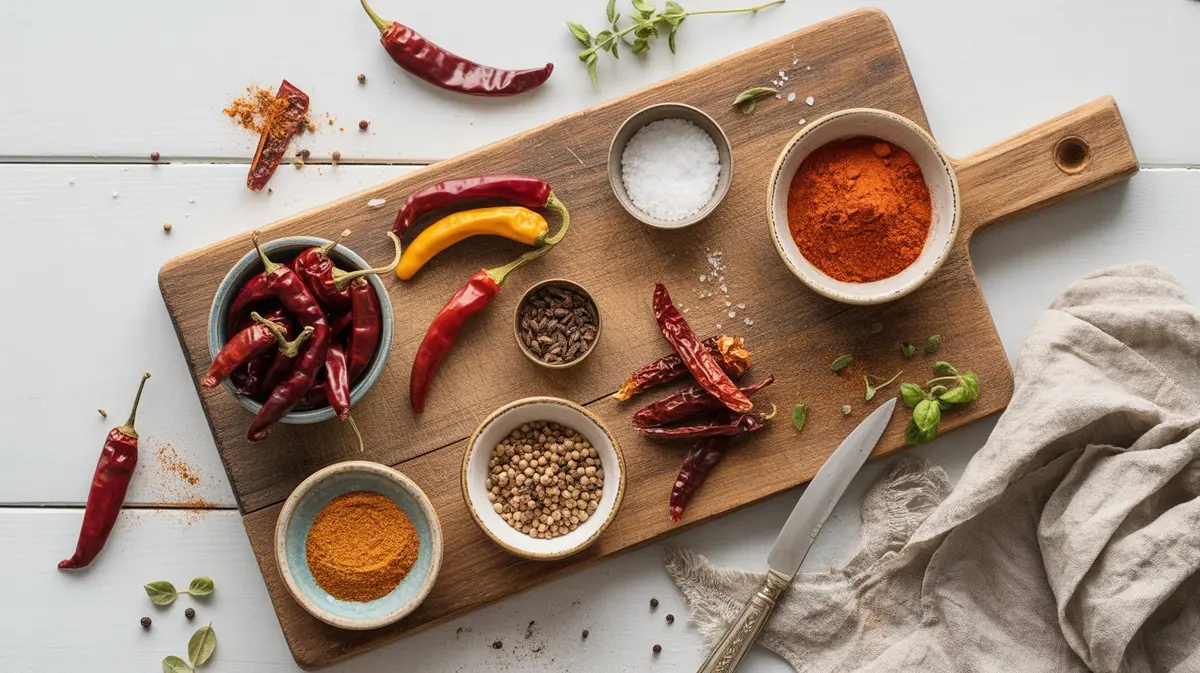
A dedicated spice grinder (blade-style coffee grinder reserved for spices) handles most dried peppers in 30-45 seconds. Clean it between batches with a handful of dry rice to absorb residual oils.
For tougher dried chiles with thick skin — including some superhot varieties — a high-powered blender works better for the first rough chop before finishing in the spice grinder.
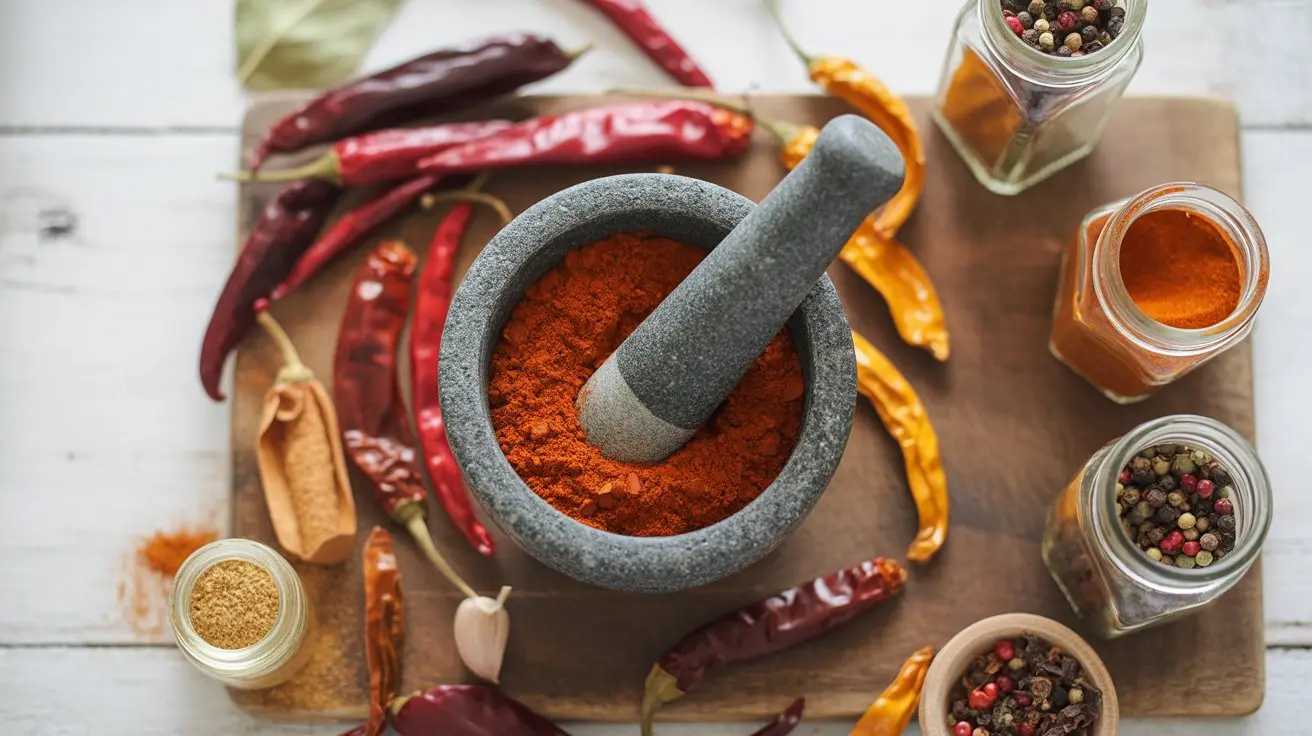
A mortar and pestle produces coarser, more textured powder with visible flecks of skin. Some cooks prefer this for rubs where texture matters. For sauces and soups, the grinder gives cleaner results.
Single-Origin Powders: Start Here
Before blending anything, make at least one single-origin powder. This is how you actually learn what each pepper contributes.
Guajillo: Bright, slightly tangy, berry-forward. Around 2,500-5,000 SHU. Falls in the medium heat tier and blends well with almost anything.
Cayenne: Clean, sharp heat with less complexity. 30,000-50,000 SHU. This is your heat dial — add more to push any blend hotter.
The fiery Siling Labuyo, a small Philippine pepper in the Capsicum frutescens family, makes a remarkable single-origin powder with sharp, clean heat and a slightly fruity finish that cayenne doesn't offer.
Classic Chili Powder Blend Recipe
American-style chili powder is actually a blend — not a single pepper. Here's a baseline recipe to adjust from:
3 parts ancho or mulato (base flavor)1 part guajillo (brightness and color)1 part cayenne (heat)1/2 part cumin (earthy warmth)1/4 part garlic powder (optional, but traditional)1/4 part oregano, Mexican variety preferred
Toast the dried peppers separately before combining — each variety has a different moisture content and toasts at a slightly different rate. Mix the ground spices after grinding each component.
This blend lands around 2,000-4,000 SHU depending on your cayenne ratio, which puts it squarely in the medium range for everyday cooking.
Pushing the Heat: Hotter Blend Variations
Once the baseline blend feels comfortable, the interesting work starts. Swapping or supplementing the cayenne with hotter dried peppers changes the character of the heat, not just the intensity.
Chile de arbol brings a clean, almost nutty heat that integrates smoothly. Dried Thai chiles — representing Thailand's hot pepper tradition — add a sharp, quick-hitting burn that fades fast.
For serious heat, small amounts of dried superhot powder can be incorporated. The Naga Morich's extreme fruity heat is potent enough that a quarter teaspoon of powder per batch is a meaningful addition — handle the dried pods with gloves.
The Lombok pepper's moderate Indonesian heat offers an interesting middle path — hotter than guajillo but with a distinct character that Southeast Asian-inspired blends benefit from.
When working with any dried pepper in the extra-hot classification, measure carefully. A little goes further than you expect once the capsaicin concentrates during grinding.
Superhot Powders: Handle With Respect
There's a legitimate market for superhot chili powder — a pinch can heat an entire pot of chili without affecting the flavor profile the way large quantities of cayenne would.
The 7 Pot Katie's blistering Caribbean heat produces a powder that's genuinely dangerous to inhale. Grind superhot peppers outdoors or with the kitchen ventilation running at full capacity. A fine particle cloud of superhot powder in an enclosed kitchen is not a pleasant experience.
The Jay's Peach Ghost Scorpion's layered fruity heat is worth grinding for specialty use — the peach and tropical notes survive drying better than most superhots, making it a genuinely flavorful addition to small-batch spice blends rather than just a heat delivery mechanism.
Superhot powders belong in the super-hot tier of the Scoville scale — understanding where they rank on the pepper heat ranking index helps calibrate how much to use without overwhelming a dish.
Regional Blend Traditions Worth Knowing
Chili powder isn't a monolithic concept. Different culinary traditions produce radically different blends from the same basic technique.
Indian-style chili powders often use a single variety — pure Kashmiri for color, pure bird's eye for heat — rather than blended bases. The Capsicum frutescens species dominates Indian hot powders, producing sharp, clean heat without the fruity complexity of chinense varieties.
South American pepper traditions favor aji varieties — particularly aji amarillo and aji panca — which produce powders with a distinct citrusy, fruity character unlike anything in the Mexican canon.
Korean gochugaru isn't technically chili powder in the American sense, but the technique of sun-drying and coarse-grinding specific varieties of Capsicum annuum produces a product with irreplaceable flavor in kimchi and Korean stews.
Storage and Shelf Life
Homemade chili powder degrades faster than commercial versions because it lacks preservatives and is ground fresher — meaning more volatile oils to oxidize. That's a feature, not a bug, but it requires proper storage.
Use airtight glass jars stored away from heat and light. A cool, dark cabinet is sufficient. The freezer works for long-term storage of larger batches — portion into small jars so you're not repeatedly freezing and thawing the main supply.
Expect peak flavor for 3-4 months at room temperature, up to a year frozen. When the powder stops smelling like anything interesting when you open the jar, it's time to grind a fresh batch.
Label every jar with the pepper varieties and the grind date. This sounds obvious until you have six unlabeled jars of varying red powders and no idea which one has the superhot blend.
Practical Tips for Better Results
- Remove stems and seeds before toasting — seeds can turn bitter when overheated and add little flavor
- Toast in small batches; crowding the pan steams rather than toasts
- Grind in short pulses rather than continuous runs to prevent heat buildup in the grinder
- Sift the finished powder through a fine mesh strainer to remove tough skin fragments
- For smoked chili powder, add 1/4 part smoked paprika rather than trying to smoke the peppers yourself
- If blending fresh-ground pepper powder with dried herbs and spices, grind the peppers first and add the rest after
Troubleshooting Common Problems
Powder is too coarse: The peppers weren't dry enough before grinding, or the grinder blade is dull. Re-dry in a 150°F oven for 20 minutes and try again.
Powder clumps immediately: Moisture is the culprit — either from insufficiently dried peppers or from humidity. Add a food-safe silica packet to the storage jar.
Flavor is flat: Skipped the toasting step, or used peppers that were already past their prime before drying. Fresh dried peppers (bought from a Mexican grocery or specialty spice shop, not a supermarket chain) make a significant difference.
Too hot to use in normal quantities: Dilute with additional ancho or mulato powder rather than starting over. The mild base peppers will bring the overall SHU down without changing the character significantly.
Frequently Asked Questions
-
Yes — seeds are worth removing before toasting. They contribute little flavor and can turn bitter when exposed to heat, which muddies the finished powder. The flesh and skin carry all the oils and color you want.
-
Cayenne powder is a single-pepper product — pure ground cayenne, nothing else. Chili powder is a blend that typically includes multiple dried peppers plus cumin, garlic, and sometimes oregano. Cayenne is hotter and sharper; chili powder is more complex and rounded.
-
A standard blender struggles with small quantities of dried peppers — the blades don't make clean contact. A dedicated spice grinder or a high-powered blender like a Vitamix works much better. For coarse powder, a mortar and pestle is a legitimate option.
-
Blend in additional mild dried pepper powder — ancho works best because it adds body and flavor rather than just diluting heat. Adding plain flour or cornstarch to reduce heat is not recommended; it changes the texture and flavor without improving the result.
-
Commercial chili powder is often ground months before purchase and stored in conditions that degrade volatile aromatic oils. Freshly ground powder contains those oils intact, which is why the aroma is noticeably more intense — that intensity translates directly to flavor in cooking.