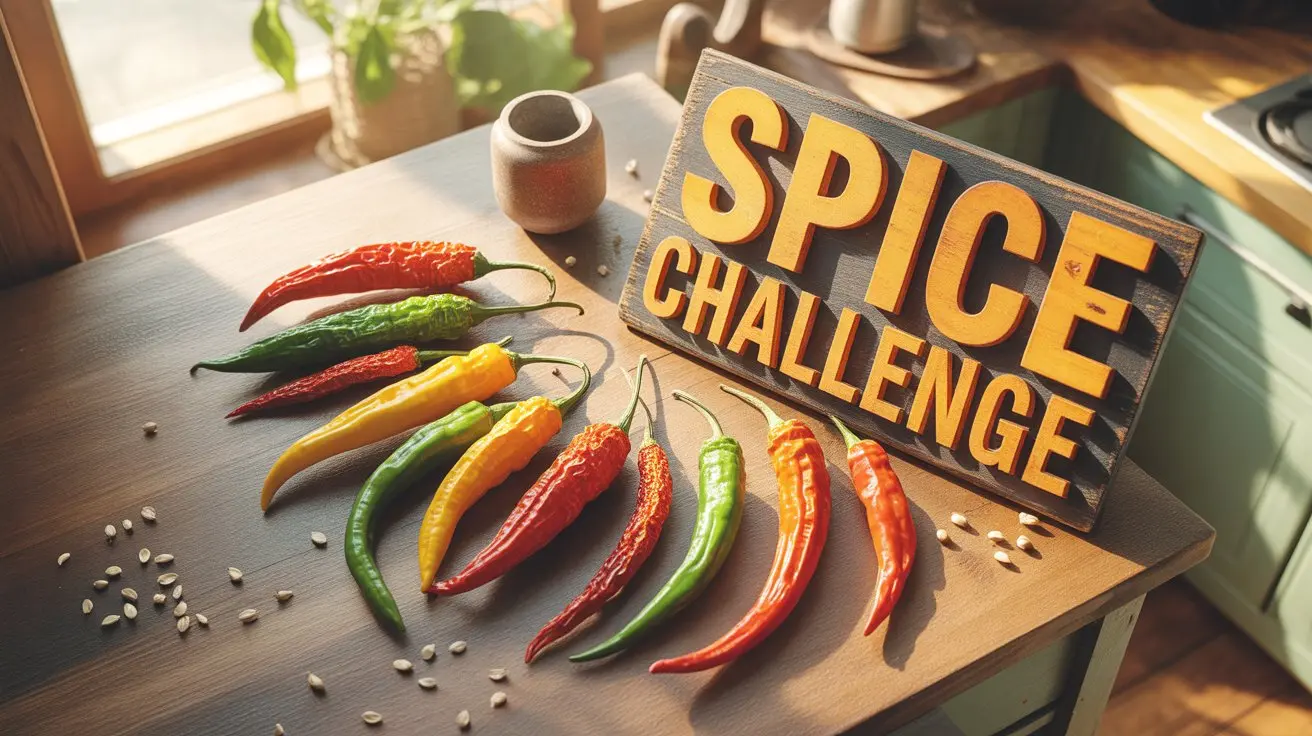
Hottest Peppers in the World
The current world record holders ranked by verified Scoville rating. From Pepper X to Carolina Reaper to Ghost Pepper. Find your perfect heat level.

The Numbers That Change Everything
A standard jalapeño tops out around 8,000 SHU. The current world record holder clears 3,000,000 SHU. That gap — 375 times the heat of a pepper most people consider spicy — tells you everything about how extreme this category has become.
The race for the hottest pepper has accelerated dramatically since the 2000s, driven by competitive breeders, university-verified testing, and a global community obsessed with pushing capsaicin to its biological limits. What follows is the current ranking as of 2026, based on verified Scoville testing.
How Scoville Ratings Actually Work
The official heat index ranking system used today is High-Performance Liquid Chromatography (HPLC), which measures capsaicinoid concentration directly rather than relying on human tasters. Results get converted to Scoville Heat Units for standardization.
Guinness World Records requires submissions to be tested by an accredited laboratory — typically Wescott Analytical or similar certified facilities. A single pepper variety can show significant variation between individual fruits, which is why record claims use average measurements across multiple samples.
Understanding how capsaicin triggers pain receptors explains why superhots feel different from regular hot peppers — it's not just intensity, it's duration and character of the burn. The TRPV1 receptor response to extreme capsaicin concentrations produces heat that builds, peaks, and lingers in ways that milder peppers simply cannot replicate.
Pepper X: The Current Record Holder
The world's most extreme heat level now belongs to Pepper X, developed by Ed Curlin of PuckerButt Pepper Company. Guinness certified it at an average of 2,693,000 SHU in 2023, dethroning the Carolina Reaper after nearly a decade at the top.
What makes Pepper X unusual isn't just the number — it's the shape. The pepper grows in a wrinkled, almost brain-like form, distinctly different from the smooth-skinned superhots that came before it. Curlin spent over 10 years selectively breeding it, crossing multiple superhot varieties to concentrate capsaicinoid production in the flesh rather than just the placenta.
The heat from Pepper X is described as full-body rather than localized — experienced tasters report that the burn spreads from the mouth into the chest and limbs in ways that other superhots don't match. This is consistent with its exceptionally high concentration of dihydrocapsaicin, which produces a longer-lasting burn than capsaicin alone.
Dragon's Breath: The Challenger That Wasn't Quite
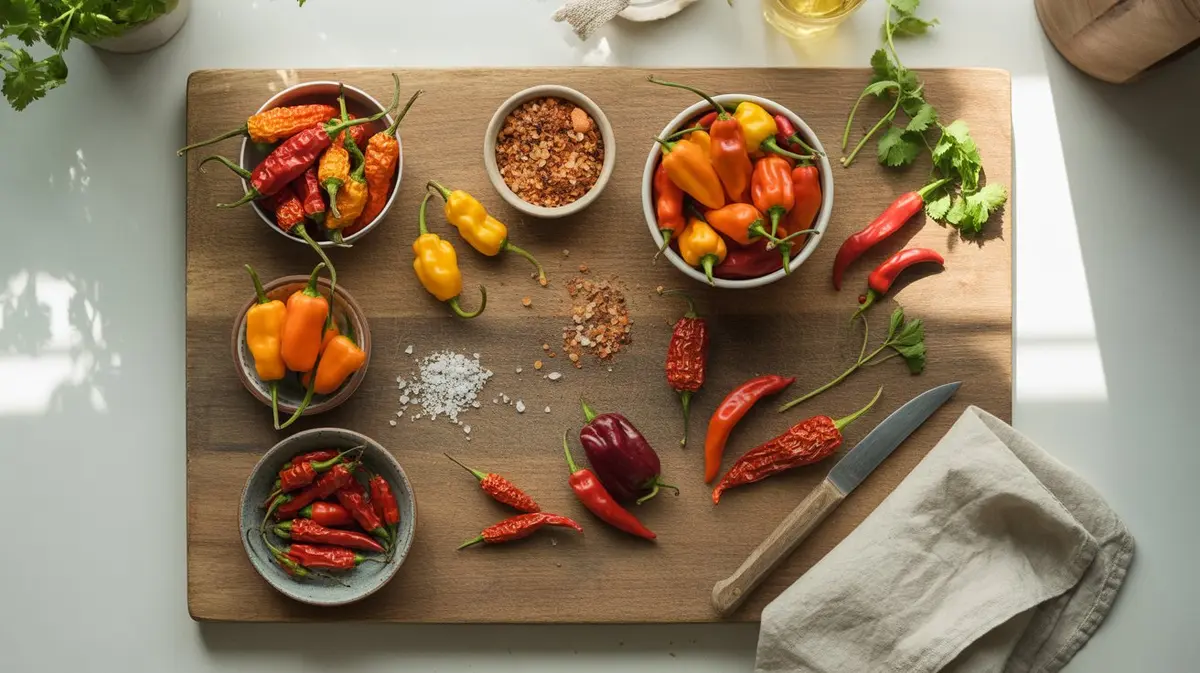
This British-bred record contender generated enormous media attention in 2017 when its creators — Mike Smith working with Nottingham Trent University — claimed it measured 2,480,000 SHU. That would have placed it above the Carolina Reaper at the time.
The catch: Dragon's Breath was never officially submitted to Guinness for record certification. The claim circulated widely in press coverage but lacked the accredited laboratory verification required for official status. It remains a significant pepper in the superhot conversation, but its exact position in the ranking is difficult to pin down without certified testing.
What Dragon's Breath did accomplish was demonstrating that pepper breeding in Britain had reached world-class levels — a meaningful shift from the traditional dominance of American and South Asian breeders in this space.
Carolina Reaper: The Benchmark
From 2013 to 2023, the pepper that redefined the super-hot tier held the Guinness record at an average of 1,641,183 SHU, with individual fruits measured above 2.2 million. Ed Curlin bred it as well — a cross between a Pakistani Naga and a Red Habanero — making him the only person to hold the record twice with different varieties.
The Reaper's distinctive tail and bumpy red skin became iconic. Its flavor profile — genuinely fruity before the heat takes over — made it more usable in actual cooking than its raw numbers suggest. Hot sauce manufacturers adopted it widely, and it remains the most commercially significant superhot pepper in production.
Even dethroned, the Carolina Reaper sits comfortably in the extreme super-hot classification that very few peppers reach. Its combination of verified heat, flavor complexity, and consistent growing characteristics keeps it relevant beyond the record conversation.
The Tier Below: Still Brutally Hot
The peppers between 500,000 and 1,500,000 SHU don't get the record headlines, but they represent the practical upper limit for most serious chili enthusiasts. This group includes the Trinidad Moruga Scorpion (1,200,000 SHU average), the 7 Pot Douglah (923,000 SHU), and several Naga varieties.
The Ghost Pepper (Bhut Jolokia) deserves specific mention — it was the first pepper to break 1,000,000 SHU when Guinness certified it in 2007, measured at 1,041,427 SHU. At the time, it was more than double any previously recorded pepper. That record lasted only until 2011, but the Ghost Pepper's cultural impact — and its place in northeastern Indian cuisine — gives it a significance that pure heat rankings don't capture.
These peppers fall into what's properly called the extra-hot classification range, where the heat is genuinely difficult to manage without experience and preparation.
Species Behind the Heat
Nearly every pepper above 500,000 SHU belongs to the Capsicum chinense species. This is not a coincidence. C. chinense evolved in the Amazon basin and developed exceptionally high capsaicin production as a defense mechanism — and the genetics that enable this concentration have proven amenable to selective breeding in ways that other species haven't matched.
Habaneros, Scotch Bonnets, Ghost Peppers, Trinidad Scorpions, and all the record holders share this species ancestry. The flavor characteristics that many describe as fruity or floral in superhots also trace back to C. chinense's distinctive aromatic compounds, which persist even at extreme heat levels.
Capsicum annuum — the species that includes jalapeños, serranos, and most familiar peppers — tops out around 100,000 SHU in its hottest varieties. The structural difference in capsaicin production between the two species is significant enough that no C. annuum variety has ever approached superhot territory without hybridization.
Growing Superhots: What the Numbers Don't Tell You
The practical reality of growing these peppers is that heat levels vary substantially based on conditions. Stress — particularly water stress and high temperatures during fruit development — increases capsaicin production. A Carolina Reaper grown in controlled greenhouse conditions may test lower than one grown in a hot, slightly dry outdoor environment.
Most superhot varieties need a long growing season — 90 to 120 days from transplant to ripe fruit. For anyone in a northern climate, starting seeds indoors in January or February is necessary. The transplanting and cultivation process for superhots differs from standard pepper growing mainly in timing and patience — the plants themselves aren't particularly difficult, they just need more time.
Superhots are perennial in frost-free climates and can be overwintered indoors in colder regions. A mature plant in its second or third year will typically produce significantly more fruit than a first-year plant, and some growers report that older plants develop more intense heat as well.
Handling and Safety
At concentrations above 1,000,000 SHU, capsaicin becomes genuinely hazardous if mishandled. Gloves are not optional — bare-hand contact with cut superhot peppers can cause chemical burns and transfer capsaicin to eyes or mucous membranes hours later, even after washing.
The burn pathway at the molecular level explains why water makes the experience worse rather than better. Capsaicin is oil-soluble, not water-soluble. Dairy fat (casein protein specifically) is the most effective relief agent, which is why milk and yogurt work where water fails.
For cooking applications, superhots are almost always used in small quantities — a fraction of a single pepper in a large batch of sauce or chili. The standard hot pepper range used in everyday cooking sits between 30,000 and 100,000 SHU, which gives you a sense of how much dilution superhots require to become usable in food.
The Record Race Is Ongoing
Ed Curlin has publicly stated that Pepper X is not his final entry in this competition. Multiple breeding programs — in the UK, Australia, and the United States — are actively working toward the next record. The ceiling for capsaicin concentration in Capsicum fruit is not yet known.
What's clear is that each new record requires more sophisticated breeding and more rigorous verification. The days of informal heat claims are over — Guinness certification demands accredited testing, multiple samples, and documented methodology. This raises the bar for legitimate record holders while filtering out the wave of unverified claims that circulated in the 2010s.
Whether Pepper X holds the title through 2026 or gets surpassed, the super-hot category it represents has permanently changed what people understand about pepper heat. Varieties that would have seemed impossibly extreme a generation ago are now commercially available, grown by home gardeners, and used in mainstream hot sauces.
Ranking Summary: Verified Superhots
- Pepper X — 2,693,000 SHU average (Guinness certified, 2023)
- Dragon's Breath — 2,480,000 SHU claimed (not Guinness certified)
- Carolina Reaper — 1,641,183 SHU average (Guinness certified, 2013-2023)
- Trinidad Moruga Scorpion — 1,200,000 SHU average (New Mexico State University, 2012)
- 7 Pot Douglah — 923,000 SHU average (multiple verified tests)
- Ghost Pepper (Bhut Jolokia) — 1,041,427 SHU (Guinness certified, 2007)
The distinction between certified and claimed matters enormously in this space. When evaluating any heat claim, the first question should always be: what laboratory tested it, using what methodology, and was it submitted for independent verification?
Frequently Asked Questions
-
Pepper X holds the Guinness World Record as of 2023, certified at an average of 2,693,000 SHU. It was developed by Ed Curlin of PuckerButt Pepper Company and dethroned the Carolina Reaper after nearly a decade.
-
The Carolina Reaper averaged 1,641,183 SHU when certified, while Pepper X averages 2,693,000 SHU — roughly 64% hotter by official measurement. Both were bred by Ed Curlin, making him the only person to hold the record twice.
-
Dragon's Breath claimed 2,480,000 SHU in 2017 but was never submitted to Guinness for official certification. Without accredited laboratory verification, it cannot be ranked definitively against certified record holders.
-
Capsicum chinense evolved with exceptionally high capsaicin production capacity, which selective breeding has pushed to extremes no other species approaches. Its genetics enable capsaicin concentrations that C. annuum and other species simply cannot match.
-
Dairy products work best — milk, yogurt, or ice cream contain casein protein that binds to capsaicin and removes it from receptors. Water is ineffective because capsaicin is oil-soluble and water cannot dissolve or dilute it.