How Do You Grow Jalapeño Peppers in Pots That Keep Producing?
One jalapeño can produce steadily in a pot when the container holds enough mix for hot weather and the plant goes outside after nights stay above 50°F. Start with a 5-gallon minimum, keep the drainage path open, provide 6 to 8 hours of sun, check root-zone moisture instead of following a calendar, support the stem before pods load the branches, and pick at the stage that fits the intended use.
What Size Pot Does One Jalapeño Plant Need?
A productive container jalapeño needs enough mix to carry its roots through summer heat. University of Maryland Extension lists a 5-gallon container as the minimum for one pepper plant, while 7 to 10 gallons gives a standard jalapeño more moisture reserve on a windy balcony or reflective patio.
Shape matters as well as volume.
Maryland Extension notes that a wide 5-gallon pot is more stable in a breeze than a tall pot holding the same amount of mix.
| Container choice | Where it fits | What to watch |
|---|---|---|
| 5 gallon | One standard jalapeño | Moisture may need daily checks in hot weather |
| 7 to 10 gallon | Long seasons or exposed patios | More stable moisture, but harder to move |
| Fabric grow bag | Sites where open drainage is useful | Wind can dry the root zone quickly |
| Rigid light-colored pot | Hot masonry or full afternoon sun | Confirm several open drainage holes |
Pot material changes the care routine. Maryland Extension says porous clay, ceramic, concrete, and wood dry faster than plastic or resin, while a dark wall can raise the temperature of the mix around tender roots.
Choose for the hardest part of summer, not the size of the transplant. We recommend a food-grade container with a broad base, enough rim space for slow watering, and a final position that can hold the weight of wet mix without blocking runoff.
When Can You Move a Jalapeño Seedling Outdoors?
Wait until nighttime lows remain above 50°F before giving a jalapeño its permanent outdoor position. University of Minnesota Extension uses that threshold because cold nights slow pepper growth even when the afternoon feels warm.
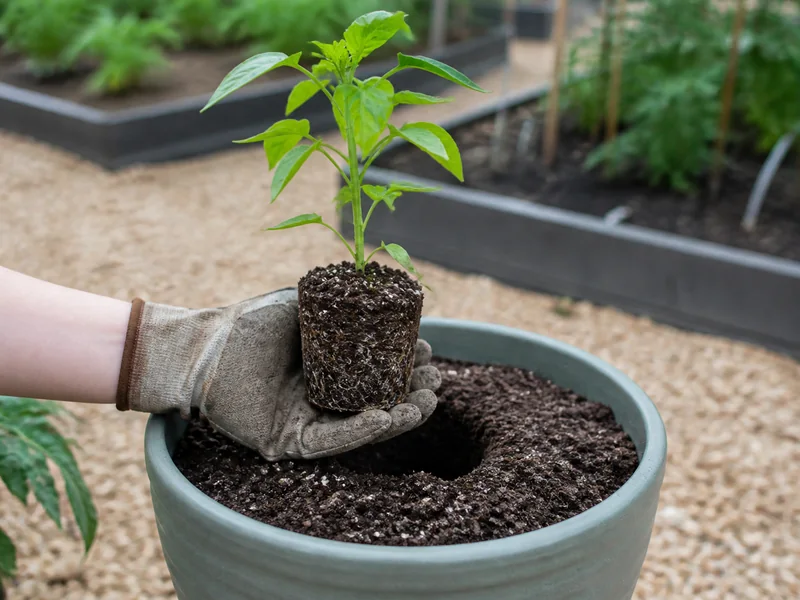
Harden the seedling over one to two weeks by increasing its exposure to outdoor sun and wind. Minnesota Extension advises bringing it back inside whenever a hardening-period night will fall below 55°F.
Water before transplanting, preserve the root ball, and set the stem at the same soil line it had in the nursery container. Minnesota Extension recommends a calm, cloudy day or late afternoon, and it warns against disturbing pepper roots more than necessary.
A root ball packed with circling roots needs only the outermost roots eased apart. Tearing through the center removes the structure the transplant needs while it begins using the new mix.
Which Potting Mix and Drainage Setup Works Best?
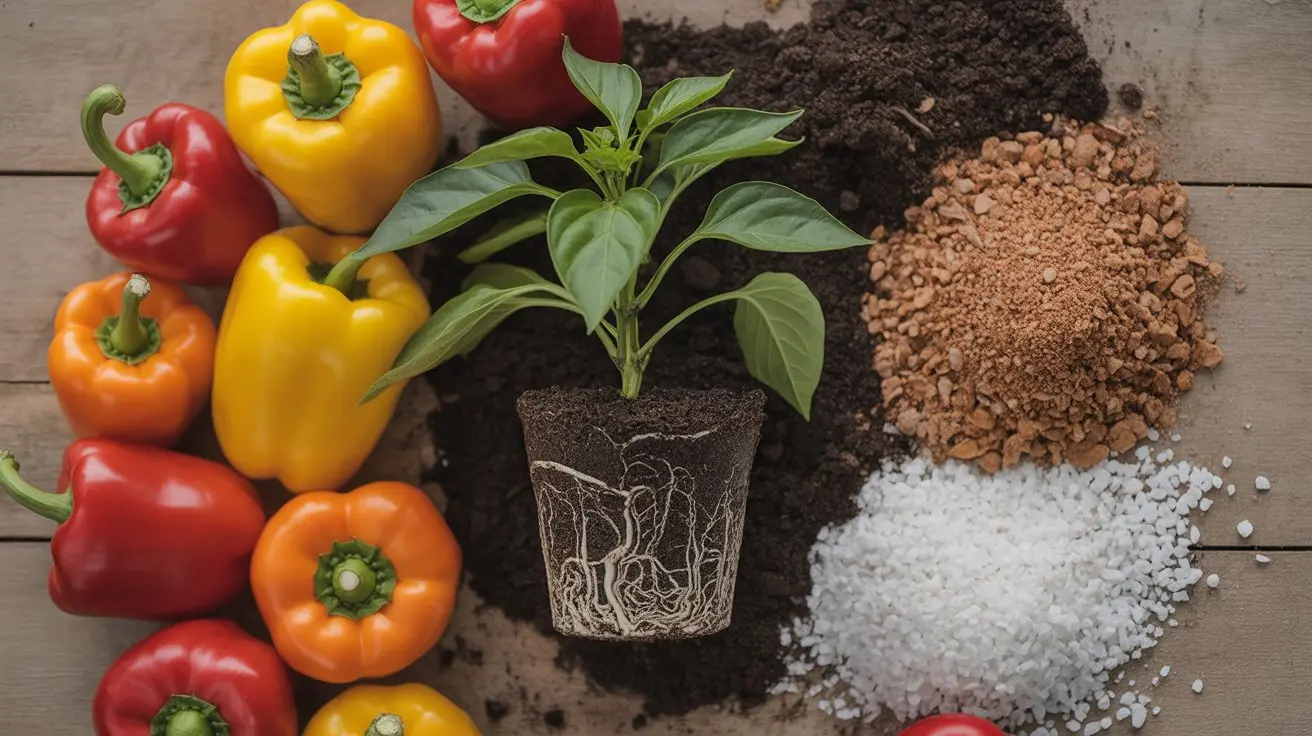
Use fresh container potting mix instead of soil dug from the garden. University of Maryland Extension recommends soilless media because garden soil can compact inside a pot and leave roots with too little air.
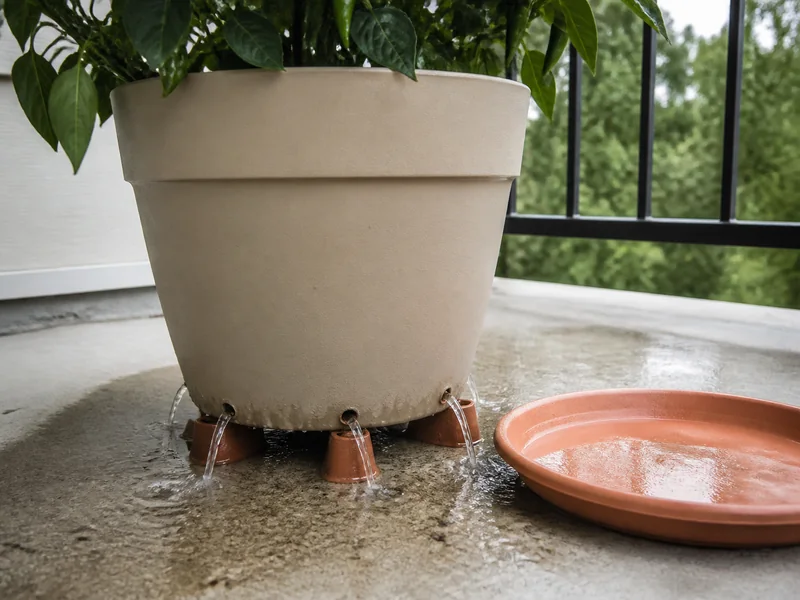
Every drain hole must remain open from the first watering onward. Maryland Extension explains that rocks, gravel, or broken pot shards do not improve drainage and can raise the saturated layer inside the container.
Raise a flat-bottomed pot an inch or two on pot feet when the patio seals its holes.
If a saucer protects a balcony, empty it after runoff so the root zone does not sit in drained water.
A self-watering planter is a different system, not a pot with sealed drainage. Maryland Extension describes a reservoir separated from the mix by a perforated platform and controlled by an overflow hole, which keeps excess water from rising into the whole root zone.
Uniform moisture matters more than a branded recipe. The mix must accept a deep soak, release the excess, and still hold enough water that a fruiting jalapeño does not swing from saturated to wilted before the next realistic check.
How Can You Protect a Potted Jalapeño From Heat?
Give the canopy 6 to 8 hours of direct sun when the site allows it.
University of Maryland Extension uses that range for warm-season container vegetables, including peppers.
A sunny location can still overheat the roots. Maryland Extension warns that brick, stone, concrete, blacktop, decking, and metal absorb or reflect solar energy, so the air beside a wall and the pot itself may run hotter than the forecast.
Check the plant during the hottest afternoon hour. If moist mix coincides with wilt beside a radiating wall, move the pot far enough to reduce reflected heat while keeping useful light on the leaves.
Wind changes the decision because it pulls water from leaves and porous grow bags. Leave airflow around the canopy, but move the plant out of a narrow wind corridor if the pot dries before the next practical moisture check.
How Often Should You Water a Potted Jalapeño?
No fixed every-two-days schedule can follow a potted jalapeño through a changing season. Container volume, wall material, wind, fruit load, and temperature can alter water use within the same week.
Learn the pot's weight immediately after a deep watering. Check the mix below the dry surface, then water when the container feels distinctly lighter and moisture has retreated from the upper root zone.
Apply water slowly enough to wet the full column of mix and produce a little runoff. A first pour that races down a gap at the pot wall needs a pause and a second pass because the center may still be dry.
- Dry top, damp below: wait and check again later.
- Light pot, dry below: soak the full root zone.
- Heavy pot after several days: inspect blocked holes, a full saucer, or compacted mix.
- Daily hard wilt: add root volume, reduce pot-wall heat, or move the moisture check earlier.
University of Minnesota Extension warns that a light surface sprinkling encourages shallow roots and leaves peppers more vulnerable to heat and drought. Direct the water to the mix rather than the leaves, since wet foliage and soil splash can increase disease risk.
Utah State University Extension ties irregular irrigation to flower drop and blossom-end rot. A wilted plant may rise after watering, but flowers and damaged fruit do not reverse when the leaves recover.
Why Is a Potted Jalapeño Dropping Its Flowers?
Temperature can stop a leafy jalapeño from setting fruit even when water and nutrition look adequate.
Utah State University Extension reports that nights below 55°F or days above 90°F can cause pepper flowers to abort. That timing makes weather the first check when open flowers fall across several days.
During a hot spell, enter the afternoon with the root zone evenly moist and move the pot away from reflected heat. Shade the container wall before shading the whole canopy, since the leaves still need useful light.
Cool nights call for patience rather than more nitrogen. Utah State says the problem usually fades as the weather improves, so keep care steady and let the next flowers develop under a better temperature window.
How Should You Fertilize a Jalapeño in a Pot?
Fertilizer cannot correct hot roots, compacted mix, or a blocked drain.
Check those conditions before treating slow growth as a nutrient shortage.
Use a fertilizer labeled for container vegetables and follow its measured rate while the plant is actively growing. University of Maryland Extension recommends the label rate because product strengths and application intervals differ.
Very dark leaves with weak flowering point toward excess nitrogen rather than hunger. Minnesota and Utah State extension guidance both warn that over-fertilizing peppers favors foliage and delays fruit set or maturity.
Pale growth can justify a measured feed after saturated roots, drought, and temperature stress have been ruled out. Keep that sequence because adding fertilizer to a waterlogged pot increases salts without restoring oxygen to the roots.
Maryland Extension recommends flushing excess fertilizer salts through open drainage holes. Use an occasional thorough watering for that job rather than following every feed with small sips that never carry salts out of the pot.
When Does a Potted Jalapeño Need Support?
Install a stake or compact support ring while the jalapeño is still easy to handle. University of Maryland Extension recommends supporting tall or top-heavy container crops early because a late stake can damage an established root system.
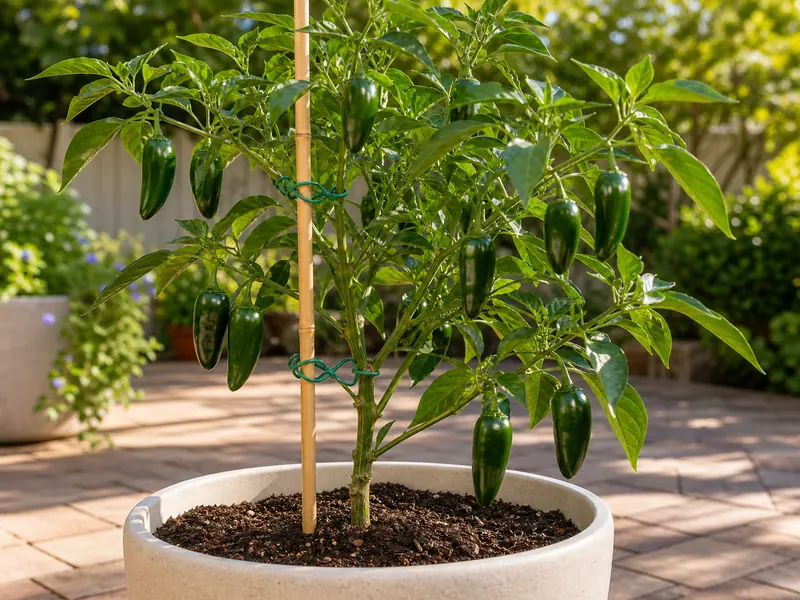
Place one stake near the edge of the root ball at transplant time, or use a ring that anchors securely in the mix. Tie the main stem loosely with soft material and leave room for it to thicken.
The support should steady the central framework rather than pull every branch upright.
Add a second loose tie when several pods load one side, and support a branch before it bends sharply at the fork.
Recheck each tie as the stem expands. A tie that was loose in June can constrict living tissue later, while a sliding tie can rub the same spot whenever the wind moves the plant.
Pot stability is part of the support system. A tall plant can tip before its stem breaks, so pair the stake with a broad-based container or an external weight that does not cover the drain holes.
What Do Common Potted Jalapeño Symptoms Mean?
Start with root-zone conditions because water, heat, nutrition, and pests can produce overlapping leaf symptoms. Minnesota Extension recommends a correct diagnosis before treatment, while Utah State separates insect chewing, sticky aphid damage, wilts, viruses, and environmental disorders by their visible signs.
| What you see | First check | Next action |
|---|---|---|
| Flowers open, then fall | Afternoon heat, cold nights, and moisture swings | Stabilize water and wait for a better temperature window |
| pepper leaves curling | Hot pot wall, wind, sticky residue, and insects below leaves | Move the pot, then inspect leaf undersides before treating |
| Chewed holes in leaves | Leaf edges, undersides, larvae, and dark droppings | Identify the pest before choosing a control |
| Plant leans under fruit | Branch load, loose ties, and pot stability | Adjust support without piercing the center of the root ball |
| Growth stalls after feeding | Drainage, salt crust, and root crowding | Flush the mix and reassess before feeding again |
Aphids often leave curled or crinkled leaves with a sticky surface, according to Minnesota and Utah State extension guidance.
Chewing pests remove tissue, while a leaf that only droops during reflected afternoon heat points back to the site and root zone.
Keep healthy leaf cover over developing pods. Both Minnesota and Utah State describe sunscald as exposed fruit tissue damaged during hot, dry weather, so indiscriminate leaf removal can turn a pest response into a fruit problem.
A pot that becomes light soon after every deep watering may be root-bound. Move the plant before a heat wave when possible, preserve most of the root ball, and wet the surrounding new mix completely.
If the container stays heavy for days while leaves yellow, inspect the drainage path before adding nutrients. Utah State notes that overwatering can accompany yellowing and stalled growth, and its disease guidance calls for diagnosis when wilt persists despite a corrected root zone.
When Should You Pick Jalapeños From a Pot?
Texas A&M AgriLife describes harvest readiness for green jalapeños as firm, solid pods about 2 to 2.5 inches long. Cultivars differ, so compare that benchmark with the packet's expected size, full shoulders, a glossy surface, and firm walls.
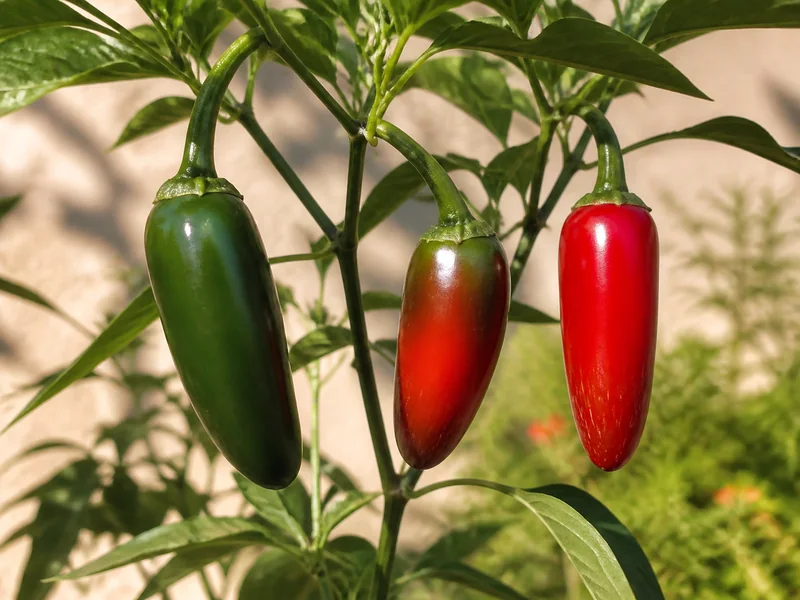
Pick full-size green pods when crisp texture and continued turnover matter. Minnesota Extension notes that harvesting encourages more flowers and fruit, which makes regular green picking useful during the main season.
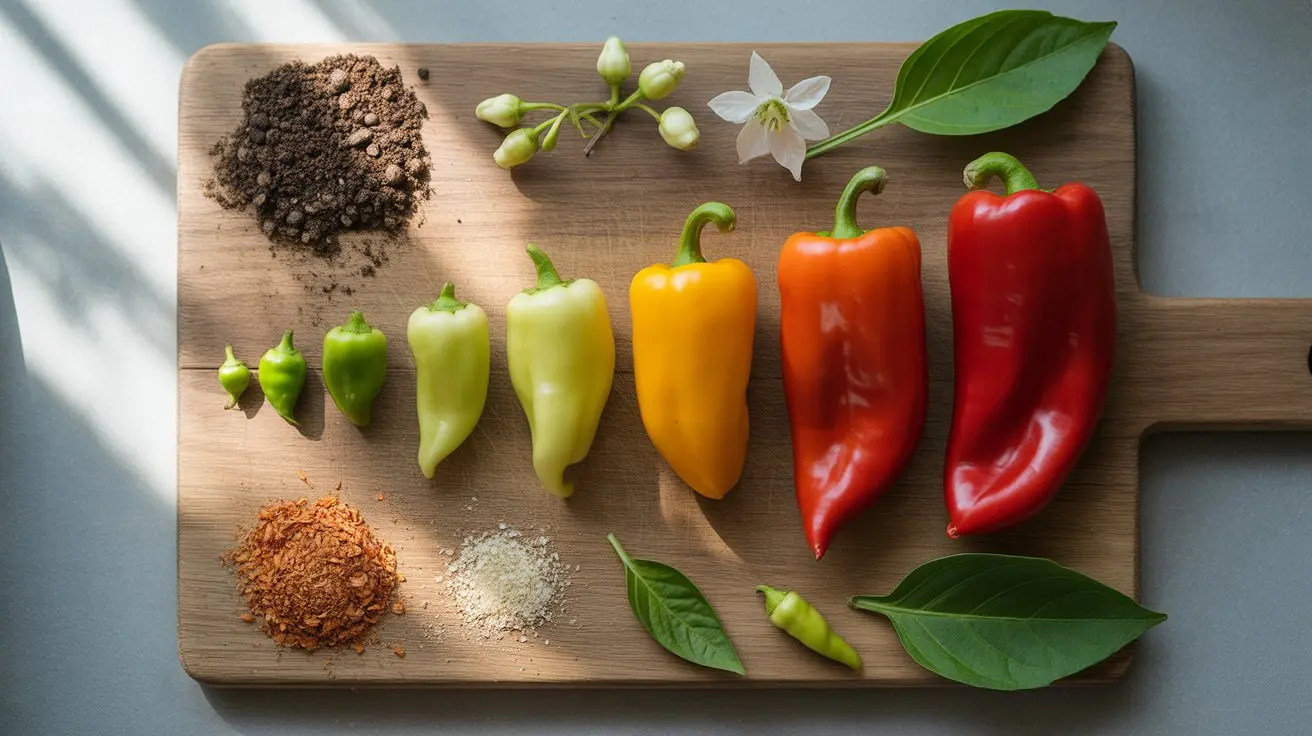
Leave selected pods to turn red when ripe sweetness, smoking, or seed saving is the intended use. Utah State says pepper fruit generally needs 35 to 45 days from flowering to full color, depending on temperature and variety.
Use clean snips and leave a short stem instead of twisting a loaded branch. Minnesota Extension recommends clipping most peppers with sharp shears, a method that protects the plant while several pods share one fork.
One plant can serve both harvest goals. Pick most mature pods green for near-term cooking, then leave a few well-positioned fruit to color where the branch and stake can carry them safely.
Can You Extend a Potted Jalapeño's Season?
Compare the 35 to 45 day color window with the warm weather left in your location. Keep established green fruit that still has time to size, but stop pushing soft new growth with extra nitrogen.
A movable container can buy protection from a short cold night, yet it cannot create weeks of ripening weather. When lasting cold approaches, Utah State advises harvesting peppers that are mature green or partly colored rather than leaving them outdoors for chilling injury.
Finish with a full inspection of fruit, stems, and ties. Remove damaged pods, clip the usable harvest, and direct the season's remaining warmth toward fruit already capable of reaching the stage you want.