Holes in Pepper Plant Leaves: Flea Beetles, Slugs, or Caterpillars?
Match the damage pattern before treating. Tiny shot holes suggest flea beetles, ragged overnight chewing with slime suggests slugs, large bites with frass suggest caterpillars, and spots with dark borders point away from simple chewing.
What Do the Hole Patterns Mean?
Holes in pepper plant leaves describe a symptom, not one pest. Begin with the size and edge of the missing tissue, then look for an insect, slime, droppings, eggs, or a pattern that continues onto new leaves.
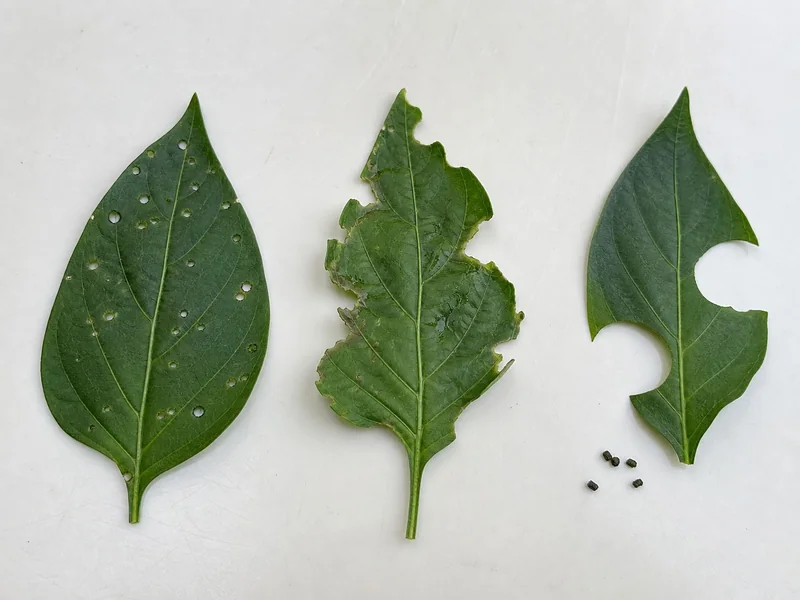
Fresh chewing usually exposes a green or pale cut edge before it dries. A hole surrounded by brown, yellow, or water-soaked tissue belongs in a disease inspection, while a clean tear after wind or handling should not keep appearing on protected new growth.
| Pattern | Evidence to seek | Leading cause |
|---|---|---|
| Many holes under 1/8 inch | Tiny beetles that jump when disturbed | Flea beetles |
| Irregular holes or ragged margins | Slime, damp shelter, night activity | Slugs or snails |
| Large bites or stripped shoots | Frass, larvae, eggs under leaves | Caterpillars |
| Brown spots with defined borders | Lower-leaf spread or lesions on stems and fruit | Leaf-spot disease |
| Splits after one storm or contact event | No new feeding evidence | Mechanical damage |
Inspect several leaves and at least one nearby plant before choosing a cause. A single old leaf can preserve damage from an event that ended days ago.
Do not confuse missing tissue with sap-feeding injury. Utah State University Extension describes aphids as soft-bodied insects under leaves that cause crinkling, curling, and sticky honeydew, while mites more often create pale stippling before leaves become tattered.
Nutrient stress also begins with color, growth, or edge changes rather than clean bites removed from otherwise green tissue. When holes occur beside widespread yellowing or distortion, diagnose both signs instead of assuming one chewing pest explains the whole plant.
Are Flea Beetles Making the Tiny Shot Holes?
Numerous small rounded or irregular holes, often called shot-hole damage, are the strongest visual clue for flea beetles. University of Minnesota Extension places these holes at less than 1/8 inch and identifies most adult flea beetles as only 1/16 to 1/8 inch long.
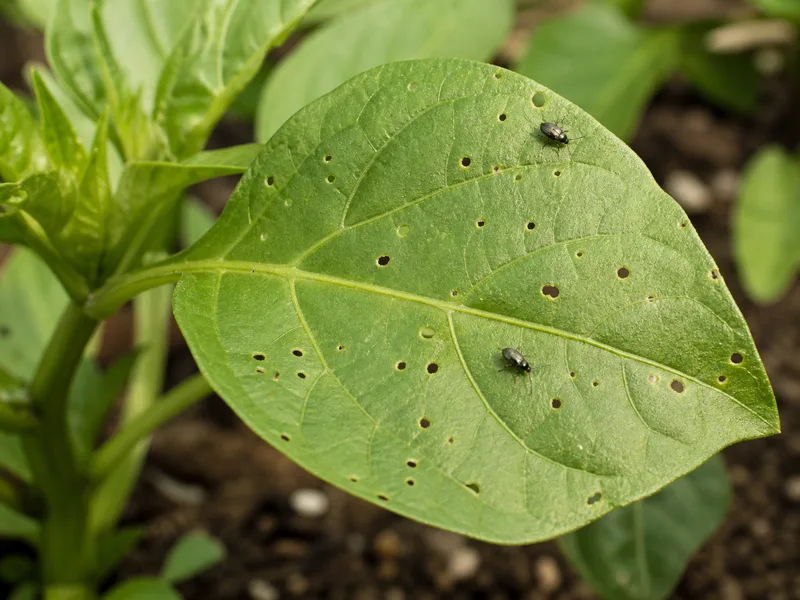
Approach the plant slowly and disturb one damaged leaf. Flea beetles have enlarged back legs and jump quickly, so movement can confirm what the holes alone only suggest.
Young pepper transplants deserve the closest attention because their total leaf area is small. University of Maryland Extension notes that healthy, fast-growing plants can outgrow light feeding, while tender seedlings are much more vulnerable to the same number of holes.
- Pattern: many small holes scattered through a leaf.
- Insect clue: tiny dark or metallic beetles that jump.
- Timing clue: pressure is often strongest around young plants in spring.
- Look-alike check: one or two neat holes do not prove flea beetles without movement or repeated shot-hole feeding.
What Eats Pepper Leaves at Night?
Irregular holes and chewed margins that appear overnight shift the search toward slugs, snails, cutworms, or other night feeders. University of Minnesota Extension says slugs rasp tissue into irregular holes and usually feed at night when conditions are cool and damp.
Check the soil surface, the underside of boards, dense mulch, pot rims, and shaded bed edges with a flashlight. A dried silver slime trail is direct slug evidence, while pellets of dark frass beneath damaged foliage point more strongly toward a caterpillar.
Caterpillars can remove larger sections, strip a shoot, or chew fruit as well as leaves. Follow damaged stems upward and inspect both sides of nearby leaves because a green larva can align with veins and remain difficult to see.
Match the feeder to evidence found at its active time. A noon inspection can miss a slug that retreated under a board and a caterpillar hidden deeper in the canopy.
Is the Damage From Chewing, Leaf Spot, or Wind?
Not every opening began as a bite. Wind, hail, transplant handling, and rubbing against a stake can split tissue, while a leaf-spot disease starts with discolored lesions rather than missing green tissue.
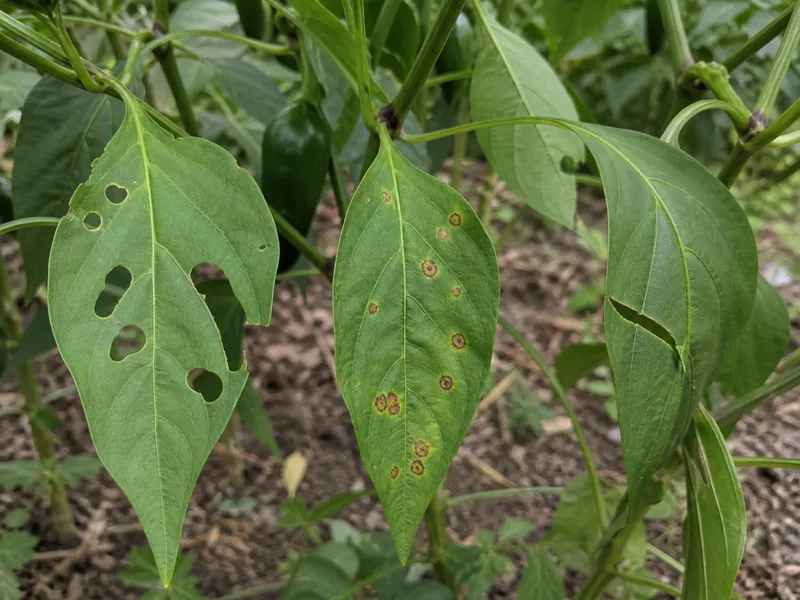
University of Maryland Extension describes bacterial leaf spot on pepper as small water-soaked spots that develop gray or tan centers with darker borders. Warm, humid conditions can enlarge the lesions, yellow leaves, and spread damage beyond the isolated clean holes expected from chewing.
Pepper bacterial spot does not always produce the classic dropped-out centers seen on some other hosts. Treat brown bordered spots, stem lesions, fruit spots, and lower-leaf spread as a disease pattern that needs its own diagnosis.
- Mechanical tear: damage follows a contact or storm event and does not advance on sheltered leaves.
- Chewing: fresh missing tissue appears with insects, frass, slime, eggs, or repeated bites.
- Leaf spot: discoloration and defined lesion borders develop before major tissue loss.
When Should You Inspect Pepper Leaves for Pests?
Run at least two inspections before deciding that no pest is present. Check once in daylight for shot holes and jumping flea beetles, then again after dusk for slugs, cutworms, and caterpillars.
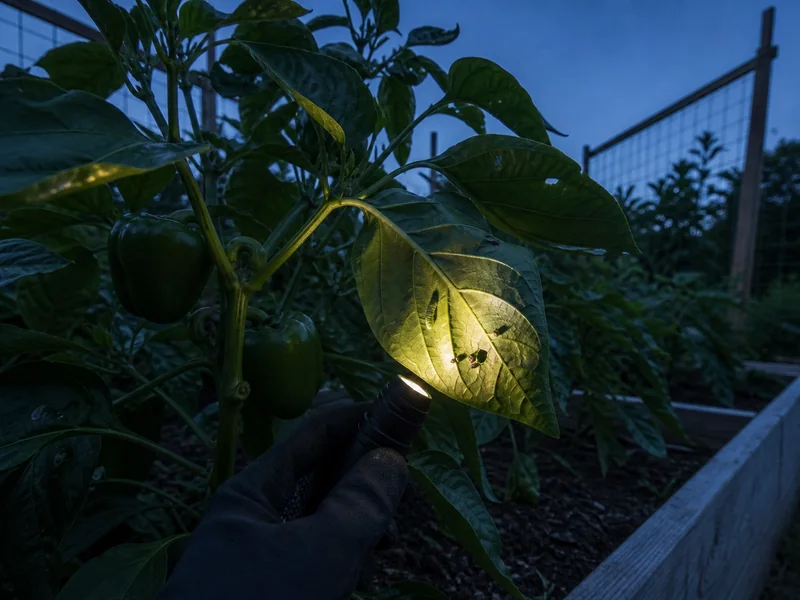
Start with the newest damaged leaf, inspect its underside, then work toward the stem and the soil below it. Eggs, webbing, frass, and cast skins can identify a feeder even when the insect has moved.
Widen the search to nearby tomatoes, eggplants, weeds, and bed edges. University of Maryland Extension lists peppers, tomatoes, potatoes, eggplants, and many other vegetables as flea beetle hosts, so the most obvious pepper may not be the only plant feeding the population.
- Photograph or mark the leaves that already have holes.
- Inspect upper and lower leaf surfaces in daylight.
- Repeat after dusk with a flashlight.
- Check mulch, boards, container rims, weeds, and neighboring crops.
- Record whether new tissue is damaged during the next inspection.
How Much Leaf Damage Can a Pepper Plant Tolerate?
A few old holes on an established plant call for observation, while fresh damage on a seedling can remove a meaningful share of its working leaf area. University of Minnesota Extension says seedlings are less tolerant of flea beetle feeding than transplants and recommends close monitoring as soon as seedlings emerge.
For flea beetles, that Extension guidance names more than five beetles per plant as a treatment trigger for seedlings and flags 10 to 30 percent leaf loss on seedlings or transplants as a serious level. These numbers apply to confirmed flea beetle pressure, not every unexplained hole.
Escalate sooner when the growing point, flowers, or fruit are being eaten, or when the plant is already wilting or stunted. An established pepper with clean new leaves and normal flowering can tolerate cosmetic scars that a small transplant cannot.
| Plant condition | Damage trend | Response |
|---|---|---|
| Established and vigorous | Only old lower-leaf holes | Mark and monitor |
| Seedling or recent transplant | Fresh shot holes spreading | Confirm flea beetles and protect promptly |
| Any age | New growth or flowers being removed | Identify the feeder and act |
| Weak or wilted plant | Holes plus broader decline | Check roots, water, disease, and pests |
How Do You Stop Pests From Eating Pepper Leaves?
Use the lightest control that interrupts the identified feeder. Hand removal fits a visible caterpillar, habitat cleanup fits slugs sheltering under debris, and an insect barrier can protect young plants from flea beetles before flowers need pollinator access.
University of Minnesota Extension recommends weed control and removal of old crop debris to reduce flea beetle food and overwintering shelter. Yellow sticky cards can help detect adult activity, but a trap supports diagnosis rather than repairing leaves.
For slugs, reduce the cool damp hiding places that the inspection actually found and remove individuals during night checks. For caterpillars, hand-pick manageable numbers and identify the larva before considering a targeted product.
Do not spray an unidentified hole pattern. If a pesticide becomes necessary, use only a product labeled for the confirmed pest and edible peppers, then follow its rate, protective equipment, pollinator warning, re-entry period, and preharvest interval exactly.
Should You Remove Pepper Leaves With Holes?
Leaves with holes do not heal, so the damaged surface will remain visible after control succeeds. Keep a leaf that is still mostly green unless it is diseased, badly collapsed, or blocking inspection, because unnecessary removal reduces the area still supplying the plant.
Recovery appears in cleaner new leaves, continued flowering, and stable fruit growth. Old lower leaves can stay unattractive without proving that feeding is active today.
Remove a leaf when disease management calls for sanitation or when damage has left little functional tissue, then disinfect tools when the suspected problem is infectious. Do not strip several leaves merely to make the plant look clean.
Fruit safety is a separate inspection. Leaf holes alone do not make sound fruit unsafe, but fruit with chewing, insect waste, rot, or soft lesions should be separated and assessed rather than mixed into a clean harvest.
How Do You Know the Pest Control Is Working?
Mark two or three damaged leaves and photograph the newest growth on the day you intervene. Recheck the same places every day or two for one week so fresh holes cannot be confused with scars already present.
The fix is working when the rate of new damage falls and new leaves open cleaner. One quiet day is weak evidence because weather and pest activity change, while a week shows whether the feeder has truly been interrupted.
- Improving: old holes remain, but no fresh bites appear on expanding leaves.
- Unresolved: new holes, frass, slime, or insects return in the same zone.
- Different problem: chewing stops but yellowing, spotting, wilt, or stunting continues.
Return to diagnosis when damage continues rather than repeating a treatment by habit. The goal is healthy new tissue and a stable crop, not a plant with no record of past damage.
If the original feeder is gone but decline continues, reopen the root, water, and disease checks rather than escalating insect control. Two problems can overlap, especially when a young plant lost leaf area while heat or irregular watering was already slowing growth.