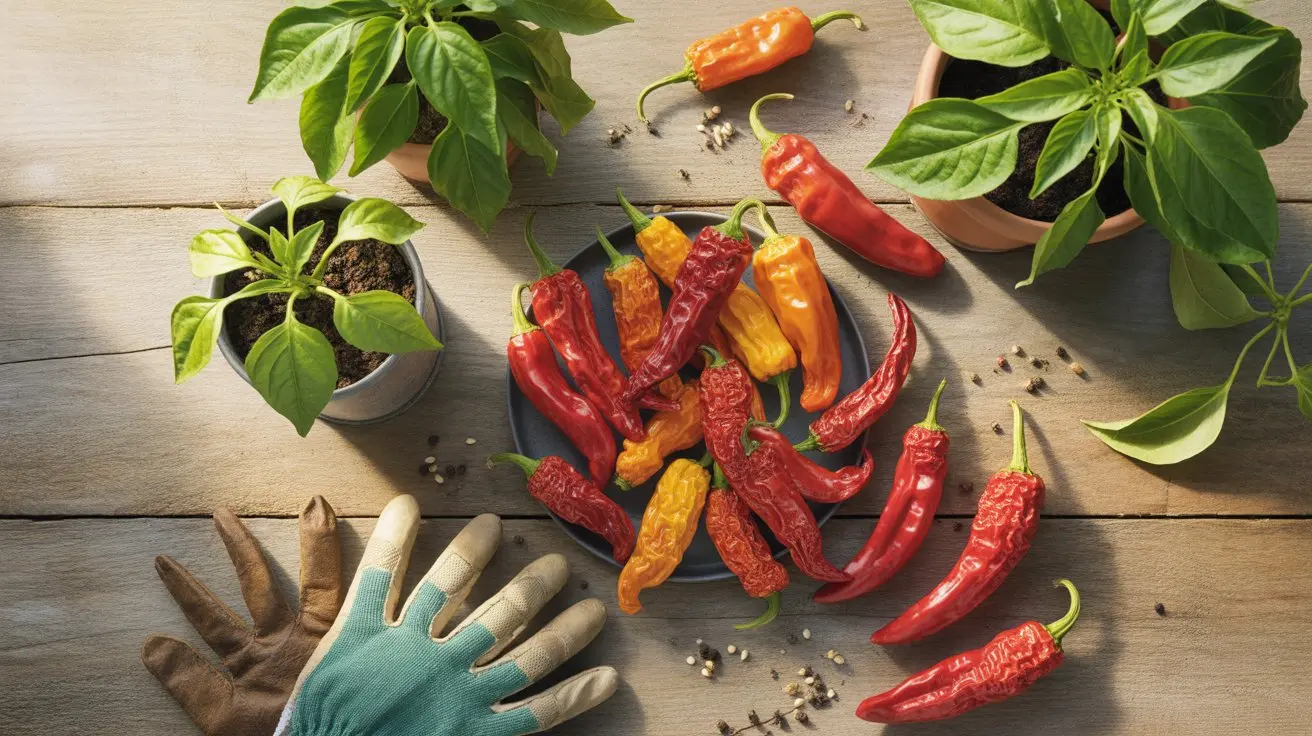
How to Grow Ghost Peppers
Ghost peppers need 150+ day seasons, extra warmth, patience. Germination tricks, soil needs, staking, and maximizing heat. Find your perfect heat level.

Why Ghost Peppers Punish Impatience
Most hot peppers forgive a late start. Ghost peppers do not. The Bhut Jolokia needs a minimum of 150 days from transplant to ripe fruit — longer than almost any vegetable most gardeners grow — and that clock doesn't start until soil temperatures are consistently warm.
Get the timing wrong by even three weeks and you'll harvest green pods before frost, wondering why your plants never delivered. Get it right, and you'll have one of the most heat-intense crops possible from a home garden.
Understanding What You're Growing
Ghost peppers belong to Capsicum chinense, the species responsible for the hottest peppers on earth, which explains their extreme heat and their demanding growing requirements.
The Bhut Jolokia was the first pepper to officially break 1,000,000 SHU, verified by the Chile Pepper Institute at New Mexico State University in 2007. That puts it roughly 200 times hotter than a standard jalapeño — not a number to take lightly when planning your kitchen use.
For context on where ghost peppers land relative to other extremes, the super-hot classification starts at 800,000 SHU, and ghost peppers sit comfortably in that tier. Compare that to something like the Bedfordshire Super Naga's record-pushing heat, which edges even higher, or the chocolate Bhut Jolokia variant's deep, smoky burn — a close relative worth growing alongside the standard red.
Native to northeastern India, particularly Assam and Nagaland, ghost peppers evolved in humid, hot conditions with long growing seasons. Replicating that environment is the entire challenge of growing them outside South Asia.
Start Seeds Earlier Than You Think
In most of North America and Europe, ghost pepper seeds need to go in 16-18 weeks before last frost. That means January or early February for gardeners in USDA zones 5-7.
Germination itself is slow. Expect 14-21 days at optimal temperature, and don't panic at day 10 when nothing has happened. Some seeds take 28 days. Capsicum chinense varieties are notoriously stubborn compared to annuum types.
Soil temperature during germination matters more than air temperature. Aim for 85-90°F (29-32°C) at the root zone. A seedling heat mat is not optional here — it's the difference between 50% germination and 90% germination. Set it to maintain that range and use a probe thermometer to verify the actual soil temperature, not just the mat setting.
Sow seeds 1/4 inch deep in a quality seed-starting mix. Avoid heavy potting soils that compact and restrict the tiny emerging roots. Keep the medium consistently moist but not saturated — ghost pepper seeds rot quickly in waterlogged conditions.
Germination Tricks That Actually Work
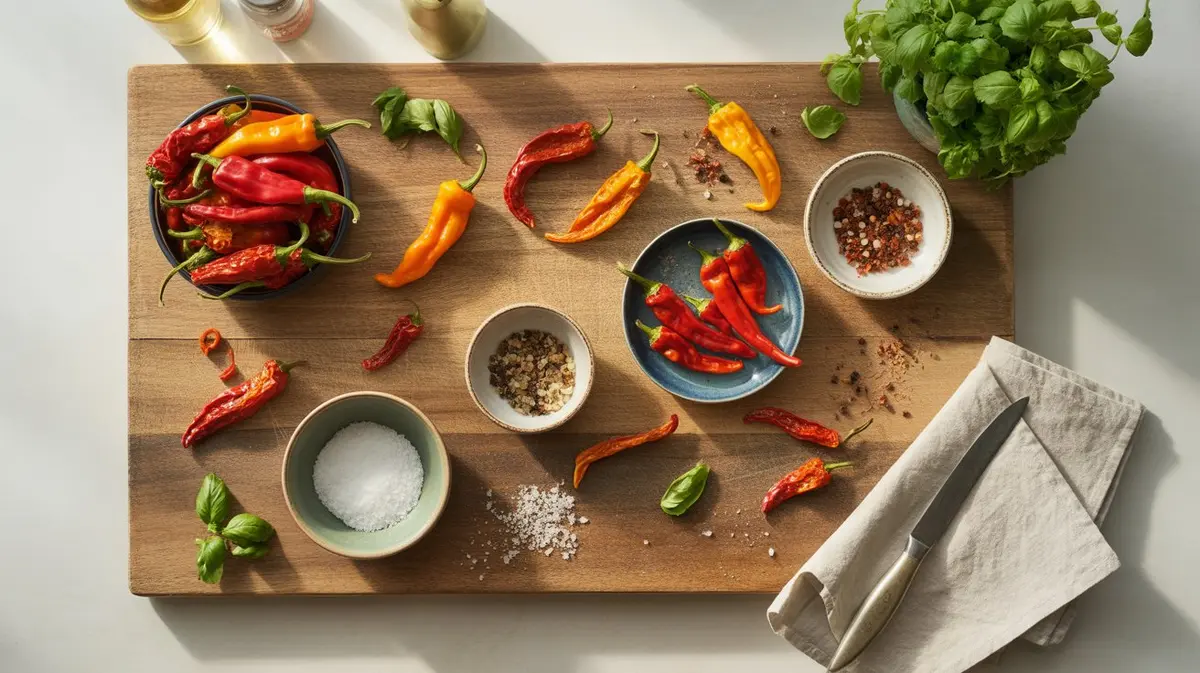
Pre-soaking seeds in warm water for 8-12 hours before planting softens the seed coat and speeds germination noticeably. Some growers use a diluted chamomile tea soak, which has mild antifungal properties that protect seeds during the vulnerable pre-sprout phase.
Another effective method: the paper towel germination test. Place seeds between damp paper towels inside a zip-lock bag, set on the heat mat, and check daily. Once the radicle (embryonic root) emerges to about 1/4 inch, transfer carefully to cells. This method lets you identify viable seeds before committing tray space.
Humidity domes are useful for the first week, but remove them once seedlings emerge to prevent damping off — the fungal collapse that kills more pepper seedlings than anything else. A small fan running on low nearby improves air circulation and strengthens stems simultaneously.
Seedling Care and Indoor Growing
Ghost pepper seedlings grow slowly. Don't compare their pace to tomatoes — it's not a fair comparison. Expect 6-8 true leaves before they're ready to transplant, which at their growth rate takes 12-16 weeks from germination.
Light is the most common failure point indoors. A south-facing window rarely provides enough intensity during winter months. Full-spectrum LED grow lights positioned 4-6 inches above the canopy for 16 hours daily produce stockier, more robust seedlings than any window setup.
Feed seedlings with a balanced fertilizer at quarter-strength once they have their first true leaf pair. Increase to half-strength by week 6. Avoid high-nitrogen formulations at this stage — they push leafy growth at the expense of the root structure that ghost peppers need to support heavy fruit loads later.
Pot up from seed cells to 4-inch containers when roots start circling the bottom, then to 1-gallon pots before transplanting outdoors. Each pot-up is a chance to bury the stem slightly deeper, encouraging additional root development along the buried section.
Transplanting and Outdoor Setup
Ghost peppers cannot go outside until nighttime temperatures stay reliably above 55°F (13°C). Below that threshold, growth stalls and the plants may drop flowers without setting fruit. For most gardeners, this means late May to mid-June.
Harden off seedlings over 10-14 days — longer than most guides suggest for other peppers. Start with 1-2 hours of outdoor shade exposure and increase gradually. Ghost peppers that skip hardening off often develop sun scald on leaves, setting them back weeks.
Choose the hottest, most sun-exposed spot in your garden. South-facing walls that radiate stored heat are ideal. Ghost peppers in container cultivation setups can be moved to chase sun and warmth, which is a real advantage in shorter-season climates.
Space plants 24-30 inches apart. These are large plants — mature ghost pepper bushes can reach 4 feet tall and equally wide in a good season. Crowding them restricts airflow and invites fungal issues.
Soil should be well-draining with a pH between 6.0 and 6.8. Amend heavy clay soils with compost and perlite before planting. Ghost peppers tolerate slightly acidic conditions better than most vegetable crops.
Feeding, Watering, and Soil Management
The fertilizer schedule changes as the season progresses. During the vegetative phase, a balanced NPK like 5-5-5 or 10-10-10 supports even growth. Once flower buds form — typically 8-10 weeks after transplanting — switch to a low-nitrogen, high-phosphorus and potassium blend to encourage fruiting.
High nitrogen after flowering pushes lush foliage but delays and reduces fruit set. This is one of the most common mistakes growers make with ghost peppers specifically.
Watering rhythm matters more than volume. Ghost peppers prefer deep, infrequent watering over shallow daily irrigation. Let the top inch of soil dry between waterings. Consistent moisture stress — not drought, but mild dryness between waterings — is associated with higher capsaicin concentration in the fruit.
The molecular pathway behind this is well-documented: how capsaicin's chemical structure responds to stress explains why peppers grown under slightly challenging conditions often test hotter than pampered plants. The plant produces more capsaicinoids as a stress response.
Mulch around the base with 2-3 inches of straw or wood chips to retain soil moisture, regulate temperature, and suppress weeds. In cooler climates, black plastic mulch warms the soil and can extend the effective growing season by 2-3 weeks.
Staking and Supporting Heavy Fruit Loads
A fully loaded ghost pepper plant carries significant weight. Each pod averages 1-2 inches long, but plants can hold dozens simultaneously. Unsupported branches snap under the load, especially after rain.
Install stakes or cages at transplant time, not after the plant needs them. A 36-inch stake driven 6 inches into the soil beside each plant gives you something to tie branches to as they develop. Tomato cages work well for the sprawling habit ghost peppers develop by midsummer.
Tie loosely with soft garden twine or strips of old t-shirt material. Tight ties cut into stems as they thicken and create entry points for disease.
Managing the Long Season in Short-Season Climates
Gardeners in zones 5 and 6 face the hardest challenge: 150+ days of warm growing conditions in a climate that might offer 120 frost-free days. Several strategies bridge that gap.
Season extension structures — low tunnels with row cover, cold frames, or small greenhouses — can add 3-4 weeks on each end of the season. Row cover fabric rated to 4°F of frost protection is enough to protect plants through light early fall frosts.
Potted ghost peppers can overwinter indoors as perennials. Cut plants back to about one-third of their height in fall, bring them inside before frost, and keep them in a cool (50-60°F) location with minimal watering. They'll break dormancy and resume growth in spring, starting the season weeks ahead of seedlings.
Overwintered plants often fruit earlier and more heavily than first-year plants. The established root system supports faster vegetative growth, compressing the time to first harvest.
Recognizing and Harvesting Ripe Pods
Ghost pepper pods start green and transition through yellow or orange to deep red at full ripeness, depending on variety. The chocolate Bhut Jolokia goes from green to a rich brown. The standard red variety is unmistakable at peak color.
Ripe pods separate from the plant with light pressure. If you're pulling hard, the pod isn't ready. Wait another few days — capsaicin content continues to increase as pods ripen fully, so patience pays off in heat as well as flavor.
Wear nitrile gloves during harvest and processing. Ghost pepper capsaicin transfers readily to skin and causes significant irritation. Avoid touching your face. If you're harvesting large quantities, consider eye protection — the volatile compounds can irritate mucous membranes even without direct contact.
For the highest heat concentration, harvest when pods are fully colored but firm. Overripe pods that have softened slightly are lower in capsaicin and prone to mold during drying.
Comparing Ghost Peppers to Other Heat Levels
Understanding where ghost peppers sit in the broader heat landscape helps calibrate their use. The Scoville heat ranking index places ghost peppers between 855,000 and 1,041,427 SHU — a wide range that reflects growing conditions, soil, and climate variation.
For growers who want to build a heat progression in their garden, consider starting with something in the hot pepper classification range to understand capsaicin management before committing to ghost pepper quantities. Working up through heat levels makes both cooking and growing more manageable.
There are also interesting wild relatives worth knowing about. The tiny, intensely hot wild chiltepin and the small-fruited, fiery piquin both sit well below ghost pepper SHU but share the characteristic of being notoriously difficult to germinate — good practice for working with demanding species.
At the other end of the spectrum, the mild, round Dundicut pepper and the familiar warmth of crushed red flakes represent the kind of everyday heat that makes ghost pepper quantities seem almost theoretical by comparison.
Drying, Storing, and Using the Harvest
Ghost peppers dry well. Slice them in half lengthwise and place on a dehydrator rack at 135°F (57°C) for 8-12 hours. Whole pods take 12-18 hours. Dried pods keep for 12+ months in an airtight container away from light.
Ground ghost pepper powder is the most versatile form. Use a dedicated spice grinder — the capsaicin oils embed in plastic and rubber components and are nearly impossible to remove. Grind outdoors or with ventilation. The powder is airborne and will clear a room.
In cooking, ghost peppers work best in applications where the heat can be diluted and distributed: hot sauces, large-batch salsas, slow-cooked dishes where the pods can be removed before serving. A single pod can season a pot of chili serving 8-10 people.
Ghost peppers also freeze well. Spread ripe pods on a baking sheet, freeze solid, then transfer to freezer bags. Frozen pods retain their heat and flavor for up to 18 months and are easier to handle than fresh when you only need a small amount.
Troubleshooting Common Problems
Aphids target ghost pepper plants in early summer. A strong spray of water dislodges most colonies. Neem oil applied in the evening controls persistent infestations without harming beneficial insects that visit flowers during the day.
Blossom end rot — the leathery, sunken dark patch on pod tips — indicates calcium deficiency, usually caused by inconsistent watering preventing calcium uptake rather than actual calcium shortage in the soil. Steady moisture management resolves it.
Yellowing lower leaves during fruiting is normal. The plant redirects resources to pods and sheds older foliage. Unless yellowing is spreading rapidly upward, it's not cause for concern. If it is spreading fast, check for root rot or the fungal diseases common to South Asian pepper varieties grown in humid conditions.
Frequently Asked Questions
-
Ghost peppers need 150 to 180 days from transplant to ripe fruit, making them one of the longest-season vegetables you can grow. Starting seeds indoors 16-18 weeks before last frost is essential to fit that timeline in most climates.
-
Soil temperature at the seed level should stay between 85 and 90 degrees Fahrenheit for reliable germination. A seedling heat mat with a probe thermometer is the most effective way to maintain that range consistently.
-
Flower drop typically