
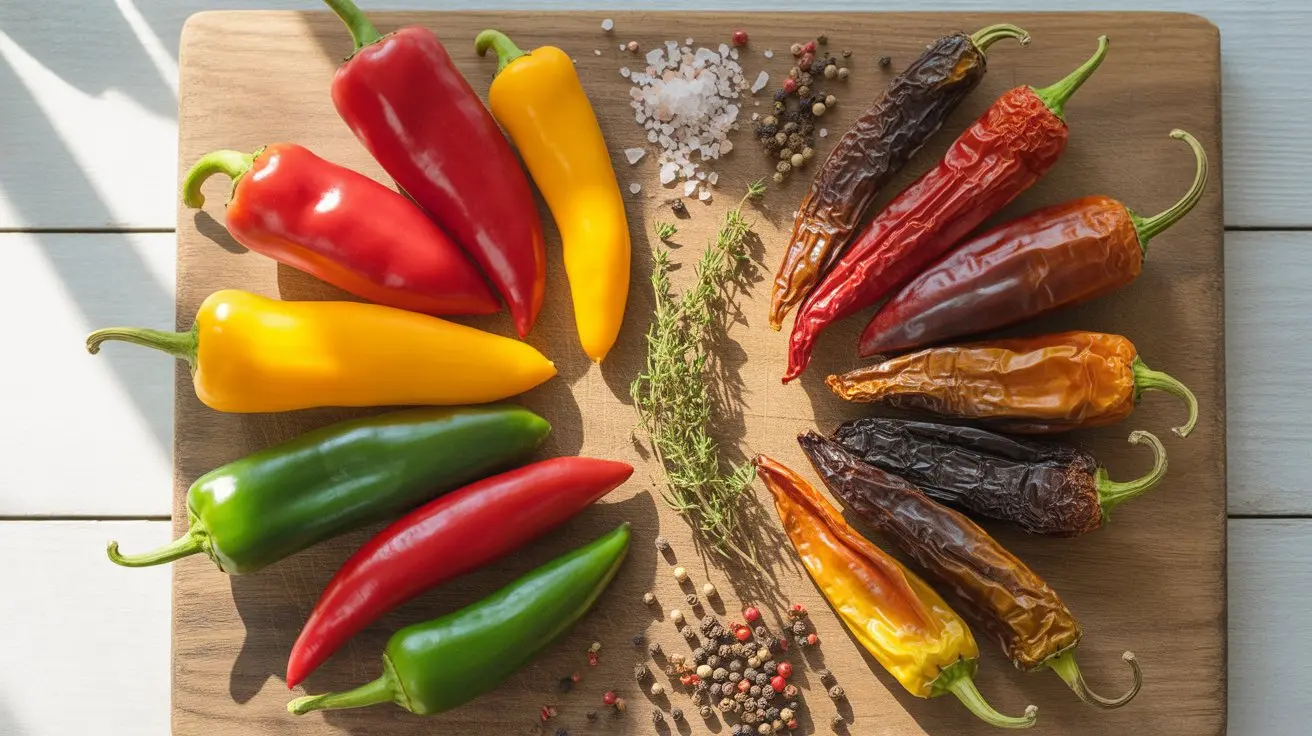
Fresh vs Dried Peppers
How drying changes pepper flavor and heat. Name changes, substitution ratios, and when to use each. Find which one fits your cooking.

What Drying Actually Does to a Pepper
Strip the water out of a pepper — which can make up 80-90% of its fresh weight — and you're not just dehydrating it. You're concentrating everything: sugars, acids, capsaicinoids, and aromatic compounds that behave very differently once the cellular structure breaks down.
The transformation is chemical, not just physical. Heat and oxidation during drying create new flavor compounds through Maillard reactions, while volatile aromatics that give fresh peppers their bright, grassy notes largely evaporate. What's left is deeper, earthier, and more complex in some ways — but fundamentally different from the fresh fruit.
The Name Change Problem
One thing that trips up a lot of cooks: many peppers get entirely different names when dried. A poblano becomes an ancho. A jalapeño becomes a chipotle (when smoked). A mirasol becomes a guajillo. These aren't just nicknames — they signal that the pepper has been transformed into a distinct ingredient with different culinary applications.
This naming convention is most common in Mexican pepper traditions, where the fresh-to-dried distinction is baked into the culinary vocabulary. Understanding it matters because a recipe calling for anchos isn't asking for fresh poblanos — the flavor profiles diverge enough to change a dish.
The Capsicum annuum species covers most of the peppers where this naming split happens, from mild to medium heat. Other species have their own drying traditions, but the dual-name convention is less formalized.
How Heat Changes (or Doesn't)
Capsaicin itself doesn't degrade significantly during standard drying. The Scoville rating of a dried pepper, measured against its fresh counterpart, stays roughly equivalent per unit of capsaicinoid — but per gram of pepper, dried is dramatically hotter because you've removed most of the mass.
A fresh jalapeño might weigh 25 grams. Dried, it could weigh 5 grams. Use the same volume of dried as fresh in a recipe, and you're delivering five times the capsaicin. This is why substitution ratios matter so much, and why dried peppers can blindside cooks who don't account for concentration.
For a detailed breakdown of where specific peppers land on the Scoville scale position and rating system, the differences between fresh and dried forms of the same variety can sometimes span thousands of units simply due to measurement methodology and moisture content at time of testing.
The receptor science behind why peppers burn doesn't change between fresh and dried — TRPV1 receptors respond to capsaicin regardless of the pepper's form. But dried peppers often deliver that heat more slowly, building in the back of the throat rather than hitting the front of the mouth immediately.
Flavor Profiles: Fresh vs Dried Side by Side
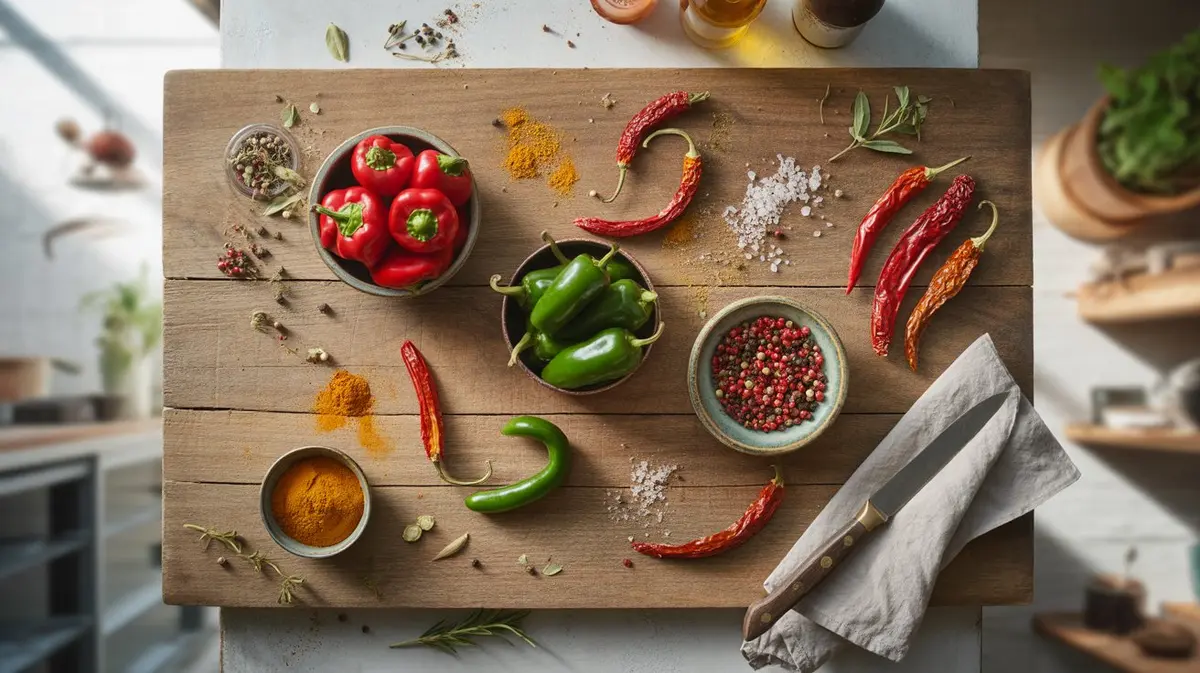
Fresh peppers taste like living plants — there's chlorophyll, moisture, and volatile compounds that read as green, bright, or fruity depending on the variety. The flavor is immediate and often one-dimensional in the sense that it hits fast and fades.
Dried peppers layer differently. The drying process develops raisin-like sweetness, tobacco notes, leather, chocolate, and sometimes smoke (if that's part of the process). These flavors unfold slowly during cooking, especially when rehydrated in liquid that then becomes part of the dish.
Consider the contrast within the same heat tier: a fresh aji amarillo's tropical fruit brightness shifts when dried into something more concentrated and jammy, though it retains more of its character than many peppers do. That's partly because Capsicum baccatum varieties tend to have robust aromatic profiles that survive drying better than more delicate peppers.
At the hotter end, a fresh de arbol's sharp, grassy heat becomes nuttier and more toasty when dried — and de arbols are almost exclusively used dried in Mexican cooking, where they're toasted before grinding.
When to Use Fresh Peppers
Fresh peppers belong anywhere you want brightness, texture, and that raw vegetal quality. Ceviche, fresh salsas, stir-fries, stuffed preparations — these dishes depend on the moisture content and the volatile aromatics that disappear during drying.
Roasting fresh peppers is a middle path. You're cooking out some moisture and developing sweetness through caramelization, but you're not concentrating the pepper the way drying does. Roasted fresh peppers still behave like fresh peppers in most applications, just with more complexity.
For mild heat range peppers especially — bells, banana peppers, pimentos — drying often strips away the delicate sweetness that makes them worth using. Fresh is almost always the right call unless you're specifically after a paprika-style powder.
The manzano's crisp, apple-like texture is a good example of a pepper where fresh is the primary use case. Its thick walls and fruity flavor don't survive drying as gracefully as thinner-walled varieties, and Capsicum pubescens species peppers in general are more commonly eaten fresh.
When Dried Peppers Are the Right Choice
Birria. That's the dish that makes the case for dried peppers more clearly than any other. The deep, complex broth in a good birria comes from rehydrated guajillos, anchos, and chiles de arbol simmered together — no fresh pepper could replicate that flavor base, because it doesn't exist in fresh peppers.
Dried peppers are built for long-cooked applications: braises, moles, stews, dry rubs, and spice blends. The concentrated flavor holds up to extended heat in ways fresh peppers can't. A fresh pepper simmered for two hours becomes mush with diminished flavor; a rehydrated dried pepper contributes more deeply the longer it cooks.
Dried peppers are also the practical choice when fresh isn't available. Goat horn pepper's thin walls and pungent heat make it a good candidate for drying and grinding into flakes — it's commonly found dried in Turkish and Balkan cooking where it functions as a table condiment year-round.
For hot heat range cooking, dried forms give more control. You can measure a teaspoon of dried flakes more precisely than you can gauge how much heat a single fresh pepper will deliver, which varies by growing conditions and individual fruit.
Substitution Ratios and Practical Conversions
The standard conversion is 1 tablespoon of dried chile powder or flakes for every 3 tablespoons (roughly 1 fresh pepper) of fresh chopped pepper. But this is a starting point, not a rule — it depends heavily on the specific pepper and how finely the dried version is ground.
For whole dried chiles rehydrated in water, the ratio shifts. One dried ancho (about 20-25 grams dry weight) rehydrates to roughly the equivalent of one large fresh poblano in terms of volume, though the flavor is still distinctly different. The soaking liquid itself carries flavor and is often used in the dish.
Rehydrating dried peppers is straightforward: remove stems and seeds, toast briefly in a dry pan if desired, then soak in hot water for 20-30 minutes until pliable. Don't discard the soaking water unless the peppers were very bitter — it's liquid flavor.
When substituting dried for fresh in a cold application (fresh salsa, for example), the texture mismatch is too significant. Dried peppers rehydrated and chopped into a pico de gallo will taste wrong — mushy and over-concentrated. Some substitutions simply don't work.
Heat Tier Behavior Across Both Forms
Mild peppers dried into powders (paprika, ancho powder, guajillo powder) behave almost like spices — they add color and background warmth rather than heat. The medium heat tier is where fresh-to-dried conversions get most interesting, because the flavor complexity increases dramatically while heat remains manageable.
At the extra-hot end of the spectrum, drying intensifies already formidable heat. The Madame Jeanette's fruity, tropical heat is almost always used fresh in Surinamese cooking — dried, the heat concentration would overwhelm the fruity notes that define it. Similarly, orange habanero's floral aromatics partially survive drying but the fresh fruit is a different sensory experience entirely.
For super-hot varieties, dried powder is the most common commercial form because fresh fruits are difficult to transport and handle. The heat concentration in dried superhot powder is extreme — a pinch delivers what would take a significant portion of fresh fruit.
Nutritional Differences Worth Knowing
Fresh peppers are high in vitamin C — a single fresh red bell delivers more than 150% of the daily recommended intake. Drying destroys a significant portion of vitamin C because it's heat-sensitive and water-soluble. Dried peppers retain more fat-soluble nutrients like vitamin A and carotenoids, which actually concentrate as moisture is removed.
Capsaicin content per gram is higher in dried peppers for the same reason — concentration through moisture removal. The antioxidant profile shifts rather than disappears, with some compounds degrading and others concentrating or transforming.
Iron, potassium, and other minerals are retained and concentrated in dried peppers. A tablespoon of dried chile powder contains meaningfully more minerals by weight than an equivalent amount of fresh pepper. Neither form is nutritionally superior — they're complementary.
Storage and Shelf Life
Fresh peppers last 1-2 weeks refrigerated, or can be frozen (though texture suffers). Dried whole chiles, stored in an airtight container away from light and heat, stay flavorful for 1-2 years. Dried chile powder degrades faster than whole dried chiles — ground powder loses volatile compounds more quickly once the surface area increases.
The practical implication: buy dried chiles whole and grind them yourself when needed. A small spice grinder and a bag of whole dried de arbols or anchos gives you fresher, more potent powder than pre-ground products that may have sat on a shelf for months.
Fresh peppers intended for later use are best frozen without blanching — slice or leave whole, freeze on a sheet pan, then transfer to a bag. They'll lose crunch but retain most of their heat and flavor for cooked applications. If you're interested in growing your own supply, a full germination walkthrough covers starting from seed through harvest.
Toasting Dried Peppers: The Step Most Recipes Skip
Toasting dried chiles before rehydrating or grinding transforms their flavor. Thirty seconds per side in a dry skillet over medium heat wakes up volatile compounds, deepens color, and adds a smoky, nutty dimension that untoasted dried peppers lack.
The technique requires attention — dried chiles go from toasted to scorched quickly, and a burned chile is bitter and unusable. You're looking for the chile to become slightly pliable, fragrant, and to develop a few darker spots. Not black. Not smoking.
This step is standard in traditional mole preparation and in most serious chile-based sauces. Skipping it produces a flatter, less complex result. It's one of those small techniques that separates a good dried chile sauce from a great one.
Frequently Asked Questions
-
Not per capsaicinoid molecule, but yes per gram of pepper. Removing moisture concentrates capsaicin, so dried peppers deliver significantly more heat by weight than their fresh counterparts. Use roughly one-third the volume when substituting dried for fresh.
-
This naming tradition comes primarily from Mexican culinary culture, where a pepper's dried form is treated as a distinct ingredient. A poblano becomes an ancho when dried; a jalapeño becomes a chipotle when smoked and dried. The name signals a different flavor profile, not just a different state.
-
Not in cold applications like fresh salsa or ceviche - the texture mismatch is too significant. Dried peppers work as substitutes in cooked dishes, braises, and sauces, where the rehydrated texture and concentrated flavor are assets rather than liabilities.
-
Remove stems and seeds, toast briefly in a dry skillet if desired, then soak in hot water for 20-30 minutes until pliable. Reserve the soaking liquid - it carries flavor and can be used directly in sauces, braises, or soups.
-
Fresh peppers have far more vitamin C, which degrades during drying. Dried peppers concentrate fat-soluble nutrients like vitamin A and carotenoids, plus minerals like iron and potassium. Neither is nutritionally superior - they offer different nutrient profiles suited to different uses.
