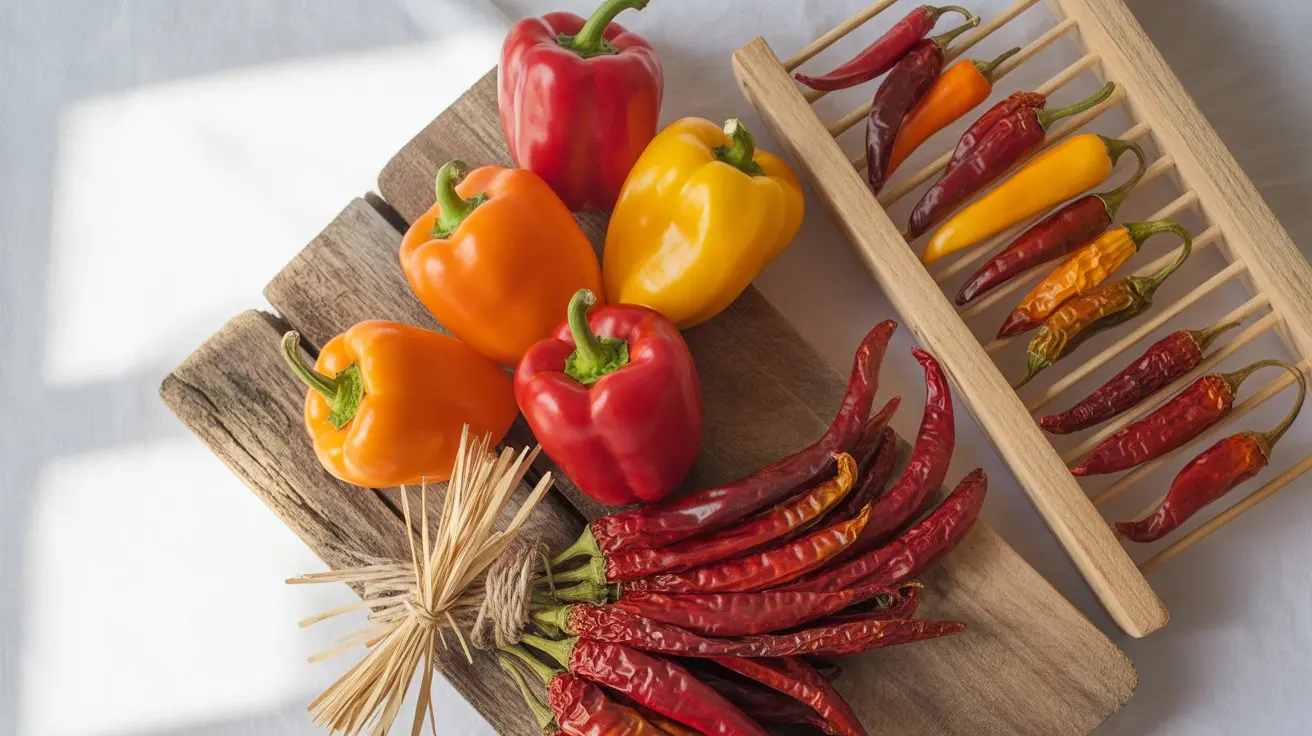
How to Dry Peppers at Home
Air drying, oven, and dehydrator methods. Storage tips and which varieties dry best. Find your perfect heat level.

Why Drying Peppers Is Worth Learning
A bumper harvest from a single plant can produce more fresh peppers than you can eat in a week. Drying solves that problem permanently — and does something fresh peppers never can: it concentrates flavor, deepens sweetness, and creates entirely new taste profiles.
The four methods covered here — air drying, oven drying, dehydrator, and smoke drying — each produce different results. Matching method to pepper type makes a real difference in the final product.
Which Peppers Dry Best
Thin-walled peppers dry fastest and most reliably. Flesh thickness is the single biggest factor in how long drying takes and whether mold becomes a risk.
Excellent candidates include the intensely hot, compact Thai chili, the wild-harvested, pea-sized chiltepin, and the smoky, medium-heat puya — all naturally thin-walled and bred for preservation. These varieties lose moisture quickly and evenly without the mold risk that plagues thicker types.
Thick-walled peppers like bells require more aggressive methods — oven or dehydrator — and still take longer. The sweet, mild-fleshed cubanelle is better roasted and frozen than dried whole.
Heat level doesn't affect drying time, but it does affect how you handle the peppers. Anything above the high-heat range of 50,000-100,000 SHU warrants gloves during prep. The receptor science behind why peppers burn applies just as much to dried powder as to fresh flesh — capsaicin doesn't degrade with heat or moisture loss.
Method 1 — Air Drying (String Drying)
The oldest method still works brilliantly for the right peppers. String drying requires zero equipment, costs nothing, and produces peppers with the most complex, slowly developed flavor.
Best for: small thin-walled varieties, anything you want to hang decoratively (ristras)
Thread a heavy needle with kitchen twine or unwaxed dental floss. Pierce each pepper through the stem cap, leaving 1-2 inches of space between each one. Hang in a location with good airflow, low humidity, and indirect light.
Direct sunlight bleaches color and can make the exterior dry faster than the interior, trapping moisture inside. A covered porch, garage, or kitchen with a ceiling fan is ideal.
Humidity above 60% makes air drying unreliable. If you live somewhere humid, use the oven or dehydrator method instead — mold can develop faster than the peppers dry.
Method 2 — Oven Drying
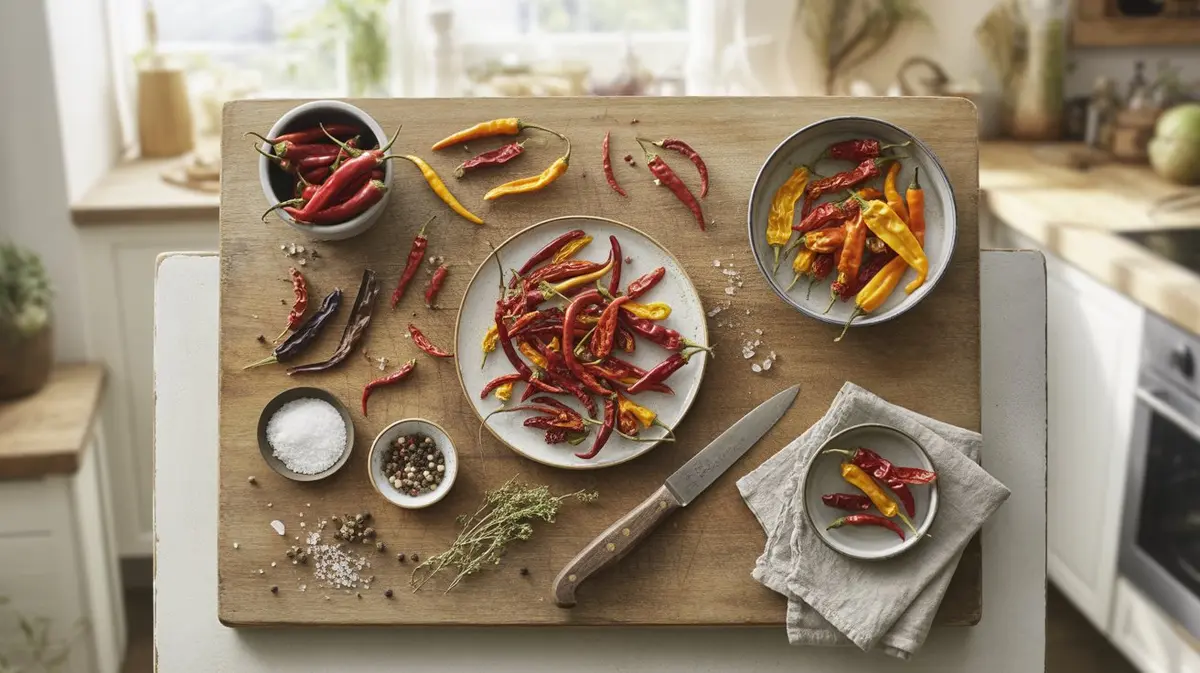
Oven drying works for any pepper type and gives you control over the process. It's faster than air drying but slower than a dehydrator, and it's the best option if you want to dry a large batch quickly without specialized equipment.
Best for: medium to thick-walled peppers, large batches, humid climates
- Preheat oven to 170-200°F (the lowest your oven will go).
- Wash and completely dry the peppers — surface moisture extends drying time significantly.
- Slice in half lengthwise or cut into rings. Whole peppers can be dried but take 2-3 times longer.
- Arrange cut-side up on wire racks set over baking sheets. Don't use solid sheet pans alone — airflow underneath matters.
- Prop the oven door open 1-2 inches with a wooden spoon to let moisture escape.
- Check every hour and rotate the racks. Thinner pieces may be done in 4-6 hours; thick-walled peppers can take 8-12 hours.
The target is leathery and pliable for rehydrating later, or completely brittle if you're making powder. Peppers that feel slightly soft in the center need more time — residual moisture causes mold in storage.
Watch the temperature carefully. Above 200°F you risk cooking rather than drying, which changes the flavor profile and can cause scorching on the edges before the center is dry.
Method 3 — Food Dehydrator
A dehydrator is the most consistent, hands-off method. Temperature stays constant, airflow is designed specifically for this task, and you can run it overnight without monitoring.
Best for: high-volume drying, uniform results, making powder
Set the dehydrator to 125-135°F for most pepper varieties. Slice peppers uniformly — inconsistent thickness means some pieces finish hours before others. Arrange in a single layer with space between each piece; overlapping dramatically slows drying.
Timeline: 8-12 hours for thin slices; 12-24 hours for halved or whole small peppers. The wide range depends on water content — a freshly harvested pepper has far more moisture than one that's been sitting on the counter for a few days.
One practical advantage: dehydrators handle the extreme end of the heat spectrum better than ovens because the lower temperature means less capsaicin volatilizing into the air. Drying superhot peppers in an oven at 200°F in a small kitchen will clear the room.
For the fruity, medium-hot Calabrian chili — a variety that goes into everything from pasta to pizza — dehydrator drying at 130°F preserves the bright red color and fruity character better than higher-heat methods.
Method 4 — Smoke Drying
Smoke drying is technically an extension of air or low-heat drying with added wood smoke. It's how chipotles are made (smoked jalapeños) and how many traditional dried peppers from Mexican pepper traditions get their characteristic depth.
You don't need a dedicated smoker. A kettle grill with the vents mostly closed, a small amount of charcoal, and hardwood chips works well. Maintain a temperature between 150-175°F inside the grill.
Place peppers on the grate away from direct heat, add a handful of wood chips (oak, mesquite, or fruit wood), and close the lid. Replenish chips every 45-60 minutes. Total time is 4-8 hours depending on pepper size and desired smoke intensity.
Smoke drying works best with thicker, fleshier peppers that can absorb smoke over a longer session. Thin-walled varieties can take on an overwhelming smokiness if you're not careful — shorter sessions with milder wood like apple or cherry keep it balanced.
Preparing Peppers Before Drying
How you prep peppers before drying affects both speed and safety. A few consistent practices apply across all methods.
Wash thoroughly and dry completely before processing. Any surface moisture slows drying and creates mold risk.
Removing seeds and membranes before drying isn't necessary for flavor but speeds up drying considerably — the seed cavity holds moisture. For making powder, removing seeds also gives you a smoother grind.
Scoring or slitting whole peppers helps moisture escape during air drying. A single cut along one side is enough — it doesn't need to be deep.
For peppers above the medium intensity range, wear nitrile gloves during prep. The oils absorb through skin and stay there — washing hands immediately after touching cut surfaces helps, but gloves are more reliable.
Making Dried Pepper Powder
Birria tacos with homemade ancho powder — that's the first dish that convinced me dried pepper powder was worth the extra step beyond just storing whole dried peppers. The difference from commercial chili powder is significant enough to justify the effort.
Peppers must be completely brittle before grinding. Any flexibility means residual moisture, and that moisture turns powder into clumps within days.
A spice grinder (dedicated coffee grinder) gives the finest powder. A blender works for larger batches but produces a coarser grind. For very small quantities, a mortar and pestle is traditional and effective.
Grind in short pulses rather than continuous runs — the friction generates heat that can release capsaicin vapors. Work in a ventilated area and avoid leaning directly over the grinder when you open it after processing hot peppers.
The citrusy, fruity aji limo from Peru makes a powder that adds both heat and a distinct floral note to fish dishes — something no commercial blend replicates. Similarly, the smoky, moderately hot puya grinds into a powder that rivals commercial ancho in depth but with a slightly sharper finish.
Sift powder through a fine mesh strainer after grinding to catch any remaining skin fragments. Store immediately in airtight containers — powder absorbs humidity faster than whole dried peppers.
Storage: Making Dried Peppers Last
Properly dried and stored peppers last 1-2 years with minimal flavor loss. Improperly stored ones turn stale in weeks or develop mold within days.
The three enemies of dried peppers are moisture, light, and oxygen. Airtight glass jars stored in a dark cabinet address all three. Vacuum-sealed bags extend shelf life further and take up less space.
Never store dried peppers in a cabinet near the stove or oven. The temperature fluctuations and steam from cooking introduce exactly the humidity you worked to remove.
Check stored peppers monthly for the first few months. Any sign of soft spots, white fuzz, or off smells means moisture got in. A single compromised pepper can affect the entire jar.
Freezing is an underused option for dried peppers and powder. Whole dried peppers freeze well and last indefinitely. Powder can clump slightly when thawed but recovers with a quick stir. If you're storing large quantities, freezing half and keeping half at room temperature reduces the risk of losing an entire harvest to a single storage problem.
Rehydrating Dried Peppers
Most dried peppers used in cooking need to be rehydrated first. The method affects the final texture and how much flavor stays in the pepper versus leaches into the soaking liquid.
Cover dried peppers with just-boiled water and let them soak for 20-30 minutes. They should become pliable and soft throughout. Thicker varieties may need up to 45 minutes.
Don't discard the soaking liquid — it's concentrated pepper flavor. Strained and added to sauces, braises, or soups, it contributes depth that would otherwise be lost. Taste it first; if it's bitter (common with some varieties), use it in small amounts or discard.
For dried peppers going into a blended sauce or paste, toasting them briefly in a dry skillet before soaking adds another layer of complexity. 30 seconds per side over medium heat is enough — you want them fragrant and slightly darkened, not charred.
Troubleshooting Common Problems
Mold during air drying: humidity is too high or airflow is insufficient. Move to a drier location or switch to oven drying. Remove and discard any affected peppers immediately.
Peppers shriveling unevenly: inconsistent sizing or thickness. Sort peppers by size before drying and process similar sizes together.
Powder clumping in storage: not fully dry before grinding, or container wasn't airtight. Spread clumped powder on a baking sheet at 170°F for 30 minutes, then re-grind and store properly.
Color loss: exposure to direct light during drying or storage. Dark storage is essential — even indirect light degrades pigments over time.
Flavor seems flat after drying: some pepper varieties simply don't develop well when dried. Mild, sweet-fleshed types like cubanelle are better preserved by roasting and freezing. Focus drying efforts on varieties with enough natural flavor concentration to survive the process.
If you're curious about the full germination-to-harvest walkthrough for growing your own drying varieties, starting with thin-walled types makes the whole process easier from the beginning.
Understanding how Scoville ratings position different peppers on the heat scale helps when deciding which varieties to dry for powder versus whole storage — higher-rated peppers are often more useful as powder where you can control quantity precisely.
Frequently Asked Questions
-
Most air fryers don't go low enough in temperature — they typically start at 200-250°F, which cooks rather than dries. A few models have a dehydrate setting around 130°F; those work well for small batches of sliced peppers.
-
Whole dried peppers should feel completely rigid and snap cleanly rather than bend. Sliced peppers should be leathery with no soft or moist spots. Any flexibility means more drying time is needed — residual moisture causes mold in storage.
-
No — capsaicin is stable and doesn't degrade during drying at low temperatures. Dried peppers often taste hotter than fresh because the water content drops while the capsaicin concentration stays the same, making each bite more intense.
-
A food dehydrator set to 135°F with thinly sliced peppers is the fastest reliable method, typically finishing in 8-12 hours. An oven at its lowest setting with the door propped open is a close second for speed and availability.
-
Yes, but whole peppers take significantly longer — often 2-3 times more than sliced ones. Scoring the skin with a single cut helps moisture escape faster. Whole drying works best with small, thin-walled varieties like Thai chilis or chiltepins.