Blossom End Rot on Peppers and Tomatoes: Fix Water First
Blossom end rot on peppers and tomatoes is a calcium transport problem, but uneven water usually starts it. The dark spot will not heal. Remove badly damaged fruit, steady the root zone, mulch the bed, ease off heavy nitrogen, and soil-test before adding calcium.
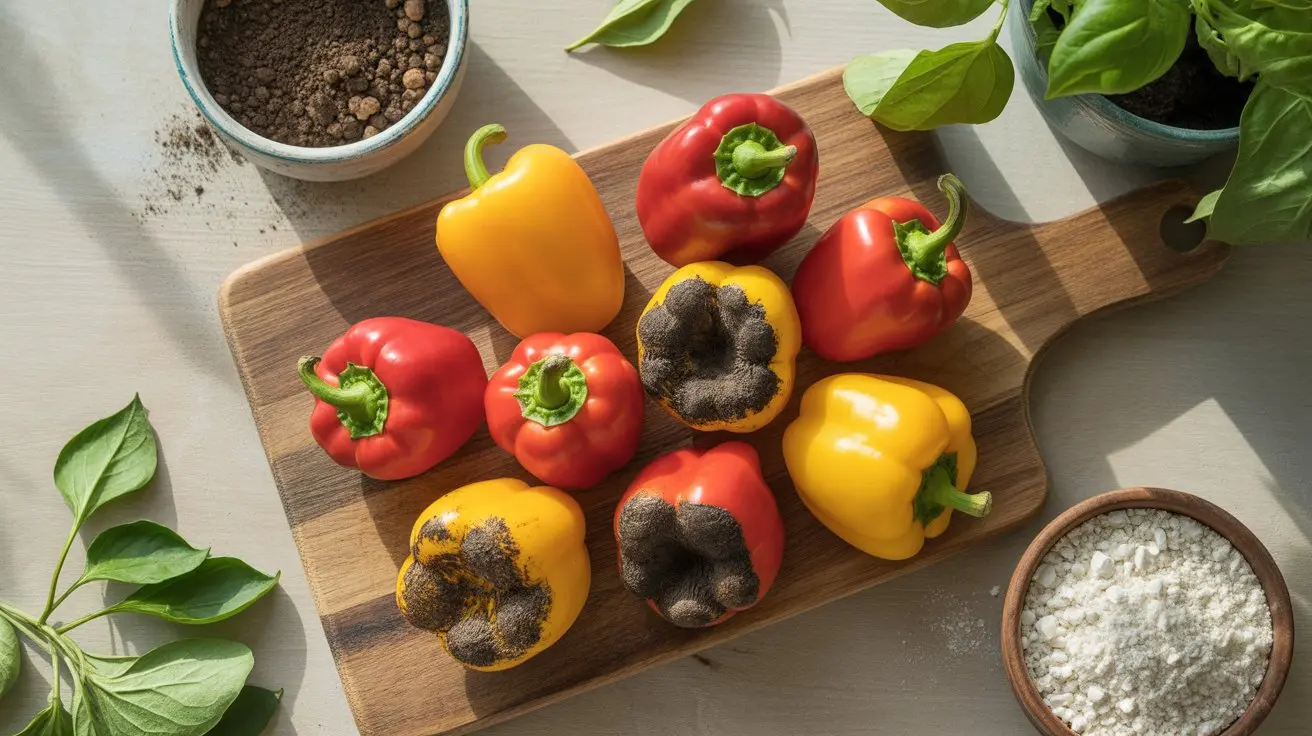
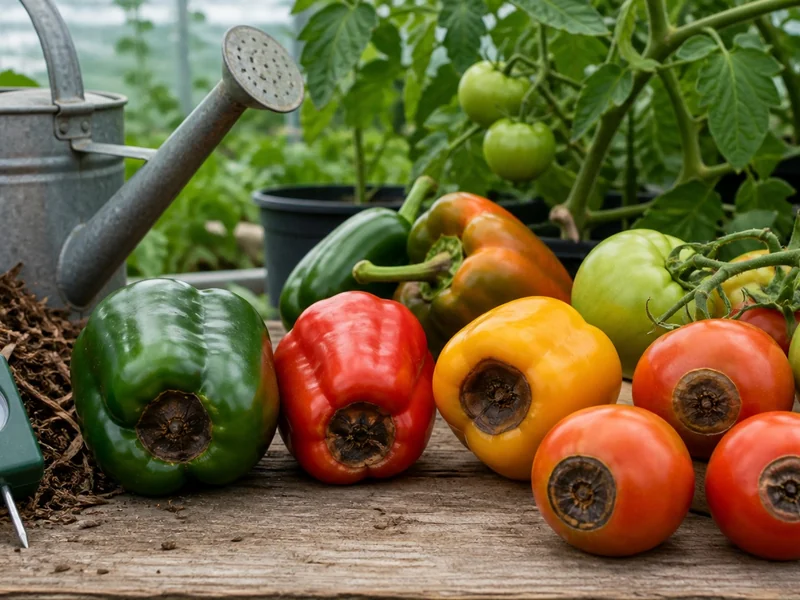
Blossom end rot is usually a water-stress problem, not a spreading disease. Peppers and tomatoes show it as a dark, sunken spot on the blossom end of young fruit because that tissue did not get enough calcium while it was expanding.
The fastest useful fix is steady root-zone moisture. Damaged fruit will not heal, but new fruit can come in clean after watering, mulch, and fertilizer pressure settle down.
Start with the spot
The first check is location. Blossom end rot begins at the blossom end, which is the end opposite the stem, and it usually starts as a pale or water-soaked patch before turning brown or black.
Texture tells the next part of the story. A dry, firm, leathery patch points toward blossom end rot, while fuzzy growth, sour smell, or a wet collapse means secondary decay has moved into tissue that was already hurt.
| What you see | Most likely issue | First check |
|---|---|---|
| Dark sunken spot on the blossom end | Blossom end rot | Moisture swings during young fruit growth |
| White or tan patch on the sunny side | sunscald on peppers or tomatoes | Leaf cover and direct afternoon sun |
| Soft mold inside an old dark patch | Secondary decay | How long the fruit stayed on the plant |
| Fruit spots plus leaf wilt | Root stress may be involved | Drainage, compaction, or pepper plant wilting |
This is not the same job as diagnosing pest and disease problems. Fungicide, insect spray, and pruning will not fix a calcium transport failure.
Peppers can fool you
Tomatoes usually make blossom end rot obvious because the black patch sits on the bottom of a round fruit. Peppers are less tidy, and that is why many gardeners misread the first damaged pods.
UNH Extension notes that pepper lesions can appear on the side of the fruit and look like sunscald. That matters when the fruit sits under good leaf cover but still shows a dry, dark side patch.
A protected side lesion should make you check moisture before blaming sunlight. Sunscald usually follows exposed fruit and hot direct sun, while blossom end rot can show on fruit that never had much sun on the damaged side.
Thin-walled hot peppers can also hide the problem by aborting fruit early. Instead of a big black patch, you may see small fruit yellow, shrivel, and drop before they size up.
Water carries the calcium
Calcium does not move around the plant like a mobile rescue nutrient. It reaches young fruit with the water stream, so any root-zone stress can leave the blossom end short at the wrong moment.
UC IPM describes blossom end rot as tied to low calcium in the fruit and water balance in the plant. University of Minnesota Extension adds that first tomato fruit are often hit hardest, especially when soil moisture swings, roots are injured, nitrogen is heavy, or hot weather pushes fast growth.
That source split is why the phrase -calcium deficiency- can mislead home growers. The fruit is short on usable calcium, but the garden soil may still have enough calcium sitting there.
In our raised-bed peppers, the pattern shows up after a dry-down followed by a deep rescue watering. The bed looks fixed the next day, but the young fruit already spent hours without steady flow.
Why the first fruit suffer
The first set of fruit often carries the most risk because the plant is changing jobs. It moves from building leaves and roots into filling fruit, and the young root system may not match the new water demand yet.
Hot weather makes that handoff harder. Leaves keep pulling water for cooling, fruit keeps expanding, and a shallow or dry root zone cannot keep calcium moving evenly to every new cell.
This is why blossom end rot can fade later without a magic product. Roots spread, the gardener notices the watering pattern, and the plant stops swinging between dry stress and rescue watering.
The practical lesson is not to panic after one early fruit. Use the first spotted pepper or tomato as a signal to fix the bed before the next fruit set.
Triage this week
Do not wait for the damaged patch to improve. Remove fruit with large black lesions, soft tissue, leaking juice, or mold because it will not recover and can pull energy from the next flush.
Small, dry spots are a judgment call. If the rest of the pepper or tomato smells clean and feels firm, you can ripen it, cut away the bad end, and use the clean flesh.
- Pick off badly damaged fruit.
- Mark three clean young fruit with tape or a plant tag.
- Water slowly enough to wet the main root zone.
- Add mulch once the soil is moist, not bone dry.
- Check the marked fruit after two to three weeks.
If you were saving peppers for a hot sauce batch or pickled pepper jars, sort harder than usual. Blossom end rot does not poison the crop, but damaged walls waste brine space and make texture uneven.
Reset the root zone
The goal is boring moisture, not constant wet soil. For in-ground plants, use a trowel or finger check and aim for even moisture in the top 6 to 8 inches where most feeder roots are working.
A weekly inch of water is a starting point in mild weather, not a promise. Wind, heat, sandy soil, heavy fruit load, and raised beds can all increase demand before the plant looks dramatic.
- In-ground beds: water slowly one to three times per week, then confirm depth with a trowel.
- Raised beds: check more often because they drain and warm faster than native soil.
- Containers: water until runoff appears, then check again before leaves droop.
- Drip lines: run long enough to wet the root zone, not just the mulch surface.
Container pepper plants need the closest watch because potting mix dries from every side. A black nursery pot can swing from wet to dry in one hot afternoon.
Our rule is simple: prevent repeated wilt. The detailed calendar belongs with pepper watering by depth, but blossom end rot cares most about avoiding hard swings during fruit fill.
Use weather, not a calendar
A fixed watering calendar works only when the weather stays fixed, and gardens never do that for long. The same bed that needs water twice a week in mild weather may need checking every day during a hot, windy fruiting stretch.
Rain does not always solve the problem either. A fast storm can wet the mulch and topsoil while the deeper root zone stays uneven, especially in raised beds with dry edges.
| Condition | What changes | Best check |
|---|---|---|
| Hot wind | Leaves pull water faster | Check depth by evening |
| Sandy soil | Water drains quickly | Mulch and split watering |
| Heavy clay | Surface can stay wet | Check for soggy roots before adding more |
| Black nursery pot | Root zone heats and dries fast | Check before leaves droop |
The best habit is boring but reliable: check the soil, then water the root zone slowly. Surface color is a weak guide because mulch, compost, and potting mix can all look damp while the feeder-root layer is already drying.
Check soil and fertilizer
Soil amendments help only when they solve the actual bottleneck. A soil test can show low pH, low calcium, high salts, or a fertilizer pattern that is pushing leafy growth too hard.
UMass Extension notes that potassium, sodium, magnesium, and ammonium can compete with calcium uptake. That matters after repeated feeding, heavy fertigation, or closed containers where salts build up instead of washing away.
| Input | Use it when | Do not use it for |
|---|---|---|
| Mulch | Soil surface dries fast | Covering a soggy crown |
| Lime | Soil test shows low pH | A quick fix for current fruit |
| Gypsum | Calcium is low but pH is fine | Uneven watering |
| Balanced fertilizer | Plant is pale and actively growing | Forcing lush leaves during fruit set |
Use pepper soil structure work for drainage and water holding, then adjust pepper fertilizer timing so nitrogen does not outrun fruit development.
Read a soil test
A soil test earns its place when the same bed keeps producing damaged fruit after watering improves. At that point, the question changes from -what did I miss this week-- to -what is this root zone doing every season--
Start with pH, calcium, magnesium, potassium, soluble salts, and organic matter if your local lab offers them. Those numbers help separate low calcium supply from nutrient competition, salt stress, and poor water holding.
If pH is low, garden lime may help future fruit by improving calcium availability and soil balance. It still will not erase a black patch that already formed.
If pH is fine but calcium is low, gypsum may fit better because it adds calcium without raising pH much. That choice belongs after a soil test, not after a panic search in the garden aisle.
A cheap home kit can help with pH, but extension lab results are more useful for calcium and salt questions. Container growers should pay special attention to salt buildup because potting mix has less buffering room than a deep bed.
Peppers and tomatoes differ
Tomatoes often make the problem obvious because the fruit is large and juicy. Paste and Roma types can show big flattened black ends, and University of Minnesota notes that first fruit are often the worst.
Peppers can be sneakier. UMass and UNH both note that pepper lesions may appear on the side of the fruit too, which is why protected fruit with -sunscald-like- side damage still deserves a moisture and calcium check.
Thick-walled fruit show the injury best. A plant carrying several thick-walled bell peppers can use water quickly, and a single afternoon wilt can interrupt calcium flow to small fruit that just set.
Read the recovery timeline
Existing spots are old damage. The plant cannot rebuild dead tissue at the blossom end, so the only fair test is what happens to fruit that forms after the fix.
Mark a few clean young fruit the day you change watering and mulch. If those fruit stay clean over the next two to three weeks, the root-zone reset is probably working.
If new fruit still develop spots after three steady weeks, look deeper. Check for compacted soil, root damage from cultivation, poor drainage after heavy rain, salt crust on container soil, or a pot that is too small for a fruiting plant.
This timeline also helps you avoid overcorrecting. Adding lime, gypsum, Epsom salt, and extra fertilizer in the same week creates a new problem before you know whether steady water fixed the old one.
Match the fix to the setup
A raised bed, a five-gallon pot, and a heavy clay row can all show the same black fruit spot, but they do not need the same correction. The symptom matches; the water problem may not.
In a small container, the fix is often more soil volume and slower drying. Watering twice a day can keep the plant alive, but it still swings hard if the pot is packed with roots and sitting in full afternoon heat.
In a sandy bed, the fix is water holding. Compost, mulch, and slower irrigation help the root zone stay even instead of draining fast after every watering.
In a clay bed, the risk can flip the other way. If roots sit wet after heavy rain, they lose oxygen and stop moving water well, so adding more water makes the calcium problem worse.
For drip irrigation, check the wetting pattern. A line can run for an hour and still miss half the active roots if emitters sit too far from the stem or clog under mulch.
For grow bags, watch the sides as much as the top. Fabric breathes well, but that same airflow dries the outer root zone fast during fruit fill, so a tray, mulch layer, or larger bag can matter more than another feeding.
For greenhouse or patio plants, also watch heat around the container. A pot sitting on concrete can have warm roots and dry edges even when the air temperature feels manageable, so moving the pot onto a wood board or lighter surface can reduce the daily dry-down.
That small setup change can protect the next fruit.
Myths that waste time
Epsom salt does not fix blossom end rot. It supplies magnesium, not calcium, and extra magnesium can make the balance harder in some soils.
Crushed eggshells are not a rescue treatment. They break down slowly, so they cannot repair spots that appeared this week.
Calcium sprays are also weaker than they sound for a home garden. Some commercial programs test fruit-directed sprays, but leaf sprays do not move calcium neatly into developing fruit, and they still do not fix dry roots.
Pesticides do not belong here. UC IPM states that blossom end rot is not caused by a pathogen, so there is no pesticide solution.
If it keeps returning
Repeat blossom end rot usually points to a setup problem, not bad luck. The common repeat offenders are small containers, sandy beds with no mulch, uneven drip coverage, heavy nitrogen feeding, and deep cultivation that cuts roots near the stem.
Write down where the first affected fruit appeared. A repeat spot in the same bed points toward soil texture, irrigation reach, or container size rather than a one-time weather problem.
For containers, move up in pot size before adding more fertilizer. A fruiting tomato or pepper in a small pot can dry too fast for calcium movement even when you water every morning.
For beds, fix water holding first. Compost, mulch, slower watering, and fewer root disturbances usually change more than another handful of amendment scattered after symptoms appear.
That note also helps when two plants behave differently in the same bed. The plant closest to a path, wall, or pot edge may dry faster than the one beside it.
Prevention before fruit set
Prevention starts before the first clean tomato or pepper is on the line. Build a root zone that holds moisture, avoid transplant shock, and set up irrigation before the first hot fruiting week.
- Mix compost into dry, sandy beds so water does not vanish between irrigations.
- Mulch with 2 to 3 inches of straw, shredded leaves, or clean compost after the soil warms.
- Keep mulch a finger-width away from stems.
- Use larger pots for fruiting peppers and tomatoes.
- Avoid root cuts from deep cultivation near the stem.
- Switch away from high-nitrogen feeding after strong fruit set.
Watch the plant before fruit damage starts. Yellow pepper leaves, afternoon wilt, crusted soil, or salt rings on containers tell you the root zone is already under pressure.
Pepper companion planting can help only when it changes the bed, such as low herbs shading soil between plants. It cannot replace watering depth, mulch, and a soil test when blossom end rot keeps coming back.