Pimento Pepper vs Piquillo Pepper: Key Differences Explained
Pimento and piquillo peppers share a zero-heat profile, but they come from different culinary traditions and behave very differently in the kitchen. Pimentos are thick-walled, sweet, and almost universally processed into cheese spreads and pickled jars, while piquillos are slender Spanish roasting peppers with a subtle earthy tang. Knowing which one to reach for changes the dish entirely.

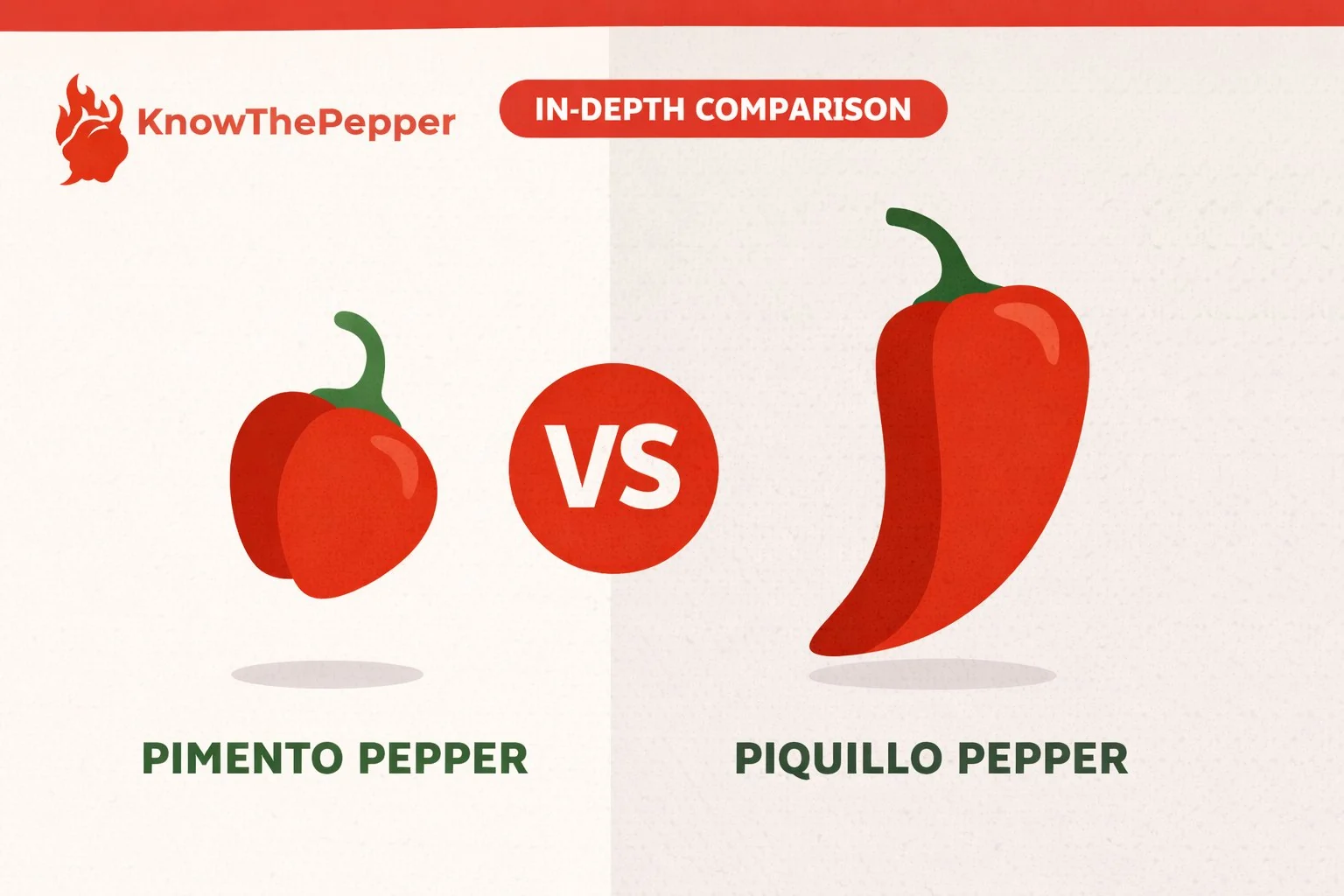
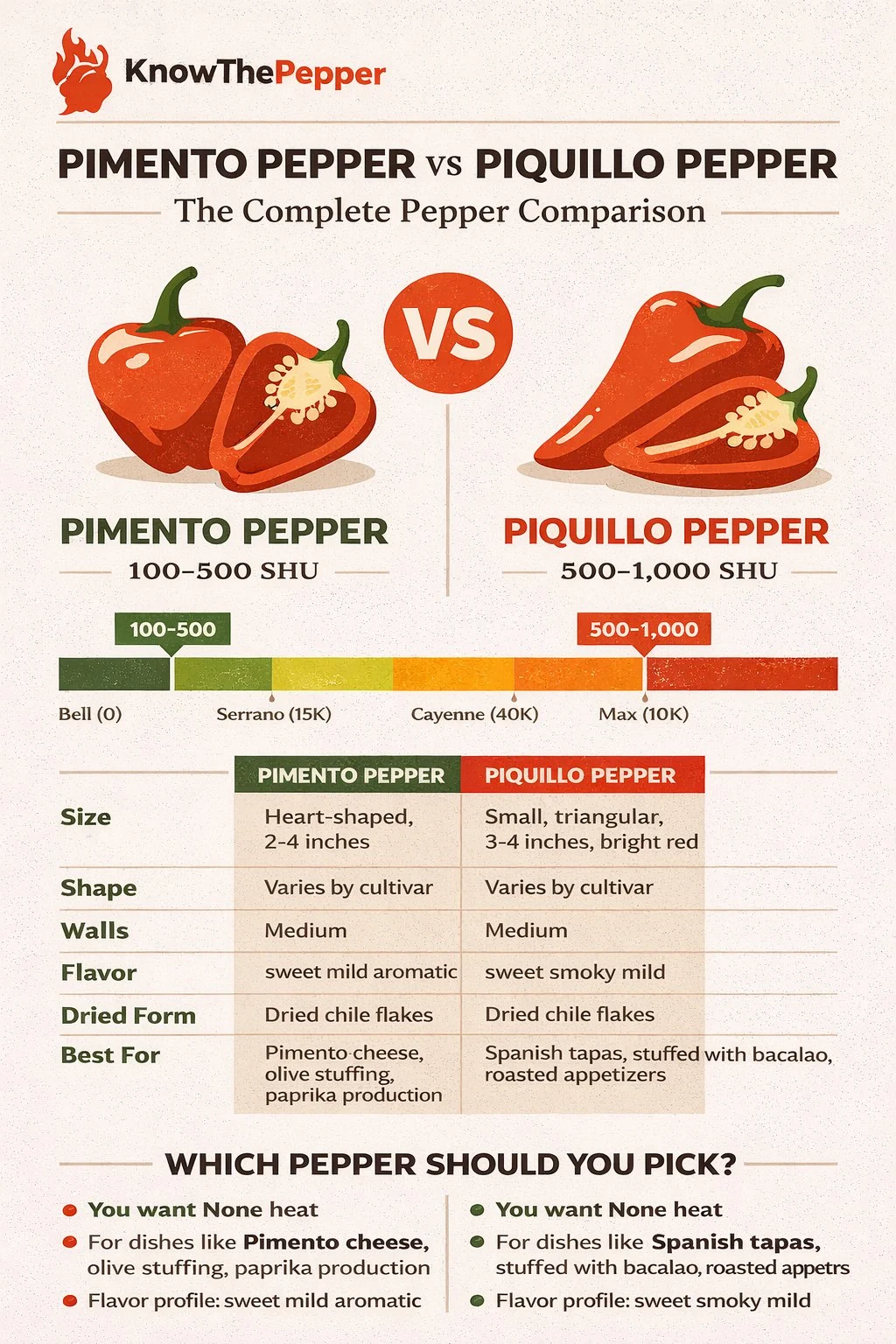
Pimento Pepper measures 100–500 SHU while Piquillo Pepper registers 500–1K SHU — making Piquillo Pepper 2× hotter. Pimento Pepper is known for its sweet and mild flavor (C. annuum), while Piquillo Pepper offers sweet and smoky notes (C. annuum).
- Heat difference: Piquillo Pepper is 2× hotter
- Species: Both are C. annuum
- Best for: Pimento Pepper excels in everyday cooking and salsas, Piquillo Pepper in fresh salsas and mild recipes
Pimento Pepper
MildPiquillo Pepper
MediumPimento Pepper vs Piquillo Pepper Comparison
Pimento Pepper vs Piquillo Pepper Heat Levels
Both the pimento and piquillo register at 0 SHU on the Scoville rating system — no detectable capsaicin, no burn, nothing that would challenge even the most heat-averse palate. For context, a guajillo typically sits around 2,500-5,000 SHU, meaning both of these peppers are essentially infinitely milder than that dried Mexican staple.
This puts them firmly in the sweet pepper intensity range alongside bells and banana peppers. There is no jalapeño multiplier worth calculating here — the comparison simply doesn't apply when a pepper reads zero on both ends of its SHU range.
What separates them heat-wise isn't capsaicin at all — it's perceived intensity from other compounds. Piquillos, when roasted over open flame (the traditional Navarran method), develop a slight bitterness that some people misread as mild heat. It isn't. That sensation comes from charred skin and concentrated natural sugars caramelizing under high heat, not from any capsaicinoid activity.
Pimentos have no such confusion. Their flavor is unambiguously sweet and neutral, which is exactly why they became the default stuffing for Spanish olives — nothing to compete with the brine. If heat is your primary concern, both peppers are identical. The real differences live entirely in flavor and texture.
Flavor Profile Comparison
Few peppers carry as much cultural weight as the pimento.
Grown in the Navarra and Rioja regions of northern Spain, the piquillo pepper (Capsicum annuum) is harvested in autumn, hand-roasted over wood fires, and peeled by hand — a process that gives it a depth of flavor no oven-roasted substitute fully replicates.
Start with aroma: a fresh pimento smells almost candy-sweet, closer to a ripe red bell than anything else. There's a faint floral note when you slice one open, and almost no grassiness. Piquillos, by contrast, carry a smokier, earthier scent even before cooking — and once they hit a flame or a hot pan, that aroma deepens into something almost savory, with hints of sun-dried tomato and charred wood.
On the palate, pimentos are mild and sugary with very little acidity. The flesh is dense and thick-walled, which gives them a satisfying chew but means they don't break down easily in sauces. That density is why they hold up so well when stuffed with cheese or meat — they're essentially edible vessels that contribute sweetness without asserting much else.
Piquillos are thinner-walled and more complex. The taste is sweet upfront, then shifts to a slightly tangy, almost wine-like finish. Roasting intensifies this profile dramatically — the sugars concentrate, the skin chars, and the flesh becomes silky. That transformation is why piquillos are rarely eaten raw and almost always sold pre-roasted in jars.
For dishes where you want the pepper to stay in the background, pimento wins. For dishes where the pepper IS the point — stuffed with bacalao, draped over grilled fish, blended into romesco — the layered flavor of the piquillo's roasted earthiness is irreplaceable. They're both sweet, but they're sweet in completely different registers.
Culinary Uses for Pimento Pepper and Piquillo Pepper
Pimentos have a long history as a pantry staple in American kitchens, most famously as the red paste inside green olives and the star ingredient in Southern pimento cheese. Their thick walls and mild sweetness make them ideal for raw applications — diced into cream cheese spreads, layered onto sandwiches, or used as a colorful garnish. Because they hold their shape under heat, they also work well stuffed and baked, though the filling tends to dominate the flavor conversation.
For a closer look at how pimento compares to its round, sweet cousins, the round shape versus flat flesh matchup between cherry peppers and pimentos covers the textural differences in detail.
If a recipe calls for pimento and you're out, roasted red bell pepper works in a 1:1 ratio for most applications. The flavor is slightly less sweet, but the texture and color are close enough that most people won't notice in a cheese dip or pasta salad.
Piquillos are the workhorse of Spanish tapas cooking. Sold roasted and peeled in cans or jars, they're ready to use straight from the container. Stuff them with salt cod brandade, goat cheese and walnut, or spiced ground lamb — the thin walls collapse around fillings beautifully without becoming soggy. They're also excellent blended into sauces: puree them with almonds and vinegar and you're halfway to a proper romesco.
The sweet-tangy profile difference between peppadew and piquillo is worth reading if you're deciding between pickled options for an antipasto spread.
Substituting piquillo for pimento (or vice versa) is possible but not seamless. Use a 1:1 ratio by weight, but expect flavor differences — piquillo adds complexity where pimento adds sweetness. In stuffed preparations, piquillo's thinner walls mean slightly less structural integrity, so reduce baking time by a few minutes.
Both peppers shine in Mediterranean-leaning grain bowls, egg dishes, and cheese boards. Pimento brings the sweetness; piquillo brings the story.
Which Should You Choose?
If your recipe needs a neutral, sweet pepper that stays out of the way — pimento cheese, olive stuffing, a colorful garnish — pimento is the right call. Its thick walls and candy sweetness do exactly what they're supposed to do without complicating anything.
If the pepper needs to carry flavor on its own — tapas, stuffed appetizers, blended sauces — piquillo earns its place. The roasted complexity and tangy finish make it genuinely interesting to eat, not just functional.
For heat-sensitive cooks or anyone feeding a crowd that includes spice-averse guests, both are completely safe at 0 SHU. Neither one will surprise anyone.
The practical answer: keep both. Pimentos belong in your cheese drawer and relish tray rotation. A jar of roasted piquillos in the pantry means you're always 10 minutes away from a credible Spanish-style appetizer. They don't compete — they occupy different slots in a well-stocked kitchen.
Can You Substitute One for the Other?
Yes — direct substitution works. Pimento Pepper and Piquillo Pepper are close enough in heat to swap at roughly 1:1. The main difference will be flavor. For more swap options, explore ranked alternatives with conversion ratios.
Growing Pimento Pepper vs Piquillo Pepper
If you’re deciding which pepper to grow at home, consider your climate and patience level. Pimento Pepper and Piquillo Pepper have different maturation times and temperature preferences. Hotter varieties generally need a longer, warmer growing season to develop their full capsaicin content. Our zone-based planting date tool can pinpoint the best sowing window for your area.
Pimento plants are compact and productive, typically reaching 18–24 inches tall — manageable in containers or tight garden rows. Start seeds indoors 8–10 weeks before your last frost date.
For practical guidance on transplant pepper seedlings outdoors, wait until nighttime temps stay consistently above 55°F. Pimentos are sensitive to cold snaps even after establishment.
Full sun is non-negotiable — at least 6–8 hours daily. Well-drained soil with a pH around **6.
Growing piquillos is straightforward if you're in a warm climate — they share the same needs as most C. annuum varieties.
Transplant outdoors once nighttime temps stay above 55°F. Piquillos need full sun and well-drained soil with a pH of **6.
For practical guidance on how long peppers grow from transplant to harvest, piquillos typically reach maturity in 80–90 days. They start green and ripen to a deep red; for authentic flavor, wait for full red color before harvesting.
History & Origin of Pimento Pepper and Piquillo Pepper
Both peppers carry centuries of culinary heritage. Pimento Pepper traces its roots to Spain, while Piquillo Pepper originates from Spain. Understanding their backstory helps explain why each pepper developed its distinctive traits.
Buying & Storage
Whether you’re shopping for Pimento Pepper or Piquillo Pepper, the same quality indicators apply. Fresh peppers should feel firm and heavy for their size, with taut, glossy skin and no soft or wet spots. Minor stem cracks known as “corking” are perfectly normal and often indicate a mature, flavorful pod.
- Firm pods with taut skin and consistent color
- Should feel heavy relative to size
- Minor stem cracks (“corking”) are normal
- Avoid anything soft, shriveled, or with dark wet spots
- Fresh: Paper bag, crisper drawer — 1–2 weeks
- Frozen: Wash, dry, freeze on sheet pan — 6+ months
- Dried: Airtight, away from light — up to 1 year
The Verdict: Pimento Pepper vs Piquillo Pepper
Pimento Pepper and Piquillo Pepper occupy very different positions on the heat spectrum. Piquillo Pepper delivers 2× more heat with its distinctive sweet and smoky character. Pimento Pepper, with its sweet and mild profile, excels in everyday cooking.
Frequently Asked Questions
Related Comparisons
Sources pending verification.