Ghost Pepper vs Naga Morich: What's the Difference?
The Ghost Pepper (Bhut Jolokia) and Naga Morich are two of the most fearsome super-hots to come out of South Asia, closely related and frequently confused. Both sit in the 1,000,000-1,500,000 SHU range, share C. chinense genetics, and deliver a slow-building, devastating burn — but their flavor profiles and regional identities differ in ways that matter to serious cooks and growers.

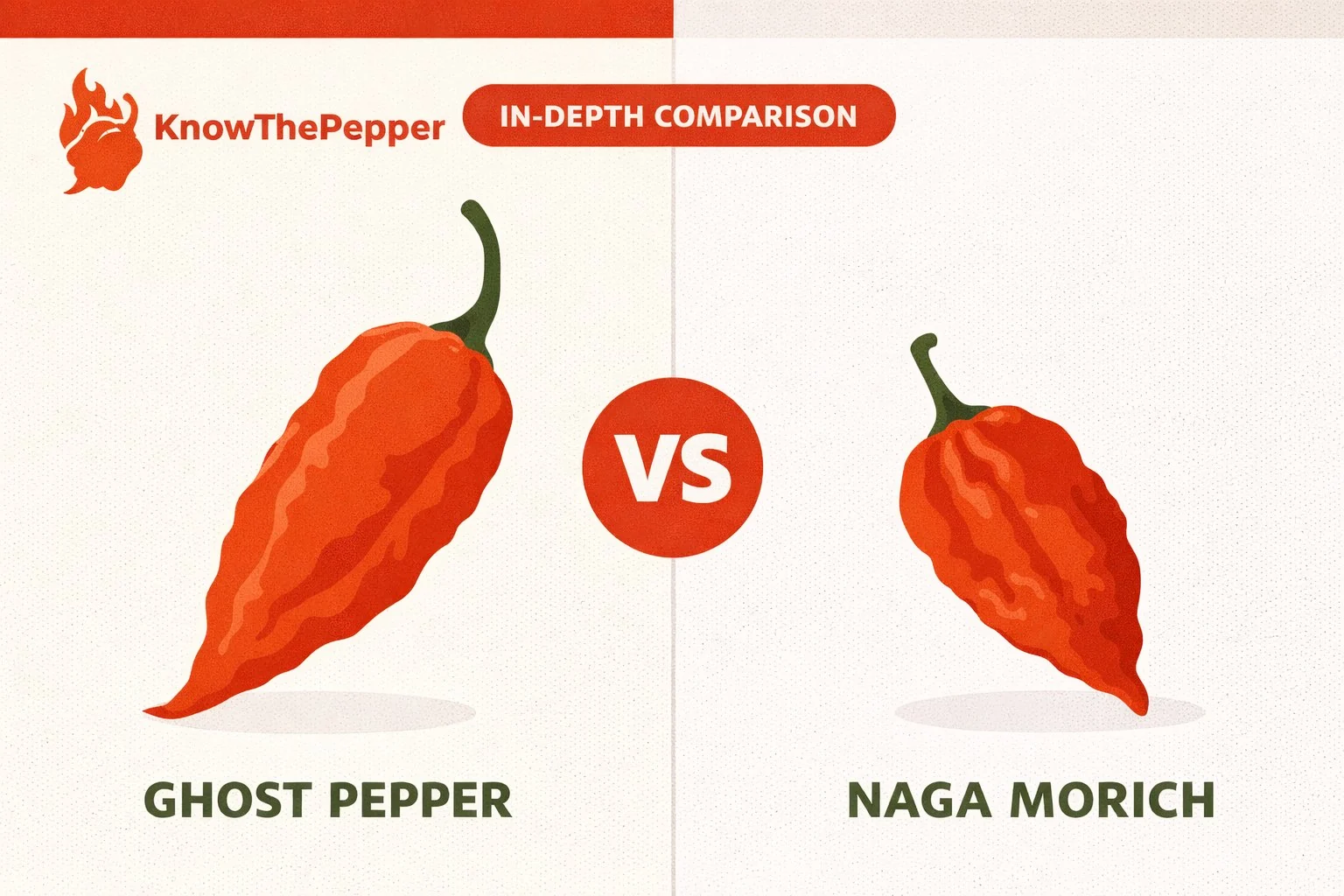
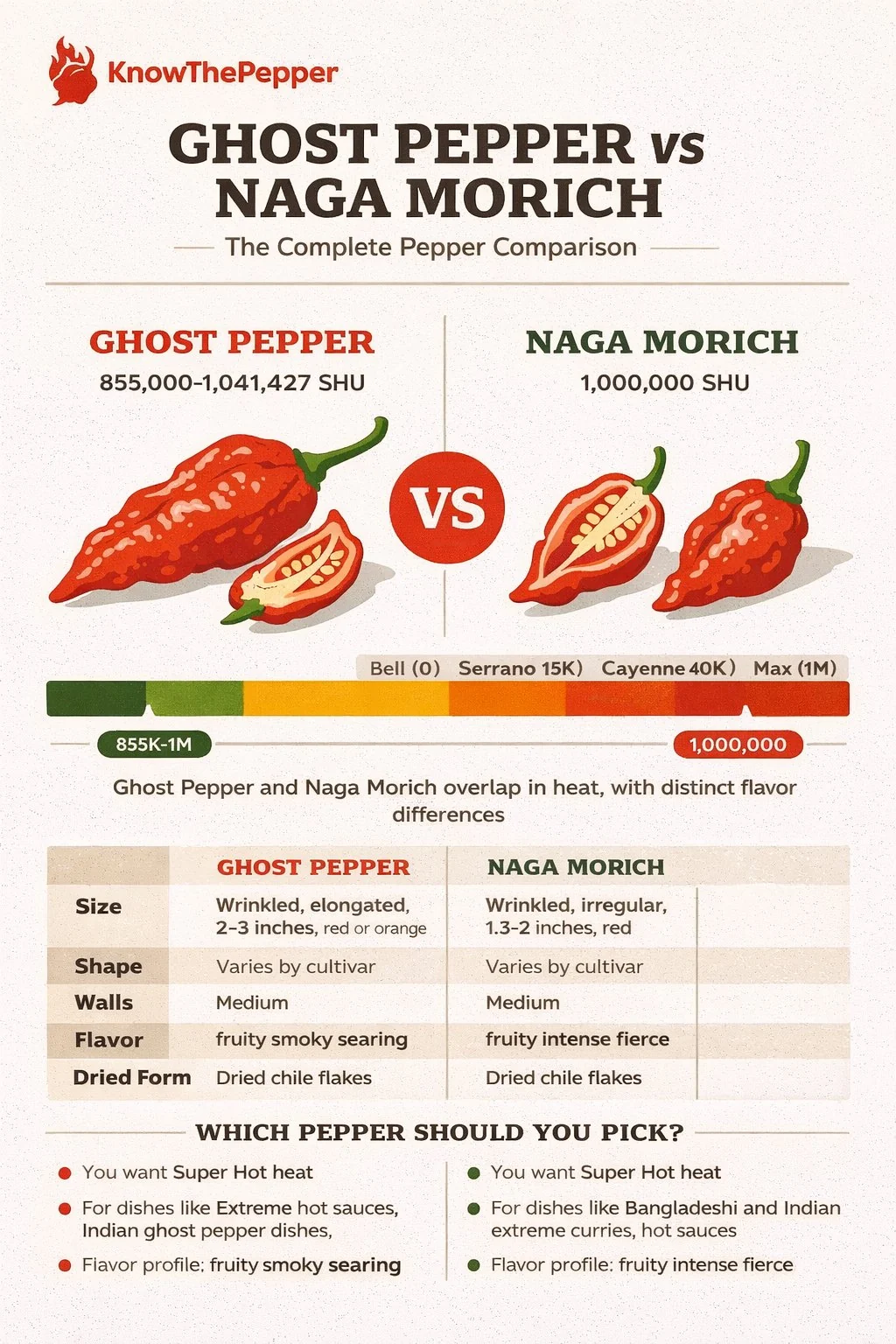
Ghost Pepper measures 855K–1M SHU while Naga Morich registers 1M–1.5M SHU — roughly equal in heat. Ghost Pepper is known for its smoky and sweet flavor (C. chinense), while Naga Morich offers fruity and intense notes (C. chinense).
- Species: Both are C. chinense
- Best for: Ghost Pepper excels in hot sauces and extreme dishes, Naga Morich in hot sauces and spicy dishes
Ghost Pepper
Super-HotNaga Morich
Super-HotGhost Pepper vs Naga Morich Comparison
Ghost Pepper vs Naga Morich Heat Levels
Both peppers occupy the same terrifying tier on the Scoville rating scale, landing between 1,000,000 and 1,500,000 SHU. For context, a guajillo pepper tops out around 5,000 SHU — meaning these South Asian super-hots are roughly 200-300 times hotter than that mild dried staple. That's not a typo.
The Ghost Pepper (Bhut Jolokia) was certified by Guinness as the world's hottest pepper in 2007, a title it held until the extreme capsaicin load of the Carolina Reaper knocked it off the top spot years later. The Naga Morich, originating from the Sylhet region of Bangladesh and neighboring Northeast India, matches or occasionally exceeds Ghost Pepper readings depending on growing conditions, soil, and climate.
Both belong to the super-hot intensity range where capsaicin stops feeling like heat and starts feeling like a physiological event. The burn is not immediate — it builds over 30-60 seconds, peaks hard, and lingers for 20-45 minutes. Neither pepper is forgiving. Capsaicin binds to TRPV1 receptors in your mouth and throat; for a deeper look at why that burn mechanism works the way it does, the receptor science is genuinely fascinating.
In practical terms, treat these two as heat equals. Any meaningful difference in SHU between them is smaller than the natural variation within a single plant's harvest.
Flavor Profile Comparison
Long before it became a dare on YouTube, the ghost pepper was a staple of Naga cuisine in Assam, Nagaland, and Manipur — used in traditional pickles, meat preparations, and even as a topical remedy against arthritis.
Here's what surprises most people: the Naga Morich predates the ghost pepper's fame by centuries, yet it's consistently treated as an afterthought.
Start with the smell, because it tells you a lot. The Naga Morich carries a sharp, almost fermented fruit aroma when fresh — intensely floral with a slight funkiness that signals its C. chinense lineage. The Ghost Pepper smells sweeter and more straightforwardly fruity, closer to a ripe tropical fruit with a faint smokiness that deepens as it ripens from green through orange to red.
On the palate, Naga Morich leads with a bright, acidic fruitiness before the heat overtakes everything. There's a complexity to it — some tasters pick up citrus, others get something closer to passion fruit or mango. The Dorset Naga vs Naga Morich matchup illustrates how selective breeding can amplify or mute these fruity notes depending on the cultivar.
Ghost Pepper flavor is slightly earthier. The sweetness is there, but it sits under a more savory, almost smoky base — which is part of why it translates so well into dried and powdered form. Smoked Ghost Pepper powder has a complexity that Naga Morich powder doesn't quite replicate.
For cooking purposes, the Naga Morich's brightness makes it better suited to fresh preparations and fermented hot sauces where you want the fruit to cut through. Ghost Pepper's deeper, earthier character holds up better in long-cooked applications — curries, stews, and slow-simmered chili oils where the heat integrates over time rather than announcing itself up front.
Culinary Uses for Ghost Pepper and Naga Morich
Neither of these peppers belongs in a dish where you're using a whole fresh pod without serious dilution. One standard approach: treat a single Ghost Pepper or Naga Morich as you would 8-10 habaneros in terms of heat contribution. The Ghost Pepper vs habanero heat difference is substantial enough that direct substitution without ratio adjustment will ruin a dish.
For hot sauces, both peppers shine when fermented. The Naga Morich's fruitiness intensifies through lacto-fermentation, producing a sauce with genuine complexity behind the heat. A simple mash of Naga Morich, garlic, and salt fermented for 2-3 weeks at room temperature creates a base that rivals anything commercial. Ghost Pepper ferments similarly well but benefits from the addition of roasted tomato or tamarind to round out its earthier notes.
In dry rub applications, Ghost Pepper powder is the more versatile choice. Its smoky-sweet profile pairs naturally with red meat, particularly brisket and ribs, where it adds heat without clashing with the fat. Use it at 0.5-1% of total dry rub weight — even that small amount is significant.
The Naga Morich is deeply embedded in Bangladeshi pepper traditions and cooking, where it appears in fresh chutneys, fish curries, and the fiery pickles that accompany rice dishes. Using it fresh and raw in a chutney — blended with mustard oil, onion, and cilantro — is one of the most direct ways to experience its flavor before the heat completely takes over.
For either pepper, dairy (yogurt, cream, ghee) is your best buffer in cooking. Fat-soluble capsaicin binds to milk proteins far more effectively than water, which is why a yogurt-marinated chicken dish can carry significant Ghost Pepper heat without being unpleasant.
Which Should You Choose?
If you're choosing between these two for cooking, the decision comes down to flavor direction. Naga Morich's bright, acidic fruitiness works best in fresh preparations, fermented sauces, and dishes where you want the pepper's character to register before the burn takes over. Ghost Pepper's earthier, slightly smoky profile integrates better into slow-cooked applications and dry spice blends.
For growing, both are demanding — long germination times, high soil temperatures, and a lengthy growing season. The full germination and growing guide is worth reading before starting either from seed. Naga Morich tends to produce slightly more pods per plant under ideal conditions, but both require the same attentive care.
For heat seekers who just want maximum intensity, the difference is essentially academic. Both will challenge even experienced hot pepper eaters. The C. chinense botanical characteristics shared by both explain their common heat ceiling and fruity flavor base.
Bottom line: Naga Morich for fresh and fermented applications; Ghost Pepper for dried, smoked, and slow-cooked uses.
Can You Substitute One for the Other?
Proceed with caution. Naga Morich is 1× hotter than Ghost Pepper.
Need a different option altogether? Search for peppers that match your target heat and flavor with precise swap ratios.
Growing Ghost Pepper vs Naga Morich
If you’re deciding which pepper to grow at home, consider your climate and patience level. Ghost Pepper and Naga Morich have different maturation times and temperature preferences. Hotter varieties generally need a longer, warmer growing season to develop their full capsaicin content. Our zone-based planting date tool can pinpoint the best sowing window for your area.
The hardest part of growing ghost peppers isn't germination — it's maintaining the long, hot season they need to fully ripen. In most of North America, that means starting seeds indoors 10–12 weeks before last frost and providing supplemental heat throughout the season.
Soil quality matters enormously. Ghost peppers want well-draining, slightly acidic soil (pH **6.
Fertilize with a lower-nitrogen mix once flowering begins — too much nitrogen pushes leafy growth at the expense of pods. Consistent calcium (through gypite or foliar spray) helps prevent blossom end rot, which ghost peppers are prone to during dry spells.
Starting Naga Morich from seed tests patience before it tests your palate. Germination typically takes 3-4 weeks at soil temperatures of 80-85°F - a heat mat is not optional at this stage, it's essential.
The step-by-step process for starting peppers indoors applies here with extra emphasis on the long growing season. Naga Morich needs 120-150 days from transplant to harvest, which means starting seeds indoors 10-12 weeks before your last frost date if you're in a temperate climate.
Plants grow tall - often 3-4 feet - and benefit from staking once pods develop. The weight of multiple wrinkled fruits on a single branch can cause breakage.
History & Origin of Ghost Pepper and Naga Morich
Both peppers carry centuries of culinary heritage. Ghost Pepper traces its roots to India, while Naga Morich originates from India. Understanding their backstory helps explain why each pepper developed its distinctive traits.
Buying & Storage
Whether you’re shopping for Ghost Pepper or Naga Morich, the same quality indicators apply. Fresh peppers should feel firm and heavy for their size, with taut, glossy skin and no soft or wet spots. Minor stem cracks known as “corking” are perfectly normal and often indicate a mature, flavorful pod.
- Firm pods with taut skin and consistent color
- Should feel heavy relative to size
- Minor stem cracks (“corking”) are normal
- Avoid anything soft, shriveled, or with dark wet spots
- Fresh: Paper bag, crisper drawer — 1–2 weeks
- Frozen: Wash, dry, freeze on sheet pan — 6+ months
- Dried: Airtight, away from light — up to 1 year
The Verdict: Ghost Pepper vs Naga Morich
Ghost Pepper and Naga Morich sit in the same heat tier but serve different roles. Naga Morich delivers its distinctive fruity and intense character. Ghost Pepper, with its smoky and sweet profile, excels in everyday cooking.
Frequently Asked Questions
Related Comparisons
Sources pending verification.