Facing Heaven Pepper vs Tien Tsin: Key Differences Explained
Facing Heaven and Tien Tsin are two celebrated Chinese dried chilies that look similar hanging in market stalls but behave quite differently in the wok. Both land in the hot range, deliver a clean dry heat, and form the backbone of Sichuan and Hunan cooking. Knowing which to reach for — and when — comes down to heat intensity, smoke character, and how each pepper releases its capsaicin into oil.

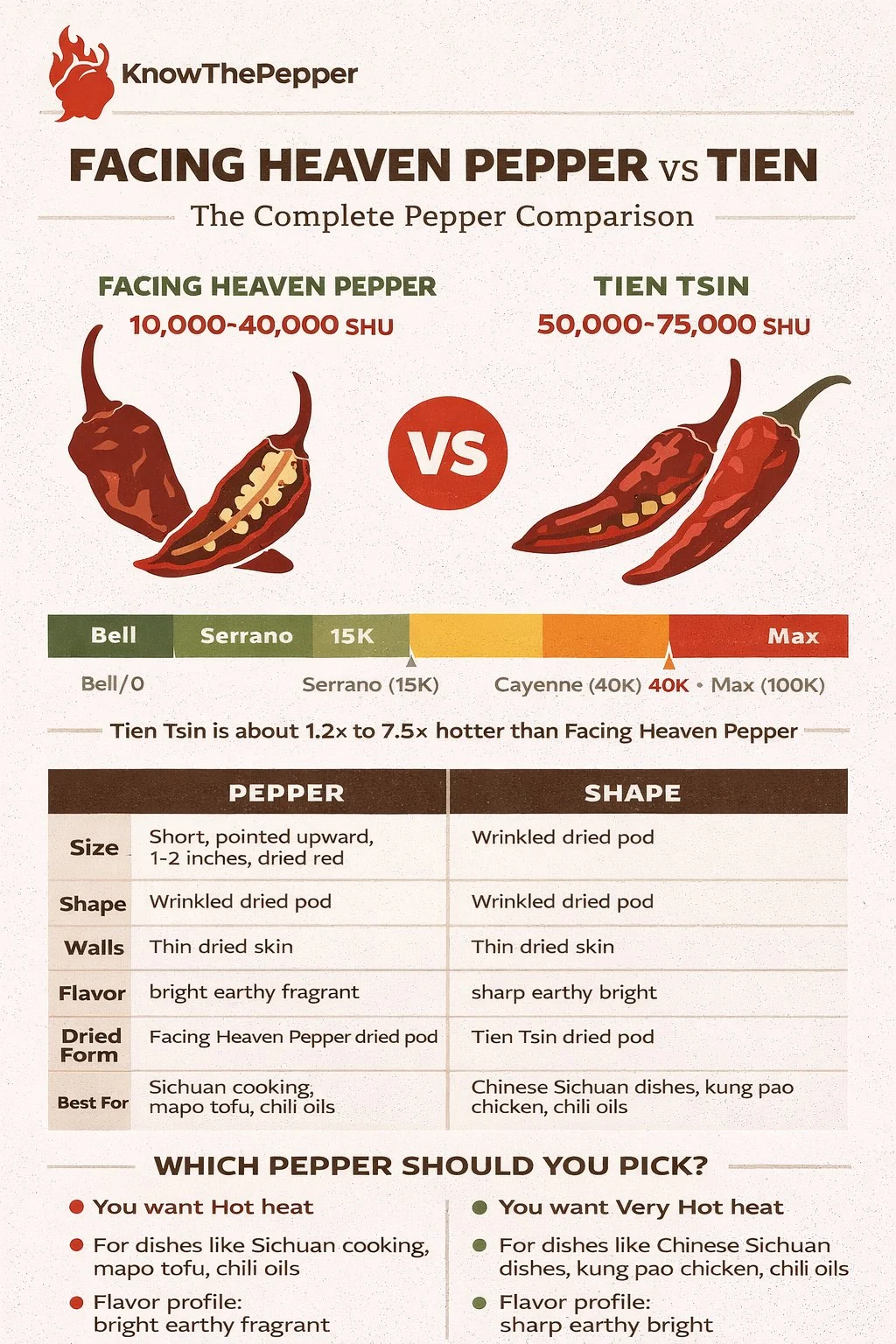
Facing Heaven Pepper measures 30K–50K SHU while Tien Tsin registers 50K–75K SHU — making Tien Tsin 2× hotter. Facing Heaven Pepper is known for its fruity and smoky flavor (C. annuum), while Tien Tsin offers sharp and smoky notes (C. annuum).
- Heat difference: Tien Tsin is 2× hotter
- Species: Both are C. annuum
- Best for: Facing Heaven Pepper excels in everyday cooking and salsas, Tien Tsin in hot sauces and spicy dishes
Facing Heaven Pepper
HotTien Tsin
HotFacing Heaven Pepper vs Tien Tsin Comparison
Facing Heaven Pepper vs Tien Tsin Heat Levels
Both peppers sit in the hot range on the Scoville rating system, though they occupy different positions within that band. Tien Tsin — sometimes called Tianjin pepper or Chinese red pepper — typically measures between 50,000 and 75,000 SHU, putting it roughly 3 to 4 times hotter than a guajillo chile. Facing Heaven (朝天椒, Chaotianjiao) runs slightly cooler at an estimated 30,000 to 50,000 SHU, or about 2 to 3 times hotter than guajillo.
The difference matters more in practice than the numbers suggest. Tien Tsin delivers heat that arrives fast — a sharp front-of-mouth burn that builds quickly when the pepper is fried in oil. Facing Heaven is slower and rounder, releasing capsaicin more gradually as it rehydrates or infuses into fat. That distinction affects how you use them: Tien Tsin is a blunt instrument for dishes that need immediate punch, while Facing Heaven gives you more control over the final heat level.
Both fall within the hot pepper intensity feel that serious cooks associate with Sichuan mala dishes. Neither approaches the scorching territory of a habanero or ghost pepper, but both will challenge anyone accustomed to mild or medium dried chilies. The capsaicin compounds in each pepper interact with pain receptors through a mechanism explained in detail in the why peppers burn receptor science literature — worth reading if you want to understand why oil temperature changes the perceived heat of both varieties.
Flavor Profile Comparison
The name comes from how the pods grow: straight up, facing the sky.
Named after the northern Chinese city now spelled Tianjin, this slender **C.
Start with the nose. Facing Heaven has a noticeably floral, slightly fruity aroma when toasted — there's a faint sweetness in the dried skin that releases before the heat even registers on the tongue. Tien Tsin smells sharper and more vegetal when dry-fried, closer to a thin cayenne than a complex dried ancho. That aromatic gap tells you a lot about how each pepper will perform in a finished dish.
On the palate, Facing Heaven brings mild sweetness alongside its heat, with a thin skin that dissolves quickly into sauces and braises. The flavor is clean but not one-dimensional — there's a subtle earthiness that rounds out the spice. Tien Tsin tastes hotter and drier, with less sweetness and a more linear heat profile. It's not as complex, but that simplicity is an asset in dishes where you want heat without competing flavor notes.
For dishes like Kung Pao chicken or mapo tofu, Facing Heaven's gentle fruitiness complements the fermented black bean and Sichuan peppercorn base without overwhelming it. Tien Tsin works better in chili oils and dry spice rubs where raw heat is the point. In pickled applications, Tien Tsin's firmer skin holds up better to brine, while Facing Heaven's thinner walls make it better suited to infusing oils and sauces quickly.
Aroma also shifts with cooking method. Both peppers bloom dramatically when added to hot oil — the classic Chinese technique of blooming dried chilies — but Facing Heaven's floral notes survive that process better than Tien Tsin's, which can turn slightly bitter if the oil gets too hot.
Culinary Uses for Facing Heaven Pepper and Tien Tsin
Facing Heaven earns its name from the way the fruit points skyward on the plant — and it earns its place in the kitchen through versatility. Use it whole in Sichuan dry-fried dishes, split and seeded in chili oils, or ground into spice blends. Because the skin is thin and the flavor is balanced, it rehydrates well for braised dishes and integrates smoothly into sauces without leaving tough bits behind.
For chili oil specifically, Facing Heaven is the more traditional choice in Sichuan kitchens. Combine it with Sichuan peppercorns, star anise, and a neutral oil heated to around 275°F (135°C) — hot enough to bloom the spices without scorching the pepper's delicate sweetness.
Tien Tsin is the pepper of choice when heat is the primary goal. It appears throughout Hunan cooking and in Americanized Chinese dishes like General Tso's chicken, where the visual presence of a whole red chili matters as much as the flavor. Its firmer texture means it holds its shape through long cooking, making it ideal for dishes where the pepper is meant to be seen but not necessarily eaten whole.
For substitution: if a recipe calls for Facing Heaven and you only have Tien Tsin, use about 70% of the quantity and expect sharper, less fruity heat. Going the other direction — subbing Facing Heaven for Tien Tsin — use 1.3x the amount and accept slightly less raw punch. Neither substitution is perfect, but both work in a pinch.
When comparing these two to other dried Asian chilies, the de arbol vs Tien Tsin heat and flavor matchup is worth reading — de arbol sits in a similar heat range but with a distinctly different flavor character rooted in Mexican rather than Chinese growing conditions.
Both peppers appear in Sichuan spice blends alongside white pepper, five-spice, and cumin. Ground Facing Heaven makes a subtler base; ground Tien Tsin punches harder. Mix them 60/40 (Facing Heaven dominant) for a balanced all-purpose Chinese chili powder that works across both cuisines.
Which Should You Choose?
Choose Facing Heaven when flavor complexity matters as much as heat — it's the better pepper for chili oils, braises, and dishes where the dried chili's character should come through in the finished sauce. Its slower heat release and floral aroma make it the more nuanced option of the two.
Reach for Tien Tsin when you need direct, unambiguous heat with less flavor interference. It's the right call for chili-forward stir-fries, dry spice rubs, and any dish where visual impact matters — the bright red skin holds up well under high heat.
For most home cooks, keeping both on hand is the practical answer. They're not interchangeable, but they complement each other well. Facing Heaven for finesse; Tien Tsin for force. If you cook Sichuan or Hunan food regularly, the dried chili flavor and heat differences between de arbol and Tien Tsin also makes useful reading for understanding where these Chinese varieties sit relative to Mexican dried chilies you might already stock.
Can You Substitute One for the Other?
Yes — direct substitution works. Facing Heaven Pepper and Tien Tsin are close enough in heat to swap at roughly 1:1. The main difference will be flavor. For more swap options, explore ranked alternatives with conversion ratios.
Growing Facing Heaven Pepper vs Tien Tsin
If you’re deciding which pepper to grow at home, consider your climate and patience level. Facing Heaven Pepper and Tien Tsin have different maturation times and temperature preferences. Hotter varieties generally need a longer, warmer growing season to develop their full capsaicin content. Our zone-based planting date tool can pinpoint the best sowing window for your area.
Facing Heaven performs best in warm climates with long summers - think USDA zones 8-11 for outdoor growing, though container cultivation extends the range considerably. Seeds germinate in 10-21 days at soil temperatures around 80-85°F.
The upright pod orientation isn't just aesthetically interesting - it actually helps with air circulation around the fruit, reducing fungal pressure during humid stretches. Plants reach 24-36 inches tall and benefit from staking once they're loaded with pods.
For companion planting strategy, the pepper companion planting guide covers what works well alongside C. annuum varieties like this one.
Tien Tsin is a rewarding garden pepper once it gets established, though germination requires patience. Start seeds indoors 8-10 weeks before last frost.
Transplant outdoors after all frost risk passes, spacing plants 18 inches apart in full sun. The plants grow to about 2-3 feet tall and tend to branch heavily, which means good airflow matters.
For a complete seed-starting germination walkthrough for hot pepper varieties, the basics apply here: consistent moisture without waterlogging, bright light from the start, and hardening off over 7-10 days before outdoor planting.
History & Origin of Facing Heaven Pepper and Tien Tsin
Both peppers carry centuries of culinary heritage. Facing Heaven Pepper traces its roots to China, while Tien Tsin originates from China. Understanding their backstory helps explain why each pepper developed its distinctive traits.
Buying & Storage
Whether you’re shopping for Facing Heaven Pepper or Tien Tsin, the same quality indicators apply. Fresh peppers should feel firm and heavy for their size, with taut, glossy skin and no soft or wet spots. Minor stem cracks known as “corking” are perfectly normal and often indicate a mature, flavorful pod.
- Firm pods with taut skin and consistent color
- Should feel heavy relative to size
- Minor stem cracks (“corking”) are normal
- Avoid anything soft, shriveled, or with dark wet spots
- Fresh: Paper bag, crisper drawer — 1–2 weeks
- Frozen: Wash, dry, freeze on sheet pan — 6+ months
- Dried: Airtight, away from light — up to 1 year
The Verdict: Facing Heaven Pepper vs Tien Tsin
Facing Heaven Pepper and Tien Tsin sit in the same heat tier but serve different roles. Tien Tsin delivers 2× more heat with its distinctive sharp and smoky character. Facing Heaven Pepper, with its fruity and smoky profile, excels in everyday cooking.
Frequently Asked Questions
Related Comparisons
Sources pending verification.