Dorset Naga vs Naga Viper: Heat, Flavor & Key Differences
The Dorset Naga and Naga Viper are two of England's most notorious super-hots, both born from Capsicum chinense genetics and capable of stopping an experienced chili cook in their tracks. The Dorset Naga spans 900,000-1,500,000 SHU with a wide heat variance, while the Naga Viper sits in a tighter 1,300,000-1,400,000 SHU band. Both deliver fruity, fierce heat — but their origins, consistency, and culinary behavior differ in meaningful ways.

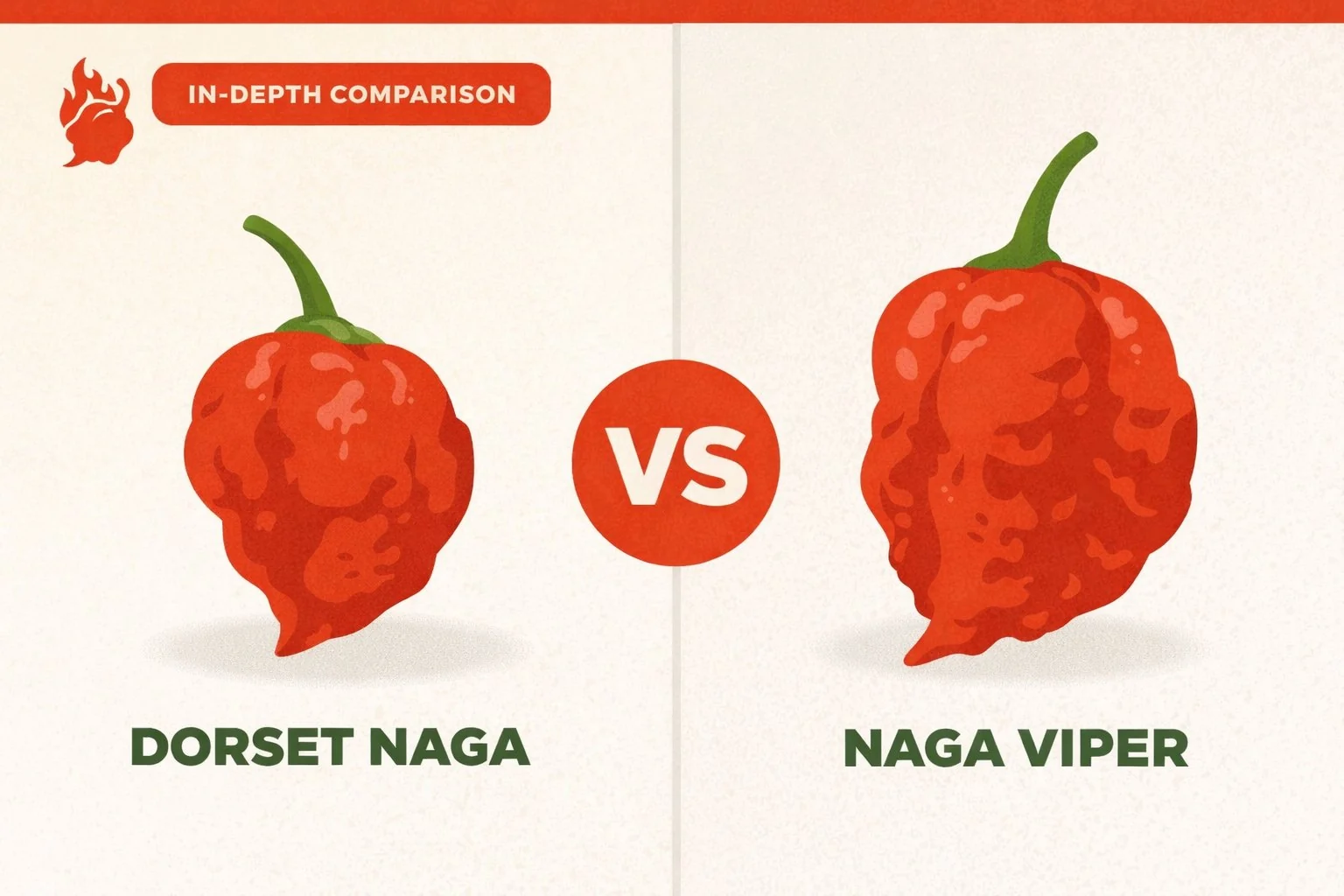
Dorset Naga measures 900K–1.5M SHU while Naga Viper registers 1.3M–1.4M SHU — roughly equal in heat. Dorset Naga is known for its fruity and intense flavor (C. chinense), while Naga Viper offers fruity and fierce notes (C. chinense).
- Species: Both are C. chinense
- Best for: Dorset Naga excels in hot sauces and extreme dishes, Naga Viper in hot sauces and spicy dishes
Dorset Naga
Super-HotNaga Viper
Super-HotDorset Naga vs Naga Viper Comparison
Dorset Naga vs Naga Viper Heat Levels
Before the numbers: biting into either of these peppers feels less like spice and more like a delayed detonation — the kind that starts as warmth at the tip of the tongue and spreads into a full-face flush within seconds. That experience is what puts both firmly in the super-hot intensity range alongside the world's most extreme varieties.
The Dorset Naga registers between 900,000 and 1,500,000 SHU, a range that reflects its natural variability — pod to pod, even plant to plant, the heat can shift dramatically depending on growing conditions, soil stress, and temperature. At peak, a Dorset Naga can hit roughly 9-10 times the heat of a Fresno chili (which averages around 150,000 SHU at its upper limit). At its lower end, it still clears 6x that benchmark.
The Naga Viper, by contrast, occupies a narrower window: 1,300,000-1,400,000 SHU. This tighter range is partly a function of its origin — it was deliberately bred by crossing multiple Naga varieties, producing a more stabilized (though still extreme) heat output. At that level, it runs about 8.5-9x hotter than a Fresno.
Where the two overlap — roughly 1.3 to 1.4 million SHU — they're essentially indistinguishable in practical terms. The difference only becomes apparent at the extremes: a top-end Dorset Naga can outpace the Naga Viper, while a lower-yielding Dorset pod might fall slightly behind. The capsaicin chemistry and receptor science behind both is similar — high concentrations of capsaicin and dihydrocapsaicin binding aggressively to TRPV1 receptors. Neither is appropriate for casual use without serious dilution.
Flavor Profile Comparison
Few peppers carry as much national pride as the Dorset Naga.
Most superhots are conversation pieces.
Strip away the heat for a moment and both peppers reveal a genuinely fruity character — the hallmark of Capsicum chinense genetics. But the way that fruitiness expresses itself differs between the two.
The Dorset Naga carries a bright, almost tropical fruitiness upfront — some growers describe notes of mango and citrus, particularly when the pod is fresh. The aroma is sharp and floral, and the fruit flavor lingers briefly before the heat takes over completely. It is intense in every sense: the flavor hits fast and the capsaicin follows almost immediately. There is little subtlety here, but the fruit notes are genuine and recognizable to anyone who has worked with habanero-adjacent varieties.
The Naga Viper leans fiercer in its flavor delivery — the fruity quality is present but slightly more compressed, as if the heat crowds it out faster. Where the Dorset Naga gives you a half-second of fruit before the burn, the Naga Viper tends to merge those sensations more aggressively. This is consistent with its hybrid nature: it was bred from multiple Naga strains, and the flavor profile reflects that blended origin rather than a single lineage's clean expression.
For cooking purposes, the Dorset Naga's slightly more open fruit character makes it marginally more useful in applications where flavor matters alongside fire — fermented hot sauces, fruit-forward chutneys, or small-batch pepper mashes. The Naga Viper's more compressed profile works better when heat is the primary goal and flavor is secondary. Neither pepper is something you use in volume; both function more like seasoning agents measured in fractions of a pod.
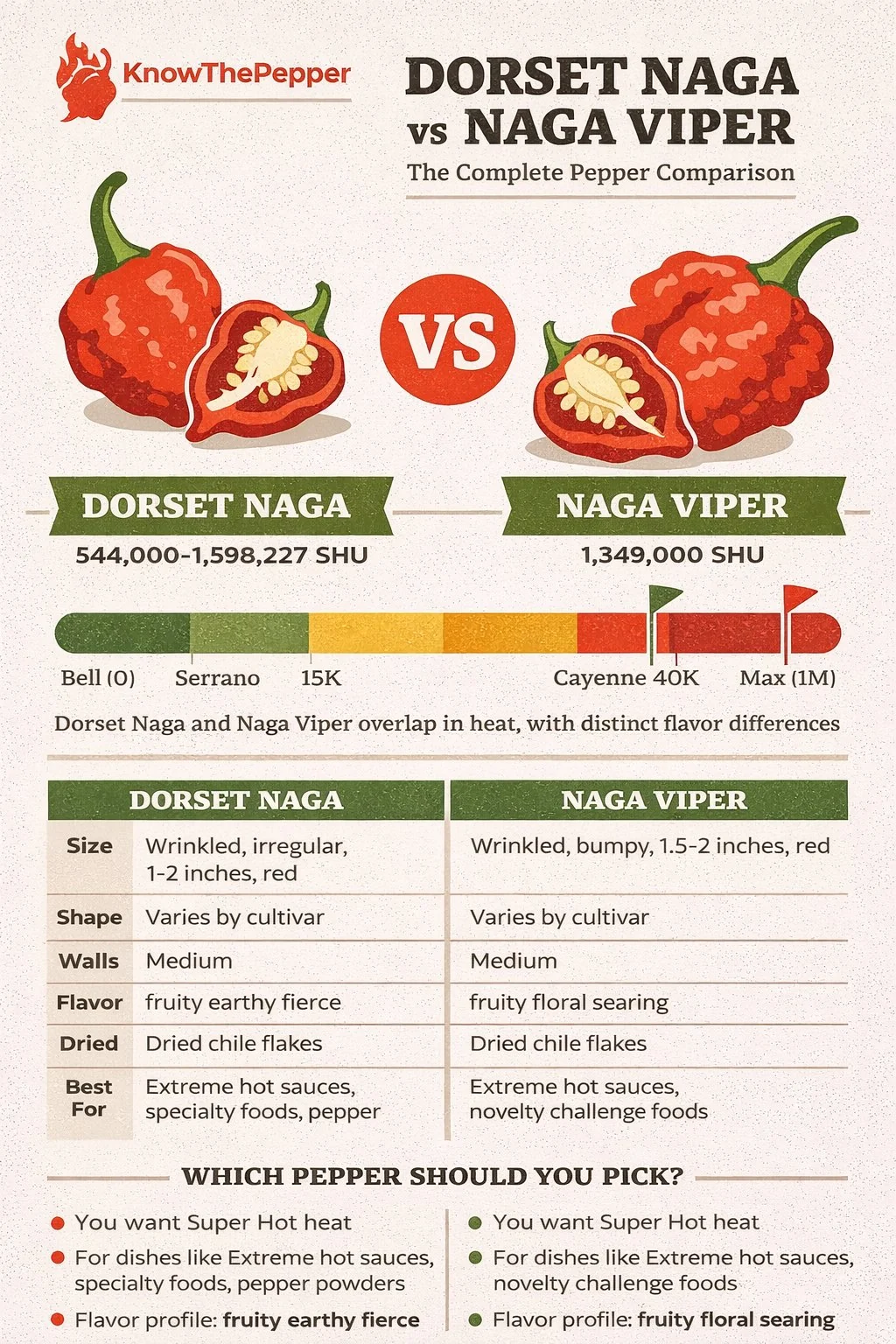
Culinary Uses for Dorset Naga and Naga Viper
Working with either of these peppers requires the same baseline respect: gloves, ventilation, and a very light hand with quantities. A single pod of either the Dorset Naga or the Naga Viper can season a multi-gallon batch of hot sauce without any additional heat source.
The Dorset Naga has a longer track record in UK artisan hot sauce production — its fruity brightness integrates well into vinegar-based sauces and fermented mashes where the acidity helps temper the raw capsaicin edge. A quarter of a fresh Dorset Naga pod, blended with roasted tomatoes and garlic, can produce a sauce with serious but manageable heat. Its flavor also holds reasonably well through cooking, making it usable in slow-cooked condiments.
For a side-by-side look at how Dorset Naga compares to its close relative, the Naga Morich comparison is worth reading — the flavor differences between those two are subtle but tell you a lot about what makes the Dorset strain distinct.
The Naga Viper is more of a specialist ingredient. Its heat consistency makes it useful when you want predictable fire in a product — extract-adjacent applications, ultra-hot challenge sauces, or small-batch condiments marketed specifically for heat seekers. Because it was bred for intensity, it excels in contexts where that intensity is the selling point.
Substitution between the two is straightforward at a 1:1 ratio, though you should account for the Dorset Naga's wider heat variance — a particularly hot Dorset pod will outperform a Naga Viper, while a milder one may slightly underperform. For either pepper, the closest practical substitute in most recipes is a dried Bhut Jolokia (ghost pepper), used at roughly 1.5x the volume to approximate the same heat level. The ghost pepper versus Naga Viper heat difference is worth understanding before making that swap.
Dried powder from either pepper is the most controlled format for kitchen use — a pinch (under 0.5g) is sufficient to add serious heat to a full pot of chili or curry without overwhelming the dish.
Which Should You Choose?
If consistency matters to you — whether for production, recipe development, or just knowing what you're getting — the Naga Viper's tighter 1,300,000-1,400,000 SHU range gives it an edge. You can calibrate around it more reliably.
If you want the ceiling — the maximum possible heat from a single pod — a top-end Dorset Naga at 1,500,000 SHU can exceed the Naga Viper. It also has a slightly more expressive fruit character, which matters in flavor-forward applications.
Both belong to the C. chinense botanical family and share the same British pepper growing heritage — the Dorset Naga through careful selection of a Bangladeshi strain in Dorset, the Naga Viper through deliberate hybridization in Cumbria. The Naga Viper's hybrid lineage is what gives it that compressed, focused heat character.
For most cooks: choose the Dorset Naga for flavor-led super-hot cooking. Choose the Naga Viper when maximum predictable heat is the goal. Either way, measure in fractions.
Can You Substitute One for the Other?
Proceed with caution. Dorset Naga is 1× hotter than Naga Viper.
Need a different option altogether? Search for peppers that match your target heat and flavor with precise swap ratios.
Growing Dorset Naga vs Naga Viper
If you’re deciding which pepper to grow at home, consider your climate and patience level. Dorset Naga and Naga Viper have different maturation times and temperature preferences. Hotter varieties generally need a longer, warmer growing season to develop their full capsaicin content. Our zone-based planting date tool can pinpoint the best sowing window for your area.
The Dorset Naga rewards growers who treat it like the tropical plant it fundamentally is. Start seeds 10-12 weeks before your last frost date - this variety needs a long season to hit its full heat and pod count.
Germination is the first test. Soil temperature should stay between 28-32°C (82-90°F) for reliable sprouting.
Once seedlings show their second true leaf set, move them to individual pots. The Dorset Naga develops a substantial root system - undersized containers restrict growth and reduce yield noticeably.
Growing the Naga Viper requires patience - this is not a pepper for first-season growers looking for quick results.
Seeds need 80-90 days from transplant to first ripe fruit, and that's assuming ideal conditions. Start seeds indoors 10-12 weeks before your last frost date.
The plants grow bushy and moderately tall, reaching 24-36 inches in a good season. They prefer full sun and well-draining soil with a pH around **6.
History & Origin of Dorset Naga and Naga Viper
Both peppers carry centuries of culinary heritage. Dorset Naga traces its roots to United Kingdom, while Naga Viper originates from England. Understanding their backstory helps explain why each pepper developed its distinctive traits.
Buying & Storage
Whether you’re shopping for Dorset Naga or Naga Viper, the same quality indicators apply. Fresh peppers should feel firm and heavy for their size, with taut, glossy skin and no soft or wet spots. Minor stem cracks known as “corking” are perfectly normal and often indicate a mature, flavorful pod.
- Firm pods with taut skin and consistent color
- Should feel heavy relative to size
- Minor stem cracks (“corking”) are normal
- Avoid anything soft, shriveled, or with dark wet spots
- Fresh: Paper bag, crisper drawer — 1–2 weeks
- Frozen: Wash, dry, freeze on sheet pan — 6+ months
- Dried: Airtight, away from light — up to 1 year
The Verdict: Dorset Naga vs Naga Viper
Dorset Naga and Naga Viper sit in the same heat tier but serve different roles. Dorset Naga delivers its distinctive fruity and intense character. Naga Viper, with its fruity and fierce profile, excels in everyday cooking.
Frequently Asked Questions
Related Comparisons
Sources pending verification.