Dorset Naga vs Naga Morich Showdown: Heat, Flavor & Uses
The Dorset Naga and Naga Morich are among the most closely related super-hot peppers on the planet — one bred in England from Bangladeshi stock, the other still grown wild across South Asia. Both land between 1,000,000 and 1,500,000 SHU, but their subtle differences in heat onset and culinary character make the comparison worth understanding.

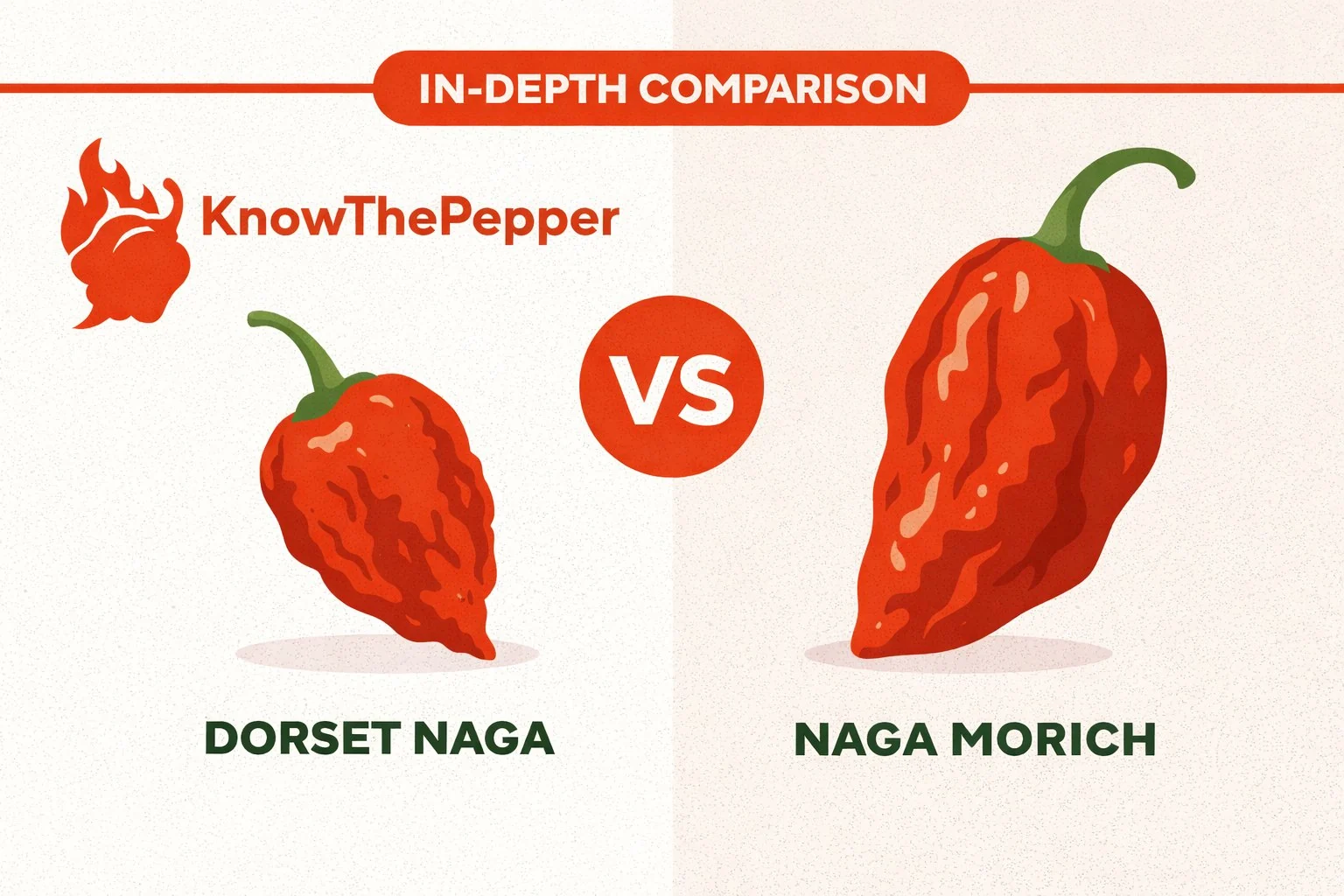
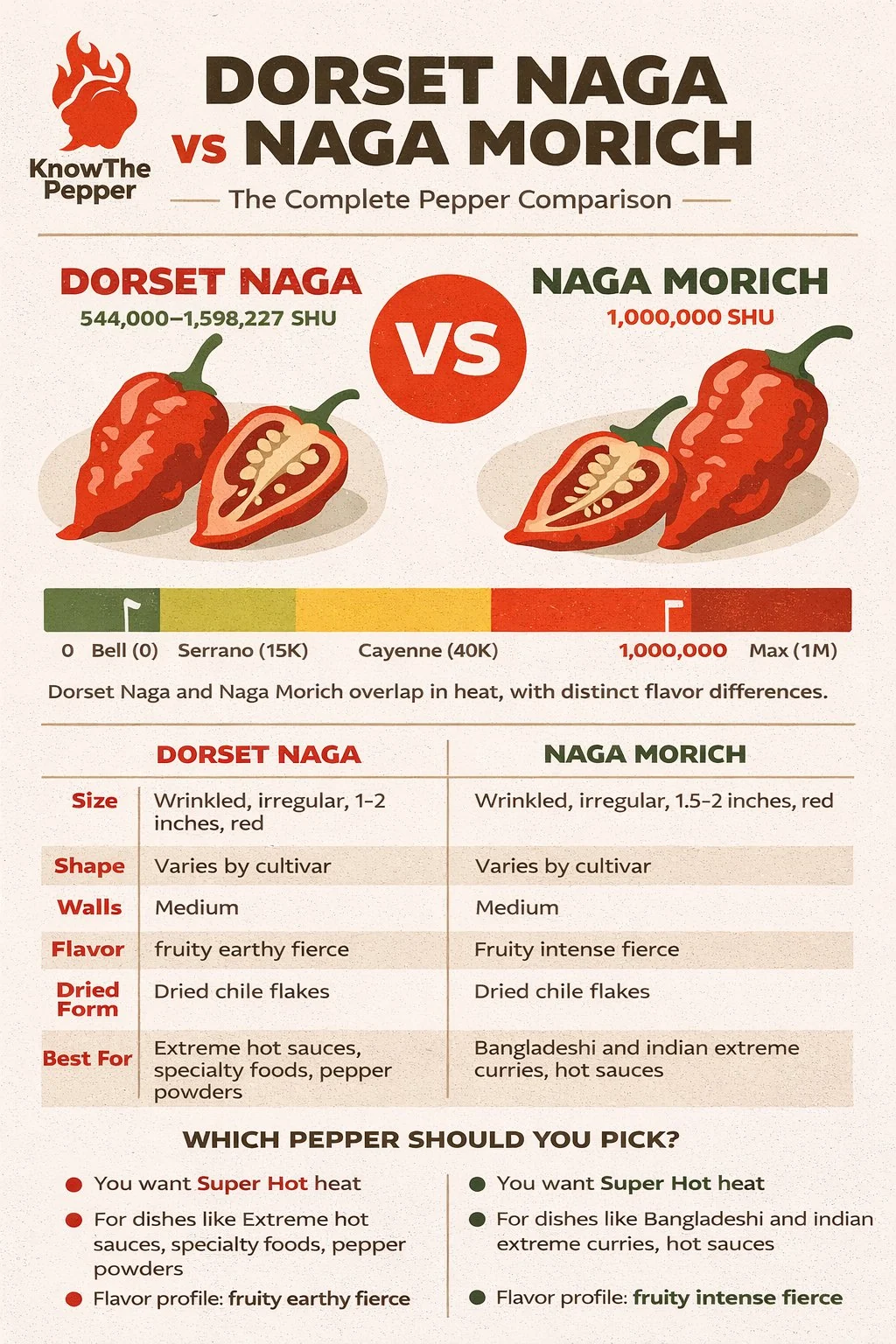
Dorset Naga measures 900K–1.5M SHU while Naga Morich registers 1M–1.5M SHU — roughly equal in heat. Dorset Naga is known for its fruity and intense flavor (C. chinense), while Naga Morich offers fruity and intense notes (C. chinense).
- Species: Both are C. chinense
- Best for: Dorset Naga excels in hot sauces and extreme dishes, Naga Morich in hot sauces and spicy dishes
Dorset Naga
Super-HotNaga Morich
Super-HotDorset Naga vs Naga Morich Comparison
Dorset Naga vs Naga Morich Heat Levels
On paper, these two peppers are nearly identical. The Naga Morich sits at 1,000,000-1,500,000 SHU, and the Dorset Naga overlaps almost completely at 900,000-1,500,000 SHU — both firmly in the super-hot tier that once represented the absolute ceiling of measured pepper heat.
To put that in serrano terms: a typical serrano peaks around 23,000 SHU. At its maximum, either of these peppers is roughly 65 times hotter than a serrano at its hottest. Even at minimum, the Naga Morich's 1,000,000 SHU floor is over 40 times more intense than a serrano's peak.
The Dorset Naga's slightly lower floor (900,000 SHU) reflects the natural variation that comes with selective breeding in a temperate UK climate — the same genetics expressing differently under less intense growing conditions. The Naga Morich, grown across Bangladesh and Northeast India, tends to be more consistent in its lower-range expression because it matures in conditions closer to its ancestral environment.
Both peppers use the same primary capsaicinoids — capsaicin and dihydrocapsaicin — and the capsaicin chemistry behind the burn is functionally identical between them. What differs slightly is the speed of onset: the Dorset Naga is often described as hitting faster, while the Naga Morich builds more gradually before reaching the same plateau. Neither is forgiving. Both require gloves during prep and serious respect in the kitchen.
Flavor Profile Comparison
Few peppers carry as much national pride as the Dorset Naga.
Here's what surprises most people: the Naga Morich predates the ghost pepper's fame by centuries, yet it's consistently treated as an afterthought.
Strip away the heat for a moment and both peppers reveal a genuinely fruity, floral character that's more complex than most super-hots. The flavor profile is close enough that blind tasting would challenge even experienced palates — but the differences are real.
The Naga Morich carries a deeper, almost fermented fruitiness — think overripe tropical fruit with a slight earthy undertone. Grown in the humid lowlands of Bangladesh and the Sylhet region, the pepper absorbs something from its terroir that shows up in its flavor. It's intensely aromatic, and the fruit notes persist even through the capsaicin assault.
The Dorset Naga was developed by Joy and Michael Michaud at their Dorset nursery from Naga Morich seeds brought from Bangladesh. The selective breeding process — choosing plants for heat and productivity in a cooler climate — also shaped the flavor. The result is slightly brighter and more citrus-forward, with the tropical fruit notes still present but cleaner and less earthy.
Both peppers share the characteristic C. chinense aroma — pungent, sweet, and distinctly different from the grassy smell of C. annuum peppers. That aroma intensifies dramatically when you cut them open, releasing volatile compounds that can irritate eyes and airways in an enclosed space.
For cooking applications where the pepper is the star, the Naga Morich's depth gives it an edge in fermented hot sauces and chutneys. The Dorset Naga's cleaner profile works better in fresh applications where you want fruit without earthiness.
Culinary Uses for Dorset Naga and Naga Morich
Neither pepper belongs in everyday cooking unless you're building heat-forward products designed for people who actively seek super-hot experiences. That said, both have legitimate culinary applications when used with precision.
Naga Morich is the traditional choice for Bangladeshi and Northeast Indian cooking — particularly in regional South Asian pepper traditions where the Naga has been used for generations in small quantities to add both heat and aroma to meat dishes, pickles, and chutneys. A single pod, seeds removed, can flavor a large pot of curry. The fermented fruit character also makes it exceptional for lacto-fermented hot sauces, where its complexity survives and deepens through the fermentation process.
The Dorset Naga found its initial audience in the UK's competitive hot sauce market. Its consistent heat and clean fruit flavor made it popular for commercial hot sauce production, where batch-to-batch predictability matters. Home cooks in the UK who grow it — cultivation in cool climates is actually viable with enough sun and a long enough season — use it similarly: small quantities in sauces, chutneys, and infused oils.
For substitution, the two peppers swap 1:1 in any recipe. If a Bangladeshi recipe calls for Naga Morich and you only have Dorset Naga, use the same quantity. The heat range is identical; the flavor difference is subtle enough that it won't change the dish meaningfully.
Both work well in: ghost pepper-style hot sauces (where you can see the heat gap between ghost pepper and Naga Morich playing out in flavor intensity), fermented condiments, infused vinegars, and dry spice blends where a small amount of powder adds serious heat. Dried and ground, both peppers lose some of their fruity brightness but retain full heat.
Start with 1/8 to 1/4 of a pod per serving if you're new to cooking with either. Even experienced hot pepper cooks rarely use a full pod in a dish meant for multiple people.
Which Should You Choose?
If you're choosing between these two for cooking, the Naga Morich wins on depth and tradition — it's the ancestral version, and its earthy-fruity complexity shines in fermented preparations and slow-cooked dishes. The Dorset Naga is the better choice for fresh applications and commercial-style hot sauces where a cleaner, brighter fruit note serves the product better.
For growing, the Dorset Naga has a practical edge for gardeners outside South Asia. It was specifically selected for productivity in cooler climates, and growers in the UK and similar temperate zones will find it more reliable. The Naga Morich needs warmth and a long season — it performs best in conditions closer to its origins. Both belong to the C. chinense species, so cultivation needs are broadly similar.
The honest answer is that these peppers are close enough that the difference rarely matters in practice. Both are extraordinary, both are genuinely dangerous if mishandled, and both reward cooks who treat them with the respect their heat demands. The Dorset Naga vs Naga Viper comparison shows how much further the heat ceiling goes — context that makes both of these feel almost approachable.
Can You Substitute One for the Other?
Yes — direct substitution works. Dorset Naga and Naga Morich are close enough in heat to swap at roughly 1:1. The main difference will be flavor. For more swap options, explore ranked alternatives with conversion ratios.
Growing Dorset Naga vs Naga Morich
If you’re deciding which pepper to grow at home, consider your climate and patience level. Dorset Naga and Naga Morich have different maturation times and temperature preferences. Hotter varieties generally need a longer, warmer growing season to develop their full capsaicin content. Our zone-based planting date tool can pinpoint the best sowing window for your area.
The Dorset Naga rewards growers who treat it like the tropical plant it fundamentally is. Start seeds 10-12 weeks before your last frost date - this variety needs a long season to hit its full heat and pod count.
Germination is the first test. Soil temperature should stay between 28-32°C (82-90°F) for reliable sprouting.
Once seedlings show their second true leaf set, move them to individual pots. The Dorset Naga develops a substantial root system - undersized containers restrict growth and reduce yield noticeably.
Starting Naga Morich from seed tests patience before it tests your palate. Germination typically takes 3-4 weeks at soil temperatures of 80-85°F - a heat mat is not optional at this stage, it's essential.
The step-by-step process for starting peppers indoors applies here with extra emphasis on the long growing season. Naga Morich needs 120-150 days from transplant to harvest, which means starting seeds indoors 10-12 weeks before your last frost date if you're in a temperate climate.
Plants grow tall - often 3-4 feet - and benefit from staking once pods develop. The weight of multiple wrinkled fruits on a single branch can cause breakage.
History & Origin of Dorset Naga and Naga Morich
Both peppers carry centuries of culinary heritage. Dorset Naga traces its roots to United Kingdom, while Naga Morich originates from India. Understanding their backstory helps explain why each pepper developed its distinctive traits.
Buying & Storage
Whether you’re shopping for Dorset Naga or Naga Morich, the same quality indicators apply. Fresh peppers should feel firm and heavy for their size, with taut, glossy skin and no soft or wet spots. Minor stem cracks known as “corking” are perfectly normal and often indicate a mature, flavorful pod.
- Firm pods with taut skin and consistent color
- Should feel heavy relative to size
- Minor stem cracks (“corking”) are normal
- Avoid anything soft, shriveled, or with dark wet spots
- Fresh: Paper bag, crisper drawer — 1–2 weeks
- Frozen: Wash, dry, freeze on sheet pan — 6+ months
- Dried: Airtight, away from light — up to 1 year
The Verdict: Dorset Naga vs Naga Morich
Dorset Naga and Naga Morich sit in the same heat tier but serve different roles. Dorset Naga delivers its distinctive fruity and intense character. Naga Morich, with its fruity and intense profile, excels in everyday cooking.
Frequently Asked Questions
Related Comparisons
Sources pending verification.