De Arbol vs Serrano Pepper: Heat, Flavor & Key Differences
De arbol and serrano are both staples of Mexican cooking, but they occupy very different roles in the kitchen. De arbol brings intense, dry heat with a nutty, smoky backbone - typically found dried or in sauces. Serrano sits in the fresh pepper lane: bright, grassy, and crisp with a clean medium-high bite that makes it a natural jalapeño upgrade.

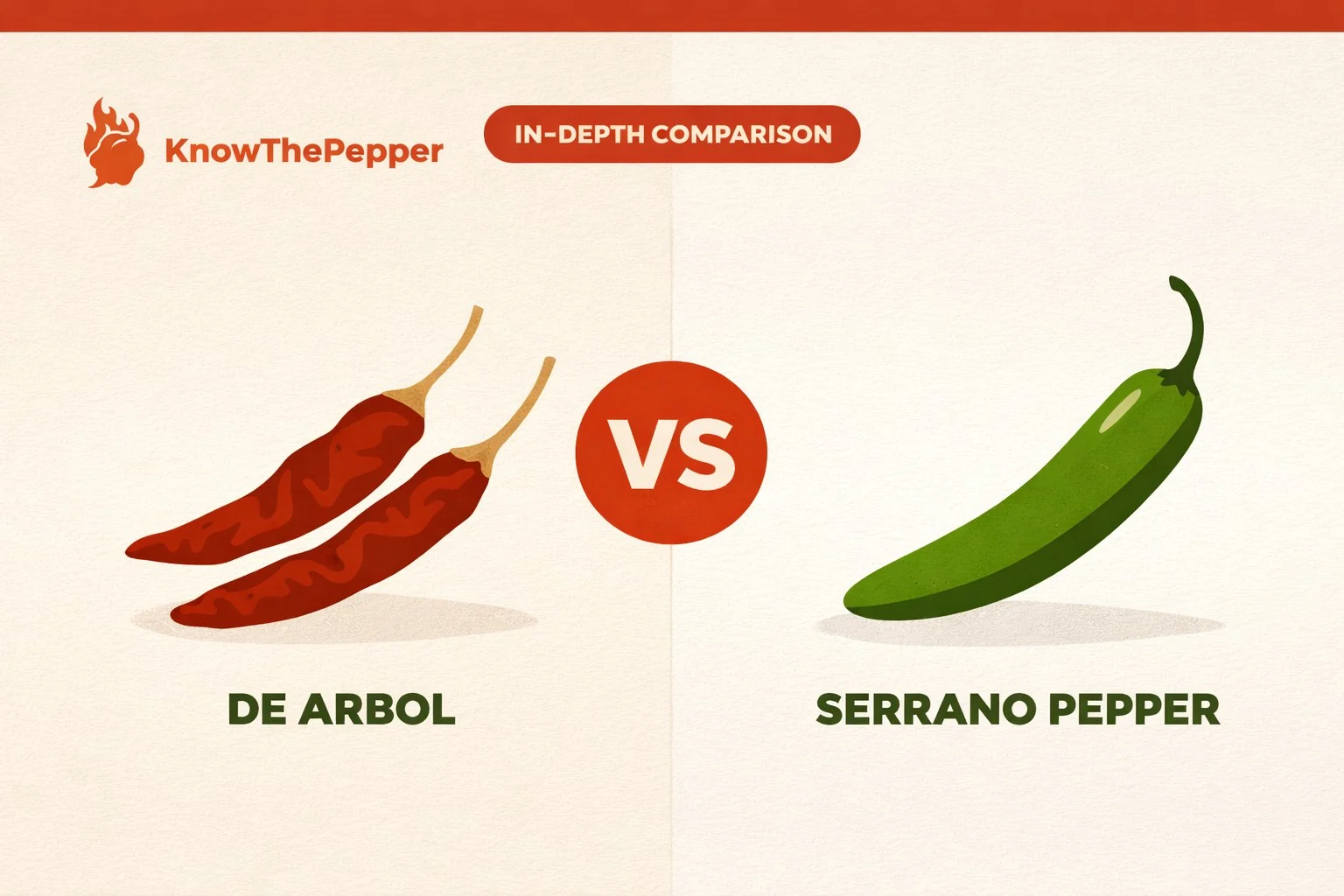
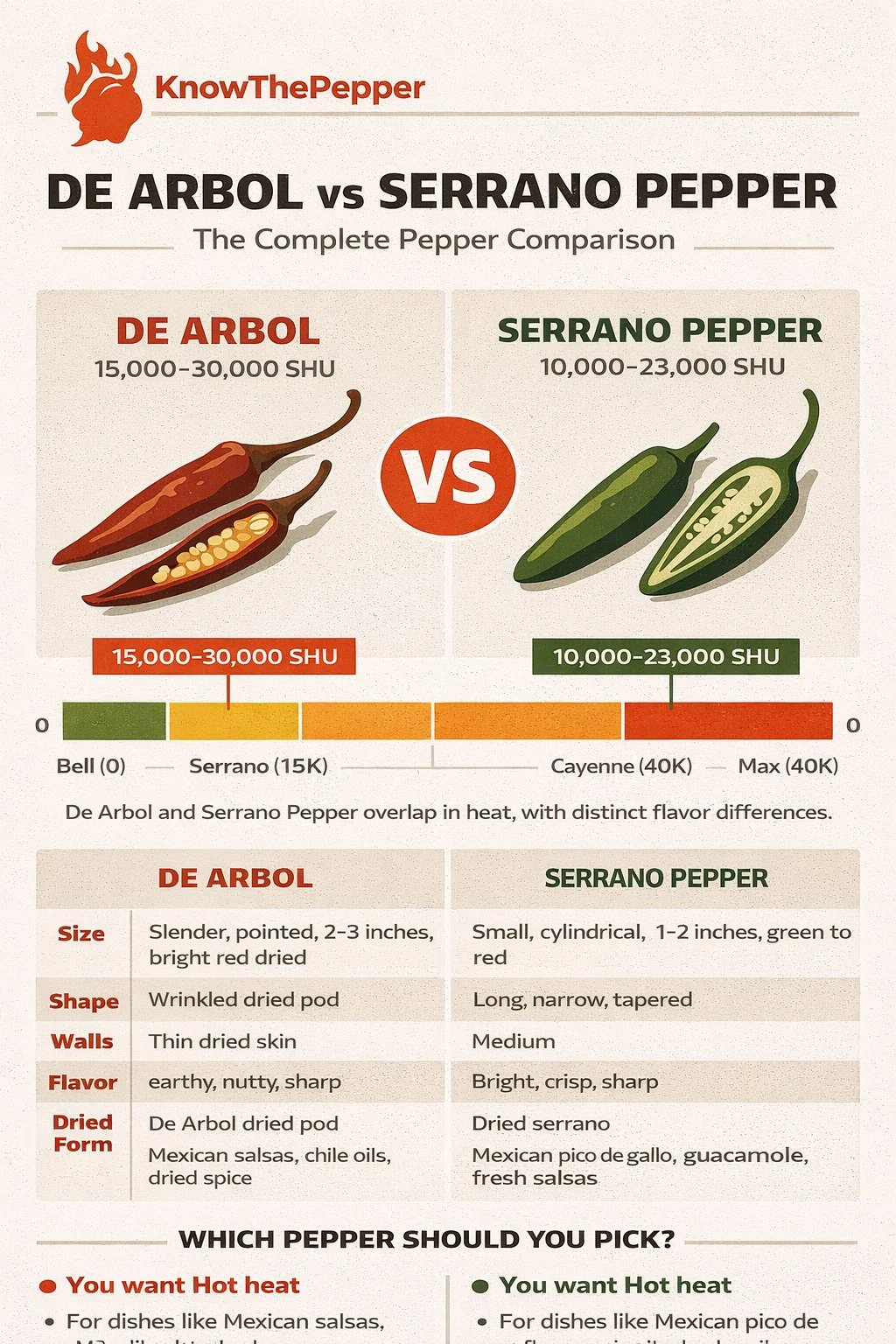
De Arbol measures 15K–30K SHU while Serrano Pepper registers 10K–23K SHU — roughly equal in heat. De Arbol is known for its smoky and nutty flavor (C. annuum), while Serrano Pepper offers bright and crisp notes (C. annuum).
- Species: Both are C. annuum
- Best for: De Arbol excels in everyday cooking and salsas, Serrano Pepper in fresh salsas and mild recipes
De Arbol vs Serrano Pepper Comparison
De Arbol vs Serrano Pepper Heat Levels
The de arbol pepper registers between 15,000 and 30,000 SHU, placing it firmly in the high-heat bracket - roughly 3 to 6 times hotter than a typical serrano. The serrano lands between 10,000 and 23,000 SHU, which is no lightweight, but the ceiling is noticeably lower.
For context on that SHU rating methodology and scale, de arbol sits at roughly twice the floor of a serrano's range, but the two overlap more than people expect at their respective midpoints. A hot serrano at 20,000 SHU isn't that far behind a mild de arbol at 15,000.
The character of the heat differs as much as the intensity. De arbol builds slowly and lingers - a dry, penetrating burn that settles in the back of the throat. This is partly due to how the pepper is almost always consumed: dried, toasted, or rehydrated, which concentrates the capsaicinoids. The chemistry behind that slow-building receptor activation explains why dried chiles often feel hotter than their SHU numbers suggest.
Serrano heat is sharper and more immediate. It hits the front of the mouth first, peaks quickly, and dissipates faster. Fresh serranos also carry more water content, which dilutes the burn slightly even at the same SHU level. If you want a high-heat SHU bracket comparison that maps where both peppers sit relative to habaneros and chipotles, the difference in perceived intensity becomes clearer than raw numbers alone suggest.
Flavor Profile Comparison
The first time a de arbol found its way into my kitchen, I mistook it for a decorative dried chili.
Bite into a raw serrano and the first thing you notice is the aroma — green, grassy, almost herbal, like a jalapeño that decided to be serious.
These two peppers share almost nothing in flavor beyond a baseline spiciness. Serrano is the fresher, brighter option - grassy and vegetal with a clean snap, similar to a jalapeño but sharper and less sweet. There's a slight citrus note in a raw serrano that makes it excellent straight in salsas or sliced over tacos without any cooking required.
De arbol, by contrast, is almost always encountered in its dried form, which transforms the flavor entirely. Dried de arbol has a pronounced nuttiness - some tasters pick up hints of toasted sesame or even a faint smokiness, though it lacks the deep earthiness of an ancho or guajillo. The heat comes with a slightly acidic, tannic edge that's characteristic of thin-skinned dried chiles.
When de arbol is toasted before use (the standard approach in Mexican cooking), the flavor deepens further. You get more complexity, a hint of dried fruit, and that distinctive dry-heat finish. Compare that to a de arbol versus guajillo side-by-side on flavor depth and earthiness and you'll see how de arbol is the leaner, sharper option even among dried Mexican chiles.
Serrano's flavor holds up well to heat but doesn't transform as dramatically when cooked. Roasting a serrano softens the grassiness and adds a mild sweetness, but it stays fundamentally fresh-tasting. This makes serrano versatile across raw and cooked applications in a way that de arbol simply isn't - dried de arbol needs liquid and heat to fully express itself.
Culinary Uses for De Arbol and Serrano Pepper
Serrano is the go-to fresh chile for salsas, pico de gallo, guacamole, and anything where you want visible green pepper with a clean bite. Slice it thin for tacos al pastor, mince it into marinades, or blend it raw into salsa verde. Because serrano holds its texture well, it also works pickled - the swap options for fresh serrano in pickling and raw applications are surprisingly limited because few peppers match that specific grassy brightness.
For cooked applications, serrano shines in chile oil, stir-fries, and curries where fresh pepper gets some heat exposure. It softens nicely without turning mushy, and the flavor mellows into something rounder.
De arbol operates on a different timeline entirely. The standard technique is to toast dried de arbol in a dry skillet for 30 to 60 seconds per side until fragrant, then rehydrate in hot water before blending. This forms the base of countless red salsas and enchilada sauces across Mexico. The pepper's thin skin means it rehydrates quickly compared to thicker-skinned dried chiles.
De arbol also works well infused into oils and vinegars - drop a few whole dried pods into a bottle of oil and within a week you have a genuinely fiery condiment. For a de arbol versus japones comparison on dried chile applications, the two are close enough that either can anchor a red sauce, though de arbol tends to have more flavor complexity.
Substitution math: if a recipe calls for 1 serrano, use roughly half a dried de arbol (rehydrated) to match heat without overwhelming the dish with that nutty dried-chile flavor. Going the other direction, 1 dried de arbol can be replaced with 2 fresh serranos in cooked sauces, though you lose the toasted depth.
For anyone comparing serrano versus cayenne in terms of fresh heat delivery, serrano consistently wins on flavor complexity - cayenne is hotter but one-dimensional by comparison.
Which Should You Choose?
Choose serrano when you want fresh, bright heat that integrates cleanly into raw dishes or light cooking. It's the better everyday fresh chile - more flavorful than jalapeño, more available than Thai bird's eye, and consistent enough to use without much adjustment.
Choose de arbol when you're building a cooked sauce, a chile oil, or any dish that benefits from that dry, nutty heat character. It's a pantry pepper - dried, shelf-stable, and capable of adding a different dimension than any fresh chile can replicate.
The two rarely compete directly in the same recipe context. Serrano belongs in your refrigerator; de arbol belongs in your spice cabinet. If you're stocking a kitchen for Mexican cooking specifically, you want both. For a full germination and cultivation guide if you want to grow either variety yourself, serrano is the easier beginner plant - de arbol grows taller and takes longer to mature but produces prolifically once established.
Can You Substitute One for the Other?
Yes — direct substitution works. De Arbol and Serrano Pepper are close enough in heat to swap at roughly 1:1. The main difference will be flavor. For more swap options, explore ranked alternatives with conversion ratios.
Growing De Arbol vs Serrano Pepper
If you’re deciding which pepper to grow at home, consider your climate and patience level. De Arbol and Serrano Pepper have different maturation times and temperature preferences. Hotter varieties generally need a longer, warmer growing season to develop their full capsaicin content. Our zone-based planting date tool can pinpoint the best sowing window for your area.
De arbol is a reliable producer once established, though it demands heat to perform. Start seeds indoors 8-10 weeks before last frost — germination runs 10-14 days at soil temperatures around 80-85°F.
Transplant outdoors only after nighttime temps stay consistently above 55°F. De arbol needs full sun and well-drained soil; waterlogged roots stall growth quickly.
Pods mature from green to bright red in 80-90 days from transplant. The plants set fruit prolifically — a single established plant can carry dozens of pods simultaneously.
Serranos are reliable producers that reward patient gardeners. Start seeds indoors 8–10 weeks before last frost — germination takes 10–21 days at soil temperatures around 80–85°F.
Transplant outdoors once nighttime temps stay above 55°F. Space plants 18–24 inches apart in full sun with well-draining soil amended with compost.
Days to maturity runs 70–80 days from transplant to green-ripe. Letting pods fully ripen to red adds another 2–3 weeks but intensifies both flavor and heat.
History & Origin of De Arbol and Serrano Pepper
Both peppers carry centuries of culinary heritage. De Arbol traces its roots to Mexico, while Serrano Pepper originates from Mexico. Understanding their backstory helps explain why each pepper developed its distinctive traits.
Buying & Storage
Whether you’re shopping for De Arbol or Serrano Pepper, the same quality indicators apply. Fresh peppers should feel firm and heavy for their size, with taut, glossy skin and no soft or wet spots. Minor stem cracks known as “corking” are perfectly normal and often indicate a mature, flavorful pod.
- Firm pods with taut skin and consistent color
- Should feel heavy relative to size
- Minor stem cracks (“corking”) are normal
- Avoid anything soft, shriveled, or with dark wet spots
- Fresh: Paper bag, crisper drawer — 1–2 weeks
- Frozen: Wash, dry, freeze on sheet pan — 6+ months
- Dried: Airtight, away from light — up to 1 year
The Verdict: De Arbol vs Serrano Pepper
De Arbol and Serrano Pepper sit in the same heat tier but serve different roles. De Arbol delivers its distinctive smoky and nutty character. Serrano Pepper, with its bright and crisp profile, excels in everyday cooking.
Frequently Asked Questions
Related Comparisons
Sources pending verification.