Bishop's Crown vs Lemon Drop: Which Pepper Should You Use?
Bishop's Crown and Lemon Drop are two peppers that look nothing alike and taste even more different. One is a mild, bell-shaped curiosity with almost no heat; the other is a bright, citrusy Peruvian pepper with a genuine kick. Knowing which to reach for depends entirely on what your dish needs.

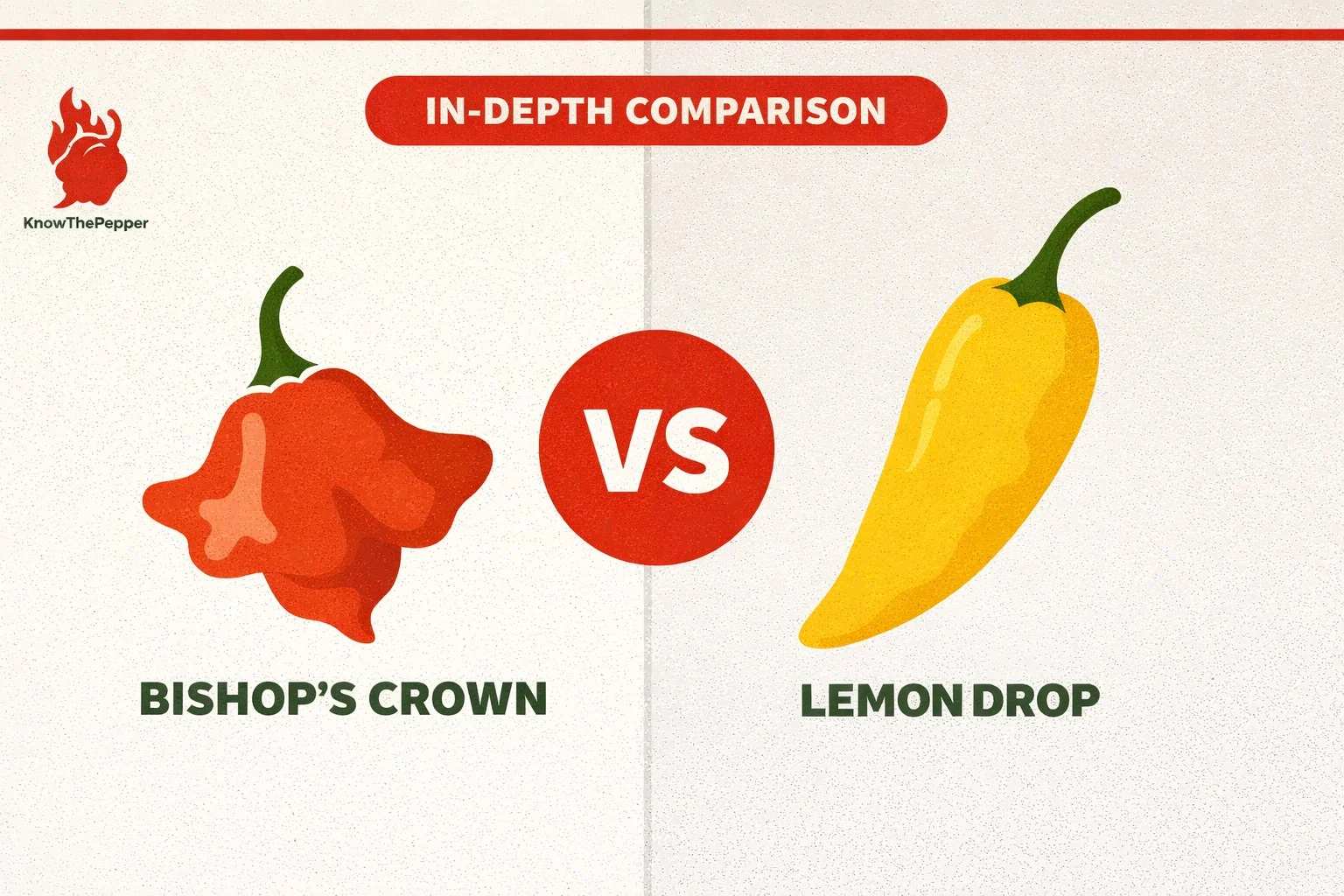
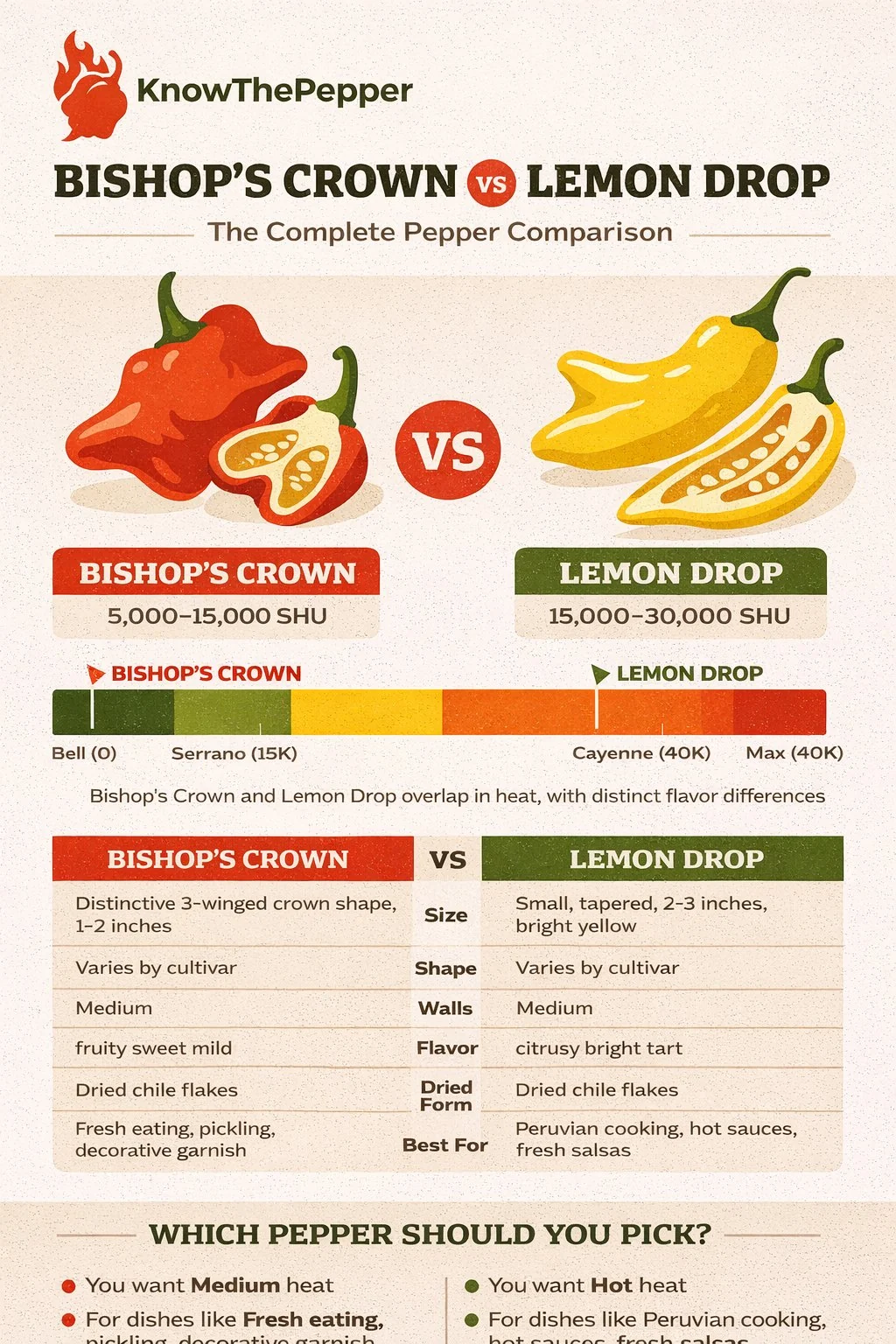
Bishop's Crown measures 5K–30K SHU while Lemon Drop registers 15K–30K SHU — roughly equal in heat. Bishop's Crown is known for its fruity and sweet flavor (C. baccatum), while Lemon Drop offers citrusy and bright notes (C. baccatum).
- Species: Both are C. baccatum
- Best for: Bishop's Crown excels in everyday cooking and salsas, Lemon Drop in fresh salsas and mild recipes
Bishop's Crown
HotLemon Drop
HotBishop's Crown vs Lemon Drop Comparison
Bishop's Crown vs Lemon Drop Heat Levels
Both peppers register at the lower end of the Scoville scale's rating system, but they are not equal — not even close.
Bishop's Crown sits at essentially 0 SHU, making it functionally heatless. Its unusual three-winged shape catches eyes at farmers markets, but your palate won't register any burn whatsoever. Compared to a Fresno pepper (averaging around 6,000 SHU), Bishop's Crown delivers zero fraction of that heat — it's a decorative and culinary pepper, not a heat source.
Lemon Drop, known in Peru as aji limon, typically ranges from 15,000 to 30,000 SHU. That puts it at roughly 2.5 to 5 times milder than a Fresno, but still enough to produce a clear, noticeable warmth — especially on the back of the throat. It sits comfortably in the mild-to-medium intensity feel of the pepper world, where heat is present but not punishing.
The burn character differs too. Lemon Drop's heat arrives quickly and fades at a moderate pace, with a clean citrus finish that softens the experience. Bishop's Crown, having no capsaicin to speak of, offers none of that progression — just pure sweet pepper flavor from start to finish.
For cooks who want heat alongside fruit-forward brightness, Lemon Drop is the clear choice. For those building flavor without any fire, Bishop's Crown is hard to beat.
Flavor Profile Comparison
Few peppers stop people mid-row in the garden the way the Bishop's Crown does.
Long before it appeared in specialty seed catalogs, the lemon drop was a staple of Peruvian markets under the name ají amarillo de la selva or simply mirasol amarillo — though it is distinct from the more famous ají amarillo grown across the Andes.
Flavor is where this comparison gets genuinely interesting, because both peppers lean fruity — just in completely different directions.
Bishop's Crown has a crisp, sweet flavor reminiscent of a mild bell pepper crossed with a hint of something floral. Its thick walls hold a lot of water, giving fresh slices a satisfying crunch. The taste is clean and slightly grassy, with no bitterness. Some growers note a faintly apple-like quality when the pepper is fully ripe and red. It's a pepper that contributes body and sweetness to a dish without asserting itself.
Lemon Drop is far more assertive. The name is earned — ripe yellow Lemon Drops carry a sharp citrus note that genuinely resembles lemon zest, sometimes edging toward passion fruit or mango depending on ripeness and growing conditions. The brightness is the defining characteristic, and it integrates heat and acid in a way that feels almost like a built-in seasoning. Peruvian cooks have relied on this quality for generations in sauces and ceviches.
Aroma also separates them. Lemon Drop has a pungent, tropical fragrance that announces itself when you slice into it. Bishop's Crown smells mild and fresh, more like a sweet pepper than anything tropical.
In cooking, Lemon Drop's citrus punch means you can often reduce or eliminate added lemon juice in a recipe. Bishop's Crown adds visual drama and sweetness but won't alter a dish's acid balance. They are rarely interchangeable, which makes understanding each one's role all the more important.
Culinary Uses for Bishop's Crown and Lemon Drop
Stuffed Bishop's Crown peppers are a natural starting point — the three-winged cavity is practically designed for fillings. Cream cheese, herbed ricotta, or a mixture of feta and roasted garlic all work beautifully. The pepper holds its shape when roasted at 400°F (200°C) for about 20 minutes, and the mild sweetness plays well against salty, savory fillings.
Beyond stuffing, Bishop's Crown excels pickled. Its firm walls and neutral heat make it ideal for quick-pickling in a white wine vinegar brine — the result is a tangy, crunchy condiment that works on charcuterie boards, sandwiches, or alongside grilled fish. Fresh, the wings can be sliced into rings for salads, where the shape adds visual interest.
Lemon Drop shines in applications where you want both heat and acid. Peruvian aji de gallina and fresh ceviches are classic homes for this pepper — its brightness cuts through rich, creamy sauces and lifts the clean flavors of raw seafood. For a comparison of how Lemon Drop stacks up against another Peruvian staple, the citrus-versus-fruity heat matchup with aji amarillo is worth understanding before you shop.
Lemon Drop also makes exceptional hot sauce. Blended with garlic, lime juice, and a touch of honey, it produces a sauce that works on tacos, eggs, and grilled chicken without the one-dimensional burn of hotter peppers. Dried and ground, it becomes a finishing powder that adds both heat and acidity — sprinkle it on popcorn or roasted vegetables.
If you need a Lemon Drop substitute and want to stay in the fruity, tangy lane, the small but fierce heat profile of aji charapita vs Lemon Drop comparison outlines the tradeoffs clearly. For Bishop's Crown, a sweet Italian pepper or even a mini bell pepper works as a stand-in, though you'll lose the distinctive shape.
Substitution ratio: when replacing Lemon Drop in cooked dishes, use 1.5x the volume of a milder fruity pepper and add a squeeze of fresh lemon to compensate for the lost acidity.
Which Should You Choose?
Choose Bishop's Crown when the dish needs sweetness, visual drama, or a heatless pepper that holds its structure — stuffed preparations, pickles, and fresh salads are its territory. It's also a genuinely fun pepper to grow, producing heavy yields of eye-catching fruit that impress guests before anyone takes a bite.
Lemon Drop belongs in your kitchen when you want heat and citrus acid working together. Sauces, ceviches, hot sauces, and spice rubs all benefit from its dual contribution. Peruvian cooking uses it as a foundational ingredient for good reason — nothing else quite replicates that combination of brightness and warmth.
They are not competitors so much as tools for different jobs. A cook who grows both has covered a lot of ground: one pepper for flavor and form, one for heat and acid. If forced to pick just one for general kitchen use, Lemon Drop is more versatile across a wider range of recipes. But if heat is off the table entirely, Bishop's Crown is the more interesting mild pepper you can grow.
Can You Substitute One for the Other?
Yes — direct substitution works. Bishop's Crown and Lemon Drop are close enough in heat to swap at roughly 1:1. The main difference will be flavor. For more swap options, explore ranked alternatives with conversion ratios.
Growing Bishop's Crown vs Lemon Drop
If you’re deciding which pepper to grow at home, consider your climate and patience level. Bishop's Crown and Lemon Drop have different maturation times and temperature preferences. Hotter varieties generally need a longer, warmer growing season to develop their full capsaicin content. Our zone-based planting date tool can pinpoint the best sowing window for your area.
Bishop's Crown is a rewarding garden plant, but it has specific preferences that separate thriving plants from struggling ones. Start seeds 8–10 weeks before last frost indoors.
This pepper is a natural fit for container growing. Check the practical guidance on growing peppers in containers if you are working with limited space — Bishop's Crown adapts well to 5-gallon pots or larger, and the ornamental shape makes it genuinely attractive on a patio.
For those comparing cultivation approaches, De Arbol's cultivation characteristics — its preference for heat and full sun — overlap with what Bishop's Crown needs: 6–8 hours of direct sun daily and well-draining soil with consistent moisture.
The hardest part of growing lemon drops is patience with fruit set. Like most baccatums, this plant grows large — often 3–4 feet tall — and will produce abundant foliage before committing to fruit.
Germination itself is straightforward at 80–85°F soil temperature, but the long 90–100 day maturity window means starting seeds indoors 10–12 weeks before last frost is not optional in most of North America. The plant needs a long season to hit its stride.
Lemon drops thrive in containers — a 5-gallon pot is the minimum, though 7–10 gallons produces noticeably larger harvests. If you're working with pots, check our container pepper guide before choosing your mix, since baccatums are sensitive to waterlogged roots.
History & Origin of Bishop's Crown and Lemon Drop
Both peppers carry centuries of culinary heritage. Bishop's Crown traces its roots to Barbados, while Lemon Drop originates from Peru. Understanding their backstory helps explain why each pepper developed its distinctive traits.
Buying & Storage
Whether you’re shopping for Bishop's Crown or Lemon Drop, the same quality indicators apply. Fresh peppers should feel firm and heavy for their size, with taut, glossy skin and no soft or wet spots. Minor stem cracks known as “corking” are perfectly normal and often indicate a mature, flavorful pod.
- Firm pods with taut skin and consistent color
- Should feel heavy relative to size
- Minor stem cracks (“corking”) are normal
- Avoid anything soft, shriveled, or with dark wet spots
- Fresh: Paper bag, crisper drawer — 1–2 weeks
- Frozen: Wash, dry, freeze on sheet pan — 6+ months
- Dried: Airtight, away from light — up to 1 year
The Verdict: Bishop's Crown vs Lemon Drop
Bishop's Crown and Lemon Drop sit in the same heat tier but serve different roles. Bishop's Crown delivers its distinctive fruity and sweet character. Lemon Drop, with its citrusy and bright profile, excels in everyday cooking.
Frequently Asked Questions
Related Comparisons
Sources pending verification.