
Bell Pepper vs Paprika Pepper: Key Differences Explained
Bell peppers and paprika peppers both register 0 SHU on the Scoville scale, meaning neither delivers any heat — but that shared number masks dramatically different flavor profiles, culinary roles, and physical characteristics. Bell peppers are eaten fresh as a vegetable; paprika peppers are dried and ground into a spice. Understanding which to reach for (and when) changes how your cooking lands.

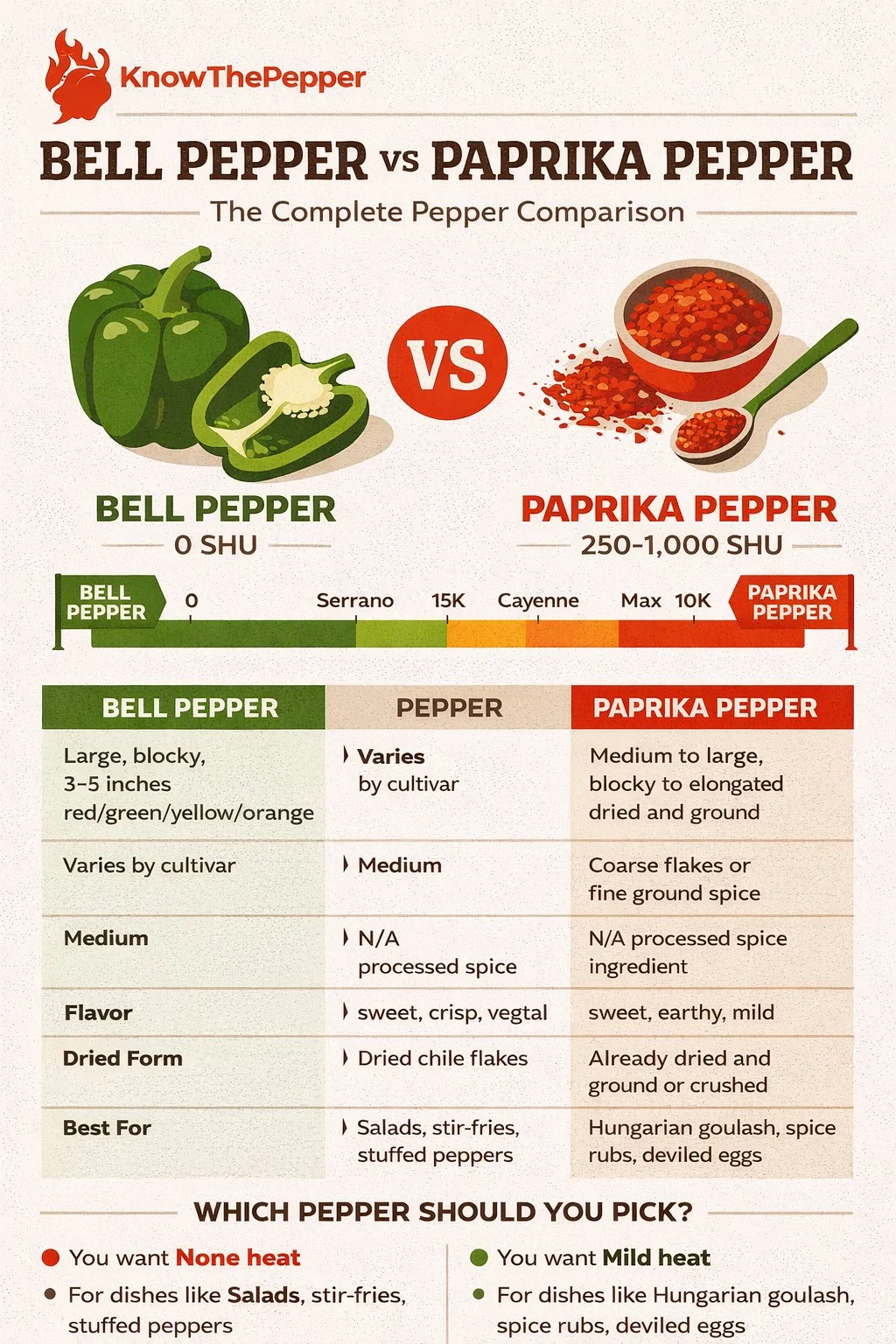
Bell Pepper measures 0–0 SHU while Paprika Pepper registers 0–1K SHU — roughly equal in heat. Bell Pepper is known for its sweet and crisp flavor (C. annuum), while Paprika Pepper offers sweet and mild notes (C. annuum).
- Species: Both are C. annuum
- Best for: Bell Pepper excels in everyday cooking and salsas, Paprika Pepper in fresh salsas and mild recipes
Bell Pepper vs Paprika Pepper Comparison
Bell Pepper vs Paprika Pepper Heat Levels
Both peppers sit at 0 SHU, placing them firmly in the zero-heat sweet pepper category alongside pimentos and banana peppers. There is no capsaicin present in either — none of the heat trigger chemistry that makes other peppers burn. On a Scoville unit definition basis, they are identical: completely non-pungent.
Compared to a guajillo (typically 2,500-5,000 SHU), both bell and paprika peppers are infinitely milder — the guajillo carries thousands of times more capsaicin. That comparison underscores just how far toward the sweet end of the spectrum both peppers land.
Where they differ is not heat but heat character in the mouth. Fresh bell peppers have a clean, watery crunch with zero lingering sensation. Dried paprika powder, by contrast, can create a subtle warmth from concentrated sugars and aromatic compounds — not capsaicin, but the perception of depth. Some paprika varieties (notably hot paprika) are blended with small amounts of hotter peppers to introduce mild pungency, but the base paprika pepper itself contributes no measurable SHU.
For cooks avoiding any spice whatsoever, both are safe. For those wanting a spice-rack ingredient that mimics the idea of heat without the burn, paprika powder is the more convincing actor of the two.
Flavor Profile Comparison
Bell peppers are the only members of [C.
Paprika peppers sit at the mildest end of the pepper spectrum, delivering sweetness with almost no perceptible heat - a stark contrast to even the gentlest Fresno, which runs roughly 2,500 to 10,000 SHU by comparison.
Fresh bell peppers taste grassy, slightly sweet, and vegetal — the green ones lean bitter and sharp, while red, orange, and yellow bells develop fruity sweetness as they ripen. The water content is high, which dilutes flavor intensity. Roasting concentrates the sugars and produces a smoky-sweet depth that's entirely different from the raw version.
Paprika peppers are bred specifically for drying, with thicker flesh and lower moisture. Once dried and ground, the flavor becomes earthy, sweet, and slightly fruity with a complexity that fresh bell pepper simply cannot match. The grinding process releases volatile aromatic compounds — think red pepper jam crossed with dried tomato.
Smoked paprika (pimentón) adds another layer entirely: wood smoke binds to those same dried pepper aromatics, producing something almost meaty. That's a long way from a grocery-store bell pepper. If you want a breakdown of how paprika compares to its closest relatives, the pimentón vs. paprika flavor matchup is worth reading.
In practical terms: bell peppers contribute texture and fresh vegetable flavor; paprika contributes color, aroma, and concentrated sweetness. They are not interchangeable in most applications, even though both come from the same broad Capsicum family.
For spice-rack comparisons involving related dried peppers, the Kashmiri chili versus paprika breakdown shows how subtle differences in drying and origin shift the flavor profile significantly.
Culinary Uses for Bell Pepper and Paprika Pepper
Bell peppers shine in applications where texture and fresh flavor matter: stir-fries, stuffed pepper recipes, raw crudités, fajitas, and salads. Their high water content makes them unsuitable as a spice but ideal as a vegetable. Red bells roasted under a broiler until charred and peeled become a sauce base with surprising depth — a technique worth trying if you haven't.
For substitution purposes, if a recipe calls for fresh bell pepper and you're out, poblanos or banana peppers are the closest swap (with slightly more flavor complexity). The bell pepper substitution ratio guide covers specific quantities.
Paprika pepper (as ground spice) goes into dry rubs, marinades, stews, rice dishes, deviled eggs, and anywhere you want red color with mild sweetness. Hungarian goulash and Spanish chorizo both rely on paprika as a foundational flavor. One teaspoon of paprika replaces the flavor contribution of roughly half a cup of fresh bell pepper in a cooked application — though the texture is obviously gone.
If you need to substitute paprika powder with something you have on hand, the paprika substitution options include options like ancho powder and pimentón.
The Espelette pepper versus paprika comparison is useful if you're considering a slightly hotter dried pepper for your spice rack — Espelette brings mild pungency that paprika lacks.
For fresh cooking, bell peppers work well in high-heat applications because they hold structure. For slow-cooked dishes like braises and soups, paprika powder integrates more smoothly and contributes color that bell pepper chunks cannot replicate. Use both in Spanish-style chicken: paprika in the sauce, sliced bells added in the last 15 minutes for texture contrast.
Which Should You Choose?
Choose fresh bell pepper when texture, volume, and vegetable character are what the dish needs — stuffed preparations, raw applications, quick sautés. Choose paprika powder when you want color, concentrated sweetness, and aromatic depth from a spice rather than a vegetable ingredient.
They are rarely direct substitutes for each other. A recipe calling for diced bell pepper wants bulk and crunch; a recipe calling for paprika wants a flavoring agent. Treating them as interchangeable is one of the more common kitchen mistakes with this pair.
For heat-sensitive cooks, both are completely safe — neither brings any capsaicin to the table. If you want to move toward a pepper with just a touch of dried-spice warmth, the Espelette versus paprika heat and flavor breakdown offers a logical next step. If you want more color intensity from your paprika with a different regional character, the Kashmiri chili's deeper red pigment profile is worth exploring.
Can You Substitute One for the Other?
Yes — direct substitution works. Bell Pepper and Paprika Pepper are close enough in heat to swap at roughly 1:1. The main difference will be flavor. For more swap options, explore ranked alternatives with conversion ratios.
Growing Bell Pepper vs Paprika Pepper
If you’re deciding which pepper to grow at home, consider your climate and patience level. Bell Pepper and Paprika Pepper have different maturation times and temperature preferences. Hotter varieties generally need a longer, warmer growing season to develop their full capsaicin content. Our zone-based planting date tool can pinpoint the best sowing window for your area.
Bell peppers are the most rewarding slow-burn crop in a kitchen garden, but they demand patience. Start seeds indoors 8-10 weeks before your last frost date - a full step-by-step walkthrough for timing transplants correctly makes a real difference in first-year results.
Germination needs warmth: soil temperature of 80-85°F is ideal, and a heat mat is worth the investment. Seedlings emerge in 10-14 days and grow slowly at first.
In the garden, bells need full sun (6-8 hours minimum), consistent moisture, and well-draining soil amended with compost. Space plants 18-24 inches apart.
Paprika peppers are among the more rewarding varieties to grow - productive, relatively disease-resistant, and visually striking when the plants load up with red fruit in late summer.
Start seeds indoors 8-10 weeks before your last frost date. Germination is reliable at 75-85°F soil temperature; a heat mat helps considerably.
Plants reach 24-36 inches tall and benefit from caging or staking once fruit sets - the heavy load of thick-walled peppers can tip unsupported plants. Space them 18-24 inches apart for good airflow, which reduces fungal pressure.
History & Origin of Bell Pepper and Paprika Pepper
Both peppers carry centuries of culinary heritage. Bell Pepper traces its roots to Mexico, while Paprika Pepper originates from Hungary. Understanding their backstory helps explain why each pepper developed its distinctive traits.
Buying & Storage
Whether you’re shopping for Bell Pepper or Paprika Pepper, the same quality indicators apply. Fresh peppers should feel firm and heavy for their size, with taut, glossy skin and no soft or wet spots. Minor stem cracks known as “corking” are perfectly normal and often indicate a mature, flavorful pod.
- Firm pods with taut skin and consistent color
- Should feel heavy relative to size
- Minor stem cracks (“corking”) are normal
- Avoid anything soft, shriveled, or with dark wet spots
- Fresh: Paper bag, crisper drawer — 1–2 weeks
- Frozen: Wash, dry, freeze on sheet pan — 6+ months
- Dried: Airtight, away from light — up to 1 year
The Verdict: Bell Pepper vs Paprika Pepper
Bell Pepper and Paprika Pepper occupy very different positions on the heat spectrum. Paprika Pepper delivers its distinctive sweet and mild character. Bell Pepper, with its sweet and crisp profile, excels in everyday cooking.
Frequently Asked Questions
Related Comparisons
Sources pending verification.
