Aji Charapita vs Lemon Drop: Which Pepper Should You Use?
The Aji Charapita is a tiny Peruvian wild pepper clocking 30,000-50,000 SHU with a bright fruity-citrus character, while the Lemon Drop sits at a gentler heat level with its own sharp lemony bite. Both bring citrus-forward flavor to the table, but they serve very different purposes depending on how much fire you want in the dish.

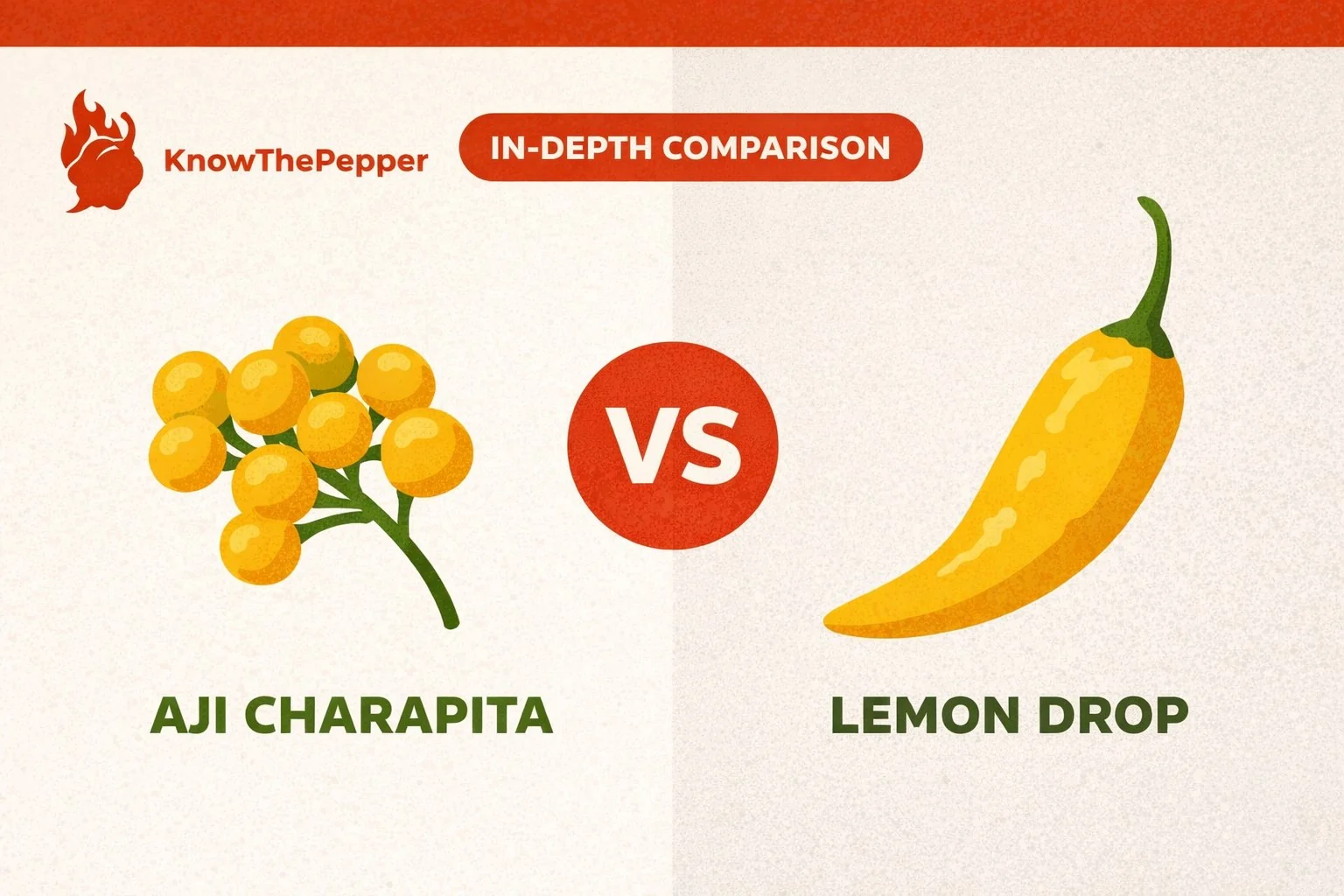
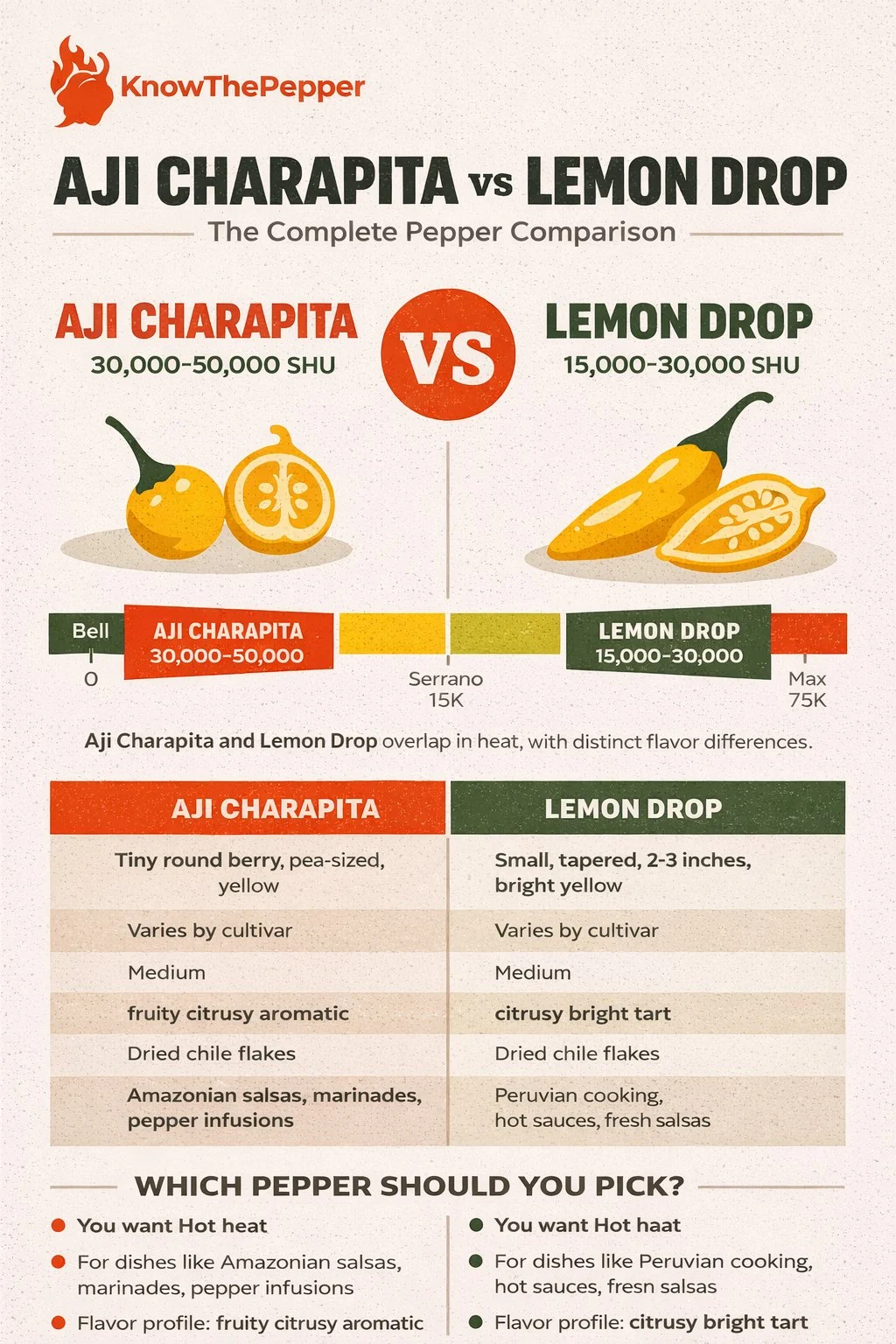
Aji Charapita measures 30K–50K SHU while Lemon Drop registers 15K–30K SHU — making Aji Charapita 2× hotter. Aji Charapita is known for its fruity and citrusy flavor (C. chinense), while Lemon Drop offers citrusy and bright notes (C. baccatum).
- Heat difference: Aji Charapita is 2× hotter
- Species: C. chinense vs C. baccatum
- Best for: Aji Charapita excels in everyday cooking and salsas, Lemon Drop in fresh salsas and mild recipes
Aji Charapita
HotLemon Drop
HotAji Charapita vs Lemon Drop Comparison
Aji Charapita vs Lemon Drop Heat Levels
The Aji Charapita registers 30,000-50,000 SHU on the Scoville organoleptic scale, placing it firmly in the hot pepper tier - a category that demands some respect from cooks unfamiliar with it.
For context, a standard Anaheim pepper tops out around 2,500 SHU. That makes the Aji Charapita roughly 12-20 times hotter than an Anaheim at its peak. You feel that difference immediately - there is no mistaking one for the other in a sauce.
The Lemon Drop pepper (also called Kellu Uchu) is generally cited in the 15,000-30,000 SHU range by most growers and spice retailers, though the data provided here lists it as unverified. Assuming the commonly reported range is accurate, it sits a full tier below Charapita at its upper bound.
What makes Charapita's heat distinctive is how it builds. As a C. chinense species member, it carries the characteristic slow-building, deep heat that hits the back of the palate rather than the front. The burn lingers. Lemon Drop's heat, by contrast, tends to arrive quicker and dissipate faster - more of a sharp sting than a sustained glow.
Neither pepper is a casual snacking choice, but Charapita at 50,000 SHU is genuinely hot. If you have moderate heat tolerance and are cooking for guests, Lemon Drop is the safer bet for keeping everyone comfortable.
Flavor Profile Comparison
At first glance, the aji charapita looks like a yellow pea someone dropped in the garden.
Long before it appeared in specialty seed catalogs, the lemon drop was a staple of Peruvian markets under the name ají amarillo de la selva or simply mirasol amarillo — though it is distinct from the more famous ají amarillo grown across the Andes.
This is where the comparison gets genuinely interesting - both peppers lead with citrus, but they express it very differently.
The Aji Charapita has a flavor profile that earns it the nickname "gold of the Amazon" among Peruvian pepper traditions. Its tiny pea-sized fruits pack a concentrated burst of tropical fruit and bright citrus - think passion fruit meeting a lime with a serious heat chaser. The aroma alone is striking: floral, fruity, almost perfume-like before any heat registers.
That complexity is part of why Charapita commands extraordinary prices in specialty markets - fresh berries can fetch hundreds of dollars per kilogram. The flavor is genuinely irreplaceable in traditional Peruvian cooking.
The Lemon Drop plays a different citrus note - more specifically lemon-forward, less tropical, with a clean tartness that reads almost like lemon zest with heat built in. It lacks the deep fruity complexity of Charapita but delivers a more predictable, focused flavor that is easier to work with in Western cooking contexts.
Aroma-wise, Charapita is more exotic and layered. Lemon Drop smells exactly like its name suggests - fresh, bright, and citrusy without much floral depth.
For dishes where citrus acidity is the goal and heat is secondary, Lemon Drop wins on control. For dishes where you want that unmistakable Amazonian fruit character alongside serious heat, nothing substitutes for Charapita.
Culinary Uses for Aji Charapita and Lemon Drop
Aji Charapita is a cornerstone of Peruvian jungle cuisine, particularly around Iquitos where it grows wild. It is most traditionally used as a table condiment - small whole peppers in vinegar or brine, brought to the table so diners can add heat to taste. That tradition exists for good reason: the flavor is so concentrated that a few berries go a long way.
In contemporary cooking, Charapita works beautifully in ceviches where its citrus-fruit heat complements raw fish without overwhelming the delicate acidity of the lime cure. It also shines in hot sauces, salsas, and marinades for grilled meats. Because the fruits are tiny, they are often used whole or lightly crushed rather than chopped.
For the Lemon Drop, the cleaner citrus profile makes it more versatile across different cuisine traditions. It works in Thai-inspired dishes, seafood preparations, cocktail garnishes (the dried powder is excellent on the rim of a margarita), and anywhere you want a lemon-pepper heat note. It also dries and powders beautifully, which Charapita does not do as conveniently given its small size.
Substitution guidance: if a recipe calls for Charapita and you cannot find it, Lemon Drop at a 1.5:1 ratio (1.5 Lemon Drops per Charapita) gets you closer on heat, though you will lose some tropical depth. Going the other direction, use Charapita sparingly - roughly 0.5:1 - to replace Lemon Drop, and expect a more complex, fruitier result.
For a comparison of how Lemon Drop stacks up against another Peruvian yellow pepper, the aji amarillo versus lemon drop breakdown is worth reading - aji amarillo shares some of Charapita's tropical character at lower heat.
Also worth checking: the bishop's crown versus lemon drop contrast if you are exploring mild-to-medium fruity pepper options for the same dishes.
Which Should You Choose?
Choose Aji Charapita when authenticity to Peruvian cooking matters, when you want that concentrated tropical-fruit complexity, or when the dish needs serious heat wrapped in flavor rather than just fire. It is the harder ingredient to source but worth tracking down for ceviches, traditional hot sauces, and anywhere the pepper is a featured element rather than a background note.
Choose Lemon Drop when you need a more controllable citrus-heat combination, when cooking for mixed heat tolerances, or when the lemon-forward flavor specifically fits the dish. It is far more available, easier to work with in larger quantities, and dries well for spice blends.
If you are building a hot sauce that bridges both, using Lemon Drop as the base with a small percentage of Charapita for depth is a smart approach - you get the volume from Lemon Drop and the complexity from Charapita without burning through an expensive ingredient.
For substitution planning, the Aji Charapita substitute picks covers what works when you cannot find either.
Can You Substitute One for the Other?
Yes — direct substitution works. Aji Charapita and Lemon Drop are close enough in heat to swap at roughly 1:1. The main difference will be flavor. For more swap options, explore ranked alternatives with conversion ratios.
Growing Aji Charapita vs Lemon Drop
If you’re deciding which pepper to grow at home, consider your climate and patience level. Aji Charapita and Lemon Drop have different maturation times and temperature preferences. Hotter varieties generally need a longer, warmer growing season to develop their full capsaicin content. Our zone-based planting date tool can pinpoint the best sowing window for your area.
Growing aji charapita successfully starts with patience at germination. Seeds can take 21–35 days to sprout — longer than most *C.
For a full step-by-step approach, the pepper germination walkthrough covers the specifics well. Start seeds 10–12 weeks before your last frost date indoors.
The plant thrives in containers (minimum 5-gallon) or directly in garden beds with well-draining, slightly acidic soil (pH **6.0–6.
The hardest part of growing lemon drops is patience with fruit set. Like most baccatums, this plant grows large — often 3–4 feet tall — and will produce abundant foliage before committing to fruit.
Germination itself is straightforward at 80–85°F soil temperature, but the long 90–100 day maturity window means starting seeds indoors 10–12 weeks before last frost is not optional in most of North America. The plant needs a long season to hit its stride.
Lemon drops thrive in containers — a 5-gallon pot is the minimum, though 7–10 gallons produces noticeably larger harvests. If you're working with pots, check our container pepper guide before choosing your mix, since baccatums are sensitive to waterlogged roots.
History & Origin of Aji Charapita and Lemon Drop
Both peppers carry centuries of culinary heritage. Aji Charapita traces its roots to Peru, while Lemon Drop originates from Peru. Understanding their backstory helps explain why each pepper developed its distinctive traits.
Buying & Storage
Whether you’re shopping for Aji Charapita or Lemon Drop, the same quality indicators apply. Fresh peppers should feel firm and heavy for their size, with taut, glossy skin and no soft or wet spots. Minor stem cracks known as “corking” are perfectly normal and often indicate a mature, flavorful pod.
- Firm pods with taut skin and consistent color
- Should feel heavy relative to size
- Minor stem cracks (“corking”) are normal
- Avoid anything soft, shriveled, or with dark wet spots
- Fresh: Paper bag, crisper drawer — 1–2 weeks
- Frozen: Wash, dry, freeze on sheet pan — 6+ months
- Dried: Airtight, away from light — up to 1 year
The Verdict: Aji Charapita vs Lemon Drop
Aji Charapita and Lemon Drop sit in the same heat tier but serve different roles. Aji Charapita delivers 2× more heat with its distinctive fruity and citrusy character. Lemon Drop, with its citrusy and bright profile, excels in everyday cooking.
Frequently Asked Questions
Related Comparisons
Sources pending verification.