Aji Amarillo vs Lemon Drop: Which Pepper Should You Use?
Aji Amarillo and Lemon Drop are both C. baccatum peppers with bright citrus-forward flavor profiles, but they diverge meaningfully in heat and culinary tradition. Aji Amarillo brings 30,000-50,000 SHU of Peruvian-rooted intensity, while Lemon Drop tends to run milder with a sharper, more acidic lemon character. Choosing between them comes down to how much heat you want alongside that citrus punch.

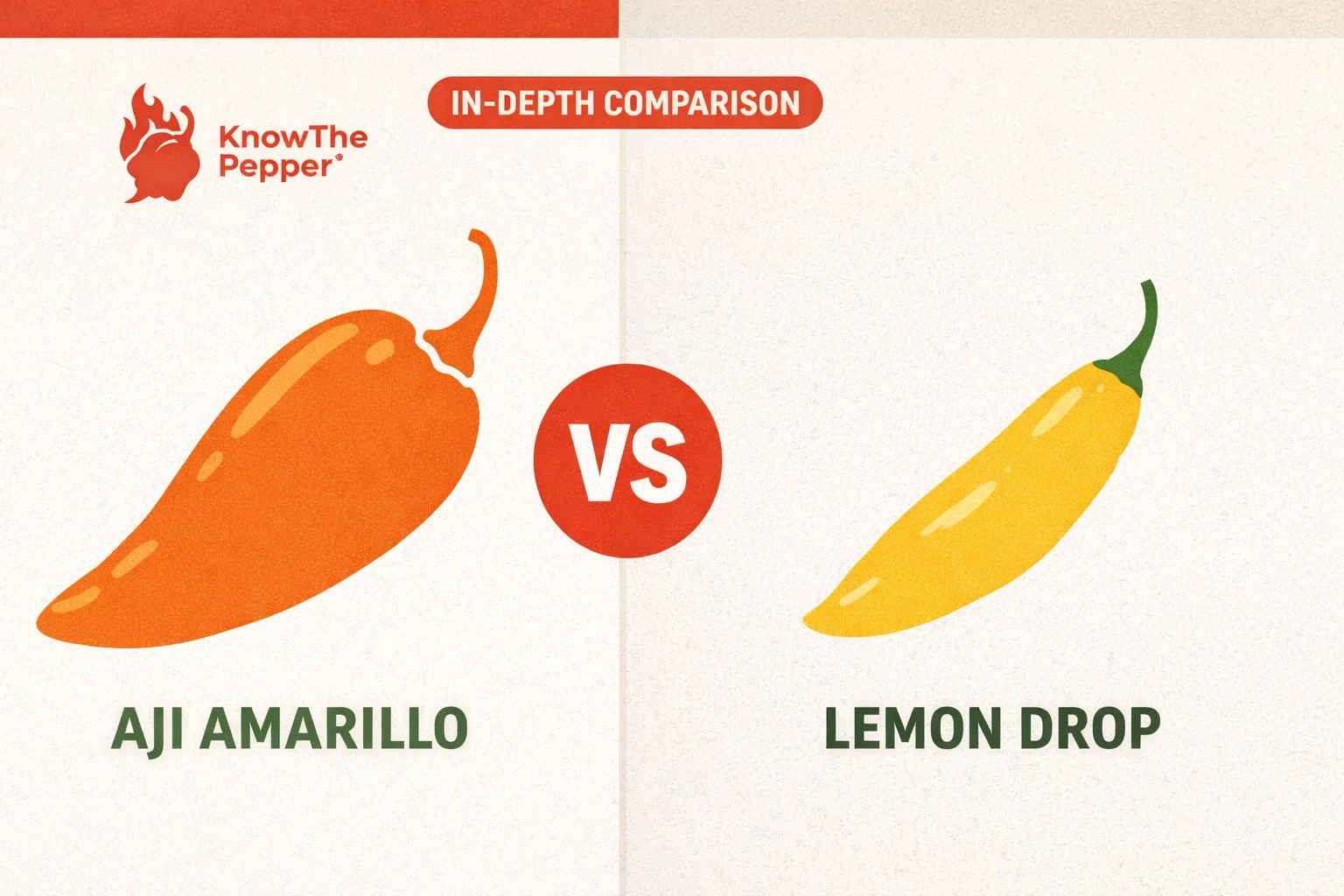
Aji Amarillo measures 30K–50K SHU while Lemon Drop registers 15K–30K SHU — making Aji Amarillo 2× hotter. Aji Amarillo is known for its fruity and raisin-like flavor (C. baccatum), while Lemon Drop offers citrusy and bright notes (C. baccatum).
- Heat difference: Aji Amarillo is 2× hotter
- Species: Both are C. baccatum
- Best for: Aji Amarillo excels in everyday cooking and salsas, Lemon Drop in fresh salsas and mild recipes
Aji Amarillo vs Lemon Drop Comparison
Aji Amarillo vs Lemon Drop Heat Levels
Aji Amarillo registers at 30,000-50,000 SHU, placing it firmly in the hot pepper intensity zone — roughly 4 to 10 times hotter than a typical chipotle, which usually measures around 5,000-8,000 SHU. That's a meaningful gap if you're calibrating a dish.
Lemon Drop peppers generally land in a milder register, though exact SHU figures vary by source and growing conditions. Most growers and culinary references place them somewhere between 15,000-30,000 SHU, making them noticeably less assertive than Aji Amarillo at its peak. At the lower end, a Lemon Drop might be only twice as hot as a chipotle — at the upper end, they start to approach Aji Amarillo territory.
The burn character matters as much as the number here. Aji Amarillo delivers heat that builds gradually and settles in the mid-palate, with a warmth that lingers without turning aggressive. Lemon Drop's heat is sharper and quicker — it hits the front of the mouth and fades faster, which some cooks actually prefer when they want citrus brightness without a prolonged burn.
Both peppers belong to C. baccatum, a species known for producing heat that feels cleaner and less punishing than the C. chinense varieties that dominate the upper end of the Scoville ranking system. If you've been burned (literally) by habaneros or Scotch Bonnets, either of these will feel more approachable while still delivering genuine heat.
Flavor Profile Comparison
Long before Spanish conquistadors arrived in South America, the aji amarillo was already woven into the fabric of Andean civilization.
Long before it appeared in specialty seed catalogs, the lemon drop was a staple of Peruvian markets under the name ají amarillo de la selva or simply mirasol amarillo — though it is distinct from the more famous ají amarillo grown across the Andes.
Aji Amarillo's flavor is the reason it anchors Peruvian cooking the way it does. The taste is genuinely complex — fruity and slightly raisin-like, with tropical undertones that read almost like mango or passion fruit before the heat arrives. It's one of those peppers where the flavor is as compelling as the burn, which is rare. The aroma when you cut one fresh is immediately distinctive: floral, fruity, and warm.
Lemon Drop earns its name honestly. The flavor is bright, acidic, and citrus-forward in a way that Aji Amarillo isn't — think lemon zest rather than tropical fruit. Where Aji Amarillo has depth and sweetness, Lemon Drop has sharpness and clarity. That acidity makes it particularly useful in applications where you want the pepper to cut through richness rather than blend into it.
Cooked, the two diverge further. Aji Amarillo deepens and becomes more jammy when roasted or blended into sauces — it's the base of classic Peruvian pepper traditions like aji de gallina and causa. Lemon Drop holds its citrus character better under heat, making it more versatile for quick sautés or fresh preparations where you want that brightness preserved.
For dishes where you need both heat and a fruity backbone, Aji Amarillo is harder to replicate. For dishes where citrus acidity is the primary goal and heat is secondary, Lemon Drop often does the job more cleanly. The head-to-head contrast between Bishop's Crown and Lemon Drop offers useful context on how Lemon Drop's acidity stacks up against other baccatum varieties.
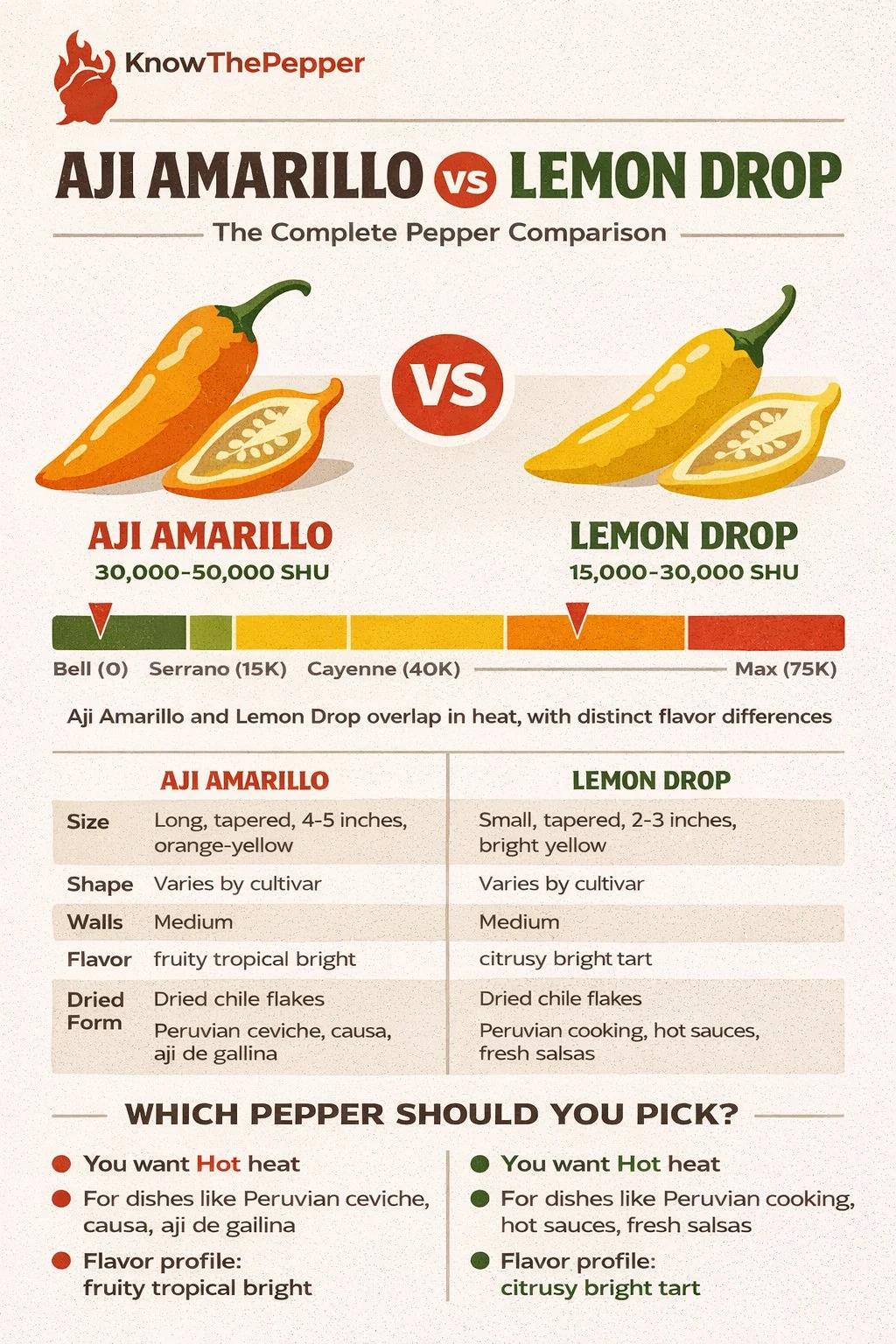
Culinary Uses for Aji Amarillo and Lemon Drop
Aji Amarillo is non-negotiable in authentic Peruvian cooking. It's the foundation of aji de gallina (creamy chicken stew), papa a la huancaina (potato in cheese sauce), and ceviche leche de tigre. The paste form — widely available in Latin grocery stores — makes it easy to incorporate into sauces, marinades, and compound butters. A tablespoon of aji amarillo paste adds fruity heat to scrambled eggs, grain bowls, or roasted vegetables without overwhelming the dish.
For those comparing Aji Amarillo against Aji Cristal, the flavor difference is subtle but real — Aji Cristal runs milder and more vegetal. Aji Amarillo is the bolder, fruitier choice. Similarly, the Aji Amarillo versus Aji Limo comparison reveals that Aji Limo brings more citrus and floral notes, closer to what Lemon Drop offers.
Lemon Drop shines in applications where you want visible pepper pieces with bright color and clean heat. Slice them into fish tacos, stir them into vinaigrettes, or pickle them quickly with rice wine vinegar for a condiment that punches above its weight. Their acidity means they work almost like a seasoning — add them where you'd reach for lemon juice but want texture and heat alongside the brightness.
Substitution ratios: If a recipe calls for Aji Amarillo and you only have Lemon Drop, use about 1.5 times the volume to approximate the heat, and consider adding a small amount of dried apricot or mango to compensate for the missing tropical sweetness. Going the other direction — Lemon Drop recipes using Aji Amarillo — reduce quantity by about a third and expect a deeper, jammier flavor profile.
Both peppers work well dried and ground into powder. Aji Amarillo powder is a pantry staple for Peruvian-inspired cooking; Lemon Drop powder functions almost like a spiced citrus seasoning that's excellent on grilled fish or popcorn.
Which Should You Choose?
If Peruvian cooking is on your agenda — or you want a pepper with genuine depth and fruity complexity — Aji Amarillo is the clear choice. Its 30,000-50,000 SHU heat comes packaged with a flavor profile that's genuinely hard to replicate, and the paste form makes it accessible even when fresh peppers aren't available.
Lemon Drop earns its place when citrus brightness is the priority and you want slightly less heat. It's more versatile as a fresh pepper for slicing and garnishing, and its acidity gives it almost a seasoning-like quality that Aji Amarillo doesn't quite match.
For most home cooks, having both on hand isn't a bad call — they complement rather than duplicate each other. But if you're choosing one, let the dish decide: Aji Amarillo for depth and tradition, Lemon Drop for brightness and versatility. Either way, you're working within the C. baccatum species family, which means the heat will be clean and the flavor will be worth the effort.
Can You Substitute One for the Other?
Yes — direct substitution works. Aji Amarillo and Lemon Drop are close enough in heat to swap at roughly 1:1. The main difference will be flavor. For more swap options, explore ranked alternatives with conversion ratios.
Growing Aji Amarillo vs Lemon Drop
If you’re deciding which pepper to grow at home, consider your climate and patience level. Aji Amarillo and Lemon Drop have different maturation times and temperature preferences. Hotter varieties generally need a longer, warmer growing season to develop their full capsaicin content. Our zone-based planting date tool can pinpoint the best sowing window for your area.
Aji amarillo is a warm-season perennial grown as an annual in most climates. Seeds need 80–90 days from transplant to first harvest, so starting indoors 10–12 weeks before last frost is standard practice.
The plants grow tall, often reaching 3–4 feet, and benefit from staking once pods set. They prefer well-draining soil with a pH between 6.
For cultivation characteristics, compare this to peppers grown in upward-facing clusters — aji amarillo pods hang downward, which helps with water drainage off the fruit. Pods start green and ripen through yellow to orange; the sweetest flavor develops at full orange ripeness.
The hardest part of growing lemon drops is patience with fruit set. Like most baccatums, this plant grows large — often 3–4 feet tall — and will produce abundant foliage before committing to fruit.
Germination itself is straightforward at 80–85°F soil temperature, but the long 90–100 day maturity window means starting seeds indoors 10–12 weeks before last frost is not optional in most of North America. The plant needs a long season to hit its stride.
Lemon drops thrive in containers — a 5-gallon pot is the minimum, though 7–10 gallons produces noticeably larger harvests. If you're working with pots, check our container pepper guide before choosing your mix, since baccatums are sensitive to waterlogged roots.
History & Origin of Aji Amarillo and Lemon Drop
Both peppers carry centuries of culinary heritage. Aji Amarillo traces its roots to Peru, while Lemon Drop originates from Peru. Understanding their backstory helps explain why each pepper developed its distinctive traits.
Buying & Storage
Whether you’re shopping for Aji Amarillo or Lemon Drop, the same quality indicators apply. Fresh peppers should feel firm and heavy for their size, with taut, glossy skin and no soft or wet spots. Minor stem cracks known as “corking” are perfectly normal and often indicate a mature, flavorful pod.
- Firm pods with taut skin and consistent color
- Should feel heavy relative to size
- Minor stem cracks (“corking”) are normal
- Avoid anything soft, shriveled, or with dark wet spots
- Fresh: Paper bag, crisper drawer — 1–2 weeks
- Frozen: Wash, dry, freeze on sheet pan — 6+ months
- Dried: Airtight, away from light — up to 1 year
The Verdict: Aji Amarillo vs Lemon Drop
Aji Amarillo and Lemon Drop sit in the same heat tier but serve different roles. Aji Amarillo delivers 2× more heat with its distinctive fruity and raisin-like character. Lemon Drop, with its citrusy and bright profile, excels in everyday cooking.
Frequently Asked Questions
Related Comparisons
Sources pending verification.