Aji Amarillo vs Aji Panca Showdown: Heat, Flavor & Uses
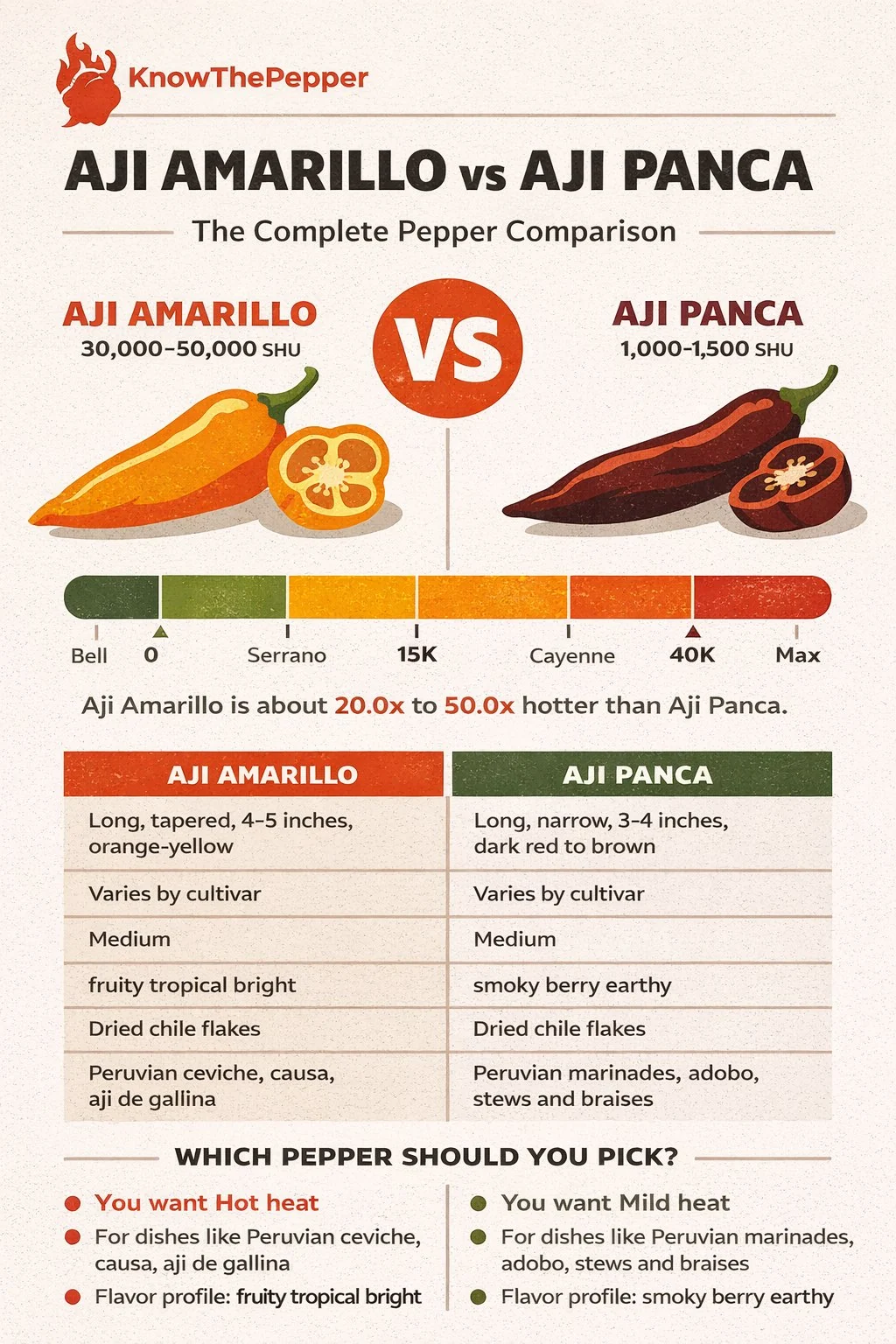
Aji Amarillo and Aji Panca are both Peruvian staples from the same botanical family, but they sit at opposite ends of the flavor and heat spectrum. Amarillo brings 30,000-50,000 SHU of bright, fruity fire while Panca barely registers at 1,000-1,500 SHU with deep smoky sweetness. Choosing between them isn't about which is better — it's about what your dish actually needs.

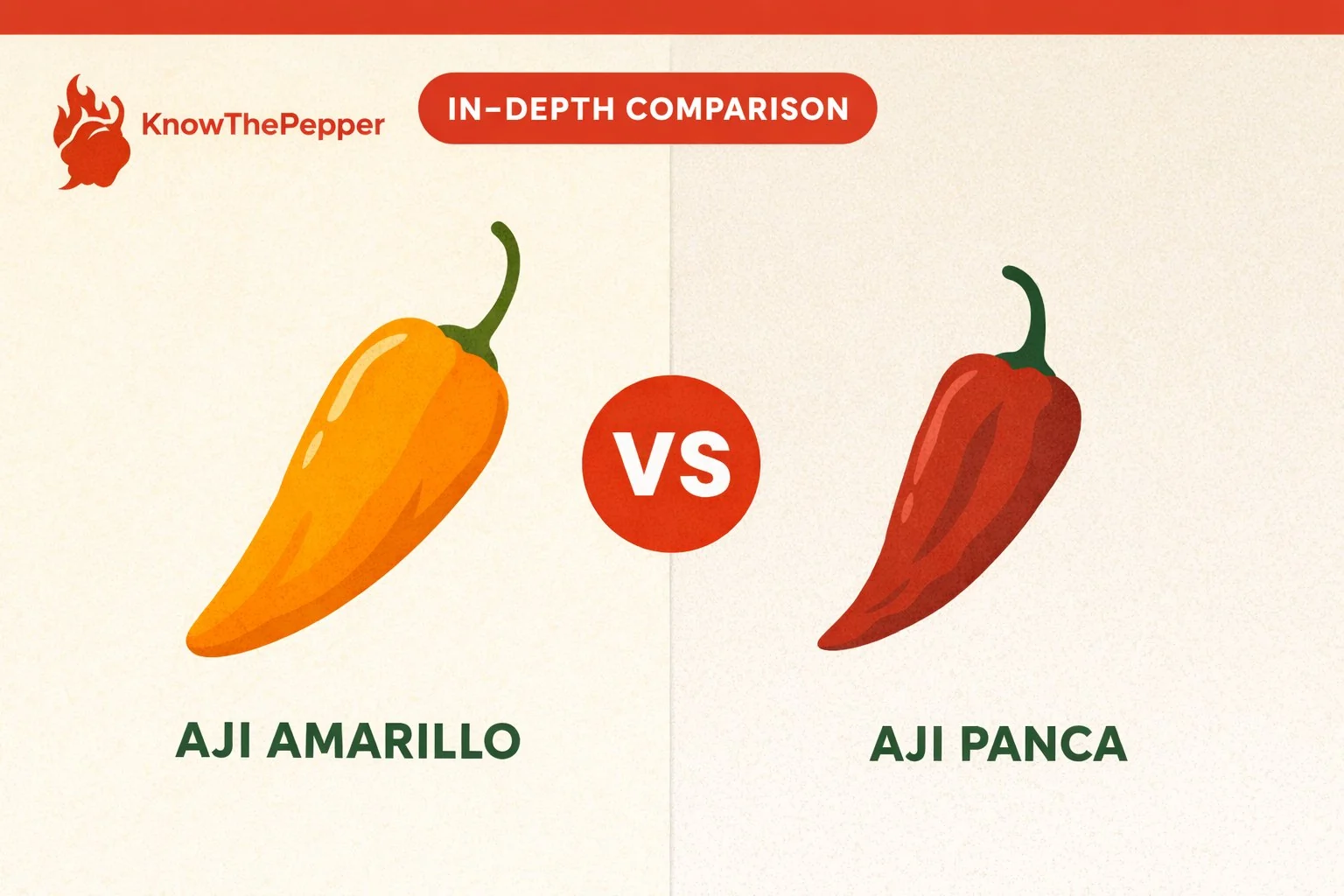
Aji Amarillo measures 30K–50K SHU while Aji Panca registers 1K–2K SHU — making Aji Amarillo 33× hotter. Aji Amarillo is known for its fruity and raisin-like flavor (C. baccatum), while Aji Panca offers smoky and fruity notes (C. baccatum).
- Heat difference: Aji Amarillo is 33× hotter
- Species: Both are C. baccatum
- Best for: Aji Amarillo excels in everyday cooking and salsas, Aji Panca in fresh salsas and mild recipes
Aji Amarillo
HotAji Panca
MediumAji Amarillo vs Aji Panca Comparison
Aji Amarillo vs Aji Panca Heat Levels
The gap here is substantial. Aji Amarillo lands in the hot pepper range at 30,000-50,000 SHU, putting it firmly above a Fresno chili, which typically tops out around 10,000 SHU. That makes Amarillo roughly 3-5x hotter than a Fresno — noticeable heat that builds and lingers.
Aji Panca, by contrast, clocks in at just 1,000-1,500 SHU. That's closer to a mild poblano than anything you'd call spicy. Against a Fresno, Panca is roughly 6-10x milder — barely a tingle for anyone with moderate heat tolerance.
Both belong to C. baccatum, a species known for producing fruity, berry-forward heat rather than the sharp, immediate burn you get from C. annuum varieties. The capsaicin in baccatum peppers tends to hit mid-palate and fade more cleanly than the throat-catching heat of habaneros or chinense types.
For context on how these two compare to an actual heavy hitter, check out Aji Amarillo's SHU matchup against habanero-level heat — the difference is dramatic. Amarillo holds its own as a genuinely hot pepper; Panca is seasoning, not a heat source. If your recipe calls for Panca but you want more fire, you're not just adjusting — you're changing the entire character of the dish.
Flavor Profile Comparison
Long before Spanish conquistadors arrived in South America, the aji amarillo was already woven into the fabric of Andean civilization.
Long before Spanish colonizers arrived in South America, the Aji Panca was already a staple along Peru's Pacific coast.
Flavor is where this comparison gets genuinely interesting. Aji Amarillo tastes like tropical fruit and heat got into a productive argument — mango, passion fruit, and a hint of raisin all show up before the burn takes over. It's bright and forward, with an almost citrusy lift that makes it distinctive in fresh preparations.
Aji Panca goes in a completely different direction. Dried and slightly fermented before processing, it develops a deep, smoky sweetness — dried cherry, cocoa, and a faint earthiness that reads more like a spice than a chili. There's fruit in there, but it's dark fruit: plum, raisin, dried blackberry.
Aroma tells the story clearly. Crack open a jar of Aji Amarillo paste and the room smells alive — fruity and sharp. Aji Panca paste smells like something slow-cooked, almost chocolatey.
These two don't substitute for each other in any meaningful way. Swapping Panca for Amarillo in a ceviche would dull the brightness completely. Using Amarillo in a slow braise meant for Panca would overwhelm the other flavors with heat and acidity.
For a comparison that highlights how Amarillo's fruit notes play against a similarly bright pepper, the flavor contrast between Aji Amarillo and lemon drop pepper is worth reading — both are baccatum, both are fruity, but the citrus angle diverges sharply. Panca occupies a flavor space closer to ancho or mulato than to any fresh chili.
Culinary Uses for Aji Amarillo and Aji Panca
Aji de Gallina — Peru's iconic creamy chicken stew — is the definitive showcase for Aji Amarillo. The pepper's fruity heat cuts through the richness of bread, walnuts, and evaporated milk in a way no other chili replicates. Beyond that, Amarillo paste goes into ceviche marinades, causa (the layered potato dish), and sauces where you want color and heat simultaneously. The paste form, widely available in Latin grocery stores, is the practical choice for most home cooks — use 1-2 tablespoons as a starting point in any recipe calling for moderate heat with fruit character.
Aji Panca belongs to the slow-cooked world. It's the base for adobo-style marinades, braised meats, and stews where you're building background complexity rather than front-of-palate heat. Peruvian anticuchos (grilled beef heart skewers) traditionally rely on Panca paste for their characteristic deep, smoky marinade. Use 2-3 tablespoons in marinades since the low heat means you can be generous without scorching the dish.
For substitution: if Amarillo isn't available, a mix of habanero (small amount) and fresh mango or a splash of orange juice can approximate the fruity heat — though nothing truly replicates it. Panca is harder to fake; ancho paste with a drop of smoked paprika gets you in the neighborhood.
Both peppers are central to Peruvian pepper traditions and show up across the full range of that cuisine. The Aji Amarillo vs Aji Cristal matchup is useful reading if you're building a Peruvian pantry and want to understand where each variety fits in the cooking hierarchy. Neither pepper works well as a fresh garnish — both are at their best cooked down into pastes or incorporated into sauces.
Which Should You Choose?
Pick Aji Amarillo when heat and brightness are the point. It's the right call for ceviches, fresh sauces, and any dish where you want the pepper to announce itself — fruity, hot, and unmistakable. Its 30,000-50,000 SHU range is real heat, not background warmth.
Pick Aji Panca when you're building depth. It's a seasoning pepper, not a heat source — ideal for braises, marinades, and slow-cooked applications where that smoky, dried-fruit character can develop fully. At 1,000-1,500 SHU, it adds complexity without challenging anyone's tolerance.
The C. baccatum species produces some of the most distinctive flavor profiles in the pepper world, and these two represent its range beautifully. For cooks building a serious pantry, keeping both on hand makes sense — they don't overlap, they complement. Amarillo for the bright dishes, Panca for the dark ones.
Can You Substitute One for the Other?
Yes — direct substitution works. Aji Amarillo and Aji Panca are close enough in heat to swap at roughly 1:1. The main difference will be flavor. For more swap options, explore ranked alternatives with conversion ratios.
Growing Aji Amarillo vs Aji Panca
If you’re deciding which pepper to grow at home, consider your climate and patience level. Aji Amarillo and Aji Panca have different maturation times and temperature preferences. Hotter varieties generally need a longer, warmer growing season to develop their full capsaicin content. Our zone-based planting date tool can pinpoint the best sowing window for your area.
Aji amarillo is a warm-season perennial grown as an annual in most climates. Seeds need 80–90 days from transplant to first harvest, so starting indoors 10–12 weeks before last frost is standard practice.
The plants grow tall, often reaching 3–4 feet, and benefit from staking once pods set. They prefer well-draining soil with a pH between 6.
For cultivation characteristics, compare this to peppers grown in upward-facing clusters — aji amarillo pods hang downward, which helps with water drainage off the fruit. Pods start green and ripen through yellow to orange; the sweetest flavor develops at full orange ripeness.
The hardest part of growing Aji Panca is the drying stage, not germination. The pepper needs extended dry heat to develop its characteristic color and flavor, which makes humid climates genuinely challenging.
In the ground, plants reach 2–3 feet tall and prefer full sun with well-draining soil. As a *C.
The plants are productive and relatively disease-resistant. Pods mature to their deep burgundy color in approximately 90–100 days from transplant.
History & Origin of Aji Amarillo and Aji Panca
Both peppers carry centuries of culinary heritage. Aji Amarillo traces its roots to Peru, while Aji Panca originates from Peru. Understanding their backstory helps explain why each pepper developed its distinctive traits.
Buying & Storage
Whether you’re shopping for Aji Amarillo or Aji Panca, the same quality indicators apply. Fresh peppers should feel firm and heavy for their size, with taut, glossy skin and no soft or wet spots. Minor stem cracks known as “corking” are perfectly normal and often indicate a mature, flavorful pod.
- Firm pods with taut skin and consistent color
- Should feel heavy relative to size
- Minor stem cracks (“corking”) are normal
- Avoid anything soft, shriveled, or with dark wet spots
- Fresh: Paper bag, crisper drawer — 1–2 weeks
- Frozen: Wash, dry, freeze on sheet pan — 6+ months
- Dried: Airtight, away from light — up to 1 year
The Verdict: Aji Amarillo vs Aji Panca
Aji Amarillo and Aji Panca occupy very different positions on the heat spectrum. Aji Amarillo delivers 33× more heat with its distinctive fruity and raisin-like character. Aji Panca, with its smoky and fruity profile, excels in everyday cooking.
Frequently Asked Questions
Related Comparisons
Sources pending verification.