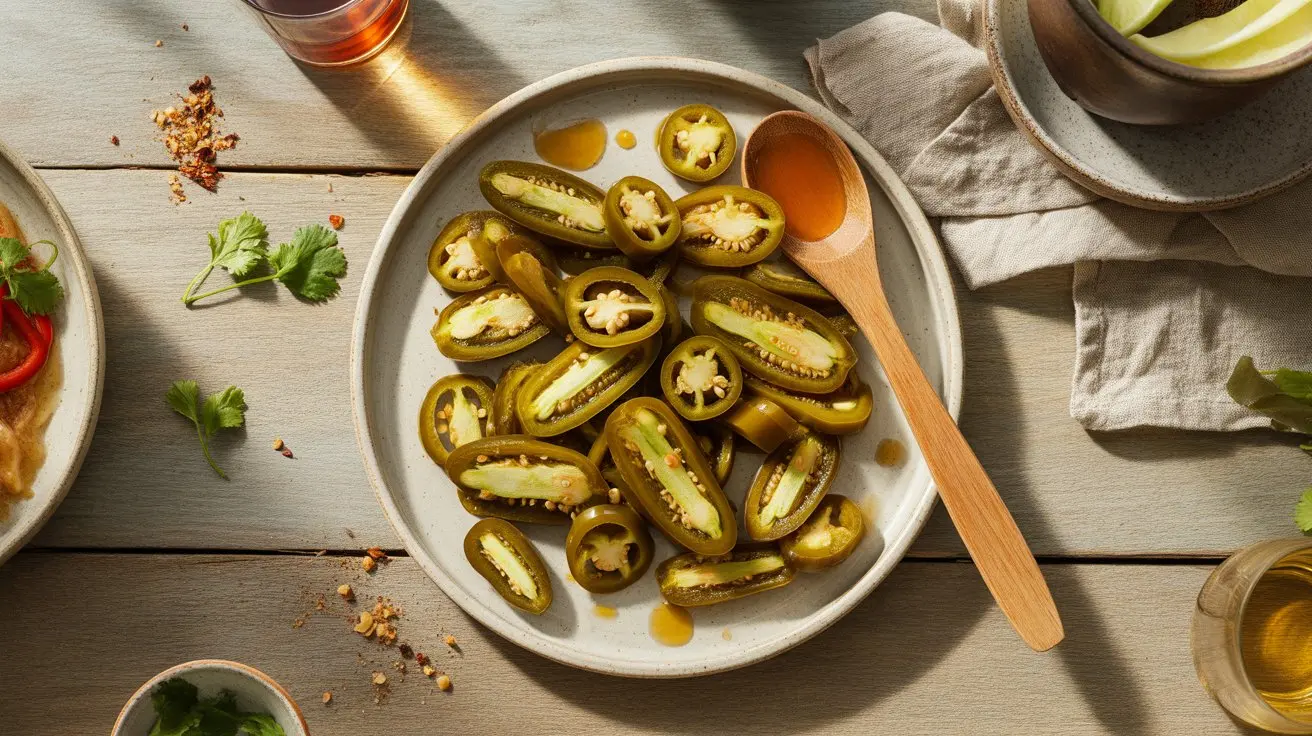
Pickled Jalapenos Recipe
Two methods: 10-minute quick pickle and proper fermented. Both stay crispy. Find your perfect heat level.

Why Pickled Jalapeños Belong in Every Fridge
A fresh jalapeño is grassy, bright, and moderately sharp. A pickled one is something else entirely — the brine softens that raw edge and pulls out a tangy, almost sweet heat that layers into food rather than just sitting on top of it.
This guide covers two methods: a 10-minute quick pickle (fridge-ready in an hour) and a proper fermented version that takes a few days but rewards you with deeper flavor and gut-friendly bacteria. Both stay crispy if you follow the technique notes below.
Jalapeños sit in the medium heat bracket, typically ranging from 2,500 to 8,000 SHU, which makes them approachable enough to use generously without overwhelming a dish. Their Capsicum annuum species background gives them that characteristic thin-walled flesh that holds up beautifully in brine — firm enough to stay crisp, thin enough to absorb flavor fast.
Quick Pickle Instructions
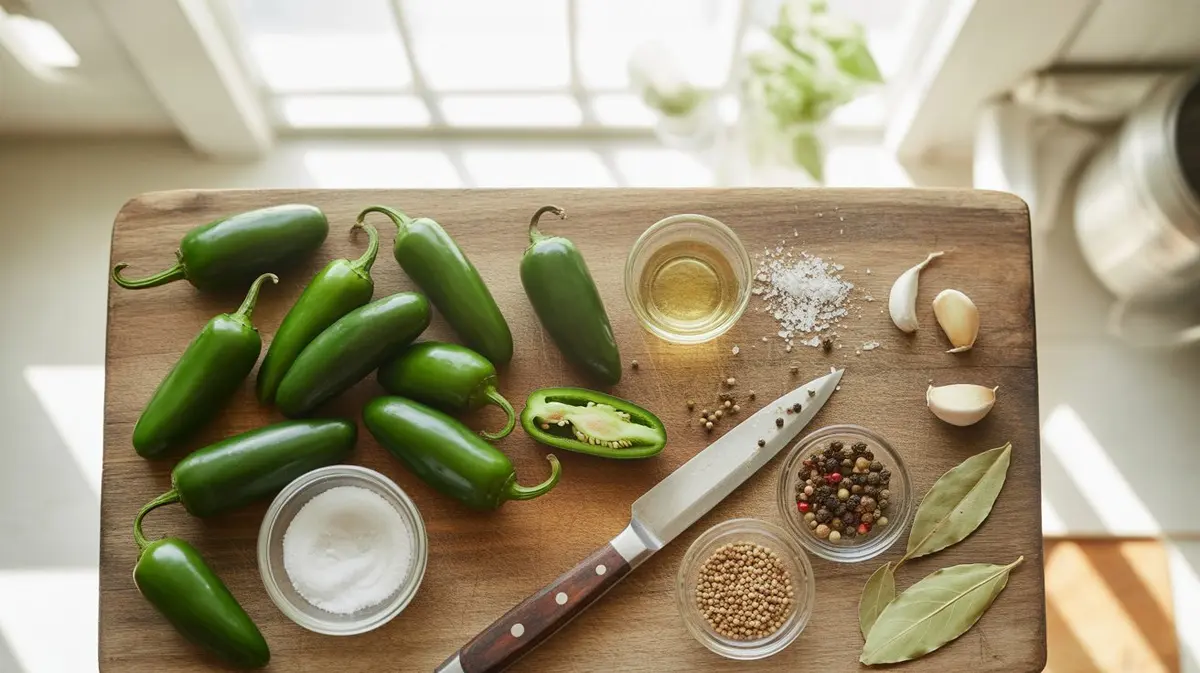
- Slice jalapeños into ¼-inch rings using a sharp knife or mandoline. Wear gloves — the capsaicin chemistry in jalapeños transfers readily to skin and eyes.
- Pack sliced jalapeños tightly into a clean 1-quart mason jar along with smashed garlic cloves, peppercorns, and any optional spices.
- Combine vinegar, water, salt, and sugar in a small saucepan over medium heat. Stir until salt and sugar fully dissolve — about 2-3 minutes. Do not boil.
- Pour the hot brine over the jalapeños, pressing slices down so they are fully submerged. Leave ½ inch headspace at the top.
- Let the jar cool uncovered for 15 minutes, then seal and refrigerate.
- They are technically edible after 1 hour but taste significantly better after 24 hours when the brine fully penetrates the flesh.
The hot brine method is the key to fast flavor penetration. Pouring cold brine over raw peppers works but takes 48-72 hours to reach the same depth of flavor.
Fermented Jalapeño Instructions
- Dissolve 1 tbsp non-iodized salt per 2 cups of filtered or non-chlorinated water. Chlorinated tap water can inhibit fermentation — filtered water is worth using here.
- Pack jalapeños (rings or whole) into a clean jar with garlic and spices.
- Pour brine over peppers, ensuring they are fully submerged. Use a small zip-lock bag filled with extra brine as a weight to keep peppers below the surface.
- Cover the jar loosely with a cloth or a fermentation lid — do not seal airtight during fermentation, as CO2 needs to escape.
- Leave at room temperature (65-75°F / 18-24°C) for 3-5 days. Taste daily starting at day 3.
- Once they reach your preferred tang level, seal the jar and refrigerate. Fermentation slows dramatically below 40°F.
Fermented jalapeños develop a funkier, more complex sour note compared to the clean acidity of vinegar pickles. Both are excellent — they just serve different flavor purposes.
Keeping Them Crispy: Technique Notes
The biggest complaint about homemade pickled jalapeños is mushiness. There are three causes: overripe peppers, boiling brine, and over-processing.
Choose firm, fresh jalapeños with tight skin and no soft spots. Older peppers with wrinkled skin will turn soft in brine regardless of technique.
For the quick pickle, heat the brine until salt and sugar dissolve — do not bring it to a full rolling boil before pouring. Boiling brine partially cooks the pepper flesh and softens cell walls.
Adding ¼ tsp calcium chloride (sold as Pickle Crisp or Ball Firm) per quart jar is the most reliable crispness insurance available. It reinforces pectin in the cell walls. A grape leaf, oak leaf, or horseradish leaf in the jar achieves a similar effect through natural tannins — a traditional method that actually works.
If you want to learn how jalapeños grow and what affects their heat level at harvest, the full pepper growing guide explains how stress conditions during the growing season push SHU higher — which directly affects your pickles.
Variations
- Escabeche style: Add sliced carrots, white onion, and cauliflower to the jar. This is the classic Mexican pickled vegetable mix served alongside tacos — the carrots absorb the brine beautifully and balance the pepper heat. A staple in Mexican pepper traditions.
- Sweet heat version: Increase sugar to 3 tbsp and add a cinnamon stick and 2 allspice berries to the brine. The result sits closer to bread-and-butter pickle territory.
- Garlic-forward: Double the garlic to 6 cloves and add 1 tsp red pepper flakes. The garlic mellows and sweetens in the brine over 48 hours.
- Hotter version: Swap half the jalapeños for serrano's sharper, thinner-walled heat. Serranos register around 10,000-23,000 SHU and bring a different kind of punch to the same brine.
- Smoked brine: Add ½ tsp smoked paprika and 1 chipotle pepper (dried) to the brine while heating. Strain before pouring for a subtle smoke note without added smokiness from the chipotle solids.
- Apple cider vinegar swap: Replace white vinegar with raw apple cider vinegar for a slightly fruitier, less sharp acidity. Works especially well in the fermented version.
Heat Level Adjustments
Jalapeños vary considerably within their own species — a grocery store jalapeño might sit at 2,500 SHU while a farm-fresh or homegrown one can push 8,000 SHU. The medium heat tier they occupy is forgiving enough to adjust without much effort.
To reduce heat: remove seeds and membranes before pickling. The membrane (placenta) carries most of the capsaicin, not the seeds themselves — removing it drops heat noticeably.
To increase heat: leave seeds and membranes intact, or add a single habanero's fruity, intense heat to the jar. The habanero's oils will slowly infuse the brine over several days, raising the overall heat level of the entire batch.
For anyone curious about the exact science behind why heat varies so much even within the same pepper variety, the Scoville testing methodology explains how capsaicin concentration is measured and why results differ between samples.
Serving Ideas
The obvious applications are tacos, nachos, and sandwiches — but pickled jalapeños earn their place in less expected spots too.
Chop them finely and stir into cream cheese or sour cream for an instant dip. Add them to deviled eggs for a briny heat contrast against the rich yolk filling. Layer them on homemade pizza before baking — the brine caramelizes slightly in the oven and concentrates the flavor.
The brine itself is useful. A splash of jalapeño pickle brine in a Bloody Mary or dirty martini adds acidity and heat simultaneously. Use it to deglaze a pan after cooking pork chops, or whisk it into a vinaigrette with olive oil and Dijon.
Storage
Quick pickled jalapeños last up to 3 months in the refrigerator in a sealed jar. They don't require water bath canning because the high acidity of the brine inhibits bacterial growth at fridge temperatures.
If you want shelf-stable pickled jalapeños without refrigeration, you'll need to water bath can them — process sealed jars in boiling water for 10 minutes, then store in a cool pantry for up to 1 year. Refrigerate after opening.
Fermented jalapeños keep in the refrigerator for up to 6 months. The lactic acid produced during fermentation is a natural preservative. Some cloudiness in the brine is normal and expected — that's the lactobacillus bacteria at work.
Always use a clean fork when pulling peppers from the jar. Introducing food particles accelerates spoilage. If you see fuzzy mold (not just brine cloudiness), discard the batch.
Scaling Up
Both recipes scale linearly. Double the batch by doubling every ingredient proportionally. The critical ratio to maintain is 1:1 vinegar to water for the quick pickle, and 1 tbsp salt per 2 cups water for the ferment.
For large batches intended for canning, use a tested recipe from the National Center for Home Food Preservation — their ratios are validated for safety at room temperature storage, which matters once you remove refrigeration from the equation.
Chef's Tip: The Resting Period
Patience is an ingredient. After mixing, let the dish rest for 10–15 minutes before serving. This allows the flavours to meld and the seasoning to fully penetrate. If making ahead, refrigerate and bring to room temperature before serving.
Shopping List
-
1 lb (450g) fresh jalapeñossliced into ¼-inch rings
-
1 cup white distilled vinegar (5% acidity)
-
1 cup water
-
1 tbsp kosher salt
-
2 tsp granulated sugar
-
3 cloves garlicsmashed
-
1 tsp whole black peppercorns
-
½ tsp dried oregano (optional)
-
1 tsp cumin seeds (optional)
Full Recipe Instructions
Slice jalapeños into…
Slice jalapeños into ¼-inch rings. Wear gloves to avoid capsaicin transfer to skin and eyes.
Pack sliced jalapeños…
Pack sliced jalapeños tightly into a clean 1-quart mason jar along with smashed garlic, peppercorns, and optional spices.
Combine vinegar, water,…
Combine vinegar, water, salt, and sugar in a small saucepan over medium heat. Stir until dissolved, about 2-3 minutes. Do not boil.
Pour hot brine…
Pour hot brine over jalapeños, pressing slices down so they are fully submerged. Leave ½ inch headspace.
Let the jar…
Let the jar cool uncovered for 15 minutes, then seal and refrigerate.
Pickles are edible…
Pickles are edible after 1 hour but taste best after 24 hours.
Frequently Asked Questions
-
Quick pickled jalapeños keep for up to 3 months refrigerated in a sealed jar. The high acidity of the vinegar brine prevents bacterial growth without any canning required.
-
Mushy pickled jalapeños are usually caused by overripe peppers, brine that was brought to a full boil before pouring, or peppers that sat too long before pickling. Adding calcium chloride (Pickle Crisp) or a grape leaf to the jar helps maintain firm texture.
-
Removing seeds is optional and depends on your heat preference. Most of the capsaicin lives in the membrane (placenta), not the seeds themselves, so removing the membrane has a bigger impact on reducing heat than removing seeds alone.
-
Yes, once for a second batch of fresh peppers. The brine loses some acidity after the first use, so the second batch may have slightly less tang and shorter shelf life - consume within 4-6 weeks rather than 3 months.
-
Quick pickled jalapeños use vinegar for acidity and are ready in hours, with a clean sharp tang. Fermented jalapeños develop acidity through lactic acid bacteria over several days, producing a funkier, more complex sour flavor with probiotic benefits.
More Recipes
View allFresh Salsa Recipe
Restaurant-quality fresh salsa in 10 minutes. Proper tomato prep, right jalapeño amount, and the secret to balanced flavor. Find your perfect heat level.
Jalapeno Poppers Recipe
Classic cream cheese stuffed jalapeño poppers that are crispy outside, creamy inside. Find your perfect heat level.
Stuffed Peppers Recipe
Classic stuffed peppers with rice and meat, plus vegetarian and Mexican variations. Covers bell peppers, poblanos, and which peppers stuff best.
Birria
Authentic birria with guajillo, ancho, and de árbol chiles. Slow-braised beef in rich chile broth. Find your perfect heat level.