
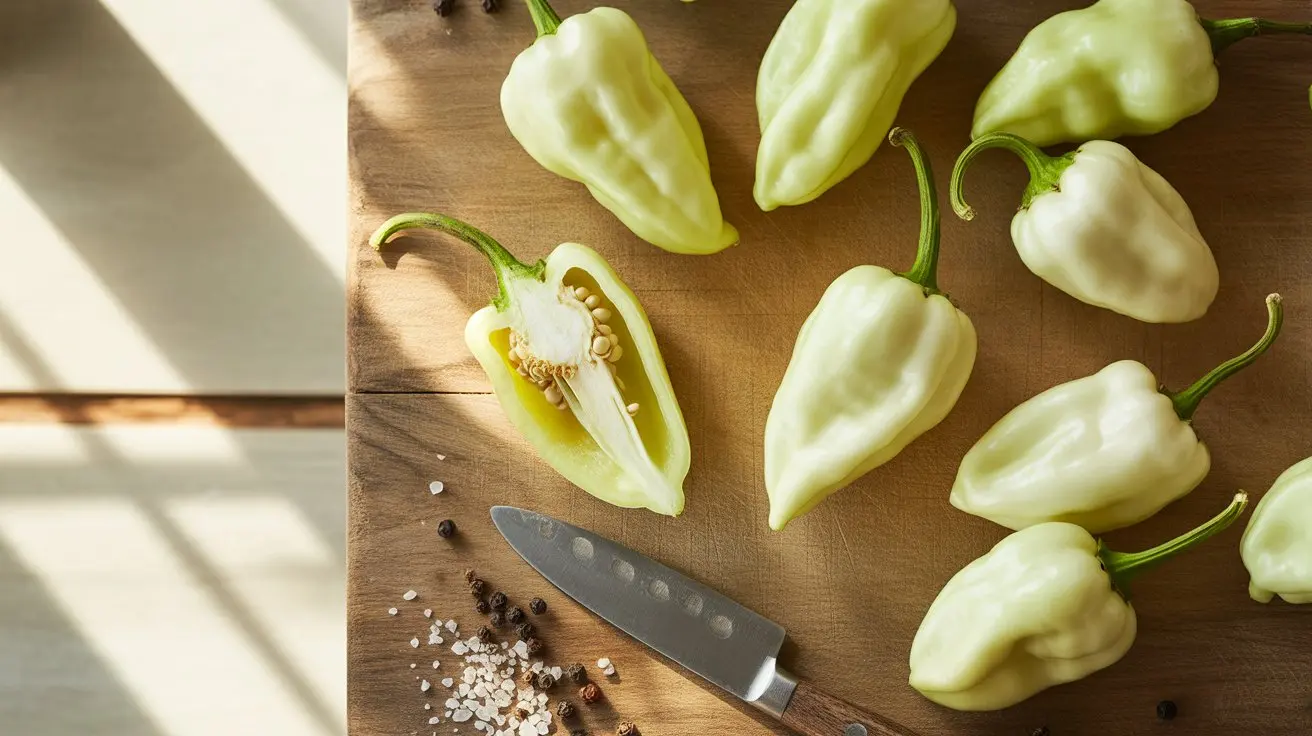
White Habanero

The white habanero is a striking ivory-skinned variant of Capsicum chinense, clocking in at 100,000–350,000 SHU — the same range as its orange cousin but with a distinctly floral, almost perfumed heat. Harder to find than standard habaneros, it rewards the search with fruity brightness that works beautifully in light-colored sauces, marinades, and fresh salsas where you don't want red or orange pigment muddying the dish.
- Species: C. chinense
- Heat tier: Extra-Hot (100K–1M SHU)
- Comparison: 70x hotter than a jalapeño
What is White Habanero?
Most people encounter habaneros in their orange form, but the white variety has its own loyal following — and for good reason. Visually, the white habanero ripens from pale green through cream to an ivory or pale yellow at full maturity, keeping that classic lantern shape with thin, waxy skin.
Heat-wise, it sits firmly in the extra-hot pepper category, ranging 100,000–350,000 SHU on the Scoville scale. That's roughly comparable to the fruity Caribbean punch of the orange habanero — same species, same fire, different aesthetic. The flavor profile leans floral and fruity, with a brightness that registers before the heat builds. That delayed onset is part of what makes it interesting to cook with.
The species is C. chinense, the same botanical family responsible for some of the most aromatic peppers in the world. White habaneros share that DNA fully — they're not a mild novelty or an ornamental curiosity. They're fully loaded.
For cooking purposes, the white skin means you can build pale hot sauces, cream-based heat, or light-colored salsas without the orange pigment changing your dish's appearance. That's genuinely useful, not just a party trick. The flavor is clean enough that it doesn't overpower delicate proteins — though at this heat level, portion control still matters considerably.
History & Origin of White Habanero
Habaneros trace back to the Yucatán Peninsula and broader Mesoamerican region, where C. chinense peppers have been cultivated for thousands of years. The white variant is less documented than the orange, but it's generally considered a naturally occurring color morph rather than a modern hybrid — the result of selective cultivation over generations by growers who favored the pale-fruited plants.
Mexico's pepper-growing traditions run deep, and regional growers have long maintained distinct color variants of habaneros. The white form likely emerged through the same informal selection processes that produced the round, dimpled appearance of Caribbean habanero relatives across the Atlantic trade routes.
Today, white habaneros remain a specialty item — more common in heirloom seed catalogs and farmers markets than grocery store produce sections. Their cultural significance is tied to Mexican artisan pepper culture, where color diversity in the same heat tier is prized.
How Hot is White Habanero? Heat Level & Flavor
The White Habanero delivers 100K–350K Scoville Heat Units, placing it in the Extra-Hot tier (100K–1M SHU). That makes it roughly 70x hotter than a jalapeño.
Flavor notes: fruity and floral.
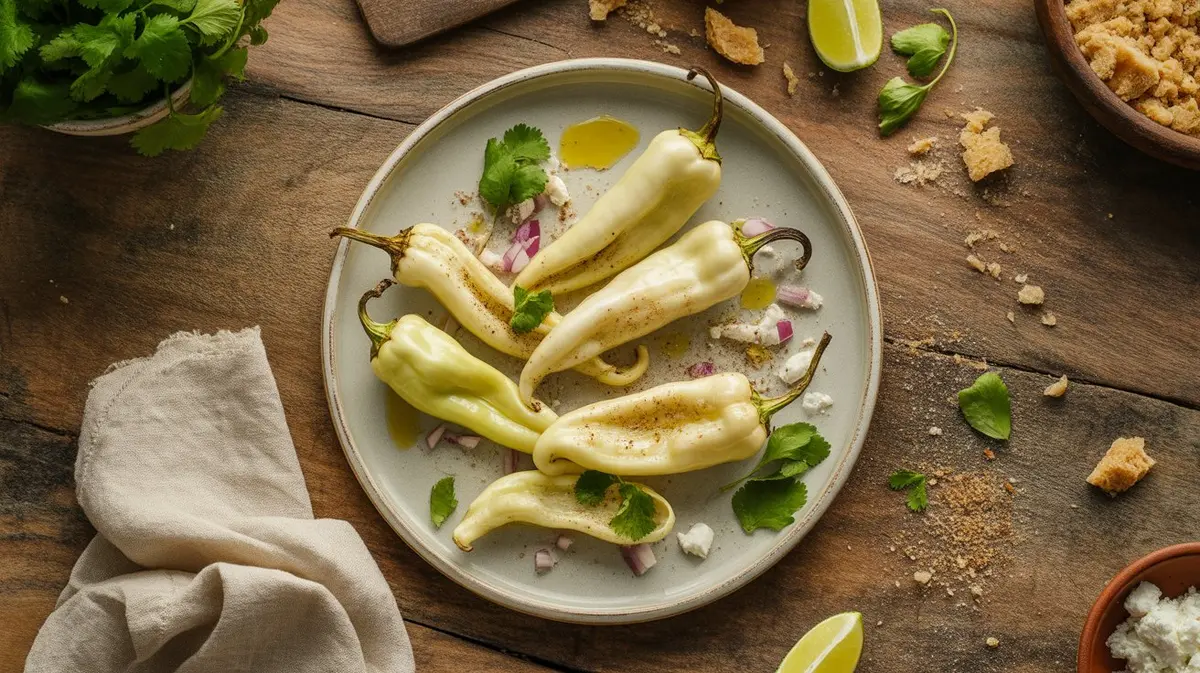
White Habanero Nutrition Facts & Health Benefits
Like other C. chinense peppers, white habaneros are nutritionally dense relative to their small size. A single pepper (about 9g) provides a meaningful dose of vitamin C — often exceeding 100% of daily recommended intake per 100g of fresh pepper. They also contain vitamin A, potassium, and dietary fiber.
Capsaicin, the compound responsible for heat, triggers thermogenic effects and has been studied for its TRPV1 receptor interaction and molecular structure — research suggests potential metabolic and anti-inflammatory benefits, though you'd need consistent dietary inclusion, not just occasional use.
Calorie count is negligible — roughly 40 calories per 100g of fresh pepper.
Best Ways to Cook with White Habanero Peppers
The practical case for the white habanero comes down to color neutrality and flavor clarity. When building a cream sauce, a pale mango salsa, or a white hot sauce, orange or red peppers drag the color somewhere you don't want it. White habaneros solve that problem without sacrificing heat.
Flavorwise, expect fruity and floral notes — similar to what you'd find in the deeply aromatic Surinamese pepper with scorching intensity, though the white habanero's floral character is arguably cleaner. It works well with tropical fruits (pineapple, coconut, white mango), mild fish, and poultry.
For hot sauce makers, blending white habaneros with white wine vinegar, garlic, and onion produces a sauce that's nearly translucent — visually striking and genuinely hot. The heat builds mid-palate and lingers, so start with less than you think you need.
Roasting mellows the floral notes and brings out a subtle sweetness. Pickling preserves the brightness. Raw in a fresh salsa, it delivers maximum heat and aroma. If you're curious about the rich, dark-fruited cooking applications of its chocolate-toned relative, you'll notice the white habanero's flavor is lighter and more citrus-forward by comparison.
Where to Buy White Habanero & How to Store
White habaneros are genuinely hard to find at standard grocery chains. Specialty Latin markets, farmers markets, and online retailers like [Etsy pepper vendors or specialty hot sauce suppliers] occasionally carry them fresh in season. Dried or powdered white habanero is more consistently available online.
When selecting fresh pods, look for firm, unblemished skin with an ivory-to-pale-yellow color. Avoid any with soft spots or wrinkling — that signals moisture loss and degraded flavor.
Fresh peppers keep 1–2 weeks refrigerated in a paper bag. For longer storage, freeze whole pods after washing and drying — they hold heat and flavor well for up to 6 months. Drying and grinding into powder is the most shelf-stable option.
Best White Habanero Substitutes & Alternatives
Whether you ran out of white habanero or just want to try something different, these peppers make solid stand-ins. We picked them based on heat range, flavor overlap, and how well they actually work in the same dishes.
Our top pick: Habanero (100K–350K SHU). Same species (C. chinense) and nearly the same heat, so it swaps in at a 1:1 ratio without changing the character of the dish. The flavor leans fruity and citrusy, which is close enough that most people won’t notice the difference in a cooked recipe.
How to Grow White Habanero Peppers
Growing white habaneros follows the same playbook as any C. chinense variety — long season, warm roots, patience. Start seeds indoors 8–10 weeks before your last frost date. Germination is slowest in this species, so bottom heat around 80–85°F speeds things up considerably. Check the transplanting and indoor starting guide for habaneros before you begin — the timing windows matter more than most growers expect.
Once transplanted outdoors, white habaneros need full sun and consistent moisture without waterlogging. They're sensitive to cold soil; don't rush the transplant. Nights below 55°F stall growth noticeably.
The plants are compact and productive, typically reaching 2–3 feet in containers or garden beds. Fruit set improves with hand pollination if you're growing indoors. Days to maturity run 90–120 days from transplant — longer than a jalapeño, shorter than a superhot.
If your plants are producing pods that stay green and mild, the guide on why peppers fail to develop heat covers the most common culprits: insufficient sun, overwatering, or harvesting before full ripeness. The small-fruited, prolific growing habit of the wiri wiri makes an interesting container companion if you're working with limited space.
Frequently Asked Questions
-
White habaneros range 100,000–350,000 SHU, while rocotos typically top out around 100,000 SHU — so the white habanero can be up to three times hotter at its upper end. Both are serious peppers, but the white habanero's heat ceiling is significantly higher.
-
The flavor profile is similar — fruity and floral — but many growers and cooks describe the white variety as slightly more perfumed and citrus-forward. The heat level and range are essentially identical between the two color variants.
-
Fresh white habaneros are rare in standard grocery stores; your best bets are specialty Latin markets, farmers markets during peak summer season, or online seed companies like Baker Creek or Pepper Joe's. Seeds are more consistently available year-round through heirloom seed retailers.
-
Yes — the heat and flavor are comparable enough that they're interchangeable in most recipes. The main reason to choose white over orange is color: white habaneros won't tint pale sauces, creams, or light-colored salsas orange.
-
Not meaningfully so — they share the same long growing season, heat requirements, and care needs as any C. chinense variety. The main challenge is sourcing quality seeds, since white habaneros are less commonly stocked by mainstream garden centers.
- Chile Pepper Institute - New Mexico State University
- USDA FoodData Central - Peppers, hot, raw
- Baker Creek Heirloom Seeds - White Habanero
- Bosland, P.W. & Votava, E.J. - Peppers: Vegetable and Spice Capsicums (CABI Publishing)
Species classification: C. chinense — based on published botanical taxonomy.
