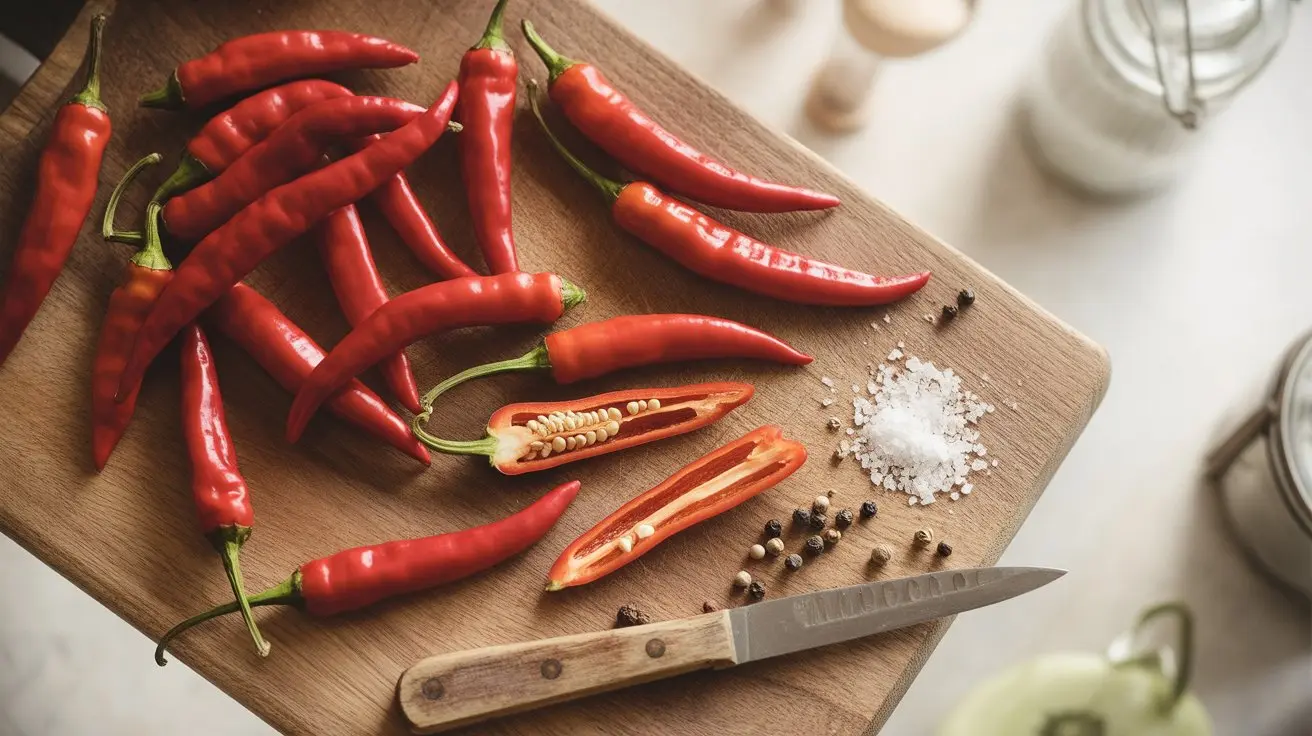
Santaka Pepper

Most people assume the Santaka pepper is just another Asian chili — it is not. This Japanese-origin C. annuum delivers a sharp, citrusy heat between 40,000–50,000 SHU, roughly 5 times hotter than a de arbol's thin-walled pungency and built specifically for dried applications. Small, elongated pods, intense flavor, outsized impact.
- Species: C. annuum
- Heat tier: Hot (10K–100K SHU)
- Comparison: 10x hotter than a jalapeño
What is Santaka Pepper?
The Santaka sits in a fascinating gap: widely used in Japanese and Asian-American cooking, yet almost invisible outside specialty seed catalogs and import shops. Its 40,000–50,000 SHU range places it firmly in the hot pepper classification on the Scoville scale, but the heat comes with a brightness — citrusy and sharp rather than smoky or earthy — that sets it apart from most chiles in its range.
Botanically, it belongs to Capsicum annuum's expansive species, the same family as cayenne and bell peppers. The pods grow elongated and slender, typically 2–3 inches, ripening from green to a vivid red. That thin flesh is ideal for drying; the pods crisp up quickly and retain their sharp flavor profile for months.
Compare it to the fruity brightness of the Peruvian Aji Amarillo and you notice how differently citrus notes can express in a chili — the Santaka is drier, sharper, less fruity. It is also meaningfully hotter than a standard de arbol, though the two are often used interchangeably in East Asian recipes calling for whole dried chiles.
The pepper's reputation in Japan centers on its drying quality and clean heat. Unlike some chiles that taste flat when dried, Santaka intensifies — the citrus edge sharpens and the burn becomes more immediate on the palate.
History & Origin of Santaka Pepper
Japan is not a country most people associate with chili pepper cultivation, but the Japanese pepper-growing tradition runs deeper than commonly assumed. Chiles arrived in Japan via Portuguese traders in the late 16th century, and by the Edo period, Japanese growers had selected distinct regional varieties suited to their climate and cuisine.
The Santaka emerged from this selection process, likely developed in central Japan for its exceptional drying characteristics. Unlike many chiles bred for fresh use, Santaka was optimized for the dried-whole applications central to Japanese cooking — togarashi blends, infused oils, pickled preparations.
By the 20th century, it became one of the primary Japanese chiles exported to Asian-American markets, where it filled the same role that Indian chiles with comparable pungency fill in South Asian cooking: a reliable, shelf-stable heat source with consistent flavor.
How Hot is Santaka Pepper? Heat Level & Flavor
The Santaka Pepper delivers 40K–50K Scoville Heat Units, placing it in the Hot tier (10K–100K SHU). That makes it roughly 10x hotter than a jalapeño.
Flavor notes: sharp and citrusy.
Santaka Pepper Nutrition Facts & Health Benefits
A 10g serving of dried Santaka chiles delivers significant vitamin C — fresh pods contain roughly 140mg per 100g, though drying reduces this considerably. Capsaicin concentration at 40,000–50,000 SHU means meaningful anti-inflammatory properties per the TRPV1 receptor activation pathway that capsaicin triggers.
Dried chiles also provide iron, potassium, and vitamin A (from beta-carotene in the red flesh). Caloric load is minimal — approximately 30–40 calories per 10g of dried pods. The thin flesh means a higher capsaicin-to-mass ratio than meatier chiles at the same SHU level.
Best Ways to Cook with Santaka Peppers
Dried whole Santaka chiles are the foundation of Japanese togarashi spice blends, including the ubiquitous shichimi togarashi (seven-spice blend). The sharp citrus edge integrates well with sesame, seaweed, and orange peel — the other key components of that blend.
For homemade hot sauce from scratch, dried Santakas rehydrate cleanly without turning muddy. The resulting sauce has a thinner body than sauces built on meatier chiles, with a vinegar-forward profile that resembles the sharp vinegary sensory experience of Tabasco-style heat but with more citrus depth.
Chili oil is where Santaka really performs. The thin pods release their capsaicin and flavor compounds quickly into hot oil, making them ideal for building chili oil at home. Use 3–4 whole dried pods per cup of oil, heat gently to 225°F, steep 20 minutes, then strain.
In stir-fries, whole Santakas added to hot oil at the start of cooking bloom their heat into the dish — a technique borrowed directly from Chinese and Japanese cooking traditions. They also pair well with the warm, ground-spice culinary applications of Turkish-style chiles when building complex spice blends.
Fresh pods work in salsas and pickles, but drying is where this pepper earns its reputation.
Where to Buy Santaka Pepper & How to Store
Dried Santaka chiles appear in Japanese grocery stores, Asian supermarkets, and specialty spice retailers. Look for pods that are deep red, uniformly dry, and pliable but not brittle — overly brittle pods have lost volatile aromatics. Avoid any with gray discoloration or off smells.
Store dried pods in an airtight glass jar away from direct light and heat. Properly stored, they hold flavor for 12–18 months. Ground Santaka loses its citrus edge faster — use ground powder within 6 months.
Fresh pods appear occasionally at farmers markets in late summer. Use within 1 week refrigerated, or dry immediately for longer storage. Seeds are available from specialty seed vendors for home growing.
Best Santaka Pepper Substitutes & Alternatives
Whether you ran out of santaka pepper or just want to try something different, these peppers make solid stand-ins. We picked them based on heat range, flavor overlap, and how well they actually work in the same dishes.
Our top pick: Cayenne Pepper (30K–50K SHU). Same species (C. annuum) and nearly the same heat, so it swaps in at a 1:1 ratio without changing the character of the dish. The flavor leans neutral and peppery, which is close enough that most people won’t notice the difference in a cooked recipe.
How to Grow Santaka Peppers
Santaka grows reliably in USDA zones 8–11 as a perennial, and as an annual everywhere else. Start seeds indoors 8–10 weeks before last frost — soil temperature should stay above 70°F for germination, which typically takes 10–14 days. For a detailed indoor seed-starting approach for hot peppers, the process applies directly to Santaka.
Transplant outdoors after last frost when nighttime temps stay above 55°F. Space plants 18–24 inches apart in well-draining soil with a pH between 6.0 and 6.8. Full sun is non-negotiable — fewer than 6 hours per day and yields drop significantly.
Days to maturity run 80–90 days from transplant to red-ripe pods. Green pods are usable but lack the full citrus character that develops at full ripeness. The plant sets fruit prolifically; expect dozens of pods per plant in a good season.
Drying is straightforward. Harvest fully red pods and hang in a warm, dry location with good airflow, or use a dehydrator at 135°F for 6–8 hours. Properly dried pods store for 12–18 months in an airtight container away from light. The fruity heat characteristics of other hot-tier peppers like Facing Heaven develop differently in storage — Santaka's citrus notes actually sharpen over time rather than fading.
Frequently Asked Questions
-
At 40,000–50,000 SHU, the Santaka is about 5 times hotter than a de arbol and sits at the upper end of the hot pepper classification on the Scoville scale. It is roughly comparable to a strong cayenne but with a sharper, more citrus-forward flavor profile.
-
Fresh Santaka pods work well in salsas, stir-fries, and quick pickles, but drying is where the pepper truly excels. The thin flesh dries quickly and the citrus-sharp flavor actually intensifies rather than dulling during the drying process.
-
Dried de arbol chiles are the closest widely available substitute — similar heat range and thin-walled texture, though they lack Santaka's citrus brightness. For Japanese togarashi blends specifically, a mix of de arbol and a small amount of dried lemon zest approximates the flavor profile reasonably well.
-
Not always — several Japanese chili varieties circulate under the generic label 'Japanese chili' or 'togarashi,' including Hontaka, which is closely related to Santaka. True Santaka pods are slightly larger and tend to have a more pronounced citrus note than Hontaka.
-
From transplant to fully red pods takes approximately 80–90 days under good growing conditions. Starting seeds indoors 8–10 weeks before last frost gives the plant enough lead time to produce a full crop before fall temperatures drop.
- Chile Pepper Institute - Capsicum Species Overview
- USDA GRIN - Capsicum annuum
- Purdue University - Capsicum annuum Horticulture
- Japan Pepper Research - Togarashi Varieties
Species classification: C. annuum — based on published botanical taxonomy.