
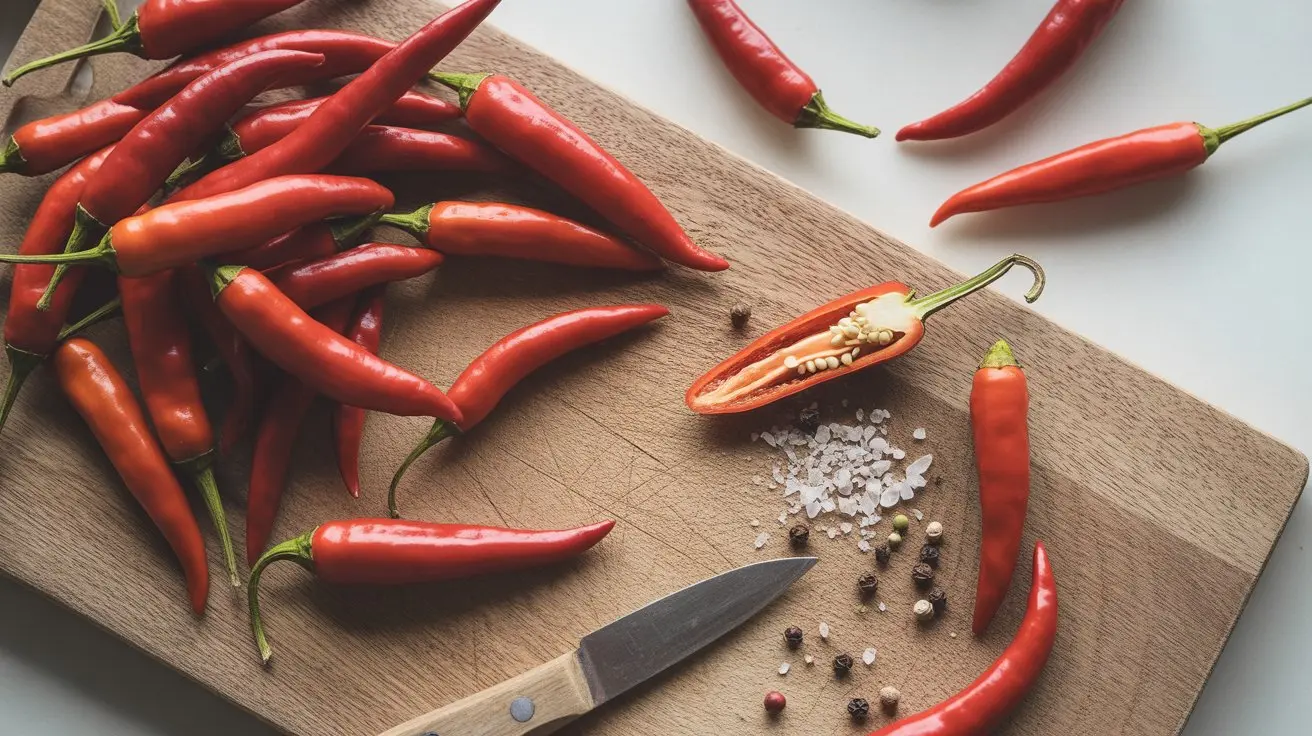
Prik Jinda

Prik Jinda is a Thai chili delivering 50,000–100,000 SHU of sharp, clean heat — roughly comparable to a habanero on the lower end, but with a brighter, more piercing burn. It belongs to the extra-hot pepper category and earns its place in Thai kitchens through sheer versatility. Slender, vivid, and intensely flavored, this is the pepper serious Thai cooks reach for first.
- Species: C. annuum
- Heat tier: Extra-Hot (100K–1M SHU)
- Comparison: 20x hotter than a jalapeño
What is Prik Jinda?
Walk through any fresh market in Thailand and you'll find Prik Jinda bundled alongside basil and lemongrass — not as a novelty, but as a kitchen staple. The name translates roughly to 'Jinda chili,' and it sits firmly in the 50,000–100,000 SHU range, putting it well above a habanero's lower threshold while staying in the same broad heat neighborhood.
The pods are elongated and slender, ripening from green through red, with thin walls that make them ideal for quick cooking. That sharp, bright character of Thai pepper traditions comes through clearly here — there's no slow, creeping burn. The heat arrives fast and exits cleanly, which is exactly what Thai cuisine demands.
Botanically, Prik Jinda is a C. annuum — the same species as bell peppers and jalapeños, though you'd never guess from the heat. That species connection means the plant is relatively adaptable and productive, with the thin-walled pods drying and fermenting exceptionally well.
Compared to the fiery intensity of bird's eye chili's deep-rooted cultural background, Prik Jinda offers a slightly more restrained but still serious punch. It's the chili you use when you want heat that enhances rather than overwhelms — precise, assertive, and distinctly Thai.
History & Origin of Prik Jinda
Thailand's chili culture traces back to Portuguese traders who introduced Capsicum species in the 16th century. Within generations, Thai cooks had selected and cultivated varieties tuned to local cuisine — and Prik Jinda emerged as one of the regional favorites, particularly in central and northern Thailand.
Unlike many heritage chilies with murky origins, Prik Jinda has a relatively traceable identity within Thai agricultural records. It's been maintained through generations of seed saving, prized for consistent heat and that characteristic sharp flavor that distinguishes it from the rounder burn of the intensely hot, fruity-sweet peach pepper developed in South America.
Today it remains a commercial crop in Thailand, sold fresh and dried throughout Southeast Asia and increasingly available through specialty importers worldwide.
How Hot is Prik Jinda? Heat Level & Flavor
The Prik Jinda delivers 50K–100K Scoville Heat Units, placing it in the Extra-Hot tier (100K–1M SHU). That makes it roughly 20x hotter than a jalapeño.
Flavor notes: bright and sharp.
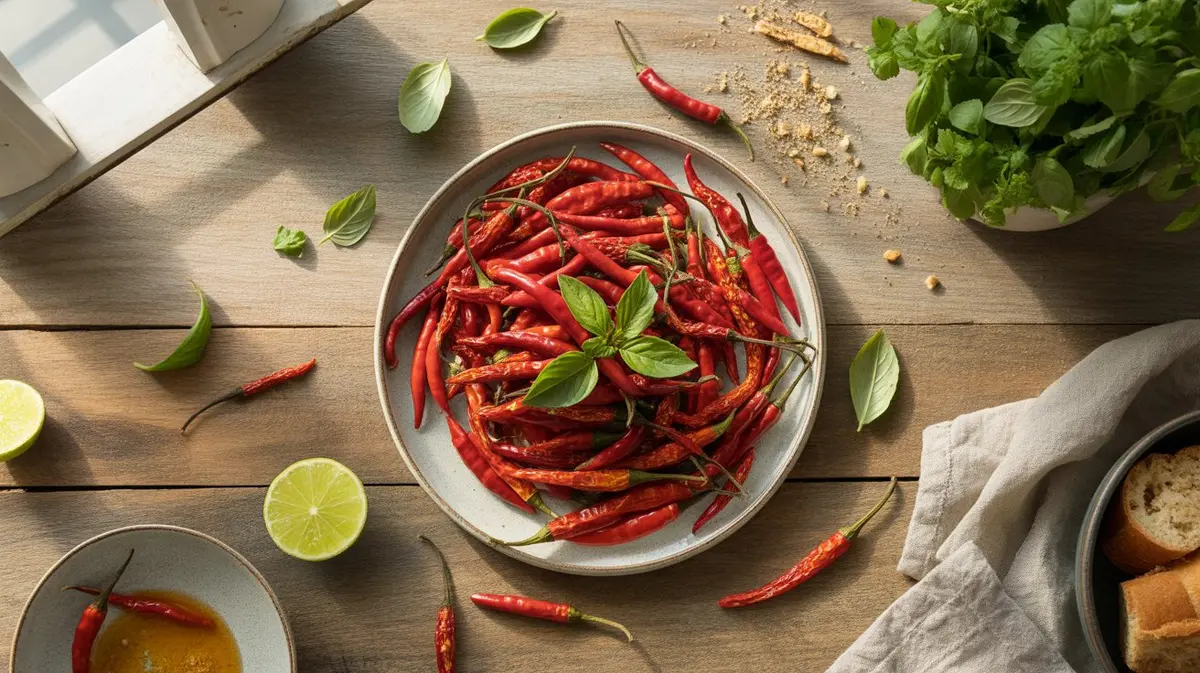
Prik Jinda Nutrition Facts & Health Benefits
Like most hot chilies, Prik Jinda is nutritionally dense relative to its serving size. A 100g fresh serving provides roughly 40 calories, significant vitamin C (often exceeding 100% of daily recommended intake), and meaningful amounts of vitamin A and vitamin B6.
The capsaicin responsible for the heat has been studied for its anti-inflammatory and metabolic effects — the molecular structure of capsaicin and its burn mechanism explains why hot peppers interact with pain receptors rather than causing actual tissue damage.
Dried Prik Jinda concentrates these nutrients further, making even small amounts a meaningful dietary contribution.
Best Ways to Cook with Prik Jinda Peppers
Prik Jinda's thin walls and bright heat make it one of the more flexible hot chilies in Southeast Asian cooking. It doesn't need long cooking times — a minute in a hot wok is enough to release its oils and temper the raw sharpness into something more complex.
In Thailand, it shows up in nam prik (chili dipping sauces), stir-fries, and curry pastes where fresh chilies are pounded rather than blended. The clean heat profile means it layers well with fish sauce, lime, and galangal without muddying the flavors.
For fermentation, Prik Jinda is excellent — the thin skin breaks down quickly, and a practical guide to fermenting peppers will take you through the lacto-fermentation process that softens the edge while preserving the heat. Fermented Prik Jinda paste keeps for months and works as a base for countless Thai preparations.
Dried and ground, it functions like a Thai version of cayenne — high heat, clean flavor, no fruitiness. That's quite different from the thick-walled rocoto's distinctive heat characteristics, which adds a fruity, almost berry-like note to dishes.
Substitute ratio: if a recipe calls for 2–3 bird's eye chilies, one Prik Jinda delivers comparable heat with a slightly sharper edge.
Where to Buy Prik Jinda & How to Store
Fresh Prik Jinda is rarely found outside Southeast Asia, but dried pods and ground powder appear in Asian grocery stores and online specialty retailers. Look for pods with deep red color and no signs of moisture damage.
Fresh pods keep 1–2 weeks refrigerated in a paper bag. Dried pods stored in an airtight container away from light last 12–18 months without significant heat loss. For longer storage, freeze fresh pods whole — they retain heat and flavor well and can be used directly from frozen in cooked dishes.
Ground Prik Jinda powder loses potency faster than whole dried pods; buy in small quantities and use within 6 months.
Best Prik Jinda Substitutes & Alternatives
Whether you ran out of prik jinda or just want to try something different, these peppers make solid stand-ins. We picked them based on heat range, flavor overlap, and how well they actually work in the same dishes.
Our top pick: Apollo Pepper (50K–100K SHU). Same species (C. annuum) and nearly the same heat, so it swaps in at a 1:1 ratio without changing the character of the dish. The flavor leans bright and crisp, which is close enough that most people won’t notice the difference in a cooked recipe.
How to Grow Prik Jinda Peppers
As a C. annuum, Prik Jinda is more forgiving than many superhot species — it sets fruit reliably in humid, warm conditions and doesn't demand the extended season that C. chinense varieties require.
Start seeds indoors 8–10 weeks before last frost. Germination happens fastest at 80–85°F soil temperature; a heat mat makes a real difference here. For guidance on timing your starts, a seasonal planting calendar for peppers lays out the regional windows clearly.
The cultivation characteristics of Thai Dragon pepper are a useful reference point — both are thin-walled Thai varieties that prefer full sun and consistent moisture without waterlogging. Space Prik Jinda plants 18 inches apart and expect bushy growth to 2–3 feet tall.
Feed with a phosphorus-heavy fertilizer at transplant to encourage root development, then switch to a balanced formula once flowering begins. Excess nitrogen pushes foliage at the expense of fruit.
Pods ripen from green to red in roughly 75–85 days from transplant. Harvest regularly to keep plants producing — leaving ripe pods on the plant signals it to slow down. In warm climates, Prik Jinda can be overwintered as a perennial.
Frequently Asked Questions
-
Prik Jinda sits at 50,000–100,000 SHU, which overlaps directly with the lower end of habanero heat (100,000–350,000 SHU). At its upper range, Prik Jinda approaches habanero territory, though the burn character is sharper and more immediate rather than the habanero's slower, fruitier heat.
-
Yes — both share the 50,000–100,000 SHU range, and Prik Jinda's thin walls and clean heat make it a direct swap in most applications. The main difference is that Prik Jinda tends to be slightly larger, so you may use fewer pods to achieve the same heat level.
-
Not exactly — 'Thai chili' is a broad category that includes several varieties, while Prik Jinda refers to a specific cultivar with a distinct elongated shape. It shares the extra-hot heat classification with many Thai varieties but has its own flavor profile and growth characteristics.
-
It excels in nam prik dipping sauces, stir-fries, and fresh curry pastes where its sharp heat integrates quickly. Dried and ground, it works as a high-heat seasoning similar to cayenne, and it ferments exceptionally well into long-lasting chili pastes.
-
Treat it like any warm-season C. annuum — start seeds indoors 8–10 weeks before last frost with soil temperatures around 80–85°F, then transplant after all frost risk passes. It produces reliably in USDA zones 9–11 as a perennial and performs well as an annual in zones 5–8 with a long enough growing season.
- Chile Pepper Institute — Capsicum Species Overview
- USDA Agricultural Research Service — Capsicum annuum
- Thai Agricultural Standard — Fresh Chili Peppers
Species classification: C. annuum — based on published botanical taxonomy.
