
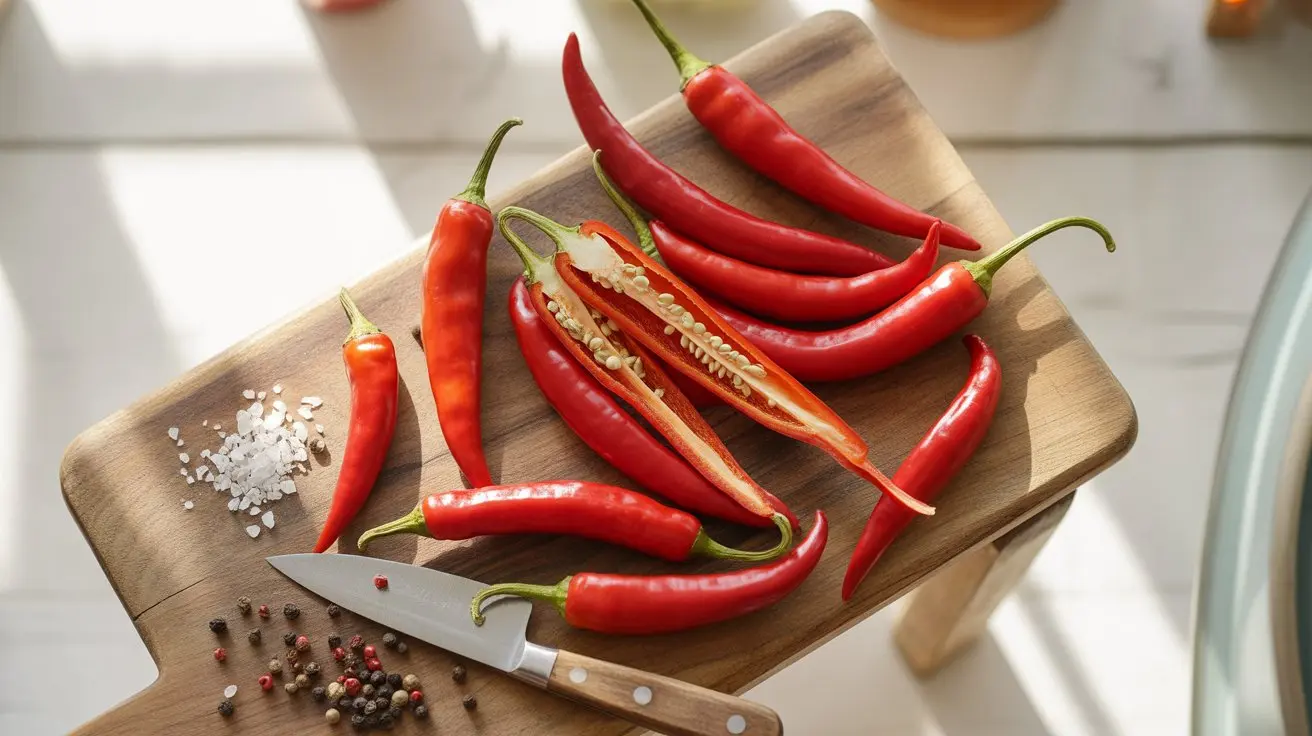
Kashmiri Chili

The Kashmiri chili earns its place in kitchens through color, not fire. Registering just 1,000–2,000 SHU, it sits at the gentler end of the medium heat index — closer to a sweet bell pepper in bite than to a jalapeño. Its real power is the intense brick-red color it gives to curries, tandoori marinades, and spice blends without scorching anyone at the table.
- Species: C. annuum
- Heat tier: Medium (1K–10K SHU)
What is Kashmiri Chili?
Color is the whole point with Kashmiri chili. Cooks across South Asia reach for it specifically because it delivers a saturated, almost lacquer-red hue that synthetic food coloring can't replicate — and it does this at a mere 1,000–2,000 SHU, so the heat never overwhelms the dish.
The pods are elongated, thin-walled, and deeply wrinkled when dried, with a papery texture that grinds easily into a fine powder. Fresh pods are rarely exported; most cooks outside India encounter it as a dried whole chili or pre-ground powder.
Flavor-wise, the profile leans sweet and mildly fruity, with a faint earthiness that deepens when the pepper is bloomed in hot oil — a technique central to Indian cooking. That bloom step is where Kashmiri chili transforms from a spice into a sauce base, releasing its pigments and aroma compounds simultaneously.
As a C. annuum variety, it shares a species with bell peppers, jalapeños, and anchos, but its breeding history in the Kashmir Valley pushed it toward maximum color yield over capsaicin production. The result is a pepper that functions almost like a spice-world equivalent of saffron: prized for what it does to a dish visually and aromatically, not for its heat.
For anyone exploring peppers in Indian cooking, this is a foundational ingredient — not optional.
History & Origin of Kashmiri Chili
The Kashmir Valley's cool climate and rich alluvial soil created ideal conditions for a distinct chili landrace that local farmers selected over generations for deep color and mild heat. Chili cultivation in Kashmir likely intensified after Portuguese traders introduced Capsicum species to South Asia in the 16th century, with regional varieties diverging quickly based on local culinary preferences.
Kashmiri cuisine prizes color and layered spicing over raw heat, which explains why farmers selected for pigment-dense pods rather than capsaicin. The pepper became embedded in Wazwan — the elaborate multi-course feast of Kashmiri cuisine — where dishes like Rogan Josh owe their signature crimson appearance almost entirely to Kashmiri chili powder.
Today it is grown primarily in the Kathua, Budgam, and Pulwama districts of Jammu & Kashmir, and it holds a [Geographical Indication tag](https://ipindia.gov.in/) that protects its regional identity, similar to how Champagne protects French sparkling wine.
How Hot is Kashmiri Chili? Heat Level & Flavor
The Kashmiri Chili delivers 1K–2K Scoville Heat Units, placing it in the Medium tier (1K–10K SHU).
Flavor notes: mild and sweet.
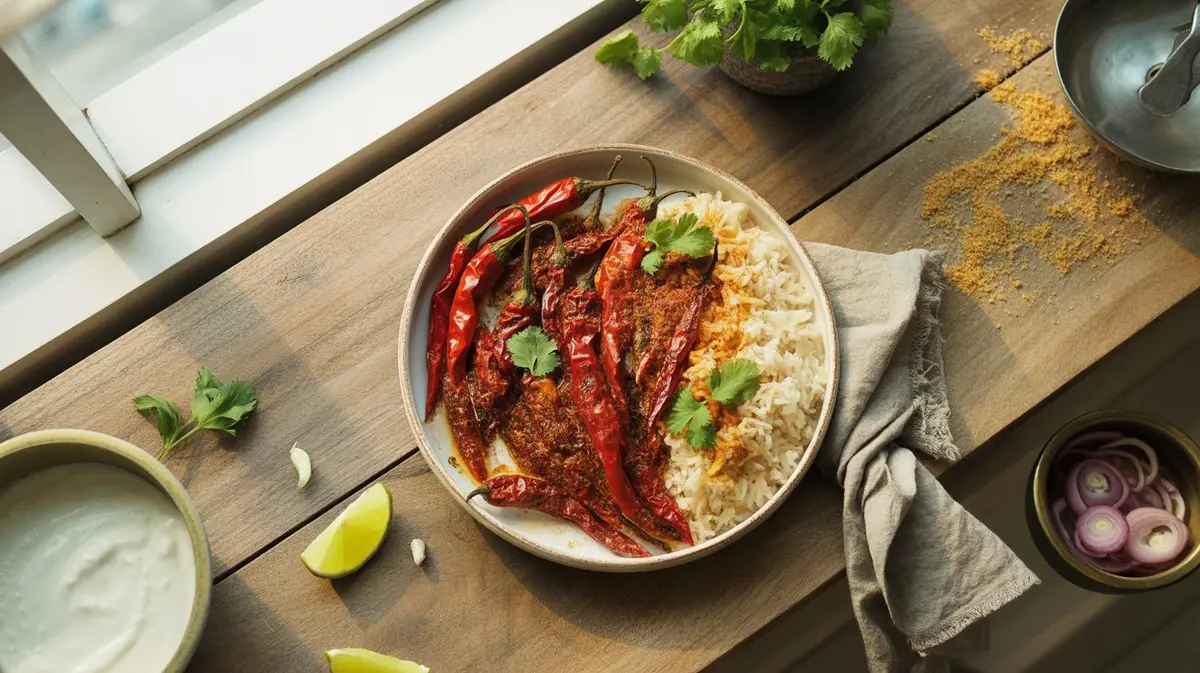
Kashmiri Chili Nutrition Facts & Health Benefits
Dried Kashmiri chili powder is rich in capsanthin and capsorubin — the carotenoid pigments responsible for its red color — which also function as antioxidants. A 1-teaspoon (2.5g) serving provides roughly 8 calories, trace amounts of protein and fat, and meaningful quantities of vitamin A precursors from those same carotenoids.
The low capsaicin content means it lacks the thermogenic effects associated with hotter varieties. Vitamin C is present in fresh pods but diminishes significantly during drying. Iron and potassium appear in small amounts. As part of the broader Indian pepper tradition, Kashmiri chili is valued more for its phytonutrient profile than its heat-related compounds.
Best Ways to Cook with Kashmiri Chili Peppers
Kashmiri chili powder is the backbone of Rogan Josh, butter chicken, and tandoori marinades — dishes where the visual impact matters as much as flavor. The standard ratio in most restaurant-style Rogan Josh is 2–3 teaspoons per serving, enough to turn the sauce a deep amber-red without pushing heat past comfortable.
Blooming the powder in ghee or neutral oil for 30–45 seconds before adding liquids is non-negotiable if you want full color extraction. Skipping this step leaves the dish looking dull and slightly raw-tasting.
Outside Indian applications, Kashmiri chili works as a paprika substitute anywhere you want more color intensity. It performs well in Spanish-style braised meats, North African spice rubs, and even deviled egg toppings. The mild, sweet profile pairs naturally with dairy — yogurt marinades, cream-based sauces, and labneh dips all benefit from a dusting.
For those familiar with the smoky depth of dried Mexican chilies, Kashmiri chili occupies a different lane: brighter, less earthy, more about color than complexity. It also contrasts with the wine-dark, raisin-like character of Urfa Biber's slow-dried preparation, which has a more concentrated, almost fermented sweetness.
Whole dried pods can be rehydrated and blended into a paste that keeps refrigerated for up to two weeks.
Where to Buy Kashmiri Chili & How to Store
Look for Kashmiri chili powder with a vivid brick-red to deep crimson color — dull or brownish powder indicates age or poor storage. Whole dried pods should feel pliable, not brittle.
Reputable South Asian grocery stores and online spice retailers carry both powder and whole pods. Avoid products labeled simply "red chili powder" without specifying Kashmiri origin; many blends substitute cayenne, which is far hotter.
Store powder in an airtight container away from light and heat. Properly stored, it holds color and flavor for 12–18 months. Whole pods last slightly longer — up to two years. Refrigeration is unnecessary but won't harm quality.
Best Kashmiri Chili Substitutes & Alternatives
Whether you ran out of kashmiri chili or just want to try something different, these peppers make solid stand-ins. We picked them based on heat range, flavor overlap, and how well they actually work in the same dishes.
Our top pick: Ancho Pepper (1K–2K SHU). Same species (C. annuum) and nearly the same heat, so it swaps in at a 1:1 ratio without changing the character of the dish. The flavor leans sweet and raisin-like, which is close enough that most people won’t notice the difference in a cooked recipe.
How to Grow Kashmiri Chili Peppers
Kashmiri chili is a warm-season annual that performs best in USDA zones 9–11 outdoors, though it grows well as a container plant in cooler climates when brought inside before frost. Start seeds indoors 8–10 weeks before last frost, maintaining soil temperature around 75–85°F for germination.
The plants are relatively compact — typically 18–24 inches tall — and moderately productive. They prefer well-drained, slightly acidic soil with consistent moisture. Unlike high-capsaicin varieties that respond to deliberate drought stress with hotter pods, Kashmiri chili's color development benefits from steady irrigation; water stress tends to reduce pigment concentration.
For those comparing cultivation approaches, the Aji Panca's similarly low-heat growing profile offers a useful parallel — both reward patience over intensity manipulation.
Full sun is essential: at least 6–8 hours daily. Pods shift from green to deep red at maturity, typically 75–85 days from transplant. Harvest when fully red for maximum color yield. Dry pods in a single layer at low heat (130–140°F) or air-dry in a well-ventilated space for 2–3 weeks before grinding.
Frequently Asked Questions
-
Sweet paprika is the closest swap for color, but it lacks the slight fruity depth that Kashmiri chili brings to bloomed oil. Use a 1:1 ratio and consider adding a pinch of cayenne if the dish needs even a little warmth.
-
The red color comes from carotenoid pigments — capsanthin and capsorubin — not capsaicin, which is the compound responsible for heat. Kashmiri chili was selectively bred to maximize pigment production, so the color-to-heat ratio is unusually high compared to most red chilies.
-
Not exactly — Deggi Mirch is a commercial blend that typically combines Kashmiri chili with other mild red chilies to standardize color and heat. Pure Kashmiri chili powder comes only from the Kashmir Valley variety and tends to be slightly more expensive.
-
Cayenne typically measures 30,000–50,000 SHU, making it roughly 15–50 times hotter than Kashmiri chili's 1,000–2,000 SHU range. Substituting cayenne for Kashmiri chili in equal amounts will dramatically change the heat level of any dish.
-
It works well anywhere you want deep red color with mild, sweet pepper flavor — Spanish braised dishes, North African spice rubs, and yogurt-based marinades all benefit from it. Think of it as high-performance paprika with a slightly different aromatic character.
- Geographical Indication Registry — Kashmiri Mirch
- Carotenoid Content in Capsicum annuum Varieties — Journal of Agricultural and Food Chemistry
- Chile Pepper Institute — New Mexico State University
- USDA FoodData Central — Spices, Chili Powder
Species classification: C. annuum — based on published botanical taxonomy.
